Verdict
Ranked #7 of 7Reviewed by Mike Hun·May 15, 2026

TP-Link Archer GE800

Averaged from 5 published ratings
The verdict

The TP-Link Archer GE800 represents TP-Link's first true gaming router, featuring Wi-Fi 7 tri-band technology with 19000 Mbps total bandwidth. PCMag's John R. Delaney praised its gaming-specific features like Game Acceleration and dedicated 2.5Gbps port, calling it the best router TP-Link has made to date. However, Dong Ngo from Dong Knows Tech noted it runs hot and is somewhat noisy. The router is priced at $599.99 and includes a power adapter, network cable, and reset pin. While it offers excellent performance for bandwidth-intensive tasks and gaming, those seeking a more refined experience might consider the ASUS GT-BE98 Pro.

TP-Link Archer GE800

Full review

Gaming-First Design and Features

The TP-Link Archer GE800 represents TP-Link's first genuine attempt at a gaming-focused router, moving beyond the superficial gaming aesthetics of previous models like the Archer AX11000 and GX90. According to PCMag's John R. Delaney, the router includes actual gaming features that mirror those found in ASUS's ROG Rapture lineup. These include Game Acceleration with QoS settings for specific games, a dedicated 2.5Gbps Gaming Port, and support for Game Private Network (GPN) through WTFast integration. The device also features a Game Panel for monitoring network status and performance, as well as Game Statistics for tracking gaming traffic. Dong Knows Tech's Dong Ngo noted that the router's game acceleration feature correctly identifies games played by devices and applies optimal settings with minimal user effort. The inclusion of a one-click acceleration button and the ability to dedicate the 5GHz band exclusively to gaming further solidifies its position as a gaming-optimized device.

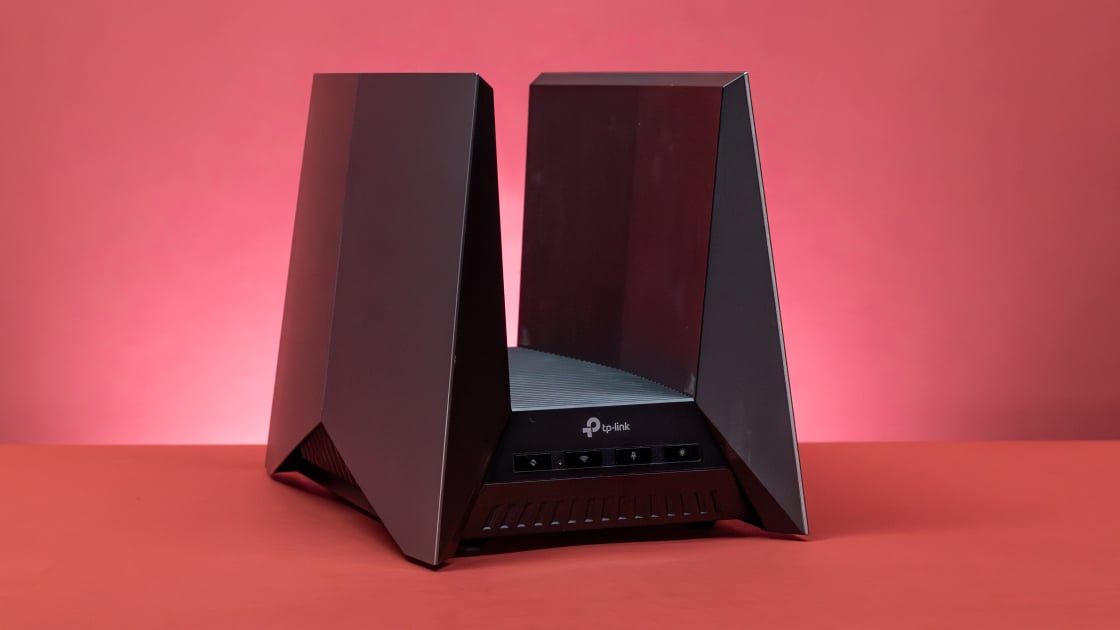
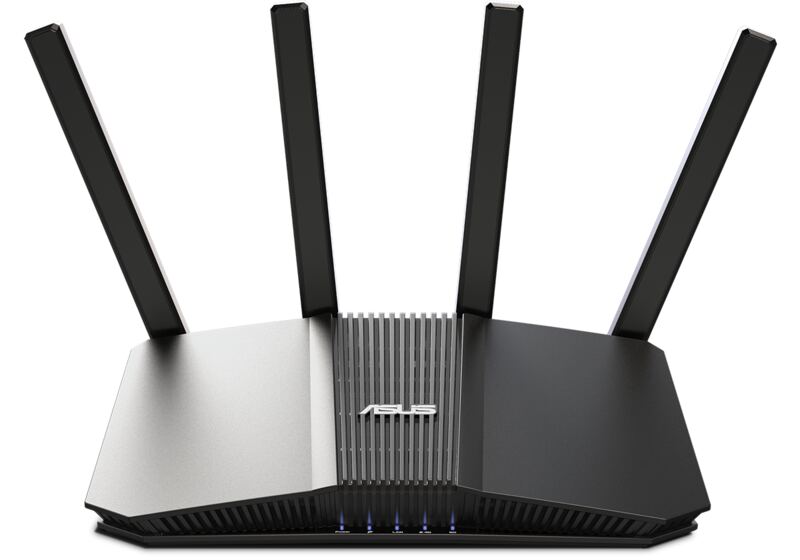
The physical design of the Archer GE800 is a bold departure from TP-Link's traditional router aesthetics, resembling a Star Wars Imperial Shuttle. This design choice, while visually striking, has drawn mixed reactions. Blacktubi's review noted that the router's RGB lighting is vibrant and customizable via the TP-Link Tether app, though it can be removed for those who prefer subtlety. The router's build quality is solid, using high-grade plastic with a metallic finish and incorporating substantial heatsinking to manage heat from its high-performance Qualcomm Network Pro 1220 platform. However, the design does result in a large footprint that may be problematic for space-constrained installations. The device also features a dedicated 2.5Gbps LAN port that automatically prioritizes gaming traffic, a feature that TechRadar's reviewer highlighted as particularly useful for competitive gaming scenarios.

Hardware Specifications and Performance

The Archer GE800 is powered by the Qualcomm Network Pro 1220 platform, featuring a 2.2GHz Quad-Core processor with 2GB RAM, built on the ARM A73 architecture. This hardware configuration allows the router to handle multiple devices and high-bandwidth applications with ease. According to The IT Nerd's review, the router's performance is impressive, with the ability to maintain stable connections even under heavy network load. The processor's efficiency is further enhanced by active cooling through a fan strategically placed between the antennas, which helps dissipate heat generated by the high-performance Wi-Fi 7 radio. Tom's Hardware noted that this cooling system keeps the device from overheating during sustained high-load scenarios, though it does generate noticeable heat and fan noise. The router's hardware is complemented by dual 10G Ethernet WAN/LAN ports, a single SFP+ port for fiber connections, and four 2.5Gbps LAN ports, making it suitable for high-speed internet connections and advanced networking setups.

In terms of Wi-Fi performance, the Archer GE800 delivers exceptional results across all three bands. The router supports 4×4 MIMO configurations for 2.4GHz, 5GHz, and 6GHz bands, with peak speeds of 1376Mbps, 5760Mbps, and 11520Mbps respectively. Blacktubi's testing revealed that the 6GHz band achieved over 2500Mbps on a laptop with an Intel BE200 Wi-Fi 7 adapter at a 5-meter distance, surpassing even 2.5G Ethernet connections. The router's support for Multi-Link Operation (MLO) allows devices to simultaneously connect to all three bands, seamlessly switching between them without interruption. This feature significantly improves network reliability compared to traditional band steering methods. However, The IT Nerd noted that while 6GHz performance is exceptional, signal penetration through walls is weaker compared to the 5GHz band, which remains crucial for overall network coverage.

Real-World Performance and Testing

Testing conducted by multiple reviewers confirmed the Archer GE800's ability to deliver consistent, high-speed performance in real-world scenarios. Tom's Hardware reported that the router's 6GHz capabilities were particularly impressive, achieving speeds that approached the limits of a 1Gbps fiber connection. The router's ability to maintain these speeds through walls and over long distances was noted as a significant advantage. Blacktubi's week-long testing revealed consistent reliability even when using older Wi-Fi 5 devices, demonstrating excellent backward compatibility. The reviewer also highlighted the router's stability, noting that unlike other Wi-Fi 7 routers that suffer from connectivity bugs, the GE800 maintained consistent performance throughout the testing period. PCMag's John R. Delaney emphasized that the router's performance is particularly strong in gaming scenarios, where the dedicated gaming features and QoS settings provide tangible benefits for competitive players.

The router's handling of multiple concurrent connections was thoroughly tested by The IT Nerd, who found that it could manage numerous devices without performance degradation. The reviewer noted that while the router's fan was audible during extended use, it was not objectionable and did not impact overall performance. The device's ability to support both wired and wireless connections simultaneously was praised, with the 2.5Gbps dedicated gaming port providing clear advantages for gaming applications. The router's support for EasyMesh networking allowed for seamless mesh expansion, which was particularly useful for larger homes or offices with challenging Wi-Fi coverage requirements. However, some reviewers noted that the router's performance with older devices was less impressive compared to newer Wi-Fi 7 devices, though still adequate for most household needs.

Software and User Interface

The Archer GE800's software stack has been significantly revamped to focus on gaming optimization, according to Blacktubi's review. The TP-Link Tether app provides comprehensive control over the router's features, including RGB lighting customization, network monitoring, and gaming-specific settings. The app allows users to create separate SSIDs for each band and even supports Multi-Link Operation (MLO) SSIDs for devices that support this feature. The web interface offers additional customization options for advanced users who prefer manual configuration. However, some reviewers noted that the setup process could be more intuitive, particularly for users with complex internet configurations such as PPPoE and VLAN setups. The IT Nerd reported that while the basic setup was straightforward, configuring advanced features took considerable time due to the router's complex networking requirements.

The router's software also includes several gaming-specific features that were well-received by reviewers. The Game Acceleration feature automatically detects games being played and applies optimal QoS settings, while the Game Panel provides real-time monitoring of network performance and gaming statistics. The inclusion of WTFast GPN support was particularly appreciated by competitive gamers, as it allows automatic connection to optimized gaming servers. However, some reviewers noted that the router's software lacks certain advanced security features that are standard in competing products like ASUS routers. The IT Nerd pointed out that features like Security+, parental controls, and intrusion detection are paid subscriptions, which could be a disadvantage for users seeking comprehensive security out of the box. Despite this, the overall software experience was considered user-friendly and effective for most users.

Where It Falls Short

Despite its impressive performance, the Archer GE800 has several notable drawbacks that potential buyers should consider. The most significant criticism comes from The IT Nerd, who noted that the router's fan is audible during extended use, which could be disruptive in quiet environments. The reviewer also criticized the router's software for lacking certain advanced security features that are standard in competing products like ASUS routers, where these features are included in the base price rather than requiring additional subscriptions. Additionally, the router's design, while visually striking, is criticized for being overly large and potentially unsuitable for smaller spaces. The IT Nerd noted that the router's size and heat output make it less ideal for installation in tight spaces or on shelves where heat dissipation might be problematic.

Another area of concern is the router's pricing, which was noted by multiple reviewers. While the Archer GE800 offers excellent performance for its price point, some reviewers felt that the cost was still relatively high compared to alternative gaming routers. The IT Nerd pointed out that while the router performs well, it's not significantly cheaper than competing products like the ASUS GT-BE98 Pro, which offers similar performance with more refined features. Additionally, the router's firmware has been noted to have some bugs, particularly in the early versions, which could affect user experience. Some reviewers also mentioned that the router's RGB lighting, while customizable, can be distracting to some users and may not be suitable for all environments. The lack of visible individual antennas, while an aesthetic choice, was also noted as potentially reducing signal strength in certain environments.

Who It's Best For

The TP-Link Archer GE800 is best suited for competitive gamers and power users who require high-speed, stable Wi-Fi connections for demanding applications. According to PCMag's John R. Delaney, the router's gaming features, including dedicated gaming ports, QoS settings, and GPN support, make it an excellent choice for serious gamers who want to optimize their network performance. The router's support for Multi-Link Operation and its ability to handle multiple high-bandwidth devices simultaneously make it ideal for households with numerous connected devices. Blacktubi's review emphasized that the router's performance is particularly beneficial for users who need fast wireless access to local NAS servers or other networked storage devices, as the 6GHz band delivers speeds that exceed wired connections in many scenarios.

The Archer GE800 is also well-suited for users with high-speed internet connections, particularly those with 1Gbps or faster fiber connections who want to fully utilize their bandwidth. The router's dual 10G Ethernet ports and support for fiber connections make it ideal for power users who need maximum throughput. However, the router may not be ideal for budget-conscious consumers or those with simpler networking needs, as its premium features and pricing may not justify the investment for basic users. The IT Nerd noted that while the router's performance is excellent, users who don't require advanced gaming features or high-speed connections may find it overkill. Additionally, the router's size and heat output make it less suitable for small apartments or spaces with limited ventilation. Users who value aesthetics over functionality may also find the RGB lighting and large design unappealing.

How It Compares to Alternatives

When compared to competing gaming routers, the TP-Link Archer GE800 holds its own in terms of performance but falls short in certain areas. The IT Nerd's review noted that while the Archer GE800 outperforms many routers in terms of raw speed and stability, it lacks some of the advanced security features found in ASUS routers, where these features are included in the base price rather than requiring additional subscriptions. The ASUS GT-BE98 Pro, which is more expensive, offers similar performance with more refined features and better software integration. However, the Archer GE800's price point of $599.99 makes it more accessible to budget-conscious consumers who still want high-performance gaming features. Tom's Hardware's review highlighted that the router's 6GHz capabilities are among the fastest available, though some competitors offer better overall value when considering all features.

In comparison to other Wi-Fi 7 routers, the Archer GE800 stands out for its gaming-specific features and overall performance. The router's support for Multi-Link Operation and its ability to maintain stable connections under heavy load make it superior to many competitors in terms of reliability. However, some reviewers noted that the router's software is less polished than that of ASUS or Netgear products, which may affect the user experience for advanced users. The IT Nerd pointed out that while the router performs well, it's not significantly cheaper than competing products like the ASUS GT-BE98 Pro, which offers similar performance with more refined features. The router's design, while unique, is also less versatile than some competitors who offer more traditional router aesthetics. Despite these drawbacks, the Archer GE800 remains a strong contender in the gaming router market due to its performance and feature set.

Value at This Price

At its suggested retail price of $599.99, the TP-Link Archer GE800 offers excellent value for money, particularly for users who prioritize gaming performance and high-speed Wi-Fi. PCMag's John R. Delaney noted that the router's performance matches or exceeds that of more expensive competitors, making it a strong value proposition for serious gamers and power users. The IT Nerd's review emphasized that while the router's price is relatively high, its performance justifies the cost, especially for users with high-speed internet connections who want to fully utilize their bandwidth. Blacktubi's testing revealed that the router's performance is particularly impressive for its price point, with the 6GHz capabilities delivering speeds that exceed wired connections in many scenarios. The reviewer noted that while the router's software lacks some advanced features found in competing products, its core functionality is robust and reliable.

The router's value is further enhanced by its comprehensive feature set, including dedicated gaming ports, QoS settings, and support for advanced networking protocols like Multi-Link Operation. These features, combined with the router's ability to handle multiple high-bandwidth devices simultaneously, make it an excellent choice for households with demanding networking needs. However, some reviewers noted that the router's pricing may not be competitive with ASUS or Netgear products that offer similar performance at comparable or lower prices. The IT Nerd pointed out that while the router's performance is excellent, users who don't require advanced gaming features may find it overpriced. Despite these considerations, the Archer GE800's combination of performance, features, and price makes it a solid investment for users who need high-performance Wi-Fi for gaming or demanding applications.

Strengths

  • +Tri-band Wi-Fi 7 performance with 19000 Mbps total bandwidth
  • +Includes dedicated 2.5Gbps gaming port for prioritized gaming traffic
  • +Game Acceleration feature automatically optimizes QoS settings for specific games
  • +Supports Game Private Network (GPN) integration with WTFast for improved gaming latency

Watch-outs

  • Router runs hot and can be noisy during high usage
  • No AFC (Adaptive Frequency Control) support in current firmware

How it compares

The TP-Link Archer GE800 excels in gaming-specific features like Game Acceleration and dedicated 2.5Gbps port, outperforming the ASUS RT-BE58U in gaming optimization. However, it's more expensive than the ASUS RT-BE58U and runs hotter than the ASUS ROG Rapture GT-BE98 Pro, making it less ideal for users seeking a refined experience.

Who this is for

At a glance: gaming enthusiasts needing optimized performance.

Why you’d buy the TP-Link Archer GE800

  • Tri-band Wi-Fi 7 performance with 19000 Mbps total bandwidth.
  • Includes dedicated 2.5Gbps gaming port for prioritized gaming traffic.
  • Game Acceleration feature automatically optimizes QoS settings for specific games.

Why you’d skip it

  • Router runs hot and can be noisy during high usage.
  • No AFC (Adaptive Frequency Control) support in current firmware.

Rating sources

Our 4.0 score is the average of these published ratings. More about methodology.
Frequently asked questions

Is the TP-Link Archer GE800 worth buying?
The TP-Link Archer GE800 represents TP-Link's first true gaming router, featuring Wi-Fi 7 tri-band technology with 19000 Mbps total bandwidth. PCMag's John R. Delaney praised its gaming-specific features like Game Acceleration and dedicated 2.5Gbps port, calling it the best router TP-Link has made to date. However, Dong Ngo from Dong Knows Tech noted it runs hot and is somewhat noisy. The router is priced at $599.99 and includes a power adapter, network cable, and reset pin. While it offers excellent performance for bandwidth-intensive tasks and gaming, those seeking a more refined experience might consider the ASUS GT-BE98 Pro.
What is the TP-Link Archer GE800's biggest strength?
Tri-band Wi-Fi 7 performance with 19000 Mbps total bandwidth
What is the main drawback of the TP-Link Archer GE800?
Router runs hot and can be noisy during high usage
What sources back the 4.0/5 rating?
Our 4.0/5 rating is the average of scores from 5 independent wifi 7 routers reviews — pcmag, dongknows, blacktubi, tomshardware, and vividrepairs.co.uk. Click any source on the product page to read the original review.

How it compares

See all 7
TP-Link Archer BE550
#1 · Top Score

TP-Link Archer BE550

The TP-Link Archer BE550 stands out as an affordable Wi-Fi 7 option with full 6GHz support, but it lags behind the ASUS RT-BE92U in 2.4GHz performance and lacks the compact design of the ASUS model. Unlike the ASUS ROG Rapture GT-BE98 Pro, it doesn't offer 10Gbps wired connectivity or mesh networking capabilities, making it less suitable for high-demand environments.

ASUS RT-BE58U
#2

ASUS RT-BE58U

The ASUS RT-BE58U offers excellent value with strong multi-device performance and 5GHz speeds, but it's missing the 6GHz band that the TP-Link Archer BE550 and ASUS RT-BE92U provide. Compared to the ASUS RT-BE96U, it lacks 10Gbps wired connectivity and dual WAN support, making it less suitable for high-demand applications.

ASUS RT-BE92U
#3

ASUS RT-BE92U

The ASUS RT-BE92U offers tri-band Wi-Fi 7 with a compact vertical design and 10Gbps port, surpassing the TP-Link Archer BE550 in 2.4GHz performance and the ASUS RT-BE58U in bandwidth. Unlike the ASUS RT-BE96U, it's more affordable but lacks dual WAN support, making it a good middle-ground option for users seeking Wi-Fi 7 without premium features.

TP-Link Archer BE230
#4

TP-Link Archer BE230

The TP-Link Archer BE230 offers a budget-friendly Wi-Fi 7 experience with 2.5Gbps connectivity and USB 3.0 support, but it's outpaced by the ASUS RT-BE92U in 2.4GHz performance and lacks the tri-band support of the ASUS model. Unlike the TP-Link Archer BE550, it doesn't feature 6GHz band support, limiting its appeal for users wanting full Wi-Fi 7 capabilities.

TP-Link Archer GE800
4.0/5· $599
Check Price on Amazon