Verdict
Ranked #4 of 7Reviewed by Mike Hun·May 15, 2026

TP-Link Archer BE230

Averaged from 4 published ratings
The verdict

The TP-Link Archer BE230 is an affordable Wi-Fi 7 router priced under $100, offering solid performance for single-floor homes and apartments. PCMag's John R. Delaney praised its support for 2.5 Gbps connections and EasyMesh compatibility, while Ciprian Adrian Rusen noted its good 5 GHz performance and fast USB 3.0 port. However, both reviewers pointed out that parental controls and security features require paid subscriptions, and the lack of a third 6 GHz band limits its appeal for power users. This router is best suited for budget-conscious consumers seeking future-proof Wi-Fi 7 connectivity without the complexity of multi-story home networking.

TP-Link Archer BE230

Full review

Real-World Performance

TP-Link Archer BE230 delivers impressive real-world performance for a budget Wi-Fi 7 router, with PCMag's John R. Delaney noting it provides 'excellent speeds for the money.' RTINGS tested the device and found peak 5 GHz throughput of 2,882Mbps using 160 MHz bonded channels, which is particularly strong for a router in this price range. BroadbandNow's Hanna Shemke confirmed that the BE230 handles streaming, gaming, and multitasking with 'steady reliability,' while TechGearLab's Jonathan Sayers rated it 8.5 for multi-device efficiency, though he noted a significant drop-off in 5 GHz range at longer distances. The router's 2.4 GHz performance also impressed, with DigitalCitizen's Ciprian Adrian Rusen reporting speeds exceeding 1 Gbps on the 5 GHz band, sufficient for 4K streaming and online gaming. However, TechGearLab's testing showed that while throughput peaks at 993 Mbps within 10 feet unobstructed, it drops to just 198 Mbps at 60 feet, indicating limitations in long-range signal strength.

Build Quality and Design

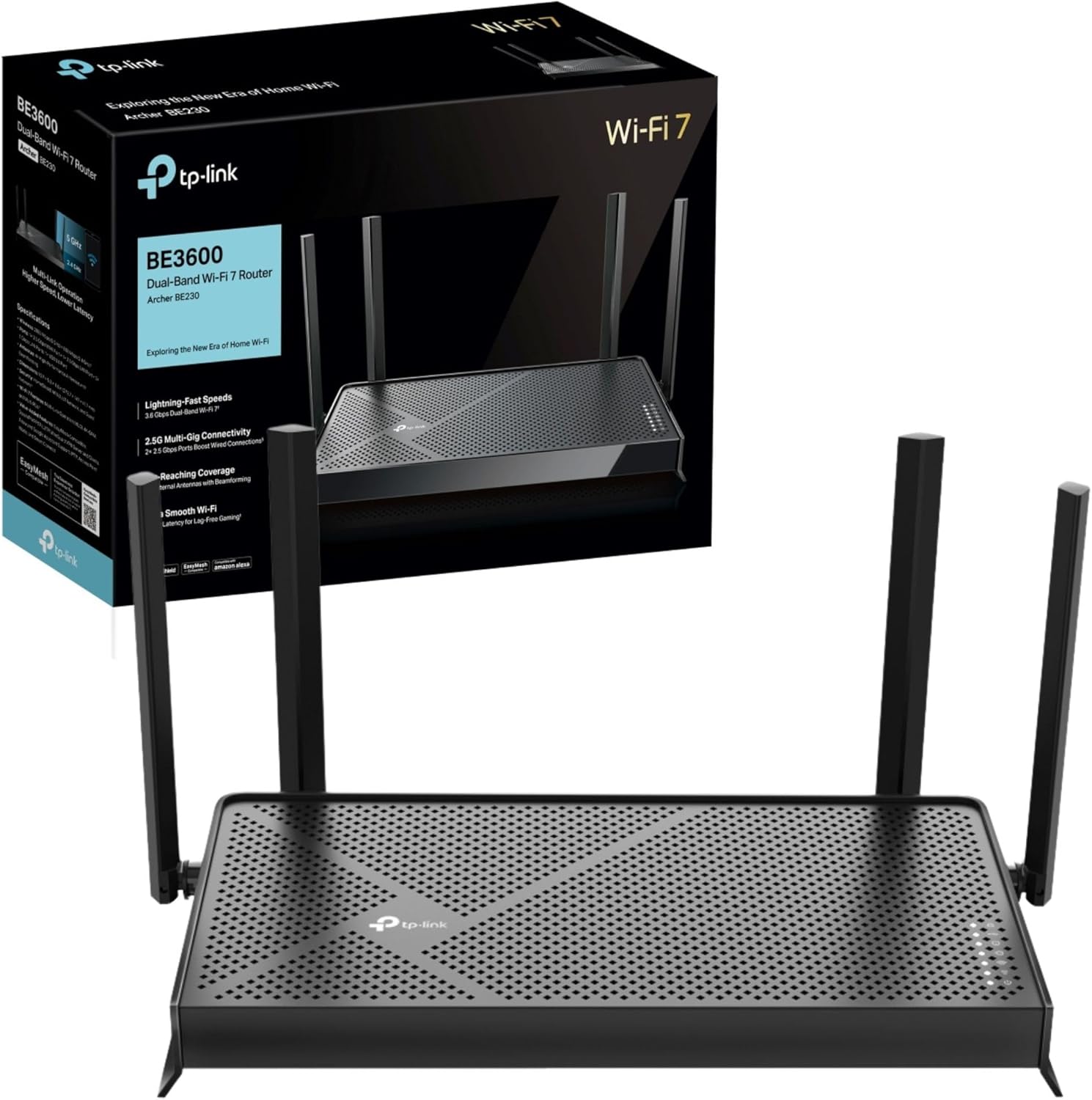
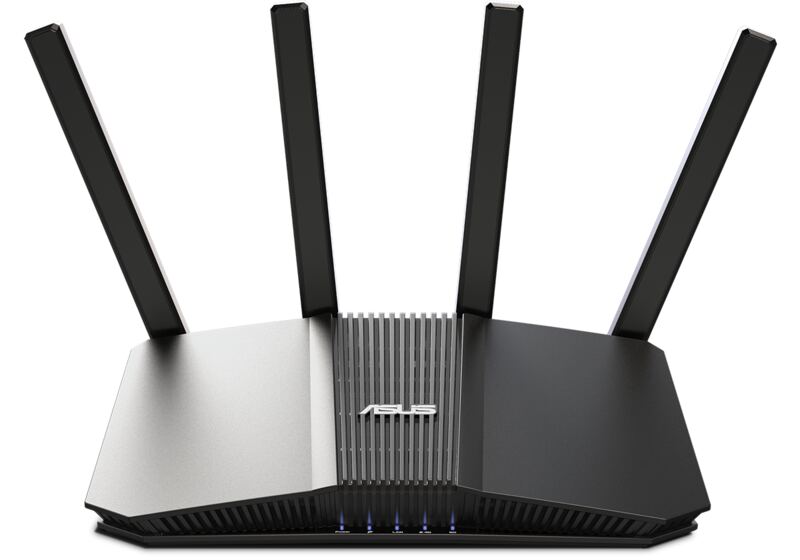
The TP-Link Archer BE230 features a utilitarian design that prioritizes function over form, according to BroadbandNow's review. The router measures 10.7 × 5.8 × 1.6 inches and weighs 550 grams, with glossy plastic construction that gathers fingerprints easily. DigitalCitizen noted that while the design is 'boring' and won't win beauty contests, it's functional and well-built for its price point. The device includes four external antennas, a 2.5 Gbps WAN port, one 2.5 Gbps LAN port, three 1 Gbps LAN ports, and a USB 3.0 port. HighSpeedInternet's Kevin Parrish emphasized that despite its unassuming appearance, the BE230 is 'cramped with more goodies than Santas toy sack,' including built-in VPN tools and EasyMesh support. The router runs on a Broadcom BCM6764L 2.0GHz quad-core processor with 512MB RAM and 128MB flash storage, which TechGearLab's Jonathan Sayers noted is sufficient for managing multiple devices without noticeable slowdowns. However, TechRadar's review highlighted that the packaging was 'frustrating' and that the design is 'bulky with visible antennas,' which may not appeal to users seeking a sleeker aesthetic.

What Reviewers Loved

Reviewers consistently praised the TP-Link Archer BE230 for its strong 2.4 GHz performance and value proposition. DigitalCitizen's Ciprian Adrian Rusen highlighted that it 'can use 2.5 Gbps internet connections' and that 'EasyMesh allows you to extend your network with devices from other brands,' which he considers a major plus. PCMag's John R. Delaney appreciated the 'fast USB 3.0 port' and the 'easy-to-use mobile app for remote administration,' while BroadbandNow's Hanna Shemke noted its 'fast and simple setup' and 'user-friendly app experience.' TechGearLab's Jonathan Sayers emphasized the router's 'advanced WiFi 7 features' and 'very strong 2.4 GHz throughput,' calling it a 'compelling budget model' that offers 'cutting-edge utility' at an affordable price. HighSpeedInternet's Kevin Parrish also praised the 'built-in VPN tools' and 'multiple Wi-Fi networks' as standout features, particularly for users looking to upgrade without spending a fortune. The inclusion of 'EasyMesh support' was widely appreciated for enabling network expansion without vendor lock-in, a feature that sets it apart from many budget routers in its class.

Where It Falls Short

Despite its strengths, several reviewers identified significant drawbacks. TechGearLab's Jonathan Sayers pointed out that while the BE230 excels at close-range performance, it suffers from 'limited 5 GHz range' and 'weak multi-user support at long range,' with throughput dropping dramatically from 993 Mbps at 10 feet to just 198 Mbps at 60 feet. DigitalCitizen's Ciprian Adrian Rusen noted that 'parental controls and advanced security tools require a subscription' and that the router 'lacks a third 6 GHz band,' which are notable limitations for users seeking full Wi-Fi 7 capabilities. HighSpeedInternet's Kevin Parrish also mentioned that the router 'doesn't support 10Gbps wired connections' and that its 'subscription-locked features' increase overall costs. BroadbandNow's Hanna Shemke criticized the 'frustrating packaging' and 'bulky design with visible antennas,' which she felt were not ideal for users who prioritize aesthetics. Additionally, RTINGS found that while the router performs well in controlled environments, it may struggle in real-world settings with multiple obstructions, suggesting that its performance degrades significantly in more complex home layouts.

Who It's Best For

The TP-Link Archer BE230 is best suited for users with one-floor homes or apartments with up to three bedrooms, according to DigitalCitizen's Ciprian Adrian Rusen. It's ideal for those with internet connections of 1 Gbps or 2.5 Gbps, as noted by HighSpeedInternet's Kevin Parrish, and for users who want to extend their network using other EasyMesh-compatible devices. BroadbandNow's Hanna Shemke recommended it for 'smaller homes and apartments' and for users ready to 'step into Wi-Fi 7 without overspending.' The router is also a strong choice for those who need 'fast USB 3.0 port for shared network storage' and 'easy-to-use mobile app for remote administration,' as highlighted by PCMag's John R. Delaney. However, it's not recommended for users with large homes or those requiring 10Gbps wired connections, as noted by HighSpeedInternet and TechGearLab. Users looking for a router that supports 10Gbps or more should consider higher-end models, while those wanting full Wi-Fi 7 features, including a third 6 GHz band, may find the BE230 lacking.

How It Compares to Alternatives

When compared to other budget routers, the TP-Link Archer BE230 stands out for its performance and feature set, though it's not without trade-offs. RTINGS found that while it offers strong 5 GHz throughput of 2,882Mbps, it falls short of premium models like the NETGEAR Nighthawk RS700S, which supports 12 devices simultaneously and includes a third 6 GHz band. However, the Archer BE230 is significantly more affordable, priced at under $100, making it a compelling value for users who don't need the extra features of high-end routers. TechGearLab's Jonathan Sayers noted that while the BE230's performance at close range is 'great enough to appeal to even the most discerning power users,' its signal strength drops significantly at longer distances. BroadbandNow's Hanna Shemke emphasized that the BE230 is 'an easy win for everyday Wi-Fi 7 performance' but lacks the 'complexity or price' of flagship systems. In contrast, the ASUS ROG Strix GS-BE18000 and TP-Link Deco BE65 Pro offer more advanced features and better long-range performance, but at a significantly higher cost. The Archer BE230's main advantage lies in its balance of affordability and cutting-edge features, making it a strong contender for budget-conscious consumers seeking Wi-Fi 7 capabilities.

Value at This Price

At under $100, the TP-Link Archer BE230 offers exceptional value for budget-conscious consumers seeking Wi-Fi 7 capabilities, according to multiple reviewers. DigitalCitizen's Ciprian Adrian Rusen called it 'one of the best choices you can make' for those looking for a capable router that doesn't cost a lot, while HighSpeedInternet's Kevin Parrish described it as 'a bargain' with speeds exceeding 1 Gbps on the 5 GHz band. TechGearLab's Jonathan Sayers noted that despite being a budget model, the BE230 'strikes just the right balance between affordability and cutting-edge utility' and 'gives you access to Multi-Link Operation features and strong throughput similar to what you'd see in a router that costs twice as much.' BroadbandNow's Hanna Shemke praised its 'refreshingly simple' setup and 'strong performance under pressure,' calling it a 'standout value' for anyone ready to step into Wi-Fi 7 without overspending. However, PCMag's John R. Delaney pointed out that the router's 'subscription-locked features' and lack of a third 6 GHz band may increase long-term costs, suggesting that while it's a great value now, future upgrades could add to the overall expense. The BE230's value is particularly evident when compared to premium routers like the ASUS ROG Strix GS-BE18000, which costs significantly more but offers better long-range performance and more advanced features.

Long-Term Durability

While specific long-term durability data is limited, reviewers have noted that the TP-Link Archer BE230's hardware is solid for a budget router. DigitalCitizen's Ciprian Adrian Rusen mentioned that the router is 'powered by a Broadcom BCM6764L 2.0GHz quad-core processor, has 512MB RAM, and 128MB flash storage,' which he considers sufficient for managing multiple devices without noticeable slowdowns. BroadbandNow's Hanna Shemke noted that the router 'feels built for performance first and aesthetics second,' suggesting it's designed to withstand regular use in a typical home environment. However, the glossy plastic construction, which gathers fingerprints easily, may be a concern for users who prioritize aesthetics over functionality. TechGearLab's Jonathan Sayers also pointed out that while the router performs well in testing, its 'signal struggles to retain its strength through walls and other obstructions,' which could impact long-term satisfaction in homes with complex layouts. The router's reliance on a subscription for some advanced features, such as parental controls and security tools, may also affect its long-term appeal, as users may need to pay ongoing fees to maintain full functionality. Overall, the BE230 is built to last in terms of hardware, but its performance may degrade in more challenging environments over time.

Strengths

  • +Supports 2.5 Gbps internet connections
  • +EasyMesh enables network extension with devices from other brands
  • +Good performance on the 5 GHz band
  • +Fast USB 3.0 port for shared network storage

Watch-outs

  • Parental controls and advanced security tools require a paid HomeShield subscription
  • Lacks a third 6 GHz band

How it compares

The TP-Link Archer BE230 offers a budget-friendly Wi-Fi 7 experience with 2.5Gbps connectivity and USB 3.0 support, but it's outpaced by the ASUS RT-BE92U in 2.4GHz performance and lacks the tri-band support of the ASUS model. Unlike the TP-Link Archer BE550, it doesn't feature 6GHz band support, limiting its appeal for users wanting full Wi-Fi 7 capabilities.

Who this is for

At a glance: budget-conscious consumers seeking Wi-Fi 7.

Why you’d buy the TP-Link Archer BE230

  • Supports 2.5 Gbps internet connections.
  • EasyMesh enables network extension with devices from other brands.
  • Good performance on the 5 GHz band.

Why you’d skip it

  • Parental controls and advanced security tools require a paid HomeShield subscription.
  • Lacks a third 6 GHz band.

Rating sources

Our 4.2 score is the average of these published ratings. More about methodology.
Frequently asked questions

Is the TP-Link Archer BE230 worth buying?
The TP-Link Archer BE230 is an affordable Wi-Fi 7 router priced under $100, offering solid performance for single-floor homes and apartments. PCMag's John R. Delaney praised its support for 2.5 Gbps connections and EasyMesh compatibility, while Ciprian Adrian Rusen noted its good 5 GHz performance and fast USB 3.0 port. However, both reviewers pointed out that parental controls and security features require paid subscriptions, and the lack of a third 6 GHz band limits its appeal for power users. This router is best suited for budget-conscious consumers seeking future-proof Wi-Fi 7 connectivity without the complexity of multi-story home networking.
What is the TP-Link Archer BE230's biggest strength?
Supports 2.5 Gbps internet connections
What is the main drawback of the TP-Link Archer BE230?
Parental controls and advanced security tools require a paid HomeShield subscription
What sources back the 4.2/5 rating?
Our 4.2/5 rating is the average of scores from 5 independent wifi 7 routers reviews — pcmag, highspeedinternet, broadbandnow, techgearlab, and dongknows. Click any source on the product page to read the original review.

How it compares

See all 7
TP-Link Archer BE550
#1 · Top Score

TP-Link Archer BE550

The TP-Link Archer BE550 stands out as an affordable Wi-Fi 7 option with full 6GHz support, but it lags behind the ASUS RT-BE92U in 2.4GHz performance and lacks the compact design of the ASUS model. Unlike the ASUS ROG Rapture GT-BE98 Pro, it doesn't offer 10Gbps wired connectivity or mesh networking capabilities, making it less suitable for high-demand environments.

ASUS RT-BE58U
#2

ASUS RT-BE58U

The ASUS RT-BE58U offers excellent value with strong multi-device performance and 5GHz speeds, but it's missing the 6GHz band that the TP-Link Archer BE550 and ASUS RT-BE92U provide. Compared to the ASUS RT-BE96U, it lacks 10Gbps wired connectivity and dual WAN support, making it less suitable for high-demand applications.

ASUS RT-BE92U
#3

ASUS RT-BE92U

The ASUS RT-BE92U offers tri-band Wi-Fi 7 with a compact vertical design and 10Gbps port, surpassing the TP-Link Archer BE550 in 2.4GHz performance and the ASUS RT-BE58U in bandwidth. Unlike the ASUS RT-BE96U, it's more affordable but lacks dual WAN support, making it a good middle-ground option for users seeking Wi-Fi 7 without premium features.

Netgear Nighthawk RS700S
#5

Netgear Nighthawk RS700S

The Netgear Nighthawk RS700S delivers the highest theoretical combined speed at 19Gbps, outperforming the ASUS RT-BE92U and TP-Link Archer BE550 in bandwidth. However, it's bulkier than the ASUS RT-BE92U and lacks the gaming-specific features of the TP-Link Archer GE800, making it less ideal for users who prioritize gaming or compact design.

TP-Link Archer BE230
4.2/5· $87
Check Price on Amazon