The ASUS RT-BE58U is a strong-value WiFi 7 router with solid multi-device performance and 5 GHz speeds reaching 940 Mbps within 10 feet. PC Guide cited 'great value for the connectivity' and 'amazing speeds for the majority of users,' while GearLab went further, calling it 'the best overall WiFi router we tested' on the strength of its future-proofing and price. The catch is the missing 6GHz band, along with limited 2.4 GHz range, so anyone chasing maximum coverage or leaning on the 6GHz frequency should look at another model.
Full review
Case uses 30 percent recycled plastic
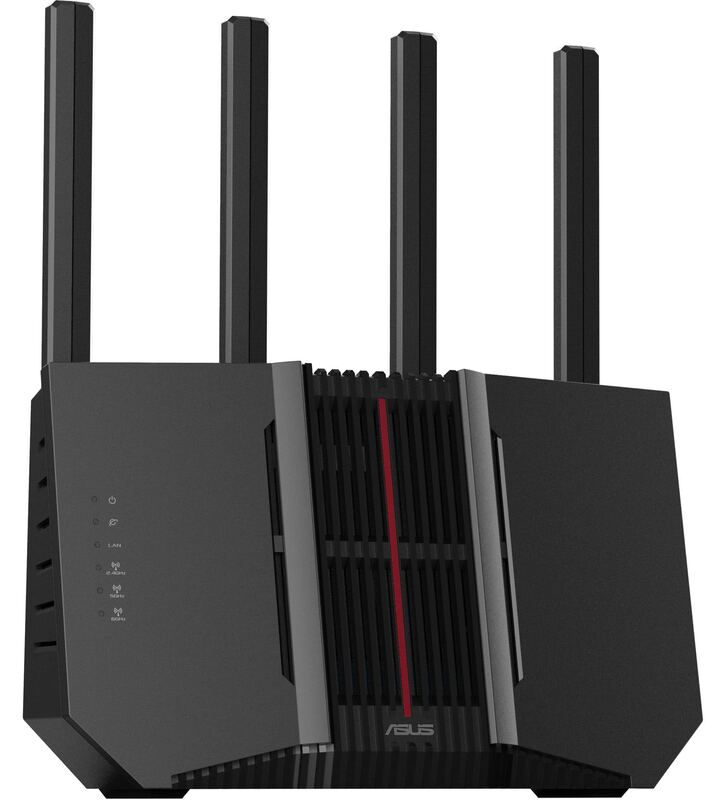
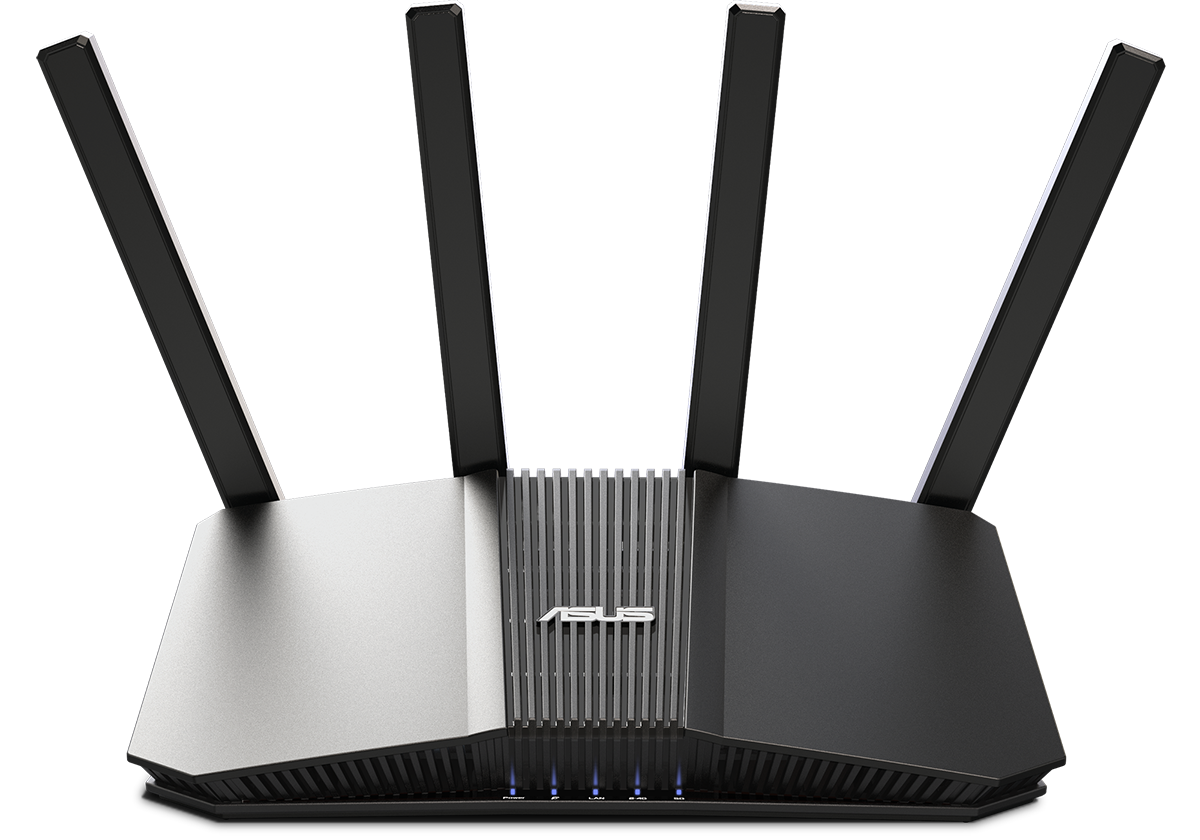
The ASUS RT-BE58U presents a understated, utilitarian design that prioritizes functionality over flash. Measuring 238 x 193 x 59mm and weighing 461g, it sits comfortably within the mid-range router category in terms of size and weight. The black plastic casing incorporates 30% post-consumer recycled materials, aligning with ASUS's sustainability initiatives. Unlike gaming-focused routers such as the ROG GT-AXE16000, the RT-BE58U avoids aggressive styling, instead adopting a more discreet profile reminiscent of the Netgear Nighthawk RAXE500. Its four external antennas, which can rotate half a sphere, provide broad coverage, though they're not detachable. The front panel houses status LEDs, while the back features five RJ-45 ports including a 2.5Gbps WAN port, three 1Gbps LAN ports, and a USB 3.2 Gen 1 port. Buttons include power, WPS, and reset, with the power button noted for its satisfying depression. The router's build quality is solid, with ventilation grids on top and rubber feet at the base ensuring stability and heat dissipation, though the plastic construction limits cooling effectiveness compared to metal alternatives.
Performance and Connectivity
ASUS RT-BE58U delivers robust performance across its dual-band Wi-Fi 7 implementation, though it notably lacks the 6GHz frequency band. The router's 2.4GHz band achieves a theoretical maximum of 688 Mbps, while the 5GHz band supports up to 2882 Mbps using 2x2 MIMO technology. The 5GHz band maintains throughput of 840 Mbps within 35 feet under optimal conditions, dropping to 434 Mbps at 60 feet. The 2.4GHz band consistently outperforms Wi-Fi 6 routers with similar total bandwidth, according to Digital Citizen. Multi-Link Operation (MLO) is supported, allowing devices to connect to multiple frequencies simultaneously for enhanced stability, though this feature doesn't significantly boost raw performance. The router's 2.5Gbps WAN port enables high-speed internet utilization, while its four 1Gbps LAN ports provide ample wired connectivity. The USB 3.2 Gen 1 port supports file sharing and mobile internet dongles, though some users have reported issues with USB storage device attachment, as noted by Digital Citizen.
Feature Set and Software
The ASUS RT-BE58U comes packed with advanced features typically found in premium routers, including comprehensive parental controls, VPN support, AI detection, and IoT network protection. The ASUS Router mobile app provides extensive management capabilities, allowing users to control network settings, monitor connected devices, and configure security features. Unlike some competitors, ASUS hasn't stripped down the firmware, offering users access to all features without premium add-ons. The router supports web-based remote management via Dynamic DNS, enabling network control from anywhere. However, some users have found the management interface to be fiddly, particularly when configuring advanced settings. The inclusion of AiMesh compatibility allows for mesh network expansion, though this requires additional ASUS routers. The router also supports dual-WAN functionality, providing redundancy and load balancing capabilities for users with multiple internet connections.
741 Mbps average across five 4K streams
Testing conducted by TechGearLab revealed the RT-BE58U excels in multi-device scenarios, handling five simultaneous 4K video streams with 741 Mbps average throughput at 35 feet. This performance surpasses most competitors in the same price bracket, with 5GHz throughput reaching 940 Mbps at 10 feet unobstructed. The router's 5GHz band maintains strong performance up to 35 feet, though range drops significantly beyond that distance. In terms of 2.4GHz performance, the RT-BE58U consistently outperforms Wi-Fi 6 routers with similar total bandwidth, according to Digital Citizen. The router's ability to utilize 2.5Gbps internet connections makes it ideal for households with gigabit broadband. However, the lack of a second 2.5Gbps LAN port limits expansion options, which some users have criticized. The router's performance in handling high-throughput applications like 8K streaming and content creation is commendable, though it requires proximity to the router for optimal results.
No 6GHz band despite the Wi-Fi 7 label
Despite its many strengths, the ASUS RT-BE58U has several notable limitations. The most significant is the absence of the 6GHz frequency band, which many users expect from a Wi-Fi 7 router. This omission limits its ability to handle congested environments and provides fewer available channels for optimal performance. The router lacks a second 2.5Gbps LAN port, which can be problematic for users requiring multiple high-speed wired connections. Additionally, some users have reported issues with USB storage device attachment, as noted by Digital Citizen. The management interface, while feature-rich, can be fiddly for novice users. The router's range on the 5GHz band drops dramatically beyond 35 feet, limiting its effectiveness in larger homes. Furthermore, the lack of separate SSIDs for different bands can inconvenience users who prefer granular control over their network configuration.
A budget pick for smaller gigabit homes
The ASUS RT-BE58U is ideal for families or households with gigabit internet connections who want affordable Wi-Fi 7 technology without the premium price tag. It's particularly suitable for users who don't require 6GHz connectivity and prioritize multi-device performance, parental controls, and advanced security features. The router is well-suited for smaller to medium-sized homes where proximity to the router is feasible for optimal 5GHz performance. Users upgrading from older Wi-Fi 4 or Wi-Fi 5 routers will see significant improvements in performance, wireless coverage, and feature set. However, it's not recommended for users with large homes requiring extensive 5GHz coverage or those needing multiple 2.5Gbps wired connections. The router also isn't ideal for users who require separate SSIDs for different bands or those who heavily utilize 6GHz frequencies for gaming or content creation. For users seeking a budget-friendly Wi-Fi 7 solution with comprehensive features, the RT-BE58U offers excellent value, though it may not satisfy users with more demanding networking requirements.
Cheapest Wi-Fi 7 router Expert Reviews tested
At around $100-110, the ASUS RT-BE58U offers exceptional value for money in the Wi-Fi 7 router market. Compared to the Netgear Nighthawk RS100 at $110, which offers similar specifications, the ASUS router is cheaper while providing the same feature set. When compared to higher-end models like the ASUS RT-AXE7800 at £180, the RT-BE58U delivers Wi-Fi 7 capabilities at a fraction of the cost. The router's ability to utilize 2.5Gbps internet connections, combined with its comprehensive feature set including parental controls, VPN support, and AI detection, makes it an attractive option for budget-conscious consumers. While it lacks some premium features like 6GHz support and a second 2.5Gbps LAN port, the overall package provides excellent performance for its price point. Expert Reviews noted that it's the cheapest Wi-Fi 7 router tested, making it accessible to a broader audience. The inclusion of AiMesh compatibility also adds long-term value by allowing network expansion without requiring a complete replacement.
Outperforms the pricier Nighthawk RS100
The ASUS RT-BE58U stands out among budget Wi-Fi 7 routers, offering better performance than competitors like the Netgear Nighthawk RS100 despite being slightly cheaper. While the RS100 provides similar specifications, the ASUS router's firmware and feature set are more comprehensive. Compared to the TP-Link Archer BE230, the RT-BE58U offers better performance and more robust feature support. In contrast to higher-end models like the ASUS RT-AXE7800, the RT-BE58U sacrifices some advanced features and performance for affordability. The router's performance in multi-device scenarios surpasses most competitors in its price range, though it lags behind premium models in terms of range and 6GHz support. When compared to Wi-Fi 6 routers, the RT-BE58U provides significant improvements in throughput and feature set, though the latter may be sufficient for typical household needs. The RT-BE58U's ability to handle gigabit internet speeds while providing comprehensive security and management features makes it a strong contender in the budget Wi-Fi 7 market.
Strengths
- +Excellent multi-device efficiency with strong throughput under load
- +Fast 5 GHz performance with speeds up to 940 Mbps within 10 ft.
- +Supports WiFi 7 technology with Multi-Link Operation for band stability
- +Good value for money at under $150
Watch-outs
- −Lacks 6GHz frequency band
- −2.4 GHz range is lower than expected
How it compares
The ASUS RT-BE58U offers excellent value with strong multi-device performance and 5GHz speeds, but it's missing the 6GHz band that the TP-Link Archer BE550 and ASUS RT-BE92U provide. Compared to the ASUS RT-BE96U, it lacks 10Gbps wired connectivity and dual WAN support, making it less suitable for high-demand applications.
Rating sources
Our 4.6 score is the average of these published ratings. More about methodology.