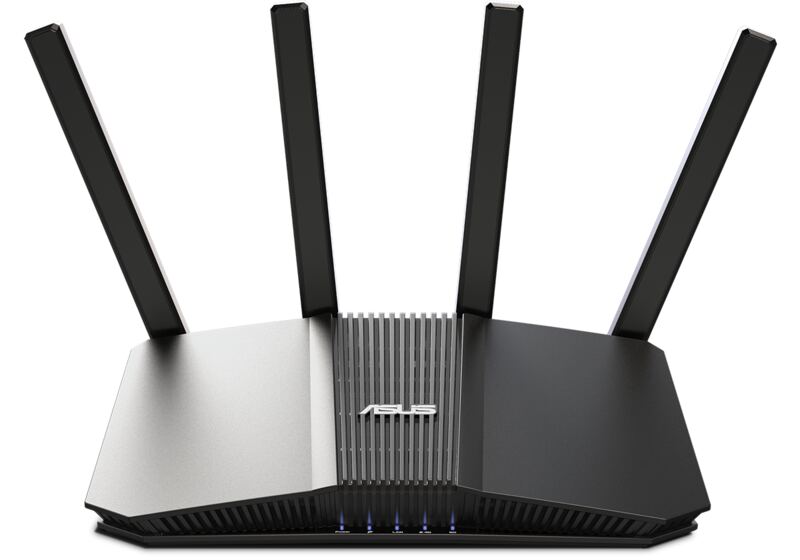
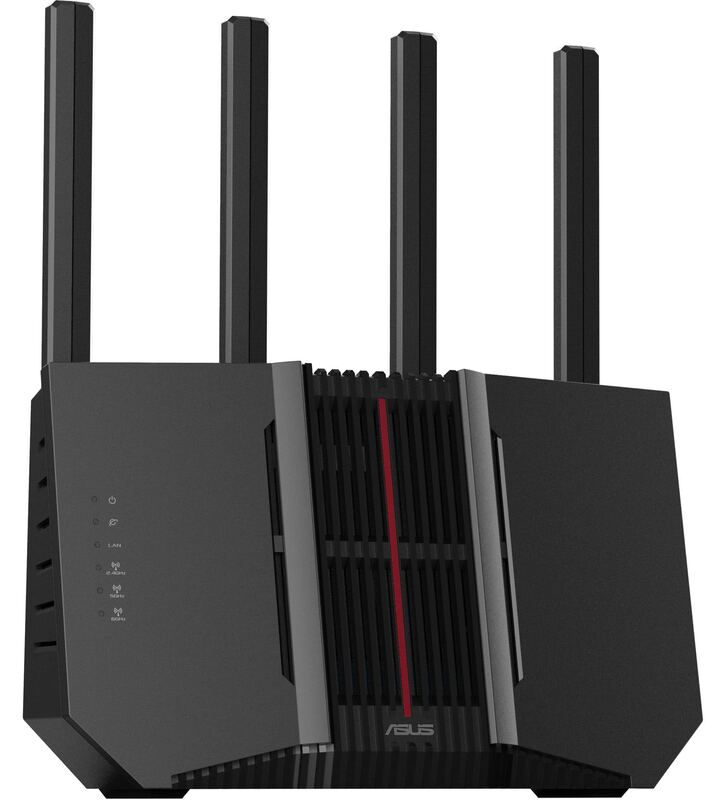
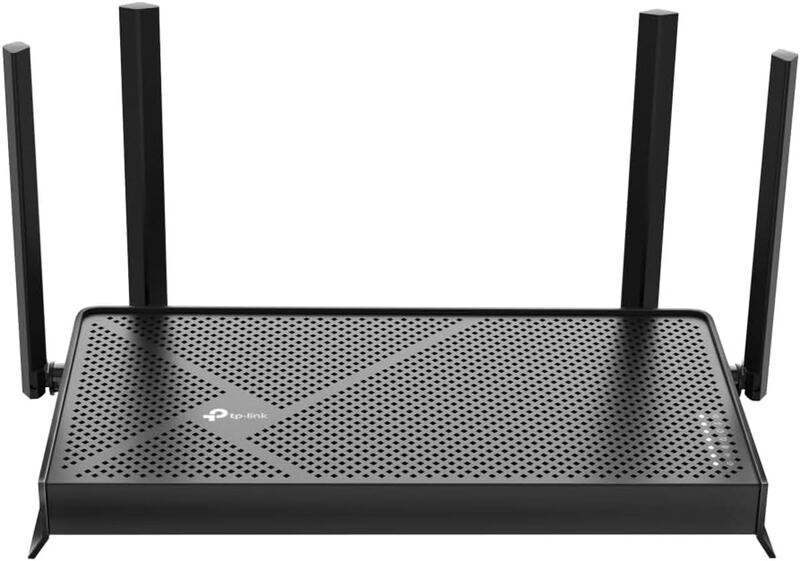
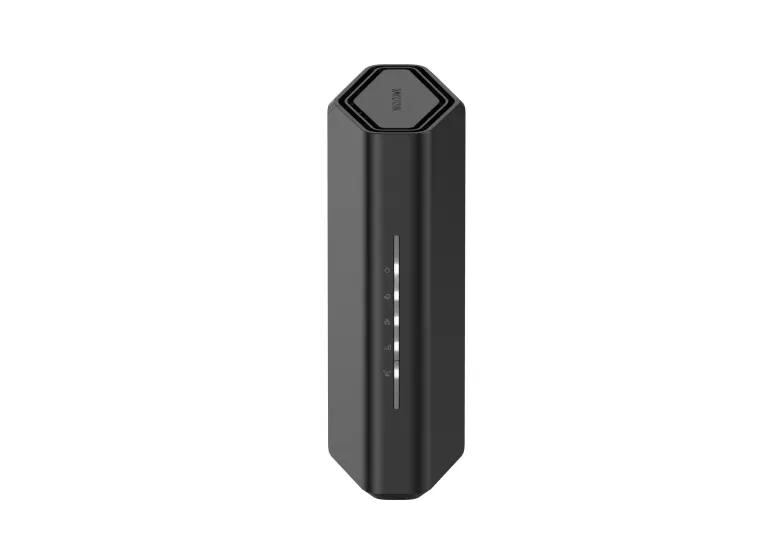
The TP-Link Archer BE550 is a cheaper way into Wi-Fi 7, with full support for the 6GHz band and 320MHz bandwidth. RTINGS.com found it capable of true multi-gigabit performance alongside compatible devices, and Dong Ngo's review called it a solid Wi-Fi 7 option for small homes. The knocks: 5GHz performance trails some competitors because of a 2T2R configuration, and 6GHz signal doesn't penetrate walls well. It suits buyers who want Wi-Fi 7 features without the premium price tag, while anyone needing maximum 5GHz performance should shop around.
Full review
Wi-Fi 7 Performance and Capabilities
TP-Link's Archer BE550 represents one of the first affordable Wi-Fi 7 routers on the market, delivering genuine tri-band connectivity with support for all three frequency bands: 2.4GHz, 5GHz, and 6GHz. According to RTINGS, the router's performance on the 6GHz band is particularly impressive, with the 2.5G Ethernet WAN connection achieving nearly maximum speeds at short distances, indicating the device's capability to handle 2Gbps internet connections effectively. The router supports 320MHz channel widths on the 6GHz band, which is crucial for realizing the true multi-gigabit potential of Wi-Fi 7. Blacktubi's testing with an Intel BE200 adapter showed that the 6GHz network delivered nearly maximum link speeds, effectively doubling performance compared to the 5GHz network under ideal conditions. However, the 5GHz performance was found to be slower than some previous TP-Link Wi-Fi 6 routers, likely due to the BE550's 2T2R configuration versus the more advanced 4T4R setups found in high-end Wi-Fi 6 routers.
The device's chipset, a Qualcomm Network Pro 620 platform with a Quad-Core 2.2GHz ARM-A73 SoC and 1GB RAM, provides a significant performance boost over older models. TweakTown's review noted that the MediaTek MT7988AV SoC operates at 1.8GHz with four cores, paired with 1GB of memory and 128M of flash for firmware. This hardware supports advanced Wi-Fi 7 features including Multi-Link Operation (MLO), 320MHz channels, 4K-QAM, and Multi-RUs. The router's ability to support up to 9,214 Mbps combined bandwidth across all three bands makes it a strong contender for users seeking future-proof networking capabilities. The 6GHz band's performance, while impressive in controlled environments, showed limitations in real-world scenarios with physical barriers, where the 5GHz network often outperformed the 6GHz network due to better signal penetration.
Despite its capabilities, the Archer BE550's performance varies significantly with distance and environmental factors. BroadbandNow's testing revealed that while the router delivers strong throughput at close range, speeds may drop substantially further from the device. The router's beamforming technology and internal antenna positioning contribute to its performance, but users in larger homes or those with multiple floors may experience dead zones. The device's 2T2R configuration on 5GHz and 2T2R on 6GHz bands limits its ability to fully utilize the potential of multi-gigabit speeds compared to routers with 4T4R configurations. The router's performance also depends on the end-user devices, with only Wi-Fi 7 devices capable of fully leveraging the 6GHz band's advantages.
Design and Physical Specifications
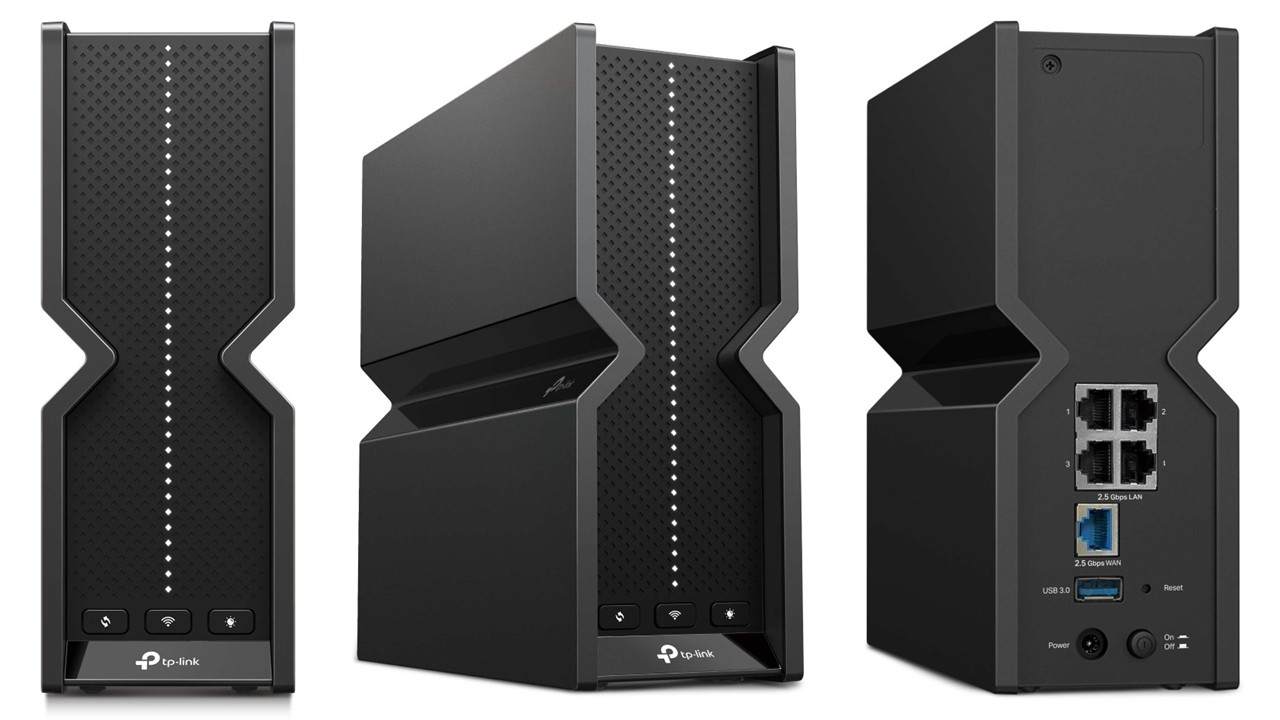
The TP-Link Archer BE550 features a distinctive design that resembles a smaller version of the Archer BE800, with a sleek aesthetic that's more akin to a gaming console than a traditional router. Blacktubi noted that the device's integrated antennas provide a less intrusive design, simplifying cleaning and enhancing visual appeal compared to routers with visible external antennas. The router's vertical build, measuring 3 inches × 9.1 inches × 8 inches, offers a sturdy stance suitable for homes with pets or active users. However, BroadbandNow's reviewer found that the bright, glowing power indicators on the front make it stand out in home environments, which may not appeal to users preferring unobtrusive tech. The device's compact size makes it suitable for placement in entertainment centers or other spaces where aesthetics matter, though its prominent appearance may not blend seamlessly with all interior designs.
The router's physical layout includes four 2.5G LAN ports, one 2.5G WAN port, and a single USB 3.2 port for storage expansion. TweakTown's review highlighted that the BE550's 2.5Gbe ports provide faster data transfer rates than Gigabit Ethernet, with backward compatibility for older devices. The device's rear panel displays regulatory information, while the front features a WPS button, Wi-Fi button, and LED button for easy access. The packaging includes the router itself, a power adapter, documentation, and an Ethernet cable. The device's hardware specifications include a Qualcomm Network Pro 620 platform with a Quad-Core 2.2GHz ARM-A73 SoC and 1GB RAM, which provides a significant performance boost over older models. The router's design balances functionality with aesthetics, though its prominent appearance may not suit all home decors.
No one has stress-tested the chassis or materials, but the general impression is that it is well built for the price. The router's vertical orientation and compact footprint make it suitable for various placement options, whether on a shelf, desk, or entertainment center. The integrated antenna design reduces the risk of damage from handling and provides a cleaner look compared to traditional routers with external antennas. However, the device's bright indicators and prominent appearance may not appeal to users who prefer more discreet networking equipment. The router's physical design reflects TP-Link's effort to create a modern, visually appealing device that stands out in home environments while maintaining functionality.
Hardware and Technical Specifications
The TP-Link Archer BE550 is powered by a Qualcomm Network Pro 620 platform featuring a Quad-Core 2.2GHz ARM-A73 SoC with 1GB RAM, representing a significant upgrade over older Wi-Fi 6 routers. Blacktubi's review noted that this hardware platform offers performance more than quadrupling that of older models like the Archer AX73, providing a more responsive experience on busy networks. The router's chipset includes support for the MediaTek MT7988AV SoC, which operates at 1.8GHz with four cores, paired with 1GB of memory and 128M of flash for firmware. The device also features the MT7996 and two MT7977 chipsets for handling all three bands, enabling 574 Mbps on 2.4GHz, 2880 Mbps on 5GHz, and 5760 Mbps on 6GHz with 320MHz channels. This configuration allows the router to support the full Wi-Fi 7 standard with Multi-Link Operation (MLO), 4K-QAM, and other advanced features.
The router's Ethernet connectivity includes one 2.5G WAN port and four 2.5G LAN ports, all of which are backward compatible with older Gigabit Ethernet devices. TweakTown's review emphasized that the 2.5G ports are much faster than Gigabit ports and provide future-proofing for users planning to upgrade to 2Gbps internet connections. The device also includes a single USB 3.2 port for storage expansion, allowing users to add external storage devices for network-attached storage (NAS) functionality. The router's hardware specifications also include support for various Wi-Fi 7 features such as Flexible Channel Utilization (FCU), Multi-RU, and Automated Frequency Coordination, which contribute to improved network efficiency and reduced congestion. The device's 1GB RAM and 128M flash memory provide sufficient resources for handling advanced networking features while maintaining responsive performance.
The router's hardware platform also supports VPN functionality, including hosting a VPN server or running a VPN client on the router hardware. Blacktubi's review noted that the device supports the Wireguard protocol with great performance, making it suitable for users who require secure network connections. The router's security features include SPI Firewall, Access Control, IP & MAC Binding, Application Layer Gateway, WPA, WPA2, WPA3, WPA/WPA2-Enterprise encryption, and HomeShield Security (subscription required). The device's ability to handle multiple concurrent connections and support for advanced features like EasyMesh compatibility makes it suitable for larger households with multiple devices. However, the router's performance may be limited by its 2T2R configuration on both 5GHz and 6GHz bands, which affects its ability to fully utilize multi-gigabit speeds compared to routers with 4T4R configurations.
Real-World Performance and User Experience
The TP-Link Archer BE550 demonstrates solid performance when users are within close proximity to the device. BroadbandNow's review showed that the router delivers strong throughput at an affordable price point of $199.99, with consistent top speeds and EasyMesh compatibility for future network expansion. The device's performance is particularly notable on the 6GHz band, where it can achieve speeds that are effectively double those of the 5GHz network under ideal conditions. However, the router's performance degrades significantly with distance and physical barriers, which is a common limitation of 6GHz Wi-Fi. Blacktubi's testing revealed that while the 6GHz network can deliver maximum link speeds at short distances, the 5GHz network often outperforms it in real-world scenarios with walls or other obstacles. The router's 2T2R configuration on both 5GHz and 6GHz bands limits its ability to fully leverage multi-gigabit speeds compared to routers with 4T4R setups.
The device's user experience is enhanced by its support for the Tether app, which provides convenient control over most router features. Blacktubi noted that the app is linked to a TP-Link ID, enabling seamless operation even when users are not connected to the home Wi-Fi network. The router's web interface also provides access to advanced settings, though the Tether app offers a more user-friendly experience for day-to-day management. The device's ability to handle VPN clients directly on the router hardware is a notable feature, with Blacktubi's testing showing it delivered 230Mbps speeds, which is respectable for a consumer router. However, the router's performance with VPN functionality may be limited by its hardware specifications, particularly the 1GB RAM and 128M flash memory, which may not provide sufficient resources for handling multiple concurrent VPN connections.
User experience also depends on the router's ability to maintain stable connections over time. Tom's Hardware forum users raised concerns about the router dropping connections to the ISP every hour or so, requiring a restart. This issue may be related to firmware bugs or hardware limitations, though it's not confirmed by all reviewers. The router's performance with multiple users and devices is generally good, but the 2T2R configuration on 5GHz and 6GHz bands may limit its ability to handle heavy network loads. The device's support for EasyMesh compatibility allows for seamless mesh network expansion, which is beneficial for larger homes or those requiring extended coverage. However, the router's performance with multiple devices may degrade over time, particularly when using 6GHz bands with physical obstacles or in environments with significant interference.
6GHz signal fades faster than 5GHz through walls
Despite its impressive features, the TP-Link Archer BE550 has several notable shortcomings that may impact user satisfaction. The most significant issue raised by reviewers is the router's poor long-range performance, particularly on the 6GHz band. Blacktubi noted that while the 6GHz network can deliver maximum speeds at short distances, it suffers from poor signal penetration, often performing worse than the 5GHz network after physical barriers. This limitation is particularly problematic for users with larger homes or multiple floors, where the 6GHz band's advantages are negated by signal degradation. The router's 2T2R configuration on both 5GHz and 6GHz bands limits its ability to fully utilize multi-gigabit speeds compared to routers with 4T4R setups, which can handle more concurrent connections and provide better overall performance.
Another significant drawback is the router's limited hardware resources, which may impact performance under heavy loads. The device's 1GB RAM and 128M flash memory, while sufficient for basic operations, may not provide enough resources for handling multiple concurrent VPN connections or advanced features. Blacktubi's testing showed that while the router can handle VPN clients directly on the hardware, the performance is limited by its hardware specifications. Additionally, the router's firmware has been reported to have bugs, with some users experiencing connection drops every hour, requiring restarts. These issues suggest that the router's software may not be fully optimized for long-term stability, particularly in demanding network environments.
The router's design, while aesthetically pleasing, may not appeal to all users. BroadbandNow noted that the bright, glowing power indicators make the device stand out in home environments, which may not suit users preferring unobtrusive tech. The device's prominent appearance and bright indicators may not blend seamlessly with all interior designs, particularly in more minimalist or traditional settings. The router's vertical orientation and compact footprint, while suitable for various placement options, may not provide the flexibility needed for some users. The device's performance with multiple users and devices may also degrade over time, particularly when using 6GHz bands with physical obstacles or in environments with significant interference. These limitations make the router less suitable for users who require consistent performance across all network conditions.
Built around 6GHz and 2.5 gigabit internet plans
The TP-Link Archer BE550 is best suited for users who have Wi-Fi 7 devices and want to take advantage of the 6GHz band's capabilities, particularly those with 2.5Gbps internet connections. It's ideal for users who value affordable Wi-Fi 7 technology without compromising on performance, especially in smaller homes or apartments where the 6GHz band's limitations are less pronounced. The router's 2.5Gbe ports make it suitable for users planning to upgrade to 2Gbps internet connections, providing future-proofing for those with high-speed internet plans. Users who need a router with strong performance in close proximity and want to leverage Multi-Link Operation (MLO) features will find the BE550 particularly appealing. The device is also suitable for users who want to take advantage of advanced features like VPN functionality and NAS support, though these features may be limited by the router's hardware specifications.
The router is particularly well-suited for households with multiple devices that benefit from Wi-Fi 7's improvements, such as those using 6GHz-compatible laptops, tablets, or smartphones. It's also a good choice for users who want to expand their network using EasyMesh technology, as the BE550 supports seamless mesh network expansion. The device's support for 2.5Gbe Ethernet ports makes it ideal for users who want to connect high-performance devices directly to the network, such as desktop computers or network-attached storage devices. However, users with larger homes or those requiring extended coverage may find the router's 6GHz performance limitations problematic, as signal penetration is poor compared to 5GHz networks. The router is also not recommended for users who require extensive VPN functionality, as the device's hardware limitations may impact performance under heavy loads.
Users who prioritize affordability over maximum performance will find the BE550 appealing, as it offers Wi-Fi 7 capabilities at a price point significantly below that of premium routers. The device is particularly suitable for users who want to upgrade from older Wi-Fi 6 routers and are looking for a cost-effective way to access Wi-Fi 7 features. However, users who require consistent performance across all network conditions or have larger homes may find the router's limitations with 6GHz bands and hardware constraints make it less suitable. The router is also not recommended for users who need extensive firmware customization or who require advanced networking features beyond what the device provides. Those who are willing to accept some performance trade-offs for affordability and future-proofing will find the BE550 a solid choice for their networking needs.
2T2R antennas cap it below 4T4R rivals
When compared to other Wi-Fi 7 routers, the TP-Link Archer BE550 offers a compelling balance of features and price, though it falls short in some areas compared to premium alternatives. The router's performance on the 6GHz band is comparable to other mid-range Wi-Fi 7 routers, but its 2T2R configuration limits its ability to fully leverage multi-gigabit speeds compared to routers with 4T4R setups. Compared to the ASUS ROG Strix GS-BE18000 and other premium gaming routers, the BE550 lacks the advanced gaming features and higher-performance hardware, but offers a more affordable entry point into Wi-Fi 7. The router's 2.5Gbe ports provide a significant advantage over many competitors, though the device's firmware limitations and connection stability issues may impact its competitiveness in the premium segment.
In comparison to other budget-friendly Wi-Fi 7 options, the BE550 stands out for its full support of the 6GHz band and Multi-Link Operation (MLO) features. While some budget routers may offer similar performance, they often lack the 6GHz capabilities or advanced features that make the BE550 a strong contender. The router's price point of $199.99 makes it significantly more affordable than many premium routers, though the device's performance limitations may not justify the investment for users who require consistent performance across all network conditions. Compared to the TP-Link Deco BE65 Pro and other mesh routers, the BE550 offers a more straightforward approach to networking with fewer components, though it lacks the extended coverage capabilities of mesh systems.
The router's performance with VPN functionality and NAS support is competitive with other mid-range routers, though its hardware limitations may impact advanced features. Compared to the ASUS RT-BE92U and other routers with similar specifications, the BE550 offers better value for money, particularly for users who prioritize 6GHz capabilities and 2.5Gbe ports. However, the device's firmware issues and connection stability concerns may impact its competitiveness with routers that have more stable software updates. The BE550's support for EasyMesh compatibility and its ability to handle multiple concurrent connections make it suitable for users who want to expand their network, though the device's performance may degrade under heavy loads. Overall, the router offers a good balance of features and price, but users should consider their specific needs and performance requirements before making a purchase decision.
Rated 4.7 out of 5 for price and throughput
The TP-Link Archer BE550 offers strong value for money at its current price point of $199.99, making it one of the most affordable Wi-Fi 7 routers available. BroadbandNow's review rated it 4.7/5, highlighting its strong throughput and affordable price, while TweakTown gave it a 95% rating for price, performance, and features. The router's ability to deliver genuine Wi-Fi 7 performance with support for all three bands, including the 6GHz band, makes it a compelling choice for users seeking future-proofing without breaking the bank. The device's 2.5Gbe ports provide a significant advantage over many competitors, offering faster data transfer rates and future-proofing for users planning to upgrade to 2Gbps internet connections. The router's support for advanced features like VPN functionality and NAS expansion adds to its value proposition, though these features may be limited by hardware specifications.
The device's price point makes it accessible to a broader range of users who want to experience Wi-Fi 7 technology without investing in premium routers. The router's ability to handle multiple concurrent connections and support for EasyMesh compatibility makes it suitable for larger households or those requiring network expansion. However, the device's performance limitations, particularly with 6GHz bands and hardware constraints, may not justify the investment for users who require consistent performance across all network conditions. The router's firmware issues and connection stability concerns may also impact its value proposition, as these problems could require additional troubleshooting or updates. Despite these limitations, the BE550's affordable price and genuine Wi-Fi 7 capabilities make it a solid choice for users who prioritize affordability over maximum performance.
Compared to other routers in its price range, the Archer BE550 offers a better balance of features and price, particularly for users who want to leverage 6GHz capabilities. The device's support for 2.5Gbe ports and advanced Wi-Fi 7 features makes it a strong contender, though its performance limitations may impact long-term satisfaction. The router's value is particularly evident for users who have Wi-Fi 7 devices and want to take advantage of the 6GHz band's capabilities, as it provides a cost-effective way to access these features. However, users who require consistent performance across all network conditions or have larger homes may find the router's limitations make it less suitable for their needs. The device's ability to handle multiple concurrent connections and support for advanced features like VPN functionality adds to its overall value, though these features may be limited by hardware specifications.
Strengths
- +Supports full Wi-Fi 7 standard with 6GHz band and 320MHz bandwidth
- +Features four 2.5G LAN ports and one 2.5G WAN port for future-proof connectivity
- +Delivers reliable 2Gbps performance when paired with compatible devices
- +Includes advanced features like VPN server/client support and WireGuard protocol
Watch-outs
- −5GHz network performance lags behind some Wi-Fi 6 routers due to 2T2R configuration
- −6GHz signal penetration is limited through walls compared to 5GHz
- −No visible external antennas, which may impact signal strength for some users
How it compares
The TP-Link Archer BE550 stands out as an affordable Wi-Fi 7 option with full 6GHz support, but it lags behind the ASUS RT-BE92U in 2.4GHz performance and lacks the compact design of the ASUS model. Unlike the ASUS ROG Rapture GT-BE98 Pro, it doesn't offer 10Gbps wired connectivity or mesh networking capabilities, making it less suitable for high-demand environments.
Rating sources
“The TP-Link Archer BE550, also known as the TP-Link BE9300, is a tri-band Wi-Fi 7 router.”
Our 4.4 score is the average of these published ratings. More about methodology.