Relying on powerful magnets rather than electronics or batteries, this tool detects nails and screws to locate studs behind drywall. Harmon Construction found it effective for hanging mirrors and mounting televisions by pinpointing fastener locations in wood or metal framing. Outdoor Life confirmed that magnetic detection remains consistent across various wall materials like OSB and paneling, provided metal fasteners are present. However, the device lacks built-in leveling features, requiring users to manually estimate plumb alignment when marking vertical lines after finding a stud. It is best suited for occasional DIYers who value durability over speed, while those needing precise layout tools or detection of non-metallic anchors should look elsewhere.
Full review
Magnetic detection replaces electronics
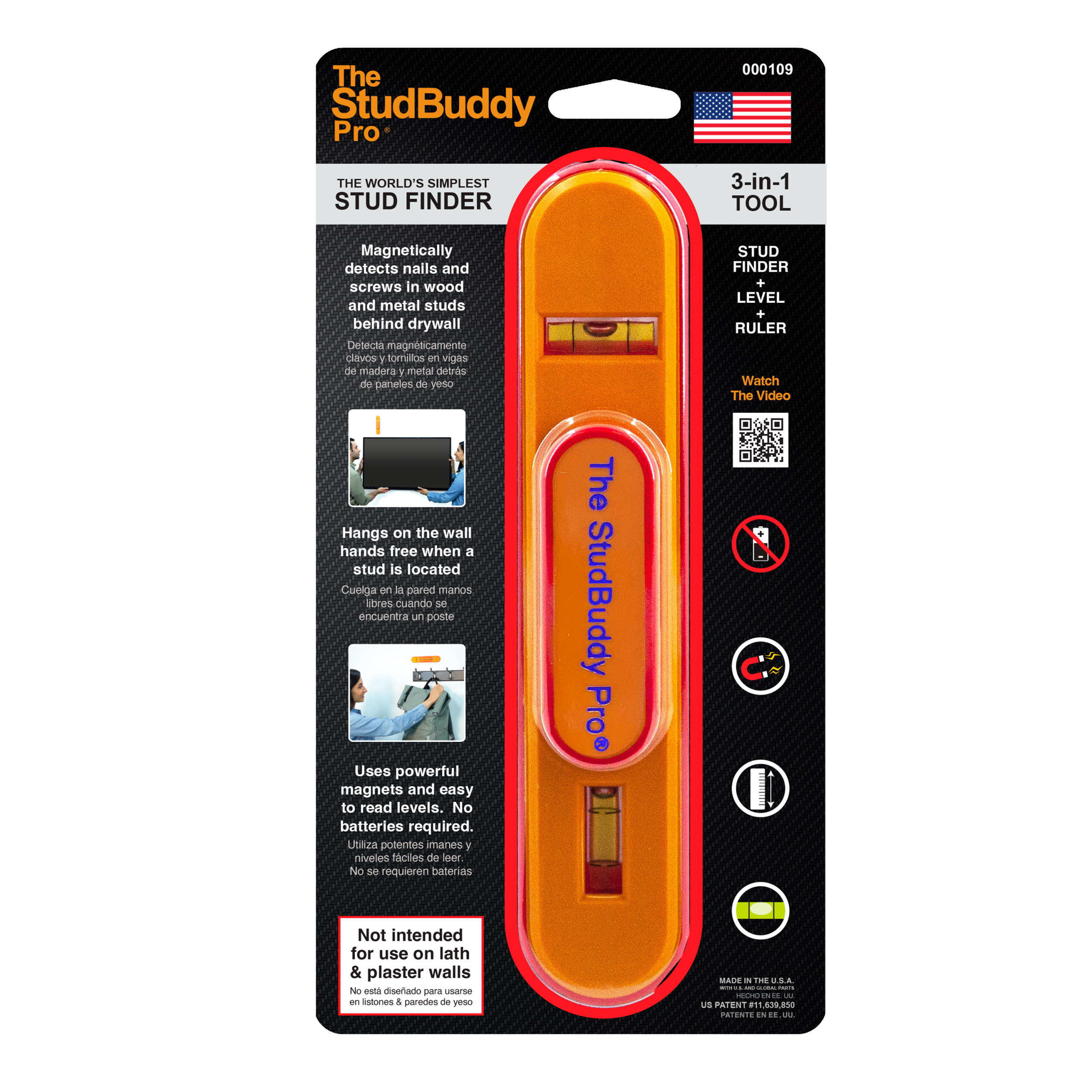
Electronic stud finders are widely recognized as fragile devices that demand tedious calibration before every single use, often leading to frustration and unreliable results. The StudBuddy sidesteps these mechanical failures entirely by relying on a simple physical principle: it uses powerful magnets to detect the ferrous nails or screws that affix drywall to wooden or metal studs. Because there are no batteries, circuitry, or moving parts inside the plastic housing, the tool requires zero maintenance and will function identically fifty years from now as it does today.
This mechanical simplicity translates directly into reliability for homeowners who only use a stud finder occasionally. Unlike capacitive sensors that can suffer from weak switches or require constant recalibration against different wall thicknesses, the StudBuddy works instantly upon contact with the fastener head. Harmon Construction notes that this approach is effective on standard drywall and painted OSB, making it an ideal tool for hanging mirrors, mounting televisions, or installing anti-tip brackets where absolute certainty about the stud location is required.
Locating fasteners reveals vertical alignment
The device operates by sliding across the wall surface until the internal magnet catches onto a hidden screw or nail head. Once it sticks, the user has pinpointed the exact location of the framing member behind the drywall. Because studs are typically spaced 16 inches apart on-center in post-1960 construction, finding one fastener allows you to map out the entire vertical line of that specific stud. This method is particularly useful for tasks like installing baseboards, where knowing exactly where a screw sits above the trim line helps determine where to place finish nails below it.
The scanning process requires a manual Z-pattern approach rather than an instant digital readout. Users must move the tool slowly up and down in short vertical sections while gradually shifting horizontally across the wall. When the magnet engages with a fastener, there is a distinct physical 'kick' or pull that signals the presence of a stud. This tactile feedback loop ensures that the user knows precisely when they have located a framing member without needing to interpret flashing lights or audible beeps.
Plumb alignment requires manual estimation
The primary limitation of the original StudBuddy model is its lack of built-in leveling features. Once a fastener is located, users must rely entirely on their own eye and judgment to draw a vertical plumb line down from that point. If the wall itself is not perfectly straight or if the user misjudges the angle while marking locations for mounting hardware, the resulting installation may be crooked. This reliance on manual estimation can be frustrating when hanging heavy items like flat-screen televisions or large picture frames where precision is critical.
Scanning speed benefits from dual magnets
While the original model relies on a single magnet, Wirecutter highlights that the broader category of magnetic stud finders often includes models with two magnets to expand the scanning area. A wider detection zone reduces the time it takes to get a hit, allowing users to cover more wall space during their Z-pattern scan without missing fasteners due to narrow sensor coverage. This expanded footprint makes the process less tedious, as users do not have to overlap their scanning paths as aggressively to ensure they catch every screw head.
Durability outlasts electronic alternatives
The plastic housing of the StudBuddy is designed for extreme durability, with Wirecutter noting that breaking it would require serious effort compared to fragile electronic sensors. Electronic stud finders often suffer from cracked casings or damaged internal components after being dropped in a tool bag or thrown into the back of a truck. The StudBuddy, containing only static magnets and plastic, is virtually indestructible under normal use conditions. It can be left in a junk drawer or tossed into a toolbox without fear of battery leakage or circuit board failure.
Versatility across wall materials
The tool functions effectively on various surface types including new construction drywall, thicker ceiling drywall, paneling over drywall, and OSB. Outdoor Life tested multiple stud finders across these mediums and confirmed that magnetic detection remains consistent regardless of the specific thickness or texture of the wall covering, provided there are metal fasteners present. This makes it a versatile choice for both interior home projects and workshop tasks involving painted wood surfaces.
Limitations with non-metallic anchors
Because the device relies exclusively on magnetic attraction, it cannot detect empty wall spaces or identify non-metallic drywall anchors. If a previous homeowner used plastic plugs to hang items in locations where no studs exist, the StudBuddy will simply slide past them without any indication. Users must be aware that this tool only confirms the presence of framing via fasteners; it does not provide information about pipes, electrical wires, or hollow cavities between studs.
Upgrade path includes built-in levels
For users who find the lack of a level on the original model to be a significant drawback, the StudBuddy Plus offers an upgraded version that addresses this specific pain point. This variant incorporates both horizontal and vertical bubble levels directly into the housing, allowing users to mark plumb lines immediately after locating a fastener without needing a separate tool. The addition of these gauges transforms the device from a simple locator into a comprehensive layout tool for mounting pictures or TVs.
Strengths
- +Uses powerful magnets to detect nails or screws without requiring batteries, electronics, or maintenance
- +Made in the USA with a simple plastic housing and no moving parts for high durability
- +Provides accurate detection on wood studs by locating the fasteners that affix drywall to the framing
- +Functions as an effective tool for finding vertical stud locations relative to existing fixtures like baseboards
Watch-outs
- −Lacks built-in leveling features, requiring users to manually ensure plumb alignment when marking locations
- −Only detects magnetic fasteners (nails/screws) and cannot identify non-metallic anchors or empty wall spaces directly
- −Requires a manual scanning process in Z-patterns rather than providing an instant digital readout of stud edges
How it compares
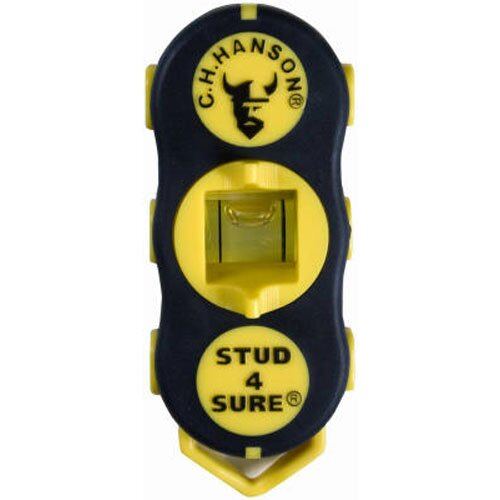
It differs from the C.H. Hanson 03040 by lacking a built-in level vial, requiring users to manually ensure plumb alignment when marking locations.
Rating sources
“I just really believe that both these products are game changers... It's just so simple and it takes the complexity and the need for batteries in your stud finder.”
“they're great man I like them so far”
Our 4.5 score is the average of the 2 scored reviews above; 2 more reviewed it without printing a score and are not in the average. Ratings marked * were derived from the reviewer’s written analysis or video transcript — the publisher didn’t print an explicit numeric score, so we inferred one from their own words. Click through to verify. More about methodology.