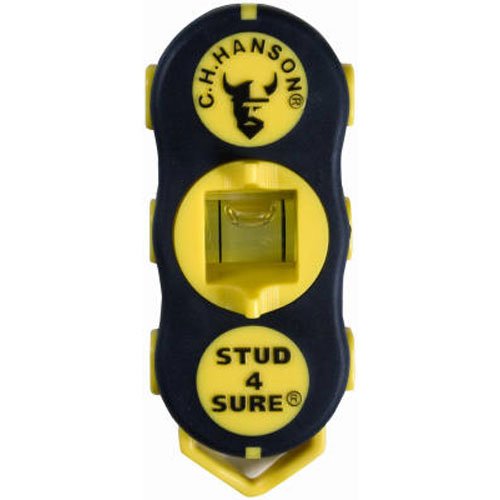
The C.H. Hanson 03040 uses a powerful rare earth magnet to detect metal fasteners through drywall, plaster, and paneling without requiring batteries or calibration. uptechnet found this approach delivers surgical precision by seeking actual screws rather than guessing based on wall density, while the built-in rotating level allows users to mark horizontal and vertical guidelines in one step. However, the tool may latch onto off-center nails, causing slight offsets from the stud's center, and can produce false positives by clinging to random hardware like staples or corner beads unrelated to studs. This compact, pocket-sized device fits homeowners who want a simple, durable tool for quick tasks but requires careful verification of hits for those needing precise structural anchoring.
Full review
Rare earth magnet detects fasteners through drywall
The C.H. Hanson 03040 abandons electronic sensors in favor of a powerful rare earth magnet that physically latches onto the metal screws or nails securing drywall to wall studs. uptechnet found this approach delivers surgical precision because it seeks out actual fasteners rather than guessing based on changes in wall density, which often leads to confusion from pipes or thick insulation. The physical attraction provides immediate tactile feedback; users feel a distinct snap when the tool hits metal, removing the anxiety of staring at a flickering light or waiting for an electronic beep that might be a false alarm.
This magnetic design eliminates warm-up time and calibration steps entirely. Unlike battery-powered sensors that can drift or misread over time, the permanent magnet is always ready for immediate use with zero setup required. uptechnet noted that because it hunts only for metal fasteners, it remains immune to interference from live electrical wires and plumbing pipes behind the walls. This allows users to map out the entire length of a stud by marking one hit and repeating the process vertically without worrying about accidental triggers from nearby outlets or wiring.
Rotating level vial marks horizontal and vertical lines
A built-in rotating level adds functionality that typical stud finders skip entirely, allowing users to draw precise guidelines without swapping tools. The integrated bubble vial can rotate ninety degrees, enabling the marking of both horizontal lines for shelf runs and vertical lines for full-wall layouts in a single step. This feature is particularly useful when hanging a row of cabinets or aligning multiple anchor points across a wall, as it ensures perfect alignment right at the marked stud location.
The level mechanism snaps securely into place at ninety-degree intervals, providing stability during use. Users can rely on this rotating vial to verify they are perfectly plumb or level before making their marks. This dual-purpose design saves time on every job by combining detection and layout in one compact device, ensuring that the marked stud location is not only found but also oriented correctly for the specific task at hand.
0.15 lbs weight fits easily into shirt pockets
Weighing just 0.15 pounds, the C.H. Hanson 03040 is exceptionally lightweight and compact enough to slip directly into a shirt pocket or small tool bag. This portability makes it an unobtrusive addition to any contractor's kit or homeowner's junk drawer. The streamlined profile fits comfortably in the palm of the hand, allowing for a fluid gliding motion across the wall surface without causing hand fatigue during long projects.
The lack of batteries and charging cables means there is no dead weight from power sources, further enhancing its pocket-friendly nature. Users can toss it into their gear without worrying about spare batteries dying at the wrong moment or charging cables taking up space. This physical lightness ensures that the tool travels easily from room to room or job site to job site, making it a convenient option for quick tasks where hauling a larger electronic device would be cumbersome.
Off-center fasteners cause slight marking offsets
A primary criticism of the magnetic approach is that it may latch onto screws or nails placed off-center by installers, potentially causing the marked location to be slightly offset from the true center of the stud. Bill at Wall of Tools noted that if a fastener is barely hanging into the stud or driven far to one side, the magnet will still grab it firmly. This can result in users driving their own screws into the edge of the framing rather than the middle, which might compromise holding power for heavy loads.
This precision limitation means that while the tool accurately locates a fastener, it does not guarantee finding the geometric center of the wood or metal stud behind it. Users must be aware that the magnetic pull indicates the presence of hardware, requiring them to verify the stud's actual width if maximum structural integrity is critical for their specific mounting project.
Random metal hardware triggers false positives
The magnet will cling to any exposed or embedded metal in the wall, including random screws, staples, or metal corner beads that are unrelated to the structural studs. uptechnet highlighted this as a common source of confusion for users who expect every magnetic snap to indicate a stud location. Metal corner beads used at drywall edges or scattered construction debris can trigger false positives, leading to unnecessary holes if not carefully evaluated.
Users must distinguish between fasteners that secure the drywall to framing and incidental metal hardware. This requires a methodical scanning approach rather than blindly trusting every magnetic attraction. The tool's sensitivity is so high that it picks up even small staples or loose screws, making it essential for users to cross-reference multiple hits vertically before assuming they have found a solid anchoring point.
Performance varies across different wall types
While the C.H. Hanson 03040 performs excellently on standard drywall and plaster, its effectiveness can vary depending on the specific construction materials behind the surface. uptechnet recorded that it acts as a reliable detector for ninety-five percent of residential construction, easily picking up drywall nails through paint and paper layers. However, very thick walls or those with multiple heavy layers of finish may reduce sensitivity, requiring slower scanning speeds to feel the magnetic tug.
Paneling performance is rated as moderate because it depends heavily on panel thickness and the type of fasteners used. In older homes with plaster and lath construction, the tool often proves more effective than electronic finders due to the consistent use of metal nails in traditional framing methods. Conversely, walls built exclusively with non-metallic adhesives or plastic fasteners will not trigger the magnet at all, rendering the tool useless for those specific rare scenarios.
Indestructible build survives accidental drops
The C.H. Hanson 03040 features a solid housing that is impact resistant and built to survive the rough handling typical of home improvement projects. With no delicate circuit boards, LCD screens, or glass components to crack, the risk of bricking the device from accidental drops is virtually zero. uptechnet described it as a buy-it-once tool that can be used for a decade without fear of electronic failure or screen damage.
This durability makes it suitable for both professional contractors running through punch lists and first-time homeowners tackling weekend projects. The rugged construction ensures that the rare earth magnet remains securely housed and functional even after years of use in dusty, wet, or physically demanding environments. It is a tool designed to earn a permanent spot in any toolkit due to its ability to withstand physical abuse without losing performance.
Strengths
- +Uses powerful rare earth magnets to detect metal fasteners through drywall, plaster, and paneling without false reads or warm-up time.
- +Requires no batteries, charging, or calibration, making it always ready for immediate use with zero setup.
- +Features a built-in rotating level vial that allows users to draw precise horizontal and vertical guidelines in the same step.
- +Compact and lightweight at 0.15 lbs, fitting easily into shirt pockets or small tool bags.
Watch-outs
- −May latch onto off-center screws or nails, potentially causing the marked location to be slightly offset from the stud's center.
- −Can produce false positives by clinging to random metal hardware like staples or corner beads unrelated to studs.
How it compares
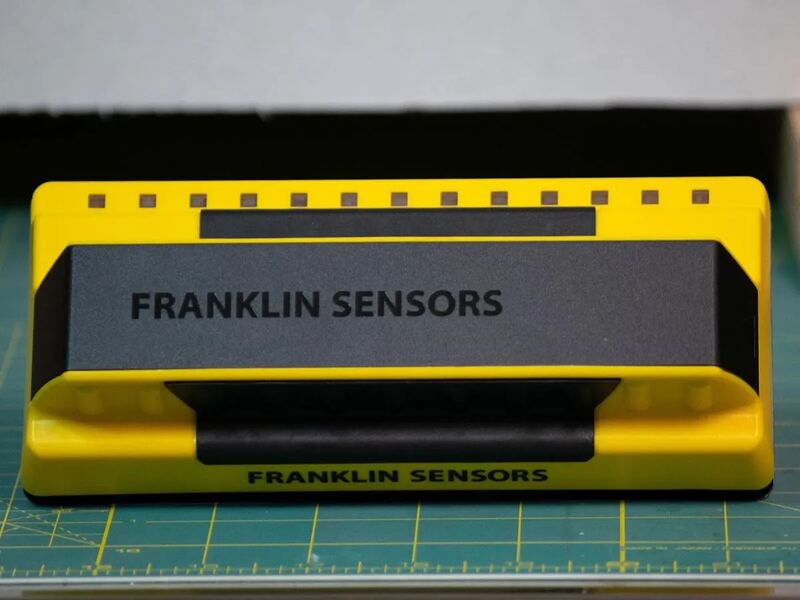
Unlike the Franklin Sensors ProSensor 710+ which uses a sensor array to detect stud width, this magnetic tool relies on rare earth magnets to latch onto fasteners, offering zero setup time compared to the battery-powered electronic models.
Rating sources
“The precision is surgical. Because the magnet snaps firmly to the metal, there is no approximate zone.”
“this thing works really well not very expensive i got it on amazon and then i like that vial clicking into place”
“great tool to add to your Arsenal”
Our 4.2 score is the average of the 3 scored reviews above; 1 more reviewed it without printing a score and is not in the average. Ratings marked * were derived from the reviewer’s written analysis or video transcript — the publisher didn’t print an explicit numeric score, so we inferred one from their own words. Click through to verify. More about methodology.