The StudPop Magnetic Stud Finder uses rare earth magnets to detect ferromagnetic fasteners through up to half an inch of wall material without requiring batteries or calibration. Home Fixated found that its unique popping indicator provides clear audio and visual feedback, making it easier for beginners to identify nail locations than tactile-only competitors. However, accuracy depends on nail placement rather than stud center, often resulting in off-center readings that require manual verification of the actual stud edges. Pro Tool Reviews noted that while the ABS plastic construction is durable and made in the USA, the hard base can scratch delicate wall finishes if not protected with tape. This tool fits DIYers needing a simple, low-cost device for quick hanging tasks, but professionals requiring precise center detection or comprehensive wiring sensing should look elsewhere.
Full review
Magnetic detection without batteries
The StudPop operates on a purely mechanical magnetic principle, eliminating the need for batteries or electronic calibration routines. Pro Tool Reviews noted that this design choice removes common failure points associated with digital sensors, such as dead power cells or drift over time. The device utilizes rare earth magnets to sense ferromagnetic fasteners like nails and screws embedded in wall structures. This approach allows the tool to function reliably across various wall materials including sheetrock, plaster, tile, and wood lathe without requiring a warm-up period.
ToolGuyd verified that the magnetic sensing mechanism works effectively through up to half an inch of wall material. The absence of electronic components means the device is immune to interference from electrical wiring or moisture levels in the drywall, which often confuses capacitive stud finders. This makes it a consistent tool for quick verification tasks where setting up a digital sensor might be overkill. The simplicity of the design ensures that users can rely on the magnetic pull without worrying about software glitches or battery maintenance.
Audible and visual popping indicator
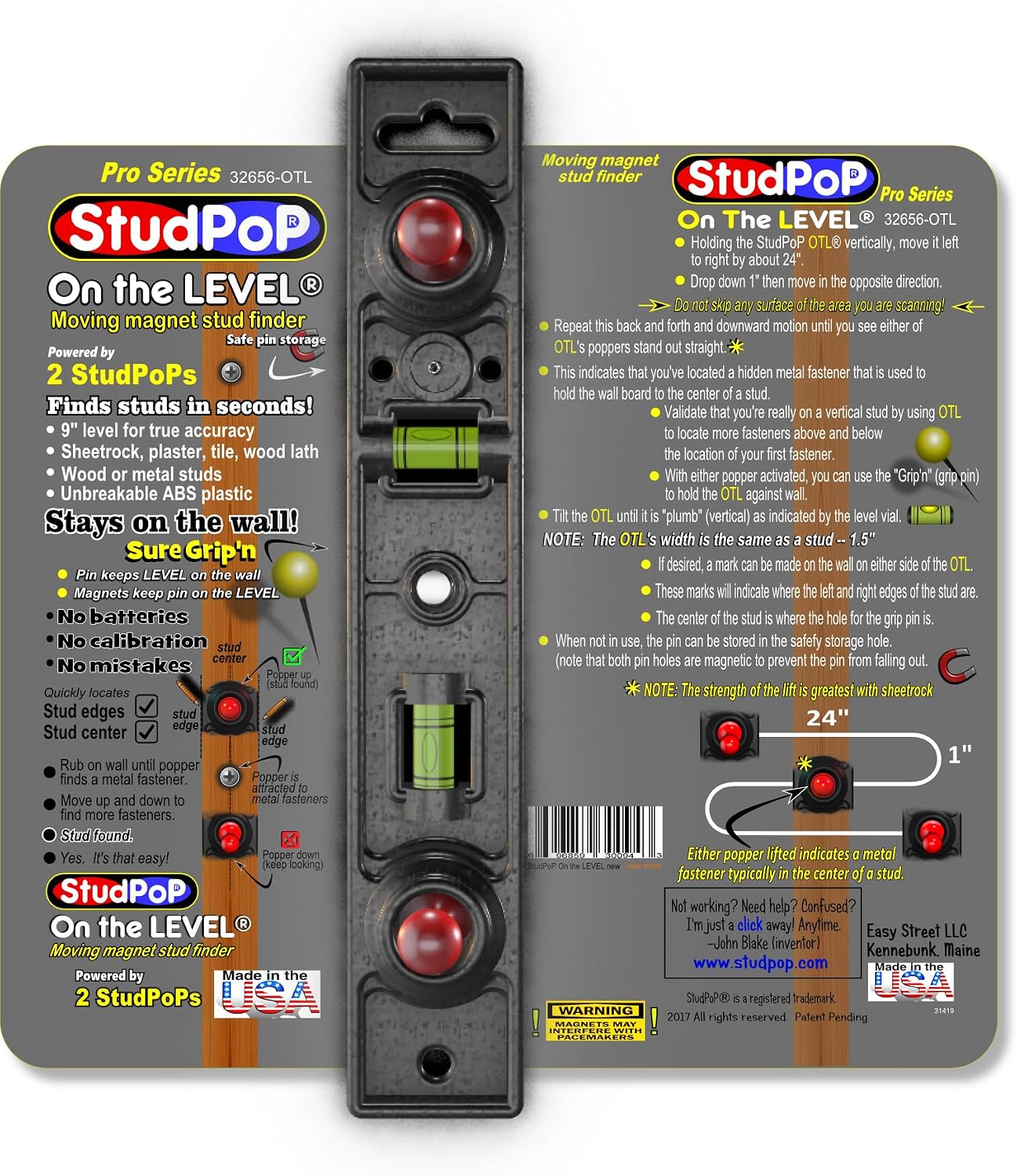
Home Fixated highlighted the StudPop's unique detection mechanism, which combines audio and visual feedback when a fastener is located. As the user glides the device across the wall surface, a plastic toggle in the center of the unit pops up to a ninety-degree angle upon detecting metal. This action provides an immediate tactile and auditory signal that confirms the presence of a nail or screw head behind the wall finish. The popping sound varies in intensity depending on the strength of the magnetic attraction, giving users additional confirmation cues beyond just the visual indicator.
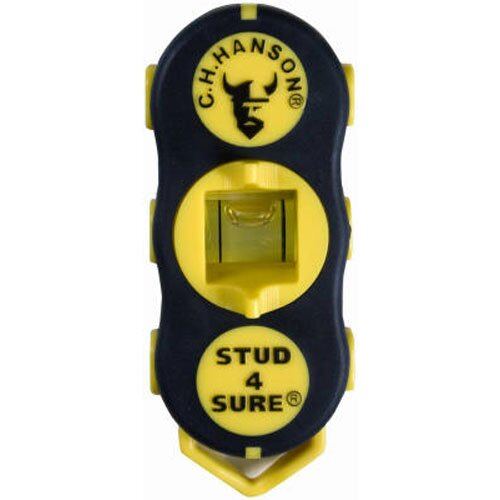
This feedback system contrasts with other magnetic finders that rely solely on physical resistance felt by the user's hand. Home Fixated compared this to the Stud4Sure, which requires users to feel subtle magnetic pulls rather than receiving a distinct mechanical pop. The StudPop's design makes it easier for beginners or those with less tactile sensitivity to identify stud locations accurately. Brian Unboxed demonstrated in video reviews that the popping action is clear and distinct, allowing users to pinpoint fasteners without needing to interpret vague changes in friction or resistance.
StudPop On the Level dimensions
The StudPop On the Level variant expands on the original concept by integrating two magnetic sensors into a nine-inch ABS plastic body. Pro Tool Reviews found that this width matches the standard spacing of 2x4 studs, allowing users to see where the edges of a stud might be located relative to the level's frame. The device includes dual line vials for checking horizontal and plumb alignment, making it useful for hanging pictures or shelves in addition to locating structural elements. This larger form factor covers more ground per sweep compared to the compact original model.
Brian Unboxed noted that the On the Level version features two popping indicators, one on each side of the level body. This dual-sensor setup increases the probability of catching a fastener during a single pass across the wall surface. The inclusion of a grip pin allows users to secure the device against the wall while making adjustments with the built-in levels. However, Pro Tool Reviews cautioned that this model is not designed as a replacement for professional-grade torpedo levels due to its ABS plastic construction and potential for scuffing during use.
Fastener placement affects accuracy
A significant limitation of magnetic stud finders is that they detect fasteners rather than the center of the stud itself. Pro Tool Reviews observed that nails and screws are rarely driven perfectly into the middle of a 2x4, meaning the device will indicate an off-center location relative to the actual stud width. Users must manually verify the edges of the stud by finding multiple fasteners at consistent intervals or by using the level's markings to estimate the centerline. This requirement for manual verification can be frustrating for users accustomed to electronic finders that claim to display the full stud width on a digital screen.
Home Fixated pointed out that while the StudPop accurately detects nails through typical drywall and plaster, the precision of locating the exact center is compromised by fastener placement. The device works best when used in conjunction with other methods, such as checking for nail patterns in baseboards or electrical outlet placements. Users should treat the magnetic indicator as a starting point for finding studs rather than a definitive guide to their precise boundaries. This limitation applies equally to both the original compact model and the larger On the Level variant.
Wall surface scratching risks
The plastic base of the StudPop can scratch delicate wall finishes as it is slid across surfaces. Home Fixated reported that the ABS plastic construction, while durable for tool storage, lacks a soft or non-marring coating on its sliding face. This becomes particularly problematic when scanning textured walls, such as skip-troweled plaster, where the rough surface accelerates wear on the device's base and transfers scratches to the paint finish. The reviewer suggested applying a strip of painter's tape to the bottom of the unit to prevent damage during use.
ToolGuyd echoed this concern, noting that while the plastic glides effectively, it may leave marks on sensitive surfaces without protection. This trade-off between durability and surface safety is inherent in the design choice to use hard ABS plastic for the contact area. Users working on finished walls or high-value drywall installations should take precautions to protect their surfaces. The risk of scratching does not affect the magnetic performance but requires careful handling to avoid damaging the wall being worked on.
Build quality and manufacturing origin
The StudPop is manufactured in the USA using strong ABS plastic, a detail emphasized by both ToolGuyd and Brian Unboxed. Pro Tool Reviews confirmed that the construction is robust enough to survive rough handling in toolboxes or on job sites. The device comes in various colors, though Home Fixated noted that availability can be inconsistent, with users receiving random colors rather than specific selections from a rainbow palette. This manufacturing origin and material choice contribute to the tool's reputation for durability despite its low cost.
Home Fixated criticized the overall build quality as a weak point compared to competitors like the Stud4Sure, which features stronger magnets and better construction materials. The plastic body lacks the heft and premium feel of higher-end tools, and some units arrived with a noticeable chemical odor reminiscent of fresh spray paint. While these aesthetic and tactile shortcomings do not impact functionality, they distinguish the StudPop as a budget-friendly option rather than a professional-grade instrument. Brian Unboxed appreciated the simplicity of the design but acknowledged that it prioritizes function over form.
Comparison to electronic stud finders
Professional reviewers consistently position the StudPop as a supplementary tool rather than a replacement for electronic stud sensors. Pro Tool Reviews noted that while magnetic finders are effective, they lack the comprehensive data provided by digital models that can detect wood edges, metal studs, and live wiring simultaneously. Users familiar with advanced electronic finders like the Franklin Prosensor may find the StudPop's reliance on fastener detection limiting for complex projects requiring precise stud mapping.
ToolGuyd described the StudPop as a great go-to tool for quick sensing or verification tasks where carrying a bulky digital device is inconvenient. The low cost and pocket-sized design make it ideal for DIYers who need to hang shelves occasionally without investing in expensive electronic sensors. However, for professional contractors who require rapid, accurate location of all stud edges and centers, the magnetic approach may be too slow and imprecise. The tool excels in simplicity but sacrifices the depth of information provided by capacitive or radar-based sensors.
Strengths
- +Uses rare earth magnets to detect ferromagnetic nails and screws without requiring batteries or calibration.
- +Provides immediate visual and audible feedback when a fastener is located via a popping indicator mechanism.
- +Capable of sensing fasteners through various wall materials including sheetrock, plaster, tile, and wood lathe.
- +Constructed from durable ABS plastic and manufactured in the USA.
Watch-outs
- −Accuracy depends on nail placement rather than stud center, often requiring manual verification of stud edges.
- −Less precise for pinpointing exact stud centers compared to linear magnetic finders with stronger magnets.
How it compares
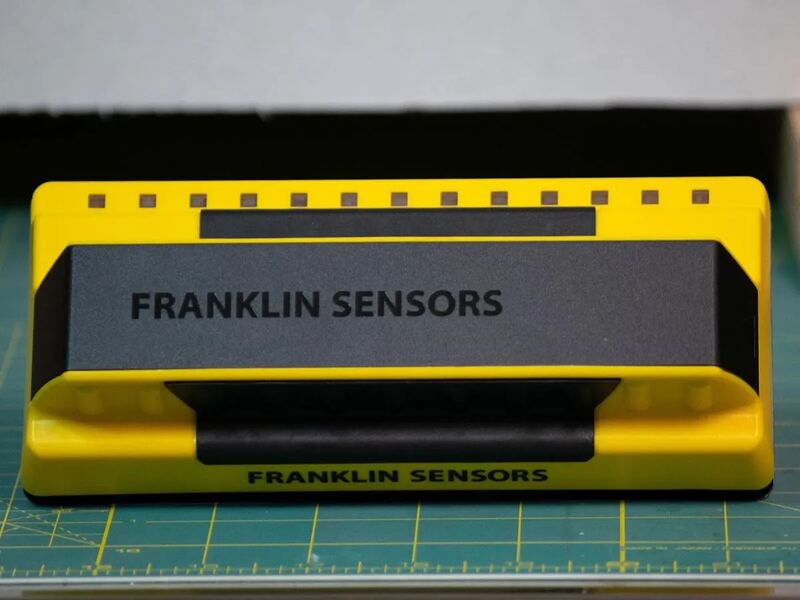
The StudPop provides immediate audio and visual popping feedback when a fastener is found, which beginners may find easier to interpret than the silent LED-only system of the Franklin Sensors ProSensor 710+. However, its accuracy depends on nail placement rather than stud center, making it less precise for structural anchoring compared to the C.H. Hanson 03040's stronger magnetic pull.
Rating sources
“The stud pop. Very inexpensive tool that can help you find studs for various home tasks and projects.”
Our 4.0 score is the average of the 1 scored review above; 3 more reviewed it without printing a score and are not in the average. Ratings marked * were derived from the reviewer’s written analysis or video transcript — the publisher didn’t print an explicit numeric score, so we inferred one from their own words. Click through to verify. More about methodology.