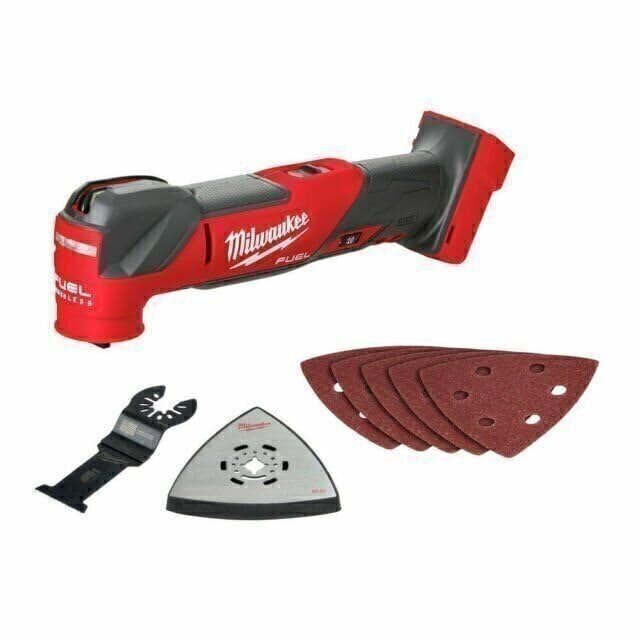
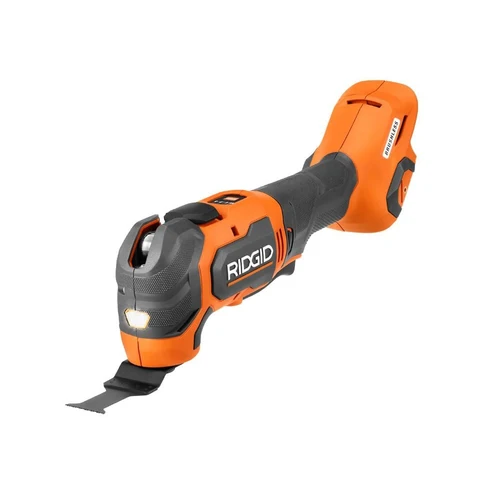
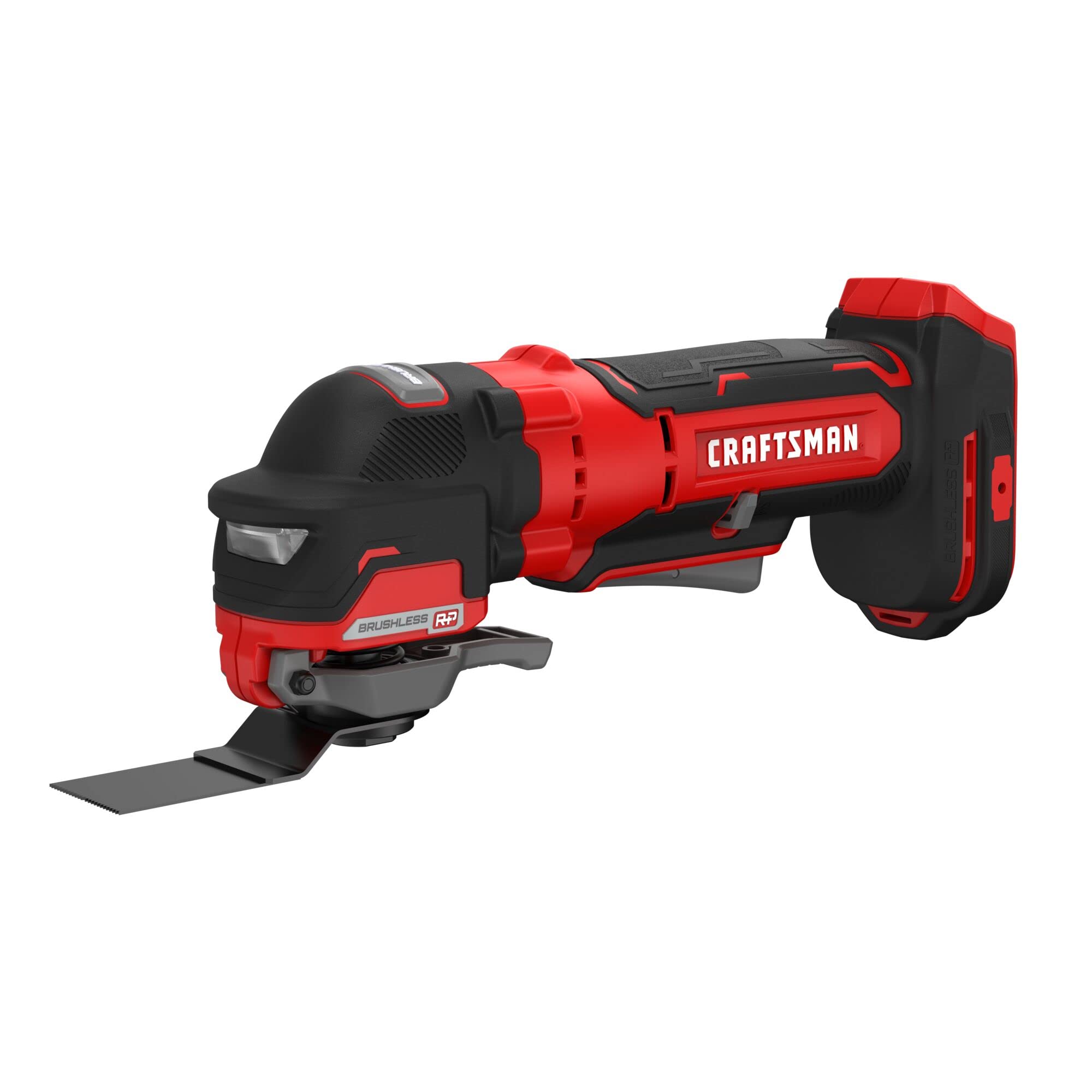
Pro Tool Reviews found that the brushless motor and increased oscillation arc deliver faster cutting speeds than the previous generation, making it effective for plunge cutting and grinding. However, vibration control lags behind premium competitors like the Milwaukee M12 or Fein SuperCut, resulting in a rougher ride during extended use. The tool-free blade change system simplifies accessory swaps, though the bare kit omits a carry case for storage. Homebuilding noted that it lacks raw power for dense hardwoods, fitting best for DIYers who already own Ryobi 18V batteries rather than professionals needing heavy-duty performance.
Full review
Brushless motor and oscillation arc drive cutting speed
The Ryobi HP Brushless Oscillating Multi-Tool replaces its brushed predecessor with a brushless motor that significantly boosts performance metrics. Pro Tool Reviews found that the updated Gen II model delivers faster cutting speeds compared to the original 18V brushed version, despite both sharing an identical oscillation rate of 10,000 to 20,000 OPM. The primary mechanical difference lies in the oscillating angle, which expands from 3.6 degrees on the first generation to 3.8 degrees on this model. This seemingly minor 0.2-degree increase allows for a more aggressive cut per stroke, translating directly into reduced task times across various materials.
This increased arc range makes the tool particularly effective for plunge cutting and grinding applications where material removal speed matters. Slashgear notes that Ryobi claims this specific mechanical upgrade enables the device to cut 80% faster while providing two and a half times more cuts before requiring blade changes compared to older standard models. The combination of the brushless drive train and the wider oscillation arc positions the tool firmly in the high-end DIY category, offering performance levels that closely approach entry-level professional tools without demanding pro-grade pricing.
Vibration control lags behind premium competitors
While cutting speed has improved, vibration management remains a distinct weakness compared to the top tier of oscillating multi-tools. Pro Tool Reviews recorded that the vibration control on this Gen II model is essentially identical to the previous generation and falls short of smoother alternatives like the Milwaukee M12 or Fein SuperCut. Although it does not vibrate aggressively enough to cause discomfort during brief tasks, users will notice a rougher ride when operating the tool for extended periods compared to higher-priced competitors.
Slashgear highlights that despite this mechanical limitation, Ryobi claims an 86% vibration reduction compared to their standard non-HP One+ 18V Cordless Multi-Tool. This internal improvement helps mitigate fatigue during typical DIY jobs, but it does not close the gap with professional-grade hardware. The tool includes a lock-on button that removes the need for continuous trigger pressure, which aids in reducing hand strain, yet the inherent mechanical vibration remains a noticeable factor during heavy-duty grinding or prolonged sanding sessions.
Adjustable head design impacts ergonomics and access
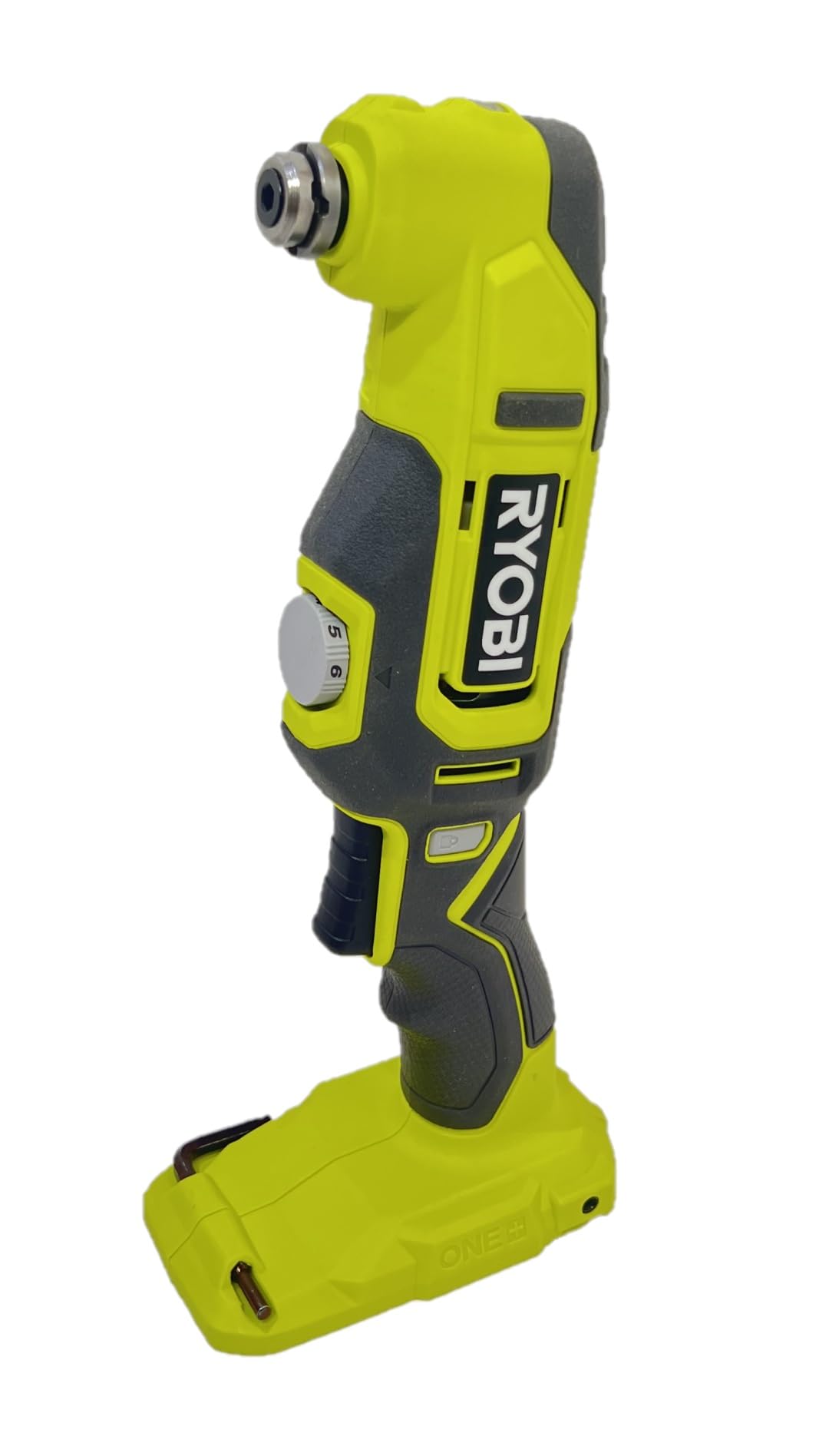
The physical design of this tool centers around an up-angled handle that fits comfortably in the hand when cutting in an upright position. Pro Tool Reviews describes this handle configuration as a double-edged sword, offering solid comfort for standard tasks but potentially limiting reach in tight or awkward spaces compared to straight-handle designs. The Gen II model also switches from a slide-on switch back to a trigger with a lock button, providing users with finer control over speed modulation and allowing for hands-free operation during repetitive cuts.
Mike's Man Cave tested the tool on a flooring project where removing skirting boards required cutting timber flush against existing structures. He found the adjustable head feature exceptionally handy for navigating these tight spaces, noting that tilting the head allowed him to cut at angles that would have been impossible with a standard fixed-head multi-tool. The ability to lock the head at various specific angles makes this model significantly more versatile than basic versions, particularly when working around obstacles like floorboards or wall corners.
Tool-free blade change system simplifies accessory swaps
Accessory changes are handled through a tool-free release mechanism that requires pulling up on the lever and sliding out the metal stop-bar to install new blades. This system works securely with standard multi-tool attachments, allowing users to switch between plunge-cutting blades, flush-cut blades, and sanding pads quickly without fumbling for hex keys or screwdrivers. Pro Tool Reviews confirmed that this mechanism remains reliable across generations, ensuring that blade swaps are fast and secure even when wearing gloves on a job site.
The kit includes specific attachments such as a multi-purpose plunge cutting blade, a round cutting blade capable of handling wood, metal, and PVC, and a sanding pad. Slashgear notes that the sanding setup comes with three pieces of sandpaper at 60, 80, and 120 grits, making it immediately usable for detail work and finishing tasks. An LED work light positioned on the front of the device illuminates the project area, which is particularly useful when working in dark cavities or under cabinetry where ambient lighting is insufficient.
Bare tool pricing excludes essential storage accessories
The bare tool version of this multi-tool is priced at $129, which requires the user to already own a compatible 18V battery and charger. For those building their system from scratch, Slashgear reports that a kit including an 18V 2Ah HP Lithium Battery and a charger retails for $189. Mike's Man Cave observed that Ryobi tools have become significantly more expensive over time, noting that he paid around $169 for a version with the articulating head plus $30 for a blade set, totaling roughly $200. He remarked that while these are still cheaper than most other brands, they no longer represent the bargain pricing of previous years.
A notable omission in the bare tool package is the lack of a carry case or attachment storage solution. Homebuilding explicitly lists this as a drawback, pointing out that a carry bag would have been a useful addition for protecting the tool and organizing its various blades and sanding pads during transport. Users who frequently move between job sites will need to purchase a separate pouch or rely on generic tool bags, adding an unlisted cost to the initial investment.
Performance limits with hard materials and warranty coverage
While excellent for wood, plastic, drywall, and non-ferrous metals, the tool struggles when pushed against harder materials. Homebuilding found that the Ryobi R18MT Multitool lacks the raw power to handle dense hardwoods or thick metal efficiently, making it best suited for home DIYers rather than professional contractors who require consistent performance under heavy loads. The noise rating of 84.5 dB indicates a moderately loud operation, which is typical for oscillating tools but worth noting for indoor residential use.
The combination of brushless efficiency, adjustable ergonomics, and solid warranty support makes this multi-tool a compelling option for homeowners invested in the Ryobi 18V ecosystem, provided they accept its limitations with extremely hard materials.
Strengths
- +Brushless motor delivers faster cutting speeds and improved efficiency over the previous brushed model.
- +Increased oscillation arc of 3.8 degrees allows for more aggressive cuts compared to the prior 3.6-degree angle.
- +Tool-free blade change system enables quick accessory swaps using standard multi-tool attachments.
Watch-outs
- −Vibration control is noticeable and less smooth than premium competitors like the Milwaukee M12 or Fein SuperCut.
- −Bare tool kit does not include a carry case for storage and transport.
How it compares
The Ryobi ONE+ features a brushless motor and an increased 3.8-degree oscillation angle that provides faster cutting speeds than the Craftsman V20’s 2.8-degree model, but its vibration control is noticeably rougher than the Milwaukee M12 FUEL or Fein SuperCut equivalents mentioned in reviews. While it shares the same top OPM range of 10,000-20,000 as the Ridgid R86242B and Milwaukee M12, it lacks the refined ergonomics and premium dampening found in those higher-tier options.
Rating sources
“So, overall, I'm very happy with it. I like the speed adjustment. I like the ergonomics of the tilting head. I'm pretty happy with it.”
Our 4.5 score is the average of the 1 scored review above; 3 more reviewed it without printing a score and are not in the average. Ratings marked * were derived from the reviewer’s written analysis or video transcript — the publisher didn’t print an explicit numeric score, so we inferred one from their own words. Click through to verify. More about methodology.