Pro Tool Reviews found that the Craftsman V20’s compact 1.9-pound bare weight and small-diameter handle make it highly ergonomic, particularly for users with smaller hands or those performing overhead work. The tool features a fast spring-loaded clamp system for quick blade changes and variable speed control ranging from 8,000 to 18,000 oscillations per minute. However, its performance is limited by a conservative 2.8-degree oscillation angle that results in slower cutting and sanding speeds compared to professional-grade competitors with wider angles. Additionally, the basic vibration control system lacks the refined dampening found in premium models like Milwaukee or Fein, which can lead to increased hand fatigue during extended use. This multi-tool is best suited for DIY enthusiasts who prioritize portability and value over raw power, while professionals requiring high-speed material removal should look elsewhere.
Full review
Compact weight and small handle favor smaller hands
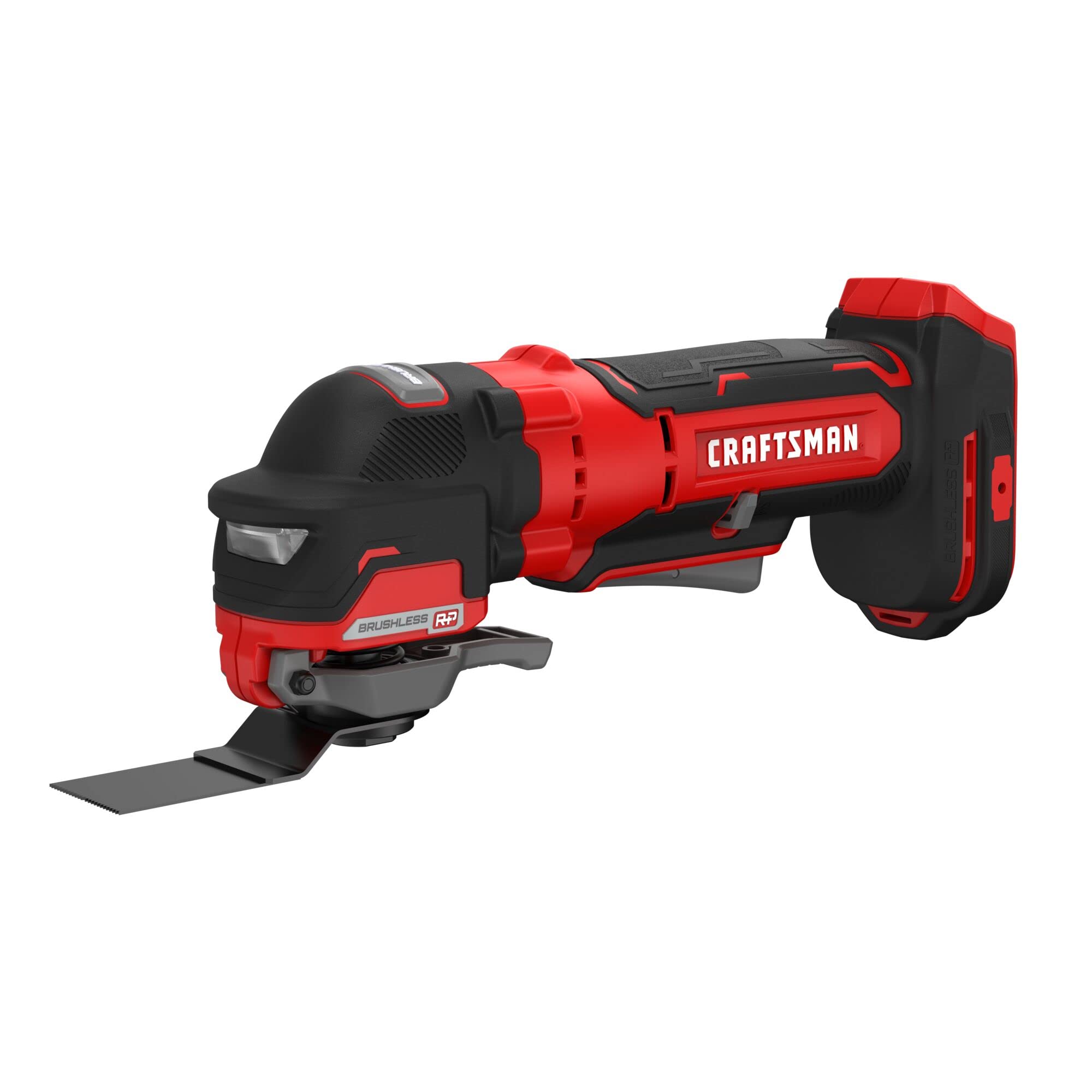
The Craftsman V20 cordless oscillating multi-tool distinguishes itself through a physical profile that prioritizes portability and ergonomics over raw power.
Beyond the total weight, the handle geometry specifically addresses users with smaller hands. The tool features a smaller diameter grip combined with generous overmolding that creates a secure and comfortable hold. This ergonomic design choice ensures that individuals who typically struggle with bulkier professional-grade oscillating tools can maintain control without excessive hand strain.
2.8-degree angle limits cutting speed compared to pros
The primary mechanical trade-off for the Craftsman's lightweight design is its reduced oscillation performance. Pro Tool Reviews noted that most professional-grade models utilize an aggressive 3.6-degree oscillation angle, with high-speed units reaching up to 4.0 degrees. In contrast, the Craftsman V20 operates at a more conservative 2.8-degree angle, which directly impacts how quickly it can remove material.
This narrower swing results in noticeably slower cutting and sanding speeds compared to industry leaders. While the tool is fully capable of performing standard cuts and sanding tasks, the reduced oscillation rate means it will take longer to complete heavy-duty removal jobs. This performance characteristic makes the tool best suited for occasional DIY use rather than continuous professional application.
Spring-loaded clamp allows quick but unsecured blade swaps
The accessory change system relies on a simple, spring-loaded lever that squeezes to open the jaws for tool-free insertion. Pro Tool Reviews found this mechanism to be very quick and easy to use for standard universal accessories that feature a rear cut-out interface. The kit includes an adapter specifically designed to accommodate fully enclosed blade interfaces, ensuring broad compatibility with existing accessory collections.
However, the simplicity of the clamp introduces a potential safety risk if not monitored closely. Because the mechanism is so straightforward, it is possible to lock a blade in place without the internal pins fully seating into their proper positions. Users must perform a visual check before powering on the tool to ensure the accessory is securely fastened, as an improperly seated blade could dislodge during operation.
Basic vibration control lacks premium dampening systems
Vibration management represents a clear area where the Craftsman V20 falls short of higher-end competitors. Pro Tool Reviews explicitly stated that the tool lacks a refined vibration control system similar to those found in Milwaukee and Fein models. While the lighter overall weight does help keep some vibration down compared to more aggressive designs, it is not enough to eliminate hand fatigue during prolonged use.
Users can certainly feel the operational vibrations while cutting through dense materials. The absence of advanced dampening means that tasks requiring sustained contact with the workpiece will transmit more shock back to the user's hands and wrists than premium alternatives would.
Variable speed range covers 8,000 to 18,000 oscillations
Pro Tool Reviews measured the operational range between 8,000 and 18,000 oscillations per minute. This wide spectrum provides sufficient flexibility for delicate sanding work at lower speeds and more aggressive cutting tasks at higher RPMs.
A lock-on switch is included to maintain continuous operation without requiring constant pressure on the trigger. The inclusion of an LED light further assists with visibility in darker corners or tight spaces where shadows might obscure the cut line.
$79 bare tool price targets DIY budget shoppers
The Craftsman V20 positions itself at an accessible entry point for homeowners who need a versatile multi-tool without investing in professional-grade equipment.
For those starting from scratch, the kit version is priced at $119 and includes a 2.0Ah battery, a charger, a wood cutting blade, a bi-metal blade, a sanding pad, an assortment of sandpapers, and a scraper. The tool comes with a three-year warranty against defects in materials or workmanship, providing standard manufacturer protection for the investment.
Strengths
- +Compact and lightweight design weighing just 1.9 pounds bare
- +Small diameter handle fits smaller hands comfortably
- +Fast tool-free clamp-style blade change system with included adapter for enclosed blades
- +Variable speed control ranging from 8,000 to 18,000 oscillations per minute
Watch-outs
- −Slower cutting and sanding performance due to a smaller 2.8-degree oscillation angle
- −Basic vibration control that is less refined than premium competitors
How it compares
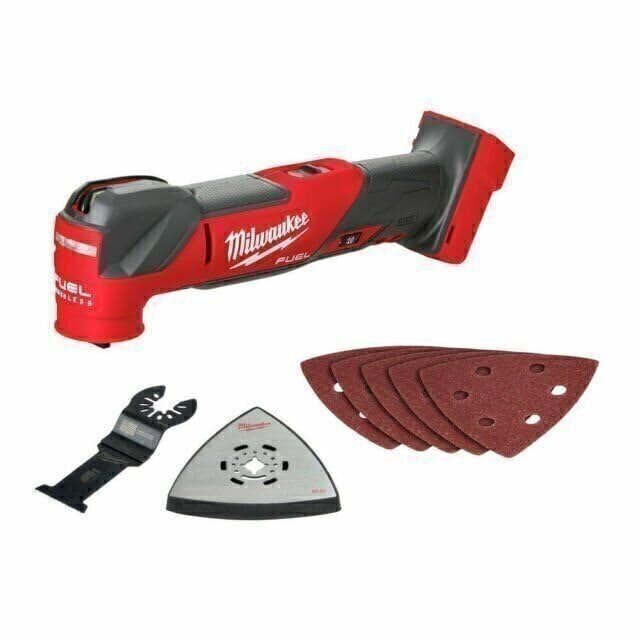
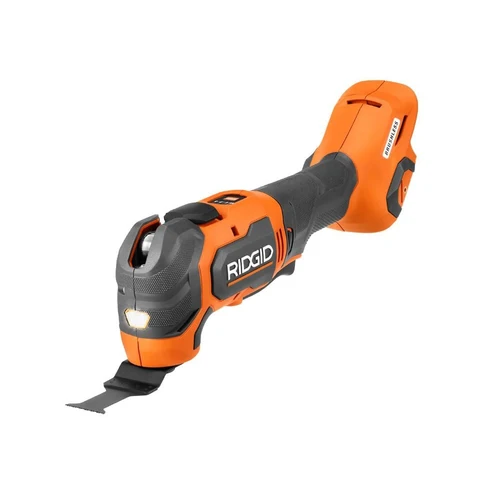
While its variable speed range of 8,000-18,000 OPM is adequate for light tasks, it lacks the raw power and vibration dampening found in the Milwaukee M12 FUEL or the high-speed efficiency of the Ridgid model.
Rating sources
Counts as 3.90/5 in our score — this publisher's 15 scores on the site average 4.43, so its scores are adjusted down to compare fairly with other publishers.
Our 3.9 score is the average of the 1 scored review above, each adjusted for how strictly its publisher scores; 5 more reviewed it without printing a score and are not in the average. More about methodology.