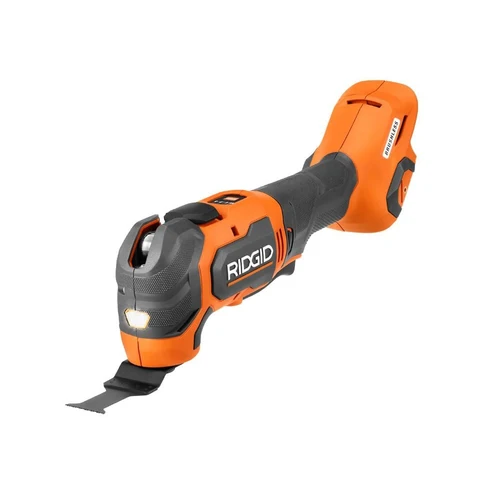
Pro Tool Reviews found that the Ridgid R86242B dominated performance tests, cutting threaded rod in just 31 seconds and outperforming competitors like Milwaukee. The tool features a brushless motor delivering up to 20,000 OPM and a new quick-change pin system for faster accessory swaps. While some reviewers noted the vibration is slightly more noticeable than top-tier rivals, it remains well-controlled. This model is best suited for DIYers and pros seeking high-speed cutting efficiency in tight spaces without needing the JobMax modular base.
Full review
Cutting speed dominates threaded rod and wood tests
Pro Tool Reviews clocked the Ridgid 18V Brushless R86242B at an impressive 31 seconds for a full cut through half-inch all-thread rod, finishing five seconds faster than the closest competitor in their head-to-head shootout. The larger four-degree swing moves more teeth through the material per cycle, translating directly into reduced job-site time for demolition or rough-cutting tasks where speed is paramount.
The tool maintained this aggressive pace across various materials. While it placed third in yellow pine and CPVC cuts, the overall leaderboard dominance suggests a highly capable machine for contractors who need to push through dense or abrasive substrates without bogging down. The variable speed trigger allows users to modulate this power when transitioning from rough demolition to more controlled plunge cutting scenarios.
The combination of three selectable speed modes capped by the variable trigger provides granular control over the 10,000 to 20,000 oscillations per minute range. This setup is particularly useful for delicate tasks like undercutting door jambs during flooring installation, where excessive force could damage surrounding trim. The tool-free latch and pin system further supports workflow efficiency by allowing rapid swaps between segment blades, plunge cut blades, and sanding pads without requiring additional hardware.
Vibration levels remain a noticeable drawback
Despite the significant gains in cutting performance, Pro Tool Reviews identified vibration control as the primary weakness of the R86242B. The tool received a four out of five rating for vibration, placing it tied for seventh among nine tested oscillating multi-tools. While this level is considered very good relative to older models and general industry standards, it was noticeably more pronounced compared to top-tier competitors in the same shootout.
The increased oscillation arc that drives the faster cutting speeds likely contributes to the higher vibration profile. A four-degree swing covers more surface area per cycle than a three-point-six-degree arc, which can transmit more shock back through the handle during high-load operations like cutting metal conduit or threaded rod. For users performing extended demolition work, this increased feedback may lead to quicker hand fatigue compared to tools optimized strictly for comfort.
The multifinger paddle trigger design, while offering precise control, requires sustained finger pressure that can compound fatigue when fighting against higher vibration levels during prolonged use.
Quick-change pin system simplifies accessory swaps
The R86242B introduces a new quick-change pin mechanism for its Oscillating Interface System, marking a significant usability upgrade over the cumbersome latches found on earlier Ridgid models. Pro Tool Reviews highlighted that switching accessories now involves simply flipping the blade release lever and removing the center pin to affix new blades or pads. This streamlined process reduces downtime between tasks, allowing users to move quickly from cutting wood to scraping adhesive or sanding surfaces.
The tool-free nature of the interface ensures that users can swap between specialized blades for flush cuts and general-purpose segment blades without needing to store small screws or tools on the job site.
The inclusion of a sanding pad and sandpaper in the standard kit allows for immediate finishing work after cutting tasks are complete. Users can quickly transition from rough demolition to fine surface preparation, leveraging the tool's versatility as a jack-of-all-trades device. The LED light positioned at the front of the head further enhances this workflow by illuminating dark corners and tight spaces where precision is critical.
Multifinger trigger design divides user preference
Toolcraze points out that Ridgid has returned to its preferred multifinger paddle trigger located at the bottom of the handle, a departure from the traditional slide switch and variable speed dial found on many competing oscillating multi-tools. This ergonomic choice requires users to apply pressure with multiple fingers rather than a single index finger pull, which can offer better control during detailed work but may feel less intuitive for those accustomed to standard power tool triggers.
The paddle design integrates directly with the three selectable speed modes located on top of the tool housing. Users must first select the desired maximum speed cap using the dial before engaging the variable trigger, a workflow that some operators find less fluid than continuous slide switches. This setup requires a momentary pause to adjust settings between different material types, potentially interrupting workflow in fast-paced environments.
While the multifinger trigger provides robust control and reduces accidental activation during transport or storage, it demands more hand strength over extended periods. For users with smaller hands or those experiencing arthritis, the sustained pressure required on the paddle may be less comfortable than a spring-loaded slide switch that locks into place. The lock-on button helps mitigate this issue by allowing continuous operation without constant finger pressure.
Weight and balance favor precision over endurance
The bare tool weighs 2.2 pounds, making it one of the lighter options in its class, while pairing it with a 4.0Ah Max Output battery brings the total weight to 3.7 pounds. This relatively low mass helps reduce user fatigue during overhead work or when maneuvering in tight spaces like under cabinets or inside wall cavities. The tool measures 12.7 inches from end to end, slightly longer than its predecessor but still compact enough for most standard job site applications.
Users can opt for a lighter 2.0Ah battery to further reduce weight, though this comes at the cost of runtime and potentially peak power output during heavy cuts. The Max Output batteries are recommended to fully leverage the brushless motor's efficiency and the tool's aggressive cutting capabilities. The balance point near the center of gravity ensures that the tool feels stable even when extended accessories or sanding pads are attached.
Strengths
- +Delivers cutting speeds up to 75% faster than previous models, finishing threaded rod cuts in just 31 seconds according to Pro Tool Reviews.
- +Features a new quick-change pin system that simplifies accessory swaps compared to the cumbersome design of older Ridgid oscillating tools.
- +Provides three selectable speed modes combined with a variable speed trigger for precise control during detailed work like undercutting door jambs.
- +Includes an LED light and tool-free blade change mechanism, allowing users to quickly swap between plunge cut blades and sanding pads.
Watch-outs
- −Exhibits higher vibration levels than some competing models in head-to-head comparisons, though still considered a significant improvement over the predecessor.
- −Uses a multifinger paddle trigger rather than a traditional slide switch with variable speed dial, which some users find less intuitive.
How it compares
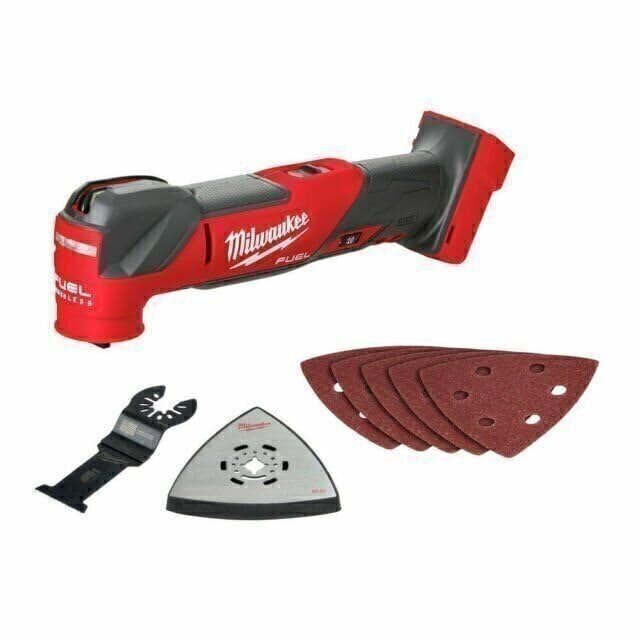
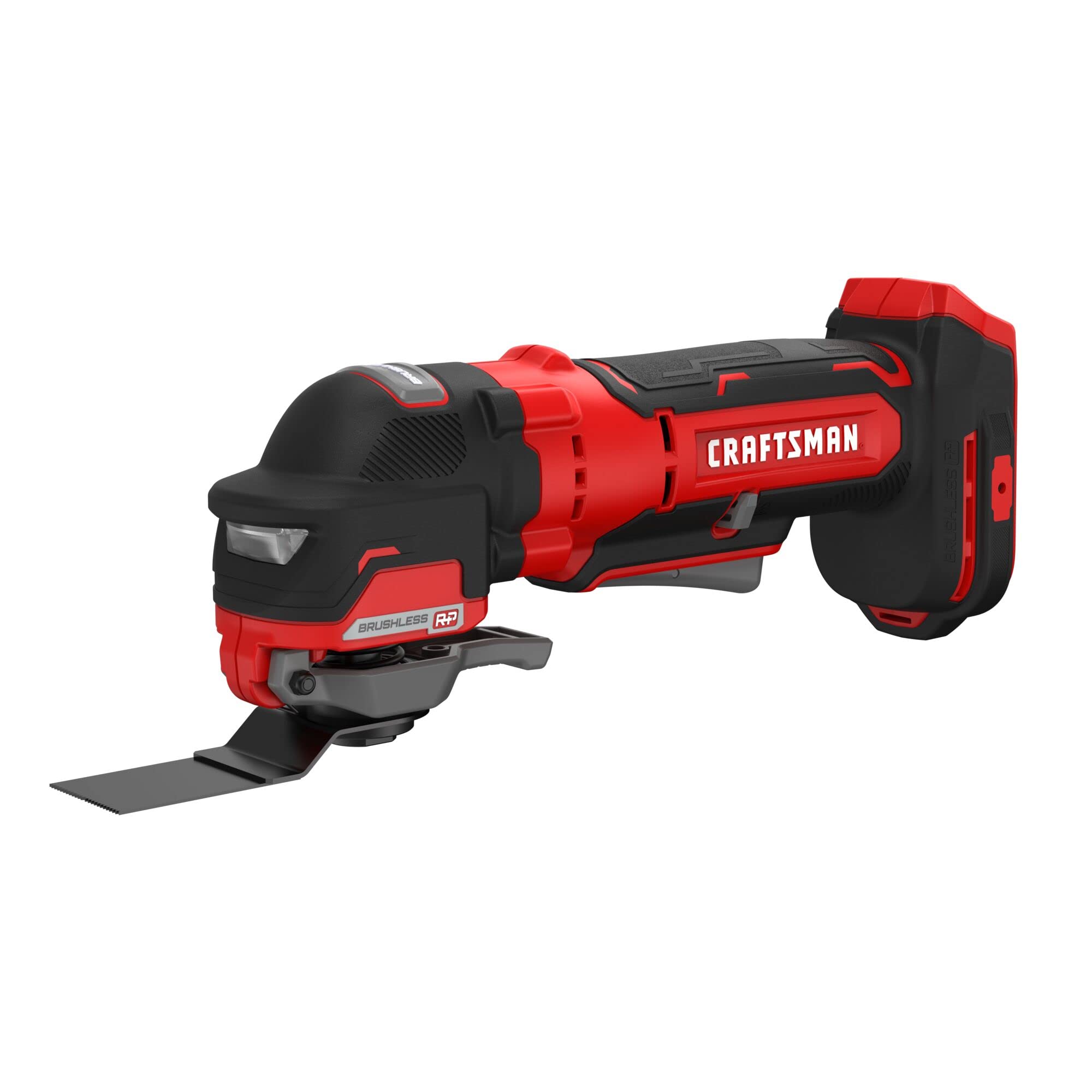
The Ridgid R86242B dominates cutting efficiency, finishing threaded rod cuts faster than the Milwaukee M18 Fuel and featuring a wider 4-degree oscillation angle compared to the Craftsman V20’s 2.8 degrees for more aggressive material removal. Its quick-change pin system allows for faster accessory swaps than the Milwaukee 2836-20’s threaded bolt, though it exhibits slightly higher vibration levels than the Milwaukee M12 FUEL during extended use.
Rating sources
“As you can see, Ridgid absolutely dominated the competition in pretty much every test! To be perfectly candid, Ridgid was not the projected favorite, but boy did we eat our words.”
Our 4.5 score is the average of the 1 scored review above; 2 more reviewed it without printing a score and are not in the average. Ratings marked * were derived from the reviewer’s written analysis or video transcript — the publisher didn’t print an explicit numeric score, so we inferred one from their own words. Click through to verify. More about methodology.