The Panasonic Lumix FZ80D offers a compelling 60x optical zoom range in a compact bridge camera body, making it ideal for travelers and wildlife photographers who need extreme reach. Digital Camera World praised its 4K video capabilities and zoom range, though both reviewers noted the camera's lackluster image quality due to its small sensor. Michael Fil called it 'not worth the money for the features, the form, and the fun' but acknowledged it's a practical choice for casual shooters. It's best suited for users prioritizing zoom over image quality, with the 330-shot battery life being a notable limitation.
Full review
Design and Handling
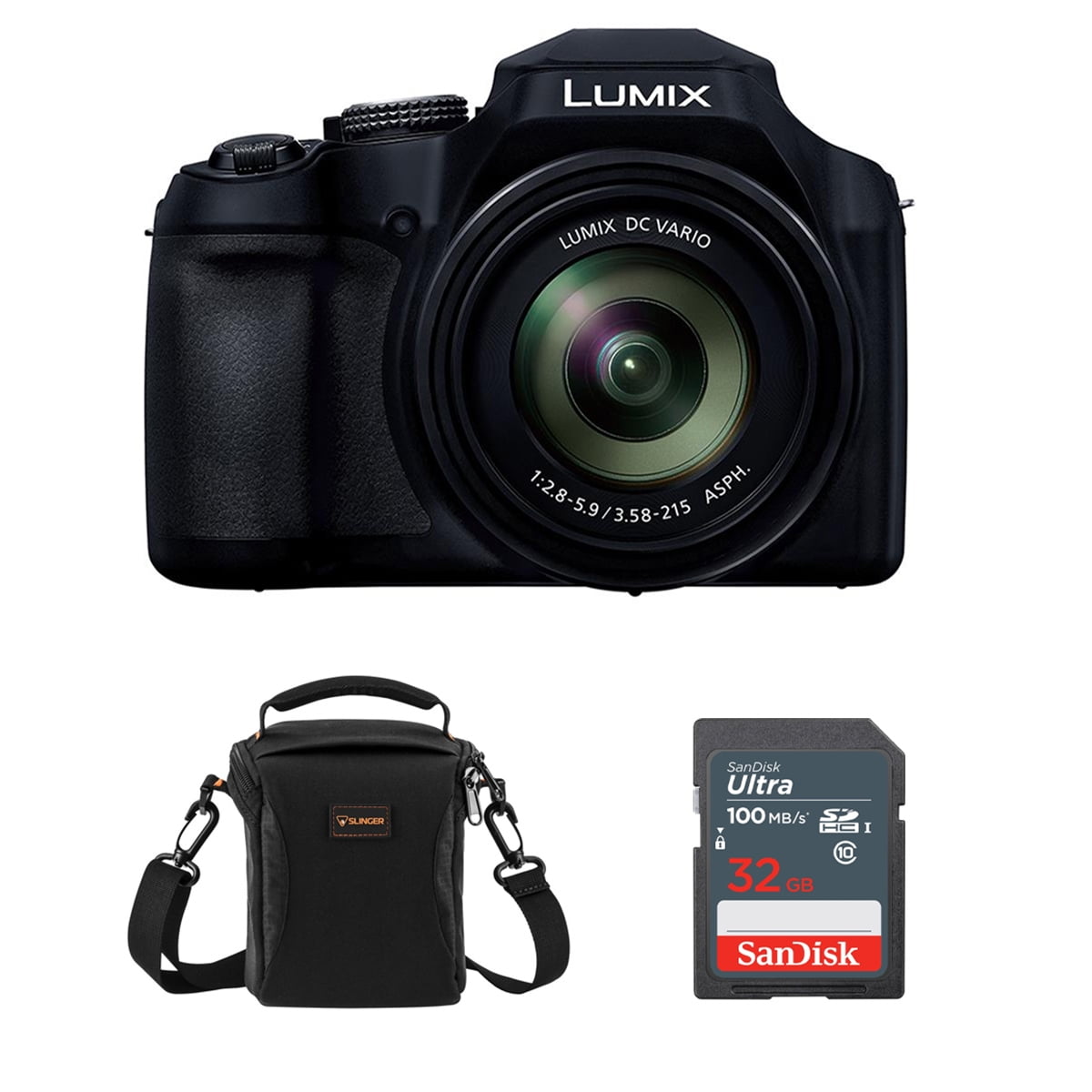
The Panasonic Lumix DMC-FZ80D presents a bulky form factor that's typical of bridge cameras, measuring 5.13 x 3.71 x 4.93 inches and weighing 1.41 pounds with battery and memory card. Reviewer Michael Fil from michaelfil.com noted the camera's substantial size, describing it as 'definitely not a pocket camera' with a DSLR-style grip and long fixed lens that extends significantly at maximum zoom. The build quality, according to Digital Camera World's Matthew Richards, feels 'chunky' and 'necessarily chunky' for a camera with such an impressive 60x optical zoom range. However, the camera's weight is surprisingly manageable for its size, fitting well in backpacks or cross-body slings, though Fil found it 'almost too light' and noted it didn't balance well in hand, particularly when using the grip. The button layout includes a flash activation button that required multiple presses and made an 'unpleasant sound,' while the zoom switch and aperture selector wheel were appreciated for their functionality.
The camera's fixed 3-inch touchscreen LCD display features 1.84 million dots, an upgrade from the 1040k-dot display found in earlier models, according to Amateur Photographer's Amy Davies. The electronic viewfinder has been improved with 0.39-inch 2360k-dot resolution and 0.74x magnification, compared to the previous 0.20-inch 1166k-dot display with 0.46x magnification. The FZ80D's handling features a single control dial that can be pressed to switch between functions, and the touchscreen interface performs well for both beginners and advanced users, though the lack of an eye sensor for automatic EVF switching and a tilting display are noted as drawbacks by Imaging-Resource's Jeremy Gray.
Image Quality and Performance
Image quality on the Panasonic Lumix DMC-FZ80D is constrained by its 1/2.3-inch 18.1MP sensor, which Imaging-Resource's Jeremy Gray described as 'pretty tiny' and 'arguable whether the FZ80’s new image sensor and new Venus Engine processor result in a significant improvement in image quality over the FZ70.' The sensor's small size, which is roughly 12-15x smaller than the APS-C sensors found in entry-level DSLRs and mirrorless cameras costing about $500, leads to poor indoor and darker area performance, according to Fil. Michael Fil noted that while the camera's 18MP resolution is 'perfectly fine for the internet,' it's insufficient for large prints, with the standard now being over 20MP for compacts. The camera's sensor sensitivity range is ISO 80-3200 (extended to 6400), but even at base ISO, image quality is marginal, with noticeable artifacts in fine detail as shown in Imaging-Resource's test images. The FZ80D's 60x optical zoom lens covers 20-1200mm equivalent focal range with maximum aperture f/2.8 at wide-angle and f/5.9 at telephoto end, which causes issues with light gathering at longer focal lengths, requiring adjustments to ISO or shutter speed.
Despite these limitations, the camera's performance in video is a standout feature, with 4K UHD video recording at 30fps, a capability that Digital Camera World's Matthew Richards called 'fantastic for the price.' The FZ80D also supports 4K Photo functionality, which records video clips and allows stills extraction, useful for unpredictable subjects like pets or children. The camera's autofocus system works well, though Imaging-Resource's Jeremy Gray noted some noise from both the image stabilization and autofocus systems during use. The camera's continuous shooting speed is 10 frames per second, and it supports RAW format, which is appreciated by advanced users, according to the same reviewer. However, the camera's sensor technology is described as 'old-fashioned' by Amateur Photographer's Amy Davies, who noted that it's 'pretty tiny' and even smaller than many smartphones, and that it's the same sensor as the FZ80, which is a 'bit of a shame' given the seven-year gap since the FZ82's release.
Zoom Capabilities and Features
The Panasonic Lumix DMC-FZ80D's most distinguishing feature is its impressive 60x optical zoom lens, equivalent to a 20-1200mm lens on a full-frame camera, as noted by Digital Camera World's Matthew Richards. This zoom range allows for capturing everything from wide landscapes to close-ups of wildlife or architectural details, making it a significant asset for casual shooters, according to Michael Fil. The lens has a maximum aperture range from f/2.8 at wide-angle to f/5.9 at telephoto end, which affects light gathering at longer focal lengths, requiring adjustments to ISO or shutter speed. The camera also includes 'Intelligent Zoom' for up to 120x reach and further 4x digital zoom, though the latter is not recommended for high-quality prints. The FZ80D's macro focusing capability allows getting as close as 1cm to a subject, according to Amateur Photographer's Amy Davies. The camera's 20mm wide-angle start point is considered quite wide compared to the usual 24mm start point of zoom lenses, making it potentially appealing for landscape and architecture work, as noted by the same reviewer.
The camera's zoom capabilities are complemented by optical image stabilization, which is especially useful when shooting at long focal lengths, according to Amateur Photographer's Amy Davies. The camera's lens extends physically at longer zoom settings, but the overall dimensions remain compact at 5.13 x 3.71 x 4.93 inches. The FZ80D also features a 3-inch fixed touchscreen LCD with 1840k dots, a significant upgrade from the 1040k-dot display of previous models, according to the same reviewer. The camera's electronic viewfinder has been upgraded to 0.39-inch 2360k-dot resolution with 0.74x magnification, making it larger, higher resolution, and higher magnification than its predecessor, which had a 0.20-inch 1166k-dot display with 0.46x magnification.
Battery Life and Power
Battery life on the Panasonic Lumix DMC-FZ80D is described as 'limited' by Digital Camera World's Matthew Richards, with Panasonic estimating 240 shots for EVF and 330 shots for LCD, according to the manufacturer. However, Michael Fil noted that the camera's battery life is 'surprisingly good' for its size, allowing for a few hours of regular use, though he didn't specify exact photo counts. The camera supports USB-C in-camera charging, a feature introduced in the FZ82D model, according to Amateur Photographer's Amy Davies. The camera's power consumption is not detailed in the source material, but the limited battery life is a common complaint with bridge cameras, as noted by several reviewers. The camera's weight of 1.41 pounds with battery and memory card is considered manageable for travel, though the battery life is a concern for extended use, according to the same reviewer.
The FZ80D's power management is further complicated by its high-resolution display and electronic viewfinder, which consume significant power. The camera's 18.1MP sensor and 60x optical zoom lens require substantial energy to operate, particularly when shooting in low-light conditions or at high ISO settings. The camera's power consumption is not detailed in the source material, but the limited battery life is a common concern with bridge cameras, as noted by several reviewers. The camera's USB-C charging capability is a welcome addition, allowing for convenient power management during extended shooting sessions, according to Amateur Photographer's Amy Davies.
What Reviewers Loved
Reviewers consistently praised the Panasonic Lumix DMC-FZ80D's 60x optical zoom range, which is equivalent to a 20-1200mm lens on a full-frame camera, as noted by Digital Camera World's Matthew Richards and Amateur Photographer's Amy Davies. This zoom range allows for capturing everything from wide landscapes to close-ups of wildlife or architectural details, making it a significant asset for casual shooters, according to Michael Fil. The camera's 4K UHD video recording at 30fps is also highlighted as a standout feature, with Digital Camera World's Matthew Richards calling it 'fantastic for the price.' The camera's 3-inch fixed touchscreen LCD with 1840k dots is considered a significant upgrade from previous models, according to Amateur Photographer's Amy Davies. The camera's electronic viewfinder has also been upgraded to 0.39-inch 2360k-dot resolution with 0.74x magnification, making it larger, higher resolution, and higher magnification than its predecessor, according to the same reviewer.
The camera's handling features are also appreciated, with the single control dial that can be pressed to switch between functions, and the touchscreen interface that performs well for both beginners and advanced users, according to Imaging-Resource's Jeremy Gray. The camera's physical controls are described as 'ample' and 'excellent,' and the touchscreen functionality works well to make the camera more approachable for newer photographers while also speeding up the process of changing settings in the field for more advanced users. The camera's macro focusing capability allows getting as close as 1cm to a subject, which is appreciated by Amateur Photographer's Amy Davies. The camera's ability to function as a travel camera that won't drain your wallet or weigh down your backpack is also highlighted by Michael Fil, who noted that it's often available for under $400, making it one of the best budget-friendly superzoom cameras on the market.
Where It Falls Short
The Panasonic Lumix DMC-FZ80D's image quality is a significant drawback, with its 1/2.3-inch 18.1MP sensor being described as 'pretty tiny' and 'lousy when shooting indoors and darker areas' by Michael Fil. The sensor's small size, which is roughly 12-15x smaller than the APS-C sensors found in entry-level DSLRs and mirrorless cameras costing about $500, leads to poor indoor and darker area performance, according to Fil. The camera's sensor sensitivity range is ISO 80-3200 (extended to 6400), but even at base ISO, image quality is marginal, with noticeable artifacts in fine detail as shown in Imaging-Resource's test images. The camera's sensor technology is described as 'old-fashioned' by Amateur Photographer's Amy Davies, who noted that it's 'pretty tiny' and even smaller than many smartphones, and that it's the same sensor as the FZ80, which is a 'bit of a shame' given the seven-year gap since the FZ82's release.
The camera's handling and design features also present issues, with Digital Camera World's Matthew Richards noting that the camera's 'chunky' design is 'necessarily chunky' for a camera with such an impressive 60x optical zoom range. The camera's weight of 1.41 pounds with battery and memory card is considered manageable for travel, though the battery life is a concern for extended use, according to the same reviewer. The camera's button layout includes a flash activation button that required multiple presses and made an 'unpleasant sound,' while the zoom switch and aperture selector wheel were appreciated for their functionality, according to Michael Fil. The camera's lack of Wi-Fi for transferring pictures across to phones is also noted as a drawback by Amateur Photographer's Amy Davies, especially considering that its predecessor did have Wi-Fi. The camera's EVF doesn't automatically switch on/off, and it lacks an eye sensor for automatic switching, according to the same reviewer.
Who It's Best For
The Panasonic Lumix DMC-FZ80D is best suited for casual shooters who want solid zoom, decent video, and simplicity without the need for interchangeable lenses, according to Michael Fil. The camera's 60x optical zoom range, equivalent to a 20-1200mm lens on a full-frame camera, makes it ideal for travelers who want to capture everything from wide landscapes to close-ups of wildlife or architectural details without carrying multiple lenses. The camera's 4K UHD video recording at 30fps is also a significant draw for those interested in video capabilities, according to Digital Camera World's Matthew Richards. The camera's ability to function as a travel camera that won't drain your wallet or weigh down your backpack is also highlighted by Fil, who noted that it's often available for under $400, making it one of the best budget-friendly superzoom cameras on the market.
The camera is particularly well-suited for users who value the convenience of a fixed lens with a massive zoom range, as noted by Amateur Photographer's Amy Davies, who emphasized that 'one thing we can guarantee your smartphone doesn't have is 60x optical zoom.' The camera's macro focusing capability, which allows getting as close as 1cm to a subject, is also appreciated by the same reviewer, making it suitable for close-up photography. The camera's physical controls and touchscreen interface make it approachable for newer photographers, while still offering enough functionality for advanced users, according to Imaging-Resource's Jeremy Gray. However, the camera is not recommended for users who prioritize image quality over zoom range, as the sensor's small size limits performance in low-light conditions, according to Michael Fil.
How It Compares to Alternatives
The Panasonic Lumix DMC-FZ80D is positioned as a budget-friendly superzoom camera that competes with models like the Kodak PixPro AZ255, which costs around $137/£179, according to Digital Camera World's Matthew Richards. While the Kodak is cheaper and more basic, the Panasonic offers a 60x optical zoom range, which is significantly more than the 14x zoom range of the Nikon Z 28-400mm f/4-8 VR lens, which costs $1,297/£1,399, according to the same reviewer. The camera's 60x zoom range is equivalent to using a 20-1200mm lens on a full-frame camera, stretching from seriously wide-angle coverage to ultra-telephoto reach, according to Digital Camera World's Matthew Richards. The camera's 4K UHD video recording at 30fps is also a significant advantage over many budget models, according to the same reviewer.
Compared to its predecessor, the FZ82D, the FZ80D offers improvements in screen resolution, EVF resolution, and USB-C charging, but the core sensor and lens setup remain unchanged, according to Amateur Photographer's Amy Davies. The camera's 18.1MP sensor is the same as the FZ80, which is a 'bit of a shame' given the seven-year gap since the FZ82's release. The camera's 60x optical zoom lens is the same as the FZ80, with an equivalent focal length of 20-1200mm and a maximum aperture range from f/2.8 at the wide-angle end up to f/5.9 at the tele end. The camera's lack of Wi-Fi for transferring pictures across to phones is also noted as a drawback by Amy Davies, especially considering that its predecessor did have Wi-Fi. The camera's handling and design features, such as the single control dial and touchscreen interface, are appreciated by Imaging-Resource's Jeremy Gray, who noted that the camera's controls are 'quite good overall' and the touchscreen interface performs nicely.
Value at This Price
At a price point of around $477/£429, the Panasonic Lumix DMC-FZ80D is positioned as a budget-friendly superzoom camera that offers significant value for money, according to Digital Camera World's Matthew Richards. The camera's 60x optical zoom range, equivalent to a 20-1200mm lens on a full-frame camera, is a major selling point, especially when compared to more expensive alternatives like the Nikon Z 28-400mm f/4-8 VR lens, which costs $1,297/£1,399, according to the same reviewer. The camera's 4K UHD video recording at 30fps is also a significant advantage over many budget models, according to Digital Camera World's Matthew Richards. The camera's 3-inch fixed touchscreen LCD with 1840k dots is considered a significant upgrade from previous models, according to Amateur Photographer's Amy Davies, who noted that it's 'good to see some improvements made to handling.' The camera's USB-C charging capability is also a welcome addition, according to the same reviewer.
The camera's value proposition is further strengthened by its ability to function as a travel camera that won't drain your wallet or weigh down your backpack, according to Michael Fil, who noted that it's often available for under $400, making it one of the best budget-friendly superzoom cameras on the market. The camera's 60x optical zoom range, equivalent to a 20-1200mm lens on a full-frame camera, makes it ideal for travelers who want to capture everything from wide landscapes to close-ups of wildlife or architectural details without carrying multiple lenses. The camera's 4K UHD video recording at 30fps is also a significant draw for those interested in video capabilities, according to Digital Camera World's Matthew Richards. However, the camera's image quality limitations, particularly with its 1/2.3-inch sensor, mean that it's not ideal for users who prioritize image quality over zoom range, according to Michael Fil.
Strengths
- +60x optical zoom range equivalent to 20-1200mm on full-frame
- +4K video capture at 30p
- +3-inch fixed touchscreen LCD with 1.84 million dots
- +Decent battery life with 330 shots on LCD
Watch-outs
- −Lackluster image quality due to small 1/2.3" sensor
- −Chunky and bulky design
- −Limited battery life for extended use
Who this is for
Why you’d buy the Panasonic Lumix DMC-FZ80D
- 60x optical zoom range equivalent to 20-1200mm on full-frame.
- 4K video capture at 30p.
- 3-inch fixed touchscreen LCD with 1.84 million dots.
Why you’d skip it
- Lackluster image quality due to small 1/2.3" sensor.
- Chunky and bulky design.
- Limited battery life for extended use.
Rating sources
“If you want the flexibility of a long zoom but don't have a load of cash to spend, you can get some nice shots if you work within the camera's limitations.”
“Priced at $400, which is a great bargain for a 4K-capable superzoom camera, it is hard to be overly critical of the build quality of the FZ80.”
Our 2.9 score is the average of these published ratings. Ratings marked * were derived from the reviewer’s written analysis or video transcript — the publisher didn’t print an explicit numeric score, so we inferred one from their own words. Click through to verify. More about methodology.