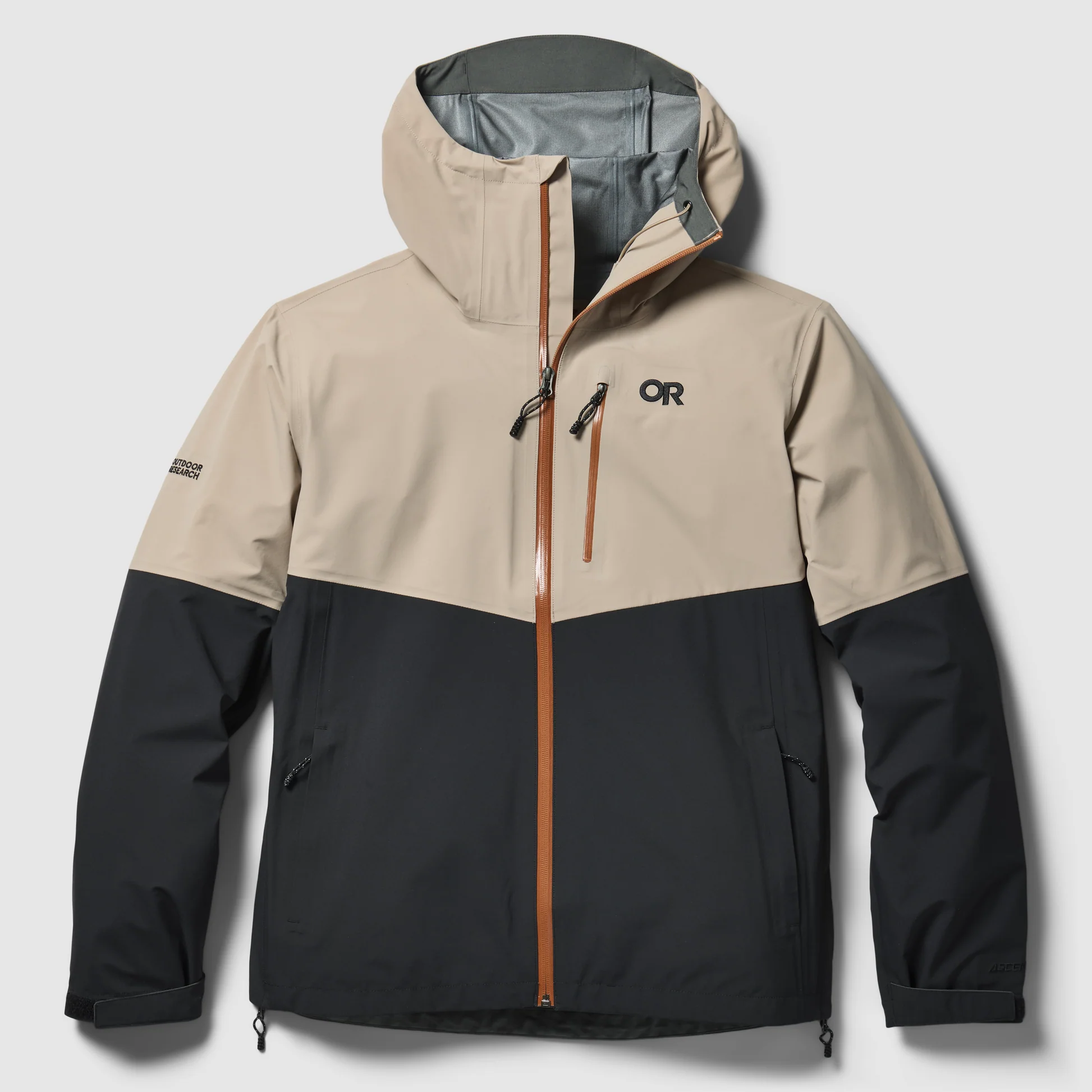
The Outdoor Research Foray 3L delivers reliable waterproofing and durable construction through its AscentShell Dry membrane, yet it suffers from significant weight and poor breathability. Pack Hacker found that the jacket’s substantial mass prevents self-packing, while Better Trail noted that the extensive TorsoFlo zippers create uncomfortable pressure points under backpack hipbelts. Treeline Review highlighted its carbon neutral certification as a key environmental advantage, but confirmed that the thick fabric creates a stifling experience during high-output activities in warm weather. This shell is best suited for cold-weather use where storm protection outweighs ventilation needs, whereas hikers seeking ultralight gear or summer breathability should look elsewhere.
Full review
AscentShell Dry fabric durability versus weight penalty
The Outdoor Research Foray 3L utilizes a proprietary three-layer AscentShell Dry membrane bonded to a 40-denier recycled nylon face fabric, creating a shell that prioritizes ruggedness over ultralight portability. While a 40-denier face fabric might sound thin compared to heavy winter hardshells, reviewers found it sufficiently robust to handle driving rain and brush without the crinkling or tearing associated with lighter options like the Montbell Versalite.
This durability focus means the jacket does not pack down into its own pocket. Pack Hacker explicitly noted that the Foray 3L lacks self-packability, forcing users to fold and roll it for storage in a backpack side pocket or car trunk. Better Trail measured the women's Aspire version at 13.9 ounces, ranking it as the heaviest three-layer jacket they tested against competitors like the Patagonia Torrentshell and Black Diamond Fineline Stretch. The extra weight is largely attributed to the heavy-duty hardware required for its unique ventilation system rather than just the fabric itself.
TorsoFlo side zips create hipbelt pressure points
The defining feature of this shell is its TorsoFlo ventilation, which consists of full-length zippers running from the bicep all the way down to the hem on both sides. When unzipped, these vents allow air to flow freely through the jacket and can even be worn open like a poncho for maximum cooling or to accommodate a bulky backpack underneath in heavy rain. Pack Hacker described this setup as creating a gap between front and back panels that adds significant airflow, making it highly effective when temperatures rise during high-output activities.
However, these extensive zippers introduce specific ergonomic issues for hikers carrying loaded packs. Better Trail found the hip-to-bicep venting to be polarizing because the hardware creates uncomfortable pressure points beneath a backpack hipbelt. The bulky zipper track and fabric flaps dig into the wearer when weight is distributed across the hips. Additionally, Pack Hacker noted that reaching these zippers can be challenging for users with limited range of motion, as the tracks terminate right at the edge of the armpit, requiring awkward twisting to engage or disengage them.
Waterproofing holds in sustained downpours
The AscentShell Dry membrane provides reliable protection against wet weather, with reviewers reporting zero water permeation during extended exposure to rain and sleet. Treeline Review tested the jacket extensively as a ridgerunner on the Appalachian Trail in Maine, subjecting it to cloud-level mist, high winds, and sideways sleet without experiencing any leaks. The 20,000 mm waterproof rating is backed by fully taped seams and YKK zippers with polyurethane coatings that effectively seal out moisture during heavy storms.
The durable water-repellent finish on the exterior also performs well in wet conditions. Better Trail confirmed that the PFAS-free Nikwax Direct.Dry DWR causes water to bead and roll off the face fabric rather than soaking through, maintaining breathability and comfort over time. While Gore-Tex Paclite versions of this jacket existed previously, the newer AscentShell Dry construction offers a stretchier, quieter alternative that still delivers stormproofing comparable to more expensive hardshells like the Patagonia Granite Crest.
Lack of breathability restricts warm-weather use
Despite the massive side vents, reviewers consistently flagged a fundamental lack of breathability in the AscentShell Dry fabric itself. Treeline Review described wearing the jacket during hot summer conditions as a stifling, sauna-like experience because the durable 40-denier face fabric traps heat and moisture inside. The stretchy construction that aids mobility also reduces airflow compared to rigid membranes, meaning users who run hot will likely find this shell relegated strictly to cooler seasons.
Better Trail acknowledged that while the soft inner backer wicks moisture better than plasticky two-layer designs, the thicker face fabric still hinders overall evaporation. On a drizzly early-summer hike in Washington’s Enchantments, reviewers managed without overheating only because of the TorsoFlo zips; without them open, condensation would build up rapidly during cardio-intensive efforts. This limitation makes the Foray 3L unsuitable for summer trail running or high-output activities in humid environments.
Adjustable hood and hem feel cheaply executed
The fit of the jacket relies heavily on its adjustment points, including a three-way adjustable hood, hook-and-loop cuffs, and an elastic waist cinch. The hood is helmet-compatible and tightens effectively to seal out driving rain, while the sturdy Velcro cuffs stay securely fastened even during vigorous movement. These features provide a secure fit that reviewers appreciated when battling gusty alpine winds.
However, Better Trail criticized specific execution details as feeling unrefined compared to premium competitors. The hem adjustment mechanism was described as cheap and poorly executed, with fabric flaps over the hand pockets adding bulk without offering a high-end aesthetic. Furthermore, because the TorsoFlo zips run along the sides, the waist cinch only adjusts the front panel, creating an asymmetrical pull that feels awkward when trying to seal out wind at the hem.
Carbon neutral certification and sustainable materials
The Foray 3L stands out in its category for its environmental credentials, utilizing bluesign-approved 100% recycled nylon throughout its construction. Treeline Review highlighted that the jacket is certified as carbon neutral by Climate Impact Partners, marking it as one of the first pieces of outdoor technical apparel to receive this specific designation. This commitment extends to the use of PFAS-free Nikwax Direct.Dry DWR, addressing growing consumer concerns regarding toxic chemicals in rain gear.
These sustainable choices do not compromise performance, but they do position the jacket at a premium price point. Treeline Review noted that while the $249 market price is steep, frequent sales from retailers make it more accessible for budget-conscious hikers who prioritize eco-friendly materials and durable construction over ultralight packability.
Strengths
- +Constructed from durable, stretchy 40D recycled nylon with AscentShell Dry 3L membrane for reliable waterproofing in heavy rain.
- +Certified carbon neutral by Climate Impact Partners and utilizes PFAS-free Nikwax Direct.Dry DWR finish.
- +Includes fully adjustable hood, hook-and-loop cuffs, and elastic waist cinch for a secure fit in storms.
Watch-outs
- −Lacks breathability due to the durable face fabric, creating a stifling experience during high-output activity in warm weather.
- −Does not pack into itself and is relatively heavy at 15.3 oz, making it less suitable for ultralight packing.
- −Long side zippers can create pressure points under backpack hipbelts and the hem adjustment feels cheap to some users.
How it compares
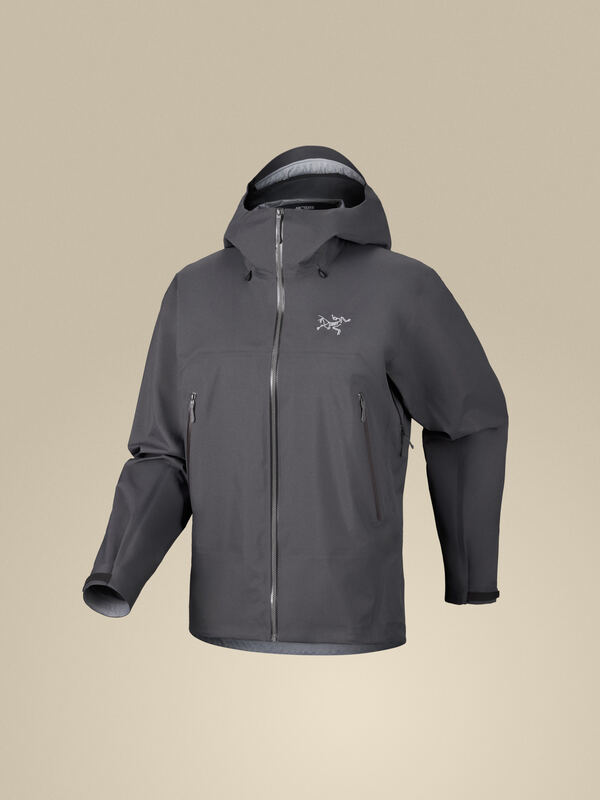
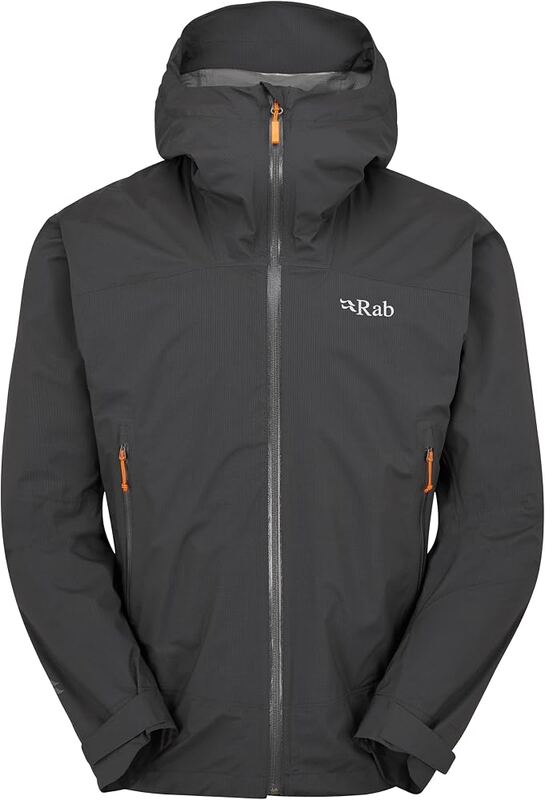
The Outdoor Research Foray 3L uses hip-to-bicep TorsoFlo zips for ventilation, where the Patagonia Boulder Fork has no vents and the Rab Downpour has underarm vents. At 15.3 oz it is heavier than the Rab Downpour (13.3 oz) and the Arc'teryx Beta SL (12 oz). It costs less than the Arc'teryx and more than the Rab.
Rating sources
Counts as 4.01/5 in our score — this publisher's 36 scores on the site average 4.38, so its scores are adjusted down to compare fairly with other publishers.
“It’s a strong performer in stormy conditions and a great daily driver from town to trail—just not the most streamlined or polished option out there.”
Counts as 4.05/5 in our score — this publisher's 10 scores on the site average 3.95, so its scores are adjusted up to compare fairly with other publishers.
“Though the Outdoor Research Foray 3L Rain Jacket doesn’t pack into itself, its durable material and smart features are enough to justify making room for it.”
Our 4.0 score is the average of the 2 scored reviews above, each adjusted for how strictly its publisher scores; 7 more reviewed it without printing a score and are not in the average. More about methodology.