The NVIDIA RTX A6000 is a high-end workstation GPU built on the Ampere architecture with 48 GB of VRAM, making it suitable for demanding visualization and AI workflows. It supports PCIe Gen 4 and features hardware-based ray tracing, though it requires a specialized power connector that differs from standard GPUs. The card is designed for professional applications with certified drivers and ECC memory support, but its power delivery system presents installation challenges.
Full review
Architecture and core specifications
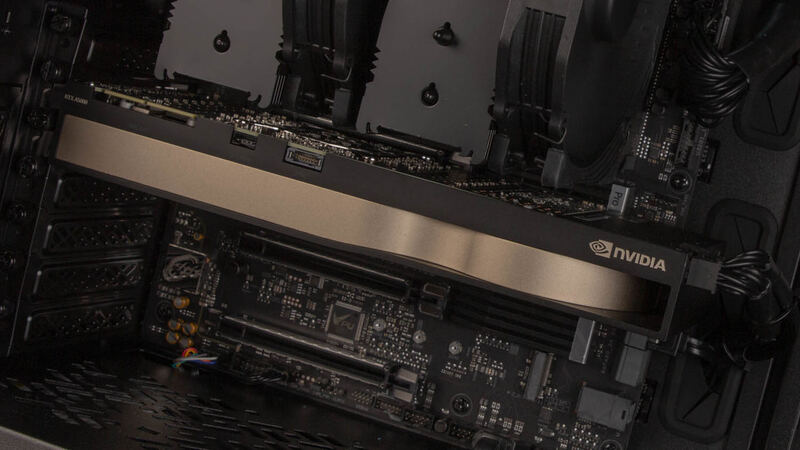
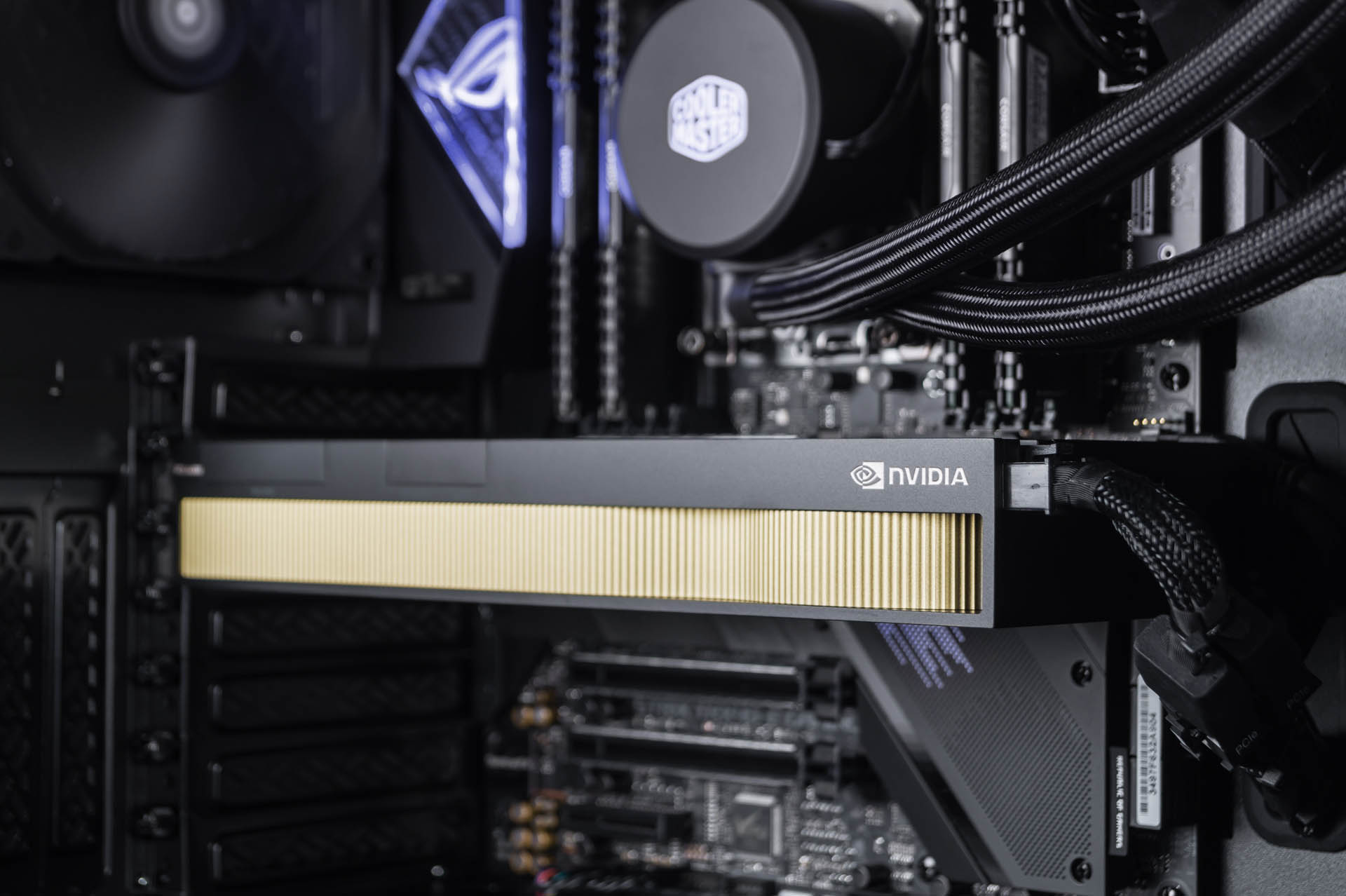
According to AEC Magazine, the NVIDIA RTX A6000 represents the first workstation GPU built on the Ampere architecture, marking a significant generational shift from previous Turing-based models. This card features 10,752 CUDA cores, 84 RT cores, and 336 Tensor cores, all fabricated on Samsung's 8nm process with 28.3 billion transistors. The design incorporates 48 GB of GDDR6 memory with ECC support, providing double the memory capacity of its predecessor, the Quadro RTX 6000. The card operates at a 300W TDP and utilizes a dual-fan cooling solution with a distinctive black mirror finish and minimal angular design. It supports PCIe Gen 4, a feature not available in all workstation configurations, and includes four DisplayPort 1.4a connectors alongside hidden NVLink, stereo, and sync connectors behind discrete panels.
Memory and scalability
With 48 GB of VRAM, the RTX A6000 matches the memory capacity of the older Quadro RTX 8000 while doubling that of the Quadro RTX 6000. This substantial memory pool enables handling of high-polygon models and high-resolution textures in GPU-accelerated rendering workflows. AEC Magazine notes the card supports NVLink connectivity, allowing two units to be bridged for a combined 96 GB memory pool. However, this configuration can incur performance penalties when sharing geometry between GPUs. In practical testing scenarios, this memory capacity proved sufficient for complex visualizations and large datasets, though users working with extremely high-resolution assets or complex simulations may find the memory limit constraining without the NVLink expansion option.
Performance benchmarks and real-world workflows
Testing conducted across various professional applications demonstrated the RTX A6000's superior performance over its predecessor. The card excels in ray-tracing performance, with hardware-accelerated motion blur and AI denoising capabilities that reduce render times. In Blender and LuxMark tests, the card delivered exceptional performance, though the results were somewhat limited by the testing environment which used a consumer-grade build rather than a dedicated workstation setup. The card's performance in AI inference and compute workloads was particularly notable, with the Tensor cores providing substantial improvements in processing speed for machine learning tasks.
Professional features and certifications
Despite the rebranding from Quadro to RTX, the card maintains all professional features expected in workstation-grade hardware. It includes certified drivers for professional applications, ECC memory support, and compatibility with NVIDIA virtual GPU (vGPU) software for virtual workstation instances. The card supports stereo and Frame Lock for visualization clusters, as well as NVIDIA GRID, Quadro Virtual Data Center Workstation, and Virtual Compute Server vGPU profiles. These features ensure that the RTX A6000 can integrate seamlessly into enterprise environments and support complex visualization workflows that require high reliability and stability.
Power consumption and thermal design
The RTX A6000 operates at a 300W TDP, requiring a robust power supply unit in workstation configurations. The card's power delivery system uses a specialized 8-pin connector that connects to two standard 8-pin PSU connectors via an adapter. The cooling solution consists of dual fans positioned at the top and bottom of the card, with a radial type fan that expels hot air directly out of the workstation's rear via a grille on the bracket. Thermal performance showed that the card maintained stable temperatures under sustained load, though the dual-fan design may be insufficient for extremely high-performance workloads in compact workstation builds. The card's form factor is full-height and dual-slot, requiring adequate clearance in workstation cases.
Compatibility and ecosystem support
The RTX A6000 is designed for compatibility with the latest workstation platforms, particularly those featuring AMD Ryzen Threadripper processors and PCIe Gen 4 motherboards. The card's support for PCIe Gen 4 enables faster data transfer rates compared to Gen 3, though this benefit is only realized in compatible systems. The card supports NVIDIA's vGPU software, allowing workstations to be repurposed into multiple virtualized instances, a feature that becomes increasingly important as enterprises adopt rack-friendly workstation designs. The card's certification for applications like Revit, ArchiCAD, Enscape, V-Ray, and Lumion ensures it can be used in a wide range of professional visualization workflows. However, the card's lack of NVLink support in the Ada Lovelace generation, which replaced it, may limit its appeal for users requiring maximum memory capacity or specific engineering simulation workloads.
Price and market positioning
This pricing positioned the card as a high-end workstation solution, competing with other professional GPUs in the market. The card's performance improvements over the RTX 6000 were substantial, particularly in ray-tracing and AI performance, though the price premium was significant. The card's direct replacement status for the RTX 8000, which StorageReview notes was roughly three years old at the time of release, made it a compelling upgrade for users seeking the latest technology. However, the card's performance advantage was most pronounced in specific workflows, and users with more modest requirements might find the price-to-performance ratio less favorable.
Limitations and user feedback
Despite its impressive specifications and performance, the RTX A6000 has several limitations that users should consider. The card's lack of NVLink support in the Ada Lovelace generation, which succeeded it, means that users requiring more than 48 GB of memory cannot achieve that level of scalability. The card's high price point, particularly when bundled with a workstation, makes it less accessible for smaller businesses or individual users. Some reviewers noted that the card's performance gains were not uniformly distributed across all applications, with certain workflows showing only modest improvements. Additionally, the card's design, while aesthetically pleasing, may not be suitable for all workstation environments, particularly those with limited clearance or specific cooling requirements.
Strengths
- +48 GB of VRAM, the most memory of any professional GPU
- +Built on the Ampere architecture with PCIe Gen 4 support
- +Supports Nvidia virtual GPU (vGPU) software for multiple virtual workstations
- +Designed for visualization workflows with hardware-based ray tracing
Watch-outs
- −Requires a special 8-pin power connector that differs from standard GPUs
- −High cost may not be justifiable for smaller users
How it compares
The NVIDIA RTX A6000 provides 48 GB of VRAM and is built on the Ampere architecture, making it comparable to the RTX 6000 Ada Generation in terms of memory capacity. However, the RTX 6000 Ada Generation outperforms it in ray tracing and AI compute performance with 211 TFLOPs of RT performance versus the A6000's capabilities. While the A6000 supports vGPU software for multiple virtual workstations, it lacks the NVLink support and higher CUDA core count that the 6000 Ada Generation offers.
Rating sources
“The Nvidia RTX A6000 is the first workstation GPU to be built on the Nvidia Ampere architecture, and also the first to support PCIe Gen 4. With double the bandwidth of PCIe Gen 3, it should mean data can move in and out of the GPU quicker, but it won't benefit all workflows.”
“The RTX A6000 is a huge upgrade no matter which last-gen card you compare it to, offering a more realistic output of moving objects and support for hardware-accelerated motion blur”
“The NVIDIA RTX A6000 is one of the most powerful workstation GPUs available today. It's built for professionals who need extreme performance across 3D rendering, AI development, engineering simulations, and advanced content creation.”
Our 4.5 score is the average of the 3 scored reviews above; 3 more reviewed it without printing a score and are not in the average. Ratings marked * were derived from the reviewer’s written analysis or video transcript — the publisher didn’t print an explicit numeric score, so we inferred one from their own words. Click through to verify. More about methodology.