Verdict
Head-to-head · Best Workstation Gpus For AI

NVIDIA RTX 3500 Ada Generation vs NVIDIA RTX A6000

Which is the better buy? Side-by-side on rating, price, strengths, and watch-outs — with the published ratings we averaged to get there.

Verdict is reader-supported. As an Amazon Associate we earn from qualifying purchases. Some links on this page are affiliate links — if you click through and buy, we may earn a small commission at no extra cost to you. Our ratings are sourced from independent publications, not sponsors.
The short answer

NVIDIA RTX A6000 comes out ahead by a clear margin (4.5 vs 4.0). The gap is mostly about users requiring maximum VRAM with certified drivers and ECC memory support — read the strengths below before deciding.

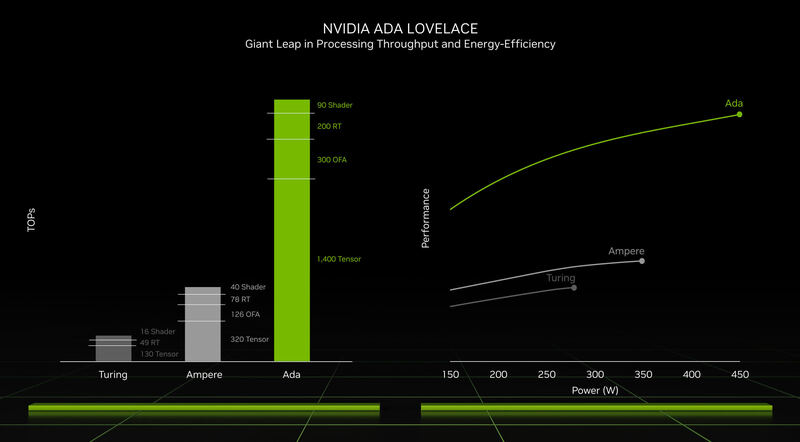
NVIDIA RTX 3500 Ada Generation
Ranked #4 in Best Workstation Gpus For AI
NVIDIA RTX 3500 Ada Generation
7 sourcesall derived$3,299.99as of Oct 2

The NVIDIA RTX 3500 Ada Generation is a professional-grade laptop GPU built on TSMC's 5nm process with Ada Lovelace architecture. It features 5,120 CUDA cores and 12 GB of ECC GDDR6 VRAM, delivering strong performance for 3D rendering and AI tasks. While it supports advanced features like DLSS 3 and ray tracing, its variable TGP range leads to significant performance differences between systems. The card is designed for professional users requiring reliable graphics performance in mobile workstations.

Strengths
  • — 5,120 CUDA cores for high parallel processing capability
  • — 12 GB of ECC GDDR6 VRAM for professional workloads
  • — Supports DLSS 3 for enhanced frame rates in compatible applications
Watch-outs
  • — Wide TGP range (60 W to 140 W) causes inconsistent performance across systems
  • — Error correction reduces available video memory by up to 1 GB
NVIDIA RTX A6000
Higher ratedRanked #2 in Best Workstation Gpus For AI
NVIDIA RTX A6000
6 sourcesall derived

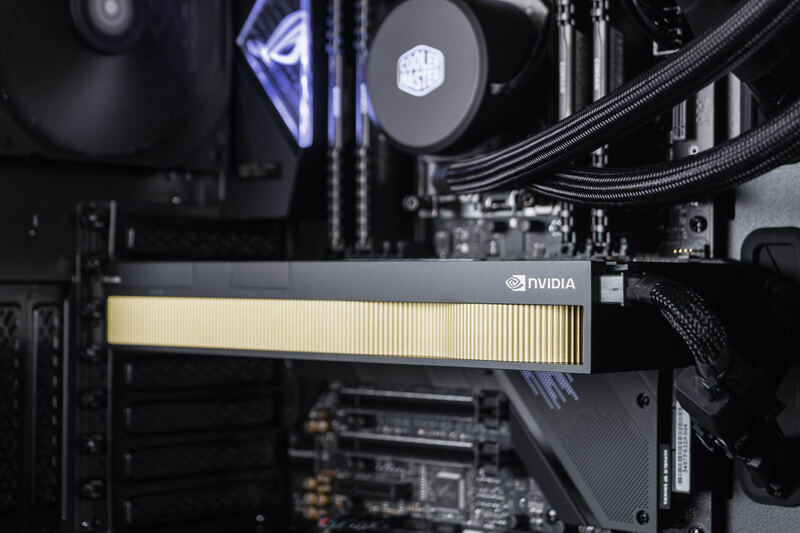
The NVIDIA RTX A6000 is a high-end workstation GPU built on the Ampere architecture with 48 GB of VRAM, making it suitable for demanding visualization and AI workflows. It supports PCIe Gen 4 and features hardware-based ray tracing, though it requires a specialized power connector that differs from standard GPUs. The card is designed for professional applications with certified drivers and ECC memory support, but its power delivery system presents installation challenges.

Strengths
  • — 48 GB of VRAM, the most memory of any professional GPU
  • — Built on the Ampere architecture with PCIe Gen 4 support
  • — Supports Nvidia virtual GPU (vGPU) software for multiple virtual workstations
Watch-outs
  • — Requires a special 8-pin power connector that differs from standard GPUs
  • — High cost may not be justifiable for smaller users

Derived means the reviewer published no score, so one was inferred from their written verdict. Everything else is a number the publisher printed. How we rank.

How they stack up

NVIDIA RTX 3500 Ada Generation

The NVIDIA RTX 3500 Ada Generation is a professional-grade laptop GPU with 12 GB of ECC GDDR6 VRAM and 5,120 CUDA cores, making it suitable for mobile workstations. While it supports DLSS 3 and hardware-accelerated ray tracing, it falls short of the memory capacity of the RTX 6000 Ada Generation and the RTX A6000, which both offer 48 GB of VRAM. Compared to the RTX A5000, it has less memory but is designed for mobile applications and supports DLSS 3.

NVIDIA RTX A6000

The NVIDIA RTX A6000 provides 48 GB of VRAM and is built on the Ampere architecture, making it comparable to the RTX 6000 Ada Generation in terms of memory capacity. However, the RTX 6000 Ada Generation outperforms it in ray tracing and AI compute performance with 211 TFLOPs of RT performance versus the A6000's capabilities. While the A6000 supports vGPU software for multiple virtual workstations, it lacks the NVLink support and higher CUDA core count that the 6000 Ada Generation offers.

Specs side-by-side

SpecNVIDIA RTX 3500 Ada GenerationNVIDIA RTX A6000
Memory Capacity12 GB GDDR648 GB
ArchitectureAda LovelaceAmpere
CUDA Cores5,12010,752
Tensor Cores160336
TDP60 W to 140 W300W
Memory Bandwidth432 GB/s768 GB/s
Form Factorlarge4.4” H x 10.5” L Dual Slot
ConnectivityDisplayPort 1.4a, PCIe 4.08-pin
← See the full ranking of best workstation gpus for ai