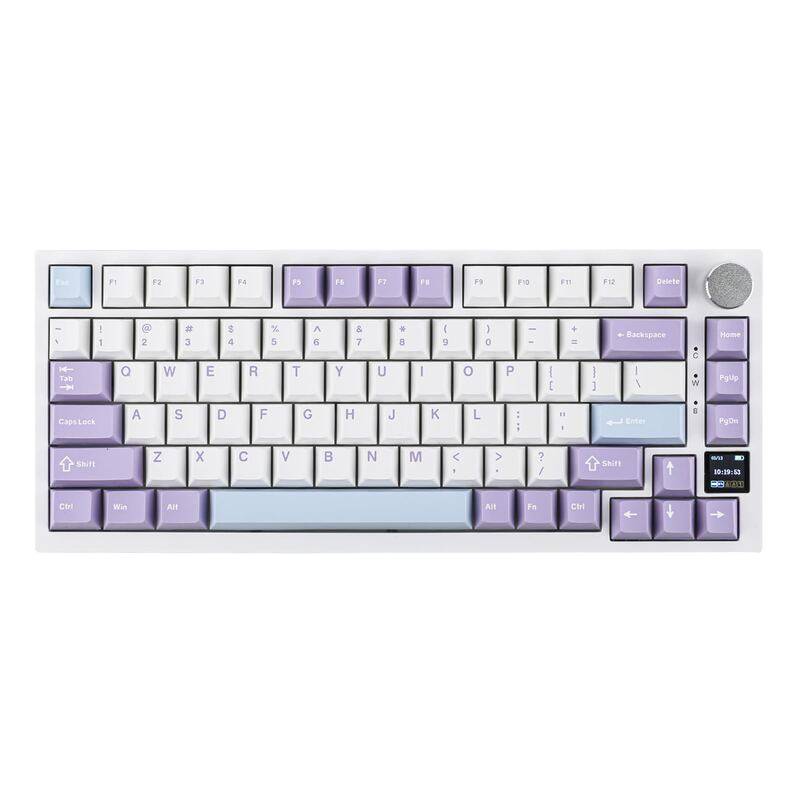
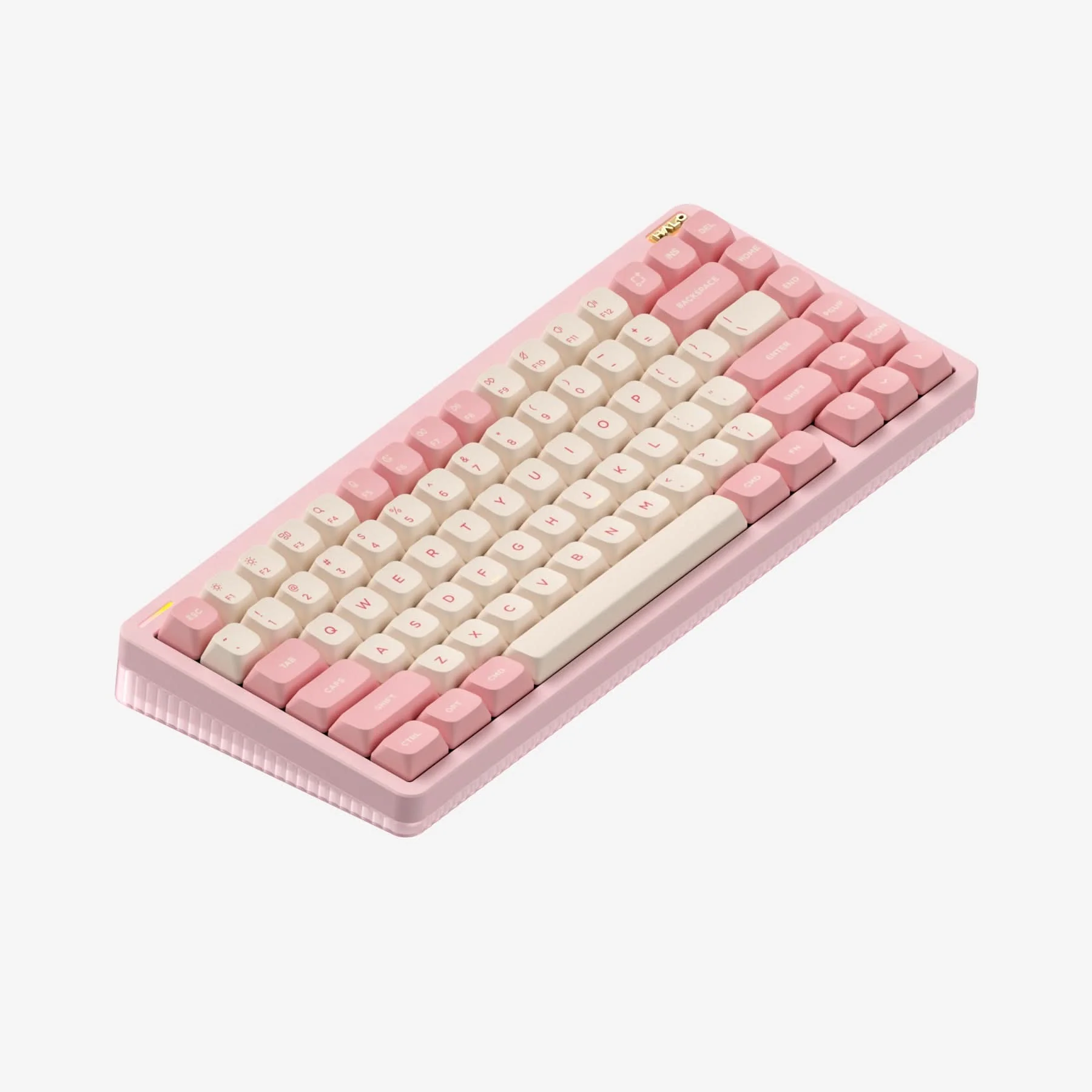
Tom's Guide found that the NuPhy Halo75 V2’s gasket-mounted construction delivers a quiet, comfortable typing experience enhanced by vibrant per-key RGB lighting that glows through translucent side panels. The fully hot-swappable PCB allows for easy switch customization without soldering, appealing to enthusiasts seeking flexibility in their mechanical keyboard setup. However, significant wireless connectivity issues persist, including missed keystrokes and difficulties resuming connections after waking from sleep mode. This product fits users who prioritize aesthetics and typing feel over reliable wireless performance, while those needing consistent input response should look elsewhere.
Full review
Gasket mount and sound profile
The NuPhy Halo75 V2 utilizes a gasket-mounted construction that physically isolates the PCB from the case, creating a typing experience characterized by flexibility rather than rigidity. This structural choice directly influences the acoustic signature of the board, which reviewers have noted is notably quiet and pleasant compared to more rigid aluminum chassis designs. The isolation dampens the sharp clack often associated with mechanical switches, resulting in a softer, more muted thock that many typists find comfortable for extended sessions.
Tom's Guide describes this sound treatment as decently quiet, highlighting it as one of the board's stronger attributes alongside its visual flair. The gasket mount allows the plate to flex slightly under pressure, absorbing impact energy that would otherwise translate into a louder noise profile. This makes the Halo75 V2 a viable option for shared office spaces or late-night home offices where excessive mechanical noise might be disruptive.
Translucent panels and RGB integration
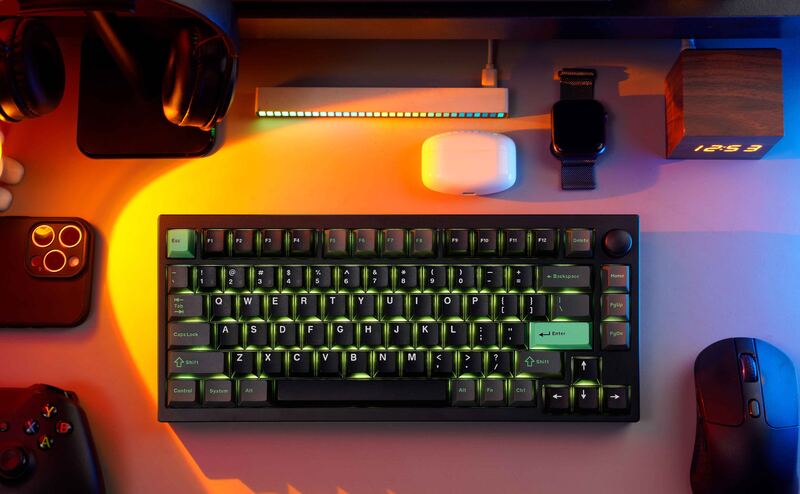
Visual distinctiveness is achieved through translucent side panels that allow the internal per-key RGB lighting to bleed outward, creating a signature halo glow around the case edges. Tom's Guide praises this backlighting implementation as being as good as, or better than competitors in certain aspects, noting how the light carries into the side panels for a cohesive aesthetic finish before fading out. This design choice transforms standard illumination into a structural element of the keyboard's identity.
The combination of an aluminum top case and translucent plastic bottom creates a striking contrast between industrial durability and ethereal lighting effects. Reviewers appreciate that the RGB does not just illuminate the keycaps but interacts with the chassis itself, providing a unique visual experience that sets it apart from standard opaque mechanical keyboards. The light diffusion is even enough to avoid hot spots while maintaining vibrant color reproduction.
Hot-swappable PCB flexibility
Enthusiasts can modify the Halo75 V2 without soldering thanks to its fully hot-swappable PCB, which accepts standard three-pin and five-pin mechanical switches. This feature allows users to experiment with different switch types to tailor the actuation force and travel distance to their personal preferences. The ability to swap components easily lowers the barrier to entry for those wanting to customize their typing experience without requiring specialized tools or technical expertise.
Wireless connectivity stability
Despite its robust feature set, the Halo75 V2 suffers from significant wireless reliability issues that disrupt consistent use. Users have reported frequent missed keystrokes and difficulties resuming connections after the device wakes from sleep mode. This instability is particularly problematic in desktop workflows where immediate input response is critical, such as gaming or fast-paced typing tasks.
Sleep wake and connection recovery
The most persistent complaint regarding the wireless implementation involves the keyboard's behavior when reconnecting to a host device. Reviewers note that resuming a wireless connection is often problematic, leading to scenarios where inputs are missed immediately after unlocking a PC or waking the computer from standby. This latency in re-establishing communication suggests a firmware-level flaw rather than simple signal interference.
Switch quality and manufacturing defects
Quality control issues have been documented regarding the switches included with or compatible with this board.
Bent pins and physical damage
Physical handling during manufacturing or shipping can also compromise switch functionality. While these issues were resolved by manually straightening the pins, their presence indicates potential inconsistencies in component quality control that users may encounter upon unboxing.
Strengths
- +Gasket-mounted construction provides a comfortable typing experience with sound dampening that reviewers describe as quiet and pleasant.
- +Features vibrant per-key RGB lighting combined with translucent side panels that create a distinctive 'halo' glow effect around the case.
- +Fully hot-swappable PCB allows users to easily replace switches without soldering.
Watch-outs
- −Some wireless connectivity issues have been reported, including missed keystrokes and difficulties resuming connections after waking from sleep.
- −Wireless connection issues
How it compares
The NuPhy Halo75 V2 features vibrant per-key RGB lighting combined with translucent side panels for a distinctive glow effect, unlike the NuPhy Air75 V3 which lacks per-key lighting adjustments. While it offers fully hot-swappable switches like the Epomaker Ajazz AK820 Pro, it suffers from reported wireless connectivity issues including missed keystrokes that are not present in the more stable Lemokey P1 HE.
Rating sources
Counts as 4.18/5 in our score — this publisher's 87 scores on the site average 3.98, so its scores are adjusted up to compare fairly with other publishers.
Counts as 4.18/5 in our score — this publisher's 95 scores on the site average 3.98, so its scores are adjusted up to compare fairly with other publishers.
Counts as 4.02/5 in our score — this publisher's 156 scores on the site average 4.15, so its scores are adjusted up to compare fairly with other publishers.
Our 4.1 score is the average of the 3 scored reviews above, each adjusted for how strictly its publisher scores; 3 more reviewed it without printing a score and are not in the average. More about methodology.