Bikeradar found that the NiteRider Swift 500 delivers a focused 500-lumen beam ideal for urban visibility but suffers from a narrow spread that limits peripheral vision on busy roads. The integrated rubber strap simplifies mounting for gloved commuters, yet the high-output mode lasts only one hour and 30 minutes, restricting its utility for extended evening rides. Blog.plip.com documented that internal battery replacement is difficult due to aggressive adhesive and soldered connections, complicating long-term maintenance. This light suits short city commutes where being seen matters most, but riders needing wide beam spill or all-night runtime should look elsewhere.
Full review
Visibility and Beam Profile in Urban Commuting
The NiteRider Swift 500 is engineered primarily as a visibility device for urban environments rather than a high-intensity illumination tool for dark rural roads. Bikeradar found that the maximum output of 500 lumens provides ample light to be seen by other road users during winter commutes, but it lacks the throw required for fast riding on unlit paths. The beam pattern illuminates potholes and debris directly in front of the rider at a distance of 1 to 2 metres, which serves as a useful backup for obstacle avoidance. However, this focused forward cone means the light does not cast significant spill onto the sides of the road.
This narrow beam spread is a distinct trade-off that affects safety on busy intersections. Bikeradar noted that the lack of side illumination limits peripheral vision and reduces the ability to alert drivers approaching from side roads or turning at junctions. For riders who frequently navigate complex city traffic with multiple entry points, this concentrated lighting profile requires heightened situational awareness compared to lights with wider flood patterns. The Swift 500 excels at making the cyclist visible in well-lit areas but falls short as a primary illumination source for isolated routes.
Runtime Constraints on Maximum Output
The operational endurance of the Swift 500 varies drastically depending on the selected mode, with the highest setting proving insufficient for extended excursions.
To mitigate this runtime limitation, the light offers lower output modes that extend battery life significantly. The medium setting delivers 250 lumens and the low setting provides 150 lumens, both of which sustain illumination well beyond the one-hour mark. Riders who prioritize seeing the road ahead over being seen from a distance can rely on these lower tiers for longer journeys. However, those who require maximum brightness throughout an entire evening ride will need to carry a backup light or plan their route around charging opportunities.
Integrated Strap Design and Mounting Simplicity
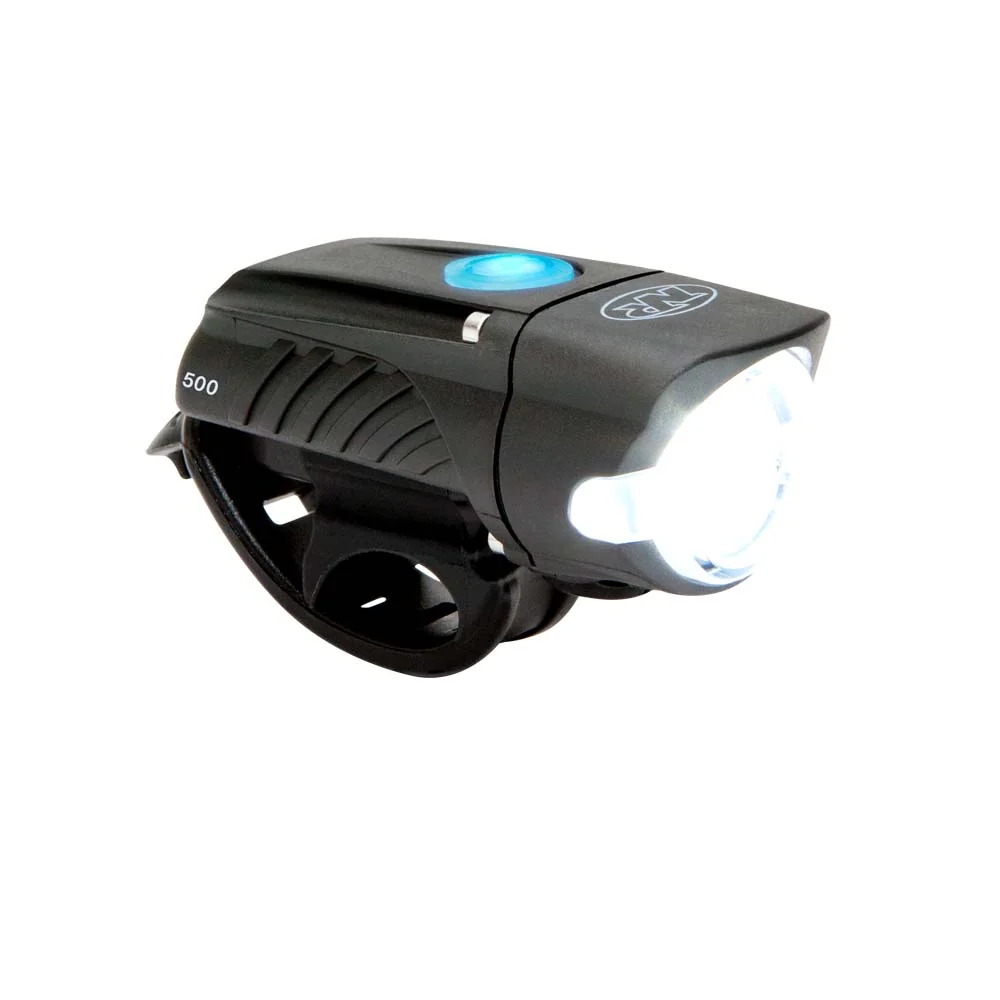
The mounting system on the Swift 500 eliminates one of the most common failure points for bicycle lights: losing a separate rubber strap. Bikeradar highlighted that the permanently attached adjustable strap is secured to the bottom of the light body, ensuring it cannot be misplaced during quick removals or in cold weather when dexterity is reduced. This design appeals specifically to commuters who wear thick winter gloves and need to mount or dismount their lights rapidly without fumbling with small components.
The bracket itself allows for swivel adjustments to fine-tune the beam direction, ensuring the light points exactly where needed on the handlebar. Stacked bmx emphasized that this rubber band design accommodates a wide range of handlebar diameters, from standard 31.8mm road bars to smaller crossbars found on some BMX or folding bikes. Unlike clamp-style mounts that require precise tightening and can slip under vibration, the strap provides a secure fit that remains stable during rides. The outer shell is also replaceable with an Allen wrench if clips break in a crash, adding to the long-term usability of the mount.
Charging Speed and Battery Management
Powering the Swift 500 is handled through a Micro-USB port, which completes a full charge cycle in approximately 2 hours. Bikeradar found this charging speed to be reasonably fast for daily use, allowing riders to top up the battery quickly between commutes or overnight without significant downtime. The integrated lithium-ion battery removes the need to purchase and replace disposable AAA or AA batteries, offering long-term cost savings despite the initial investment.
Battery status is communicated through a simple visual indicator on the power button located at the top of the light. Bikeradar noted that the button illuminates in blue when the charge is full and slowly fades to red as the battery drains. This intuitive feedback system helps riders remember to recharge the unit before it dies unexpectedly. However, because the battery is sealed inside the housing with no user-serviceable parts listed by the manufacturer, a dead battery eventually renders the light unusable without professional repair or replacement.
Durability and Serviceability Challenges
The physical construction of the Swift 500 relies on robust rubber and fibreglass materials to withstand daily wear and tear.
Despite its rugged exterior, long-term ownership presents challenges regarding repairability. Blog.plip.com documented the process of opening the unit to replace a failed battery, revealing that the internal lithium cell is aggressively affixed with double-sided sticky tape and soldered directly to the circuit board. The manufacturer does not list user-serviceable parts or provide official replacement batteries, forcing owners to perform DIY repairs involving cutting wires and soldering new cells. While Stacked bmx mentioned a 2-year warranty and crash replacement incentives for cosmetic damage like broken clips, internal battery failure requires significant technical effort from the owner.
Mode Selection and Operational Feedback
The Swift 500 provides five distinct lighting modes to suit different riding conditions: High at 500 lumens, Medium at 250 lumens, Low at 150 lumens, Flash at 500 lumens, and Walk at 30 lumens. Bikeradar found the mode cycling straightforward, accessed by pressing a single button on top of the unit. The inclusion of a low-power Walk mode is particularly useful for staying visible while pushing the bike through pedestrian areas or navigating dark parking lots without blinding others.
Stacked bmx noted that many riders prefer the solid beams over the flashing mode, as the constant illumination provides better depth perception and obstacle detection at night. The high-output 500-lumen beam is described as intensely bright even in well-lit indoor environments, demonstrating its effectiveness for making the cyclist visible from a distance. However, the lack of intermediate dimming options means users must choose between maximum visibility and lower power consumption without fine-tuning the exact brightness level.
Strengths
- +Integrated rubber strap eliminates risk of losing a separate mount, appealing to commuters in gloves
- +IP64 rating ensures robustness against daily use and heavy downpours
- +Micro-USB charging completes a full cycle in approximately two hours
- +Five modes including Low (150 lumens), Medium (250 lumens), High (500 lumens), Flash, and Walk (30 lumens)
Watch-outs
- −Beam spread is narrow with insufficient side spill for peripheral vision on busy roads
- −Run time on the highest 500-lumen setting was only 1 hour 30 minutes in BikeRadar's test
How it compares
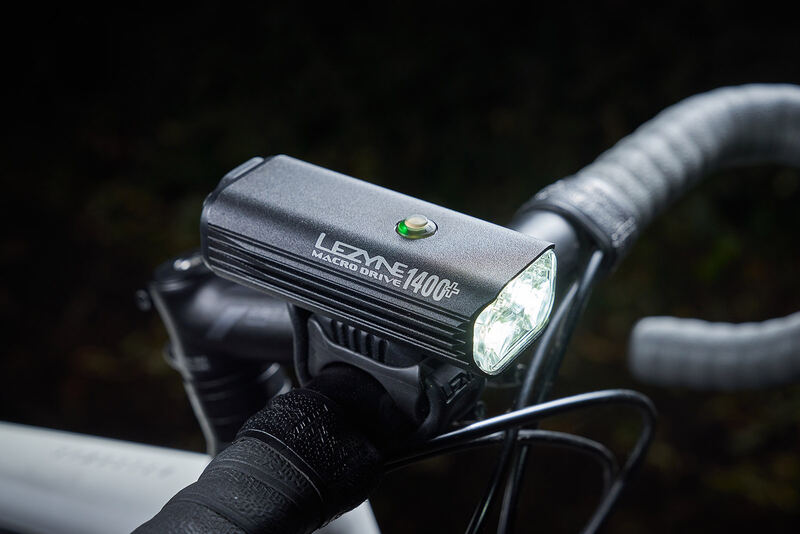
The NiteRider Swift 500 is a 500-lumen front light, against 1,400 lumens for the Lezyne Macro Drive 1400+. It carries an IP64 rating where the Lezyne is IPX7, and it charges over micro USB while the Lezyne uses USB-C. It costs less than the Lezyne.
Rating sources
Counts as 3.94/5 in our score — this publisher's 3 scores on the site average 4.33, so its scores are adjusted down to compare fairly with other publishers.
Counts as 4.18/5 in our score — this publisher's 7 scores on the site average 3.86, so its scores are adjusted up to compare fairly with other publishers.
“great quality lights definitely saves you a lot of money”
Our 4.1 score is the average of the 2 scored reviews above, each adjusted for how strictly its publisher scores; 2 more reviewed it without printing a score and are not in the average. More about methodology.