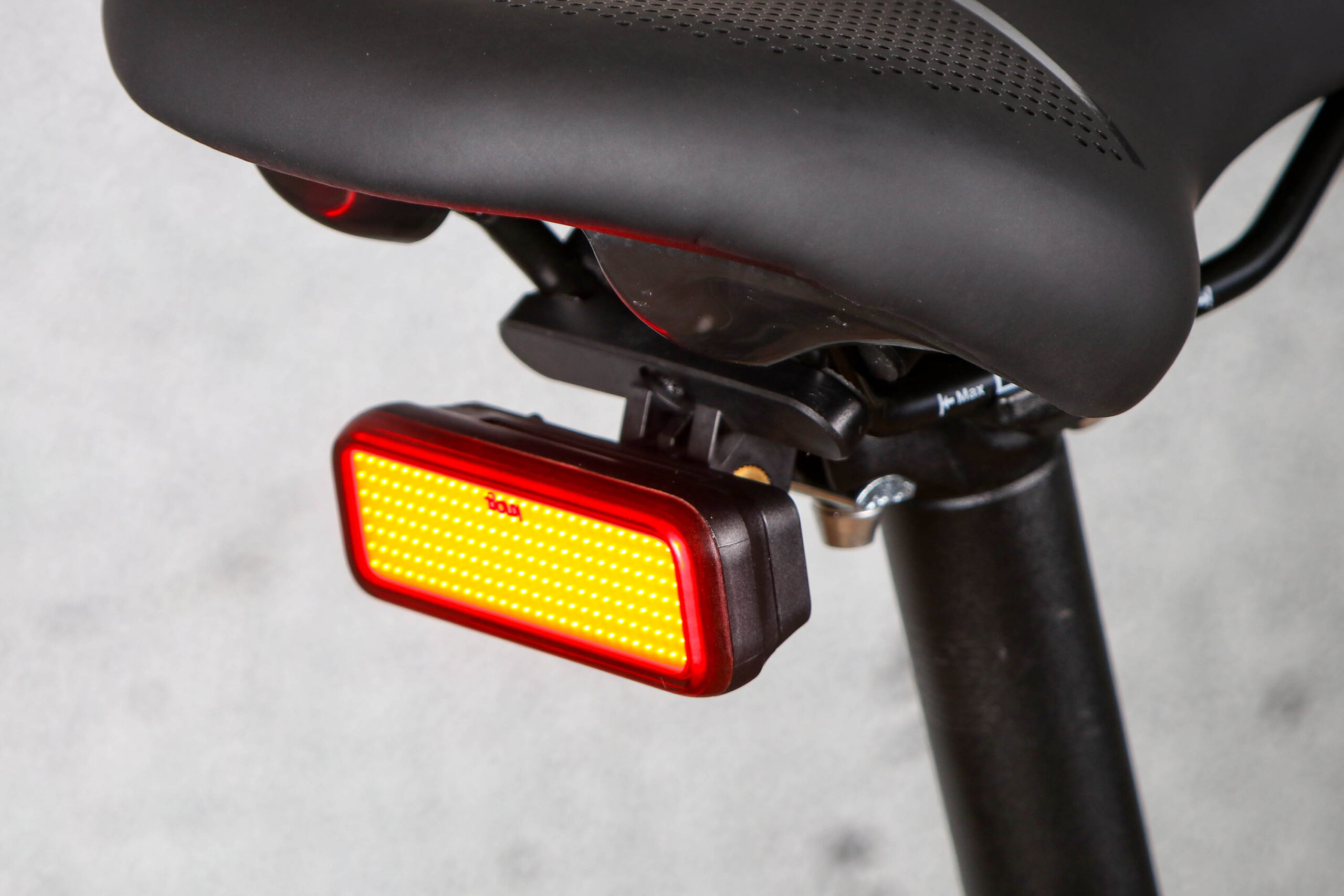
The Knog Blinder Link addresses urban visibility challenges by offering dedicated saddle and rack mounts that keep lights exposed above panniers or cargo, a feature Bikerumor highlights as essential for modern commuters. The unit weighs 74g to 77g depending on the version and utilizes a quick-clip system for easy removal during charging, while Electricbikejournal confirms its IP67 waterproofing withstands heavy rain. However, the maximum brightness of 100 lumens is modest, and battery life drops significantly on higher output modes, lasting only four hours in continuous beam or seven hours on high flash. This light fits riders prioritizing versatile mounting and all-day eco-mode endurance over raw brightness, while those needing intense illumination for dark trails should look elsewhere.
Full review
Saddle and Rack Mounting Versatility
The Knog Blinder Link was engineered specifically to address the visibility challenges faced by cyclists carrying heavy loads. Bikerumor highlights that modern urban riders increasingly use their bikes as vehicles, often filling racks with panniers or bags that obscure traditional rear light positions. To solve this, Knog released two distinct versions of the Link: a Saddle mount and a Rack mount. The Saddle version utilizes a universal saddle rail mount designed to save seatpost space, making it particularly useful for riders who use dropper posts or want to keep their seatpost clear. The Rack version is built to attach directly to bike racks using 50mm or 80mm spacing options, ensuring the light remains visible even when the rear of the bicycle is cluttered with cargo.
Both mounting systems rely on a lightweight clip-on design that allows for rapid attachment and detachment from the bike. Electricbikejournal notes that this quick-clip mechanism makes it easy to remove the light unit from its mount to charge, without having to unscrew or unbolt the entire bracket from the bicycle frame. This convenience is critical for commuters who need to bring their lights indoors overnight.
While the clip system is praised for its ease of use, the mounting strategy requires riders to choose their preferred location based on their specific setup. The Saddle mount keeps the light out of the rider's way but places it in a fixed position under the seat. The Rack mount offers flexibility for cargo bikes and touring setups where visibility above panniers is essential. This dual approach ensures that regardless of whether a rider is commuting with groceries or riding a minimalist road bike, there is a dedicated mounting solution that keeps the light visible to traffic from behind.
Eight Light Modes and Visibility Output
The Blinder Link provides eight distinct flashing modes designed to maximize rider visibility in various lighting conditions. Bikerumor states that at maximum brightness, the light outputs 100 lumens, which is a modest figure compared to high-output front lights but considered decent for a rear LED unit focused on conspicuity rather than road illumination. The most energy-efficient mode is the eco-flash setting, which Knog claims provides up to 50 hours of runtime with intermittent bursts of 30 lumens. This long-duration mode is ideal for multi-day tours or riders who leave their lights on during short commutes without frequent charging.
In contrast, higher output modes significantly reduce battery life. According to Bikerumor, a continuous beam at the highest setting lasts only four hours, while the High Flash mode—which utilizes the full 100 lumens in rapid bursts—lasts for seven hours. Electricbikejournal adds that these eight modes allow riders to cycle through different patterns to find what works best for their visibility needs. The width of the light helps spread the red illumination effectively, ensuring that the beam is not just a single pinpoint but covers a broader angle for drivers approaching from behind.
The sheer number of options means riders must pay close attention to their settings, as switching between a high-intensity strobe and a low-intensity pulse will drastically alter the endurance of the light during long rides.
Battery Life Expectations by Mode
Runtime varies dramatically depending on which of the eight modes is selected. The advertised maximum runtime of 50 hours is achieved only in the eco-flash mode, which relies on low-power intermittent bursts. For riders who prefer a constant light source for safety or social riding reasons, the battery depletes much faster. Bikerumor specifies that the continuous beam mode lasts just four hours at its highest output. This limitation means that riders planning long night rides where they need to keep the light in steady-on mode must plan their charging schedule carefully.
The High Flash mode offers a middle ground, providing maximum visibility for seven hours before requiring a recharge. Electricbikejournal notes that the runtime is dependent on which flashing mode is used, reinforcing the need to match the mode to the length of the ride. For daily commutes or short evening rides, even the highest output modes will easily last through multiple trips without needing to be plugged in.
Battery management is assisted by an LED indicator located beside the power button. Electricbikejournal mentions that this light turns red when the battery is getting low, providing a visual cue before the unit shuts off unexpectedly. This feature helps riders avoid being stranded in the dark with no warning. However, the rapid drain on high modes means that relying solely on the eco-flash mode for extended visibility might not satisfy all safety preferences, creating a trade-off between runtime and brightness.
IP67 Waterproofing and Build Quality
Durability is a key selling point for the Blinder Link, with both versions carrying an IP67 waterproof rating. This specification means the light is completely protected against dust ingress and can withstand immersion in water up to 1 meter deep for 30 minutes. Electricbikejournal confirms that the unit remains fully functional even when exposed to heavy rain or wet conditions, providing peace of mind for commuters who ride year-round regardless of weather.
The construction feels solid and well-engineered. Bikerumor describes the light as having a lightweight design that does not compromise on structural integrity. The clip mechanism is robust enough to stay securely attached during bumpy rides, eliminating concerns about the light falling off over rough pavement or gravel paths. This reliability is essential for riders who depend on their lights for daily transportation rather than occasional weekend use.
The USB-C charging port adds to the modern convenience of the unit. Unlike older models that used proprietary cables or exposed contacts, the Blinder Link uses a standard USB-C interface. Knogsupport.zendesk.com provides user guides for both the Saddle and Rack mounts, indicating official support for setup and maintenance. The inclusion of USB-C ensures compatibility with most modern power banks and wall adapters, making it easy to charge the light alongside other electronic devices.
Visibility in Urban Commuting Scenarios
The primary use case for the Blinder Link is urban commuting where visibility to traffic is paramount. Electricbikejournal tested the light during gloomy, darker days and found that keeping it on a pulse or flash mode helped catch drivers' attention effectively. The wide spread of the red illumination ensures that the light is visible from multiple angles, not just directly behind the bicycle. This is particularly important in city environments where cars may approach from side streets or change lanes unexpectedly.
For cargo bike riders or those using rear racks heavily loaded with panniers, the Rack mount version solves a common problem: obscured lights. Bikerumor notes that as more people use bikes for practical transport, standard saddle-mounted lights often get hidden behind bags. The Link's ability to be mounted directly to the rack ensures that the light remains above the cargo, maintaining its effectiveness regardless of how much stuff is strapped to the back.
The quick-release clip system allows riders to easily remove the light when parking or bringing it indoors. This convenience encourages consistent use, as there is no friction in taking the light off and putting it on. Electricbikejournal found that despite the ease of removal, they never worried about the lights coming loose during rides, indicating a secure fit that balances accessibility with safety.
Trade-offs Between Brightness and Endurance
The Blinder Link makes a clear trade-off between raw brightness and battery longevity. At 100 lumens, it is not designed to light up dark forest trails or serve as a primary illumination source for night riding; rather, it is a conspicuity device meant to make the rider visible. Bikerumor acknowledges that while 100 lumens is decent for a rear light, it pales in comparison to front lights that often exceed 1000 lumens. This distinction is important for buyers who might expect a rear light to also provide road illumination.
The significant drop in runtime when using higher modes means that riders must be strategic about their settings. A rider who starts with the high flash mode for visibility might find themselves needing to recharge after just seven hours, whereas staying in eco-flash could last them a week.
This trade-off suits specific types of riders best. Commuters and casual riders who make short trips will appreciate the long battery life in eco-mode and the convenience of USB-C charging. However, riders who need maximum visibility for extended periods or who ride in extremely low-light conditions without streetlights might find the 100-lumen output insufficient compared to more specialized rear lights that prioritize brightness over runtime.
Strengths
- +Offers versatile mounting options including dedicated saddle and rack mounts to ensure visibility even when cargo covers standard positions.
- +Features a quick clip-on/off attachment system that allows for easy removal from the bike for charging without removing the mount.
- +Provides eight different flashing modes designed to maximize rider visibility to traffic.
- +Constructed with a lightweight design, weighing only 74g for the rack version and 77g for the saddle version.
Watch-outs
- −Battery life drops significantly on higher output modes, lasting only four hours in continuous beam and seven hours on high flash.
How it compares
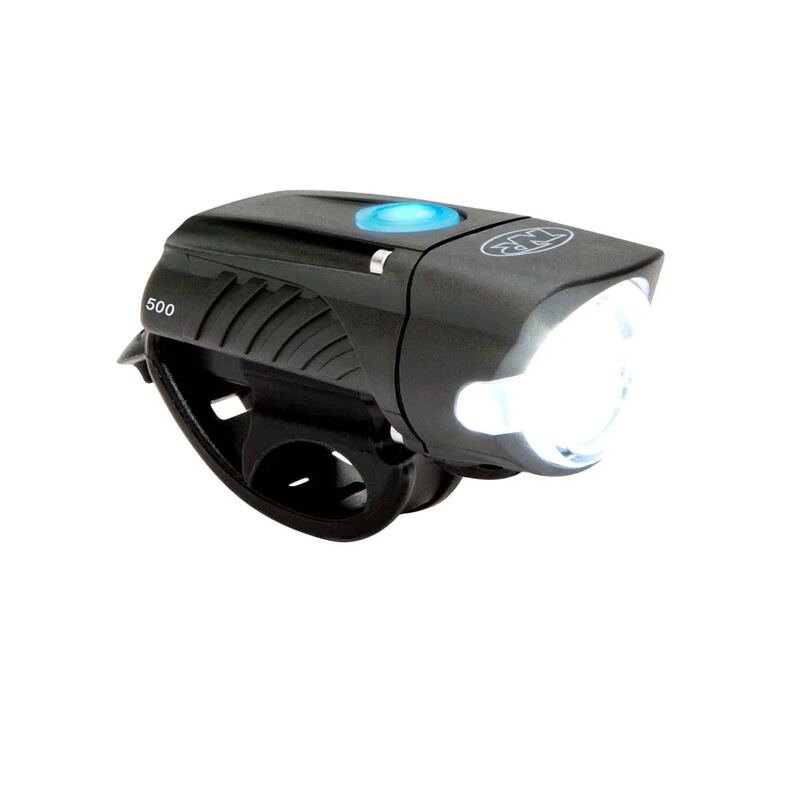
The Knog Blinder Link is a rear light with a 100-lumen maximum, while the NiteRider Swift 500 is a 500-lumen front light. The Blinder Link carries an IP67 rating against the Swift 500's IP64.
Rating sources
Counts as 4.18/5 in our score — this publisher's 7 scores on the site average 3.86, so its scores are adjusted up to compare fairly with other publishers.
Our 4.2 score is the average of the 1 scored review above, each adjusted for how strictly its publisher scores; 3 more reviewed it without printing a score and are not in the average. More about methodology.