Made in Dorset, Vermont by a family-owned company since 1944, this board features over fifty pairs of hands touching each unit before shipping and includes a lifetime guarantee covering defects and damage. While the flagship reversible model uses edge-grain construction for carving roasts, serious eats found that end-grain options are better suited for nightly chopping to preserve knife sharpness. The end-grain maple boards start at $140 and reach up to $340 for larger sizes, reflecting the labor-intensive staggered block construction. Shoppers seeking a specialized tool for large meats will appreciate the poultry well and juice trench, but those wanting an everyday chopping surface should look elsewhere toward the more expensive professional end-grain line.
Full review
Vermont manufacturing and lifetime guarantee
The board is manufactured in Dorset, Vermont by a family-owned company that has been producing wooden kitchen tools since 1944. The production process involves more than fifty pairs of hands touching each individual board before it leaves the factory floor, ensuring a level of craftsmanship that distinguishes it from imported alternatives. This domestic manufacturing base means all hardwoods are sourced locally in North America and sustainably harvested, with the shop operating close to zero waste by repurposing offcuts into fuel for heating or sawdust for local farms.
A major differentiator for this brand is a lifetime guarantee that covers both manufacturer defects and shipping damage. The warranty process requires customers to submit a claim through a web form accompanied by a photograph, with the company asking buyers to allow two to four weeks for resolution. This coverage extends beyond standard five-year warranties found among competitors, providing long-term security for a board built from dense maple.
Edge-grain carving versus end-grain chopping
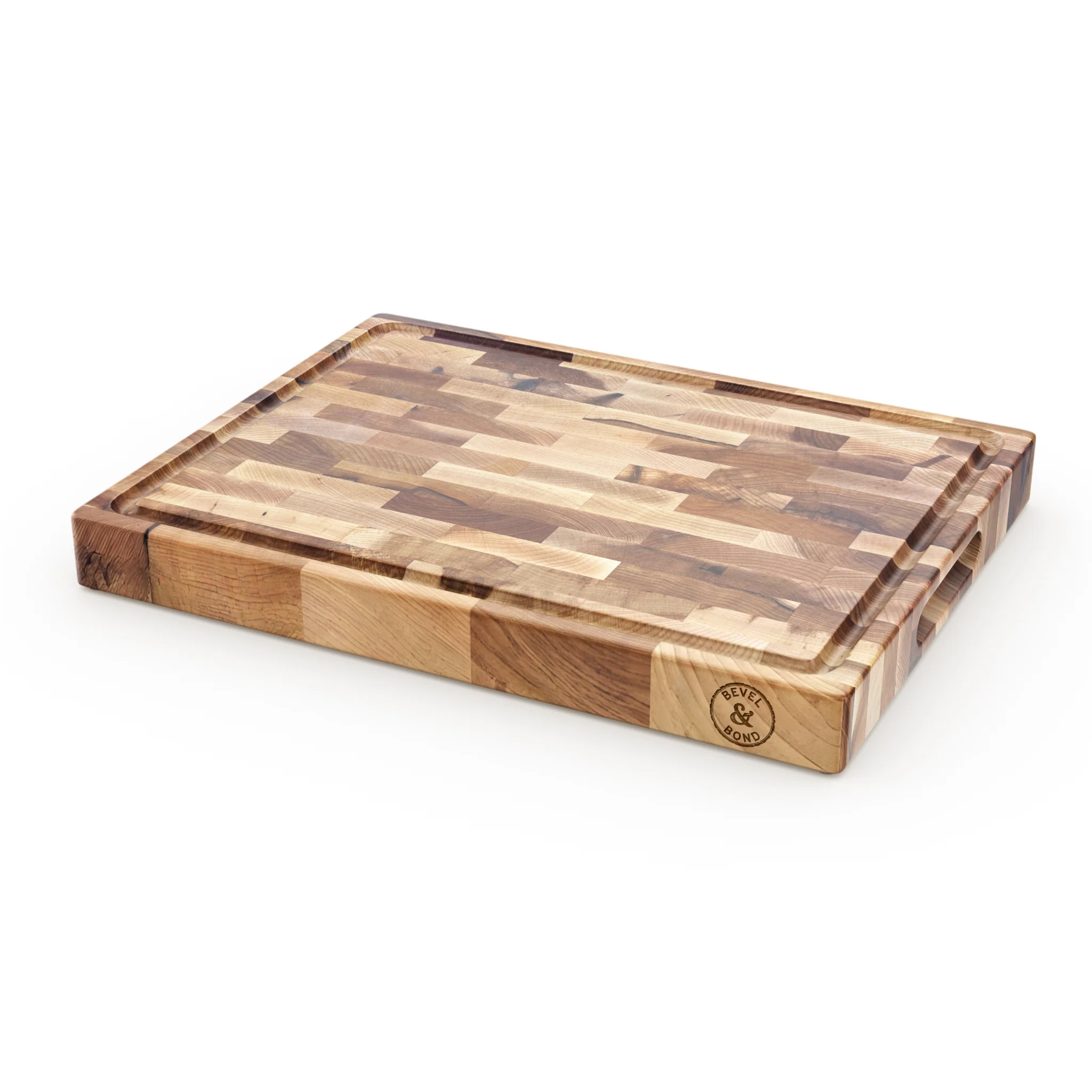
The flagship Maple Reversible Carving Board utilizes edge-grain construction rather than the end-grain orientation found in many premium prep boards. The board is built from long strips of maple running the full length, which makes it incredibly tough and cost-effective to build but alters how a knife interacts with the surface. Because the blade slices across the wood fibers instead of slipping between them, edge grain is generally harsher on knives than end-grain construction, per Serious Eats.
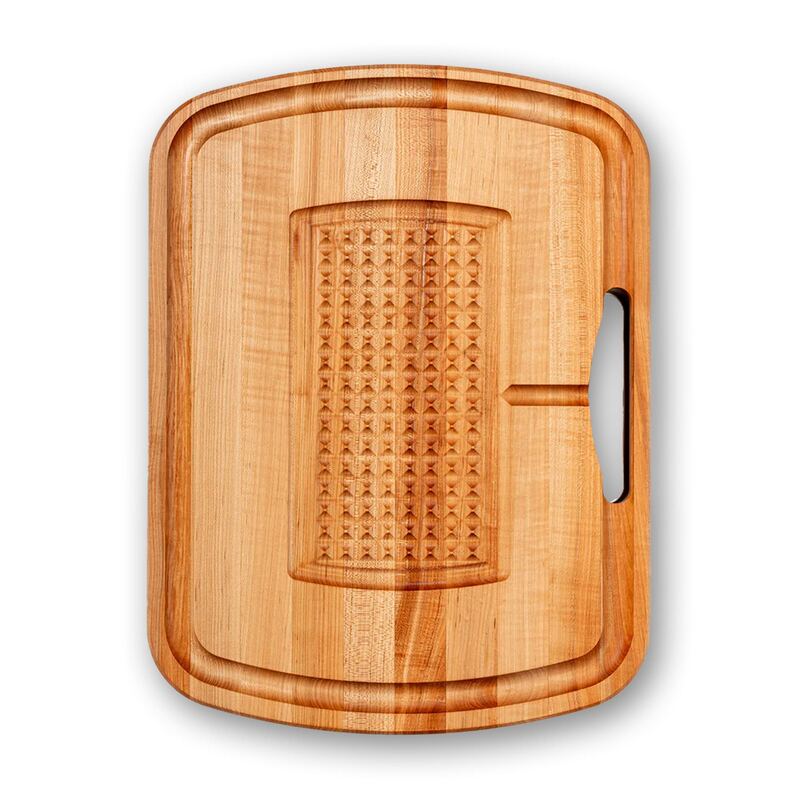
This structural difference dictates its primary use case. The board excels at carving roasts and turkeys rather than fine daily chopping. It features a shallow poultry well on one side to cradle meat so it stops skating during slicing, while the reverse side offers a flat surface with a deep perimeter trench designed to catch juices.
Poultry well and juice trench performance
The dual-sided design addresses specific pain points during holiday meal preparation. The poultry well provides a dedicated cradle that stabilizes large birds or roasts, preventing them from sliding around the counter while carving. This feature is particularly valuable for handling twenty-pound turkeys, which can be unwieldy on standard flat surfaces.
When flipped over, the board reveals a deep perimeter trench that captures runoff effectively.
End-grain options and pricing tiers
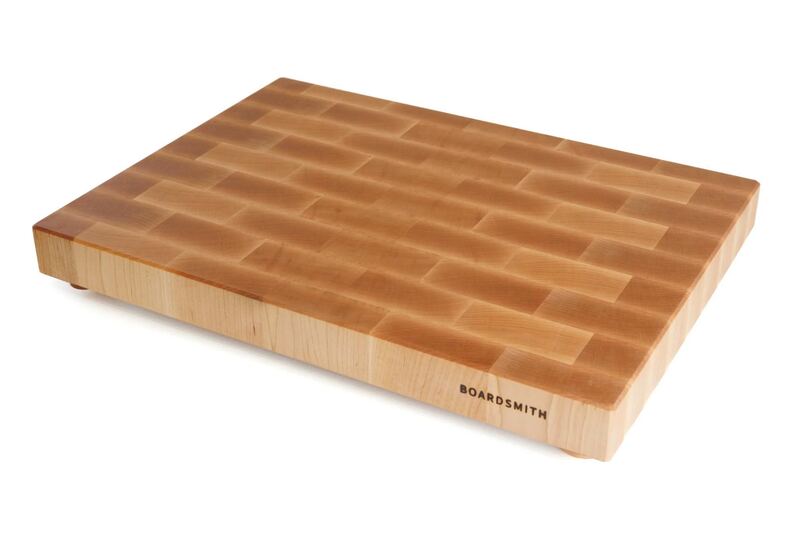
For shoppers who prioritize knife preservation through end-grain construction, JK Adams offers a separate line of professional maple boards. These end-grain models start at one hundred forty dollars for a sixteen by ten inch board and scale up to three hundred forty dollars for the largest twenty by sixteen inch version. The Infinity Edge model in a twenty by twelve inch size is priced at one hundred seventy-nine dollars, positioning it as a premium option compared to entry-level alternatives.
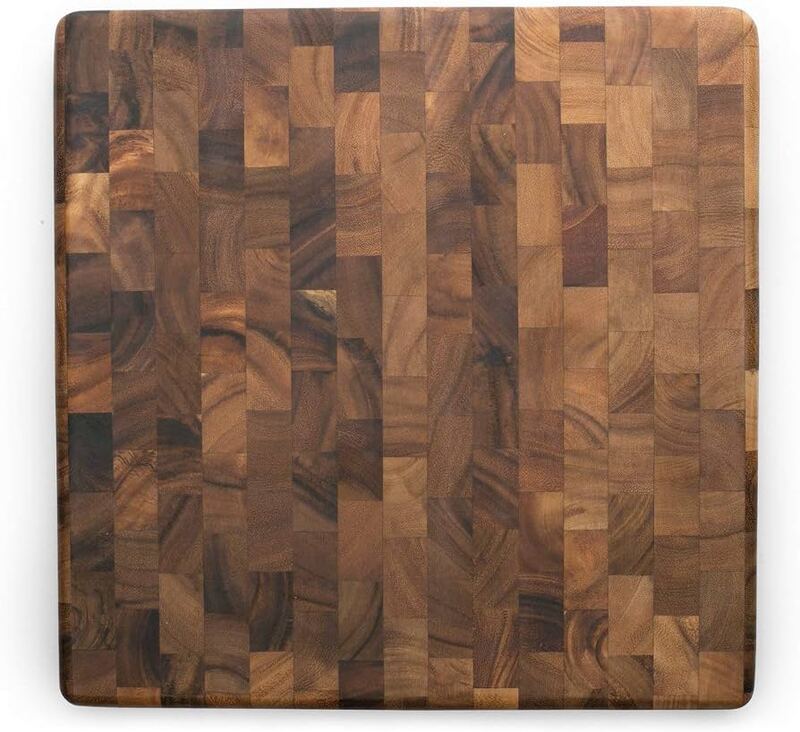
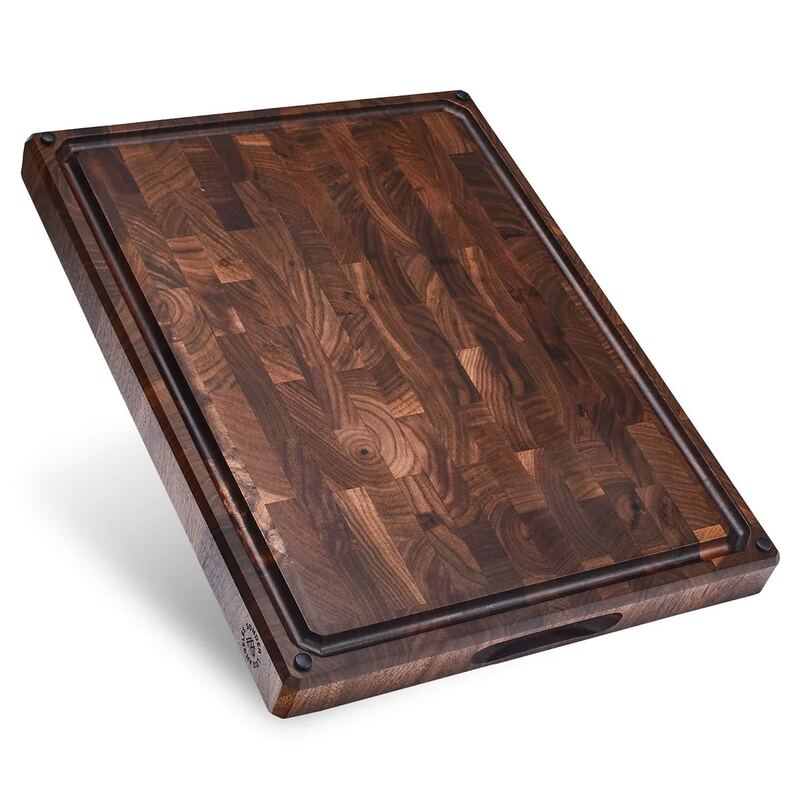
The end-grain boards feature short staggered blocks of fiber ends on the surface, which allows knives to slip between the wood fibers rather than cutting across them. This construction method requires significantly more labor and material waste during production, explaining the higher price point. While the edge-grain carving board is a specialized tool for large meats, these end-grain boards are better suited for nightly chopping tasks where knife sharpness is a priority.
Knife dulling and surface maintenance
Independent testing of cutting board materials reveals that maple wood performs differently than plastic or composite surfaces. This highlights a trade-off inherent to wooden boards: they are gentler on blades than hard plastics but can still cause wear compared to specialized composite materials.
To maintain the integrity of the wood and prevent splitting along the seams, regular oiling is required. Serious Eats contributor An Uong recommends washing the board on both sides evenly to distribute moisture and avoid warping as it dries. After washing, the board should be dried with a towel and allowed to air dry completely until moisture-free. This maintenance routine keeps the maple straight and sturdy over years of daily use.
Engraving and gift suitability
Most boards in the JK Adams lineup can be personalized with engraving for an additional twenty-five dollars. This service transforms a functional kitchen tool into a viable wedding or housewarming gift, adding sentimental value to the durable maple construction. The option to customize the board allows buyers to tailor the product specifically for recipients without compromising the structural integrity of the wood.
The combination of domestic manufacturing, lifetime warranty, and personalization options makes these boards stand out in the premium kitchenware market. Shoppers looking for a specialized carving tool will find the reversible design highly effective, while those seeking an everyday chopping board may need to look toward the more expensive end-grain professional line.
Strengths
- +Made in Dorset, Vermont since 1944 by a family-owned company with over 50 pairs of hands touching each board before shipping, according to Bevel and Bond.
- +Comes with a lifetime guarantee that covers manufacturer defects and shipping damage, per Bevel and Bond.
- +Sustainably harvested North American hardwoods are used, with the shop running close to zero waste.
- +Most boards can be engraved for $25, making them suitable as personalized gifts.
Watch-outs
- −The flagship Maple Reversible Carving Board is edge-grain construction rather than end-grain.
- −End-grain maple options are expensive, starting at $140 and reaching up to $340 for larger sizes, per Bevel and Bond.
How it compares
The option for engraving makes it distinct from other models that lack personalization features.
Rating sources
“JK Adams is a family-owned, Vermont-made brand with a lifetime guarantee and an America's Test Kitchen carving-board win, and their boards are worth the money.”
Our 4.5 score is the average of the 1 scored review above; 2 more reviewed it without printing a score and are not in the average. Ratings marked * were derived from the reviewer’s written analysis or video transcript — the publisher didn’t print an explicit numeric score, so we inferred one from their own words. Click through to verify. More about methodology.