Dave Fignar highlights the Ironwood Gourmet Charleston as a premium end-grain cutting board crafted from sustainably harvested acacia wood. Reviewers praise its substantial 1.25-inch thickness and heavy-duty durability, noting that the vertical grain structure is exceptionally gentle on knife edges during daily use. The board's multifunctional design allows it to serve effectively as both a prep station for chopping vegetables or meat and an attractive serving platter for entertaining. While its modern aesthetic and solid build are widely appreciated, users must commit to hand washing and regular oiling to prevent drying, as the natural wood requires more care than synthetic alternatives.
Full review
End-grain acacia preserves blade sharpness
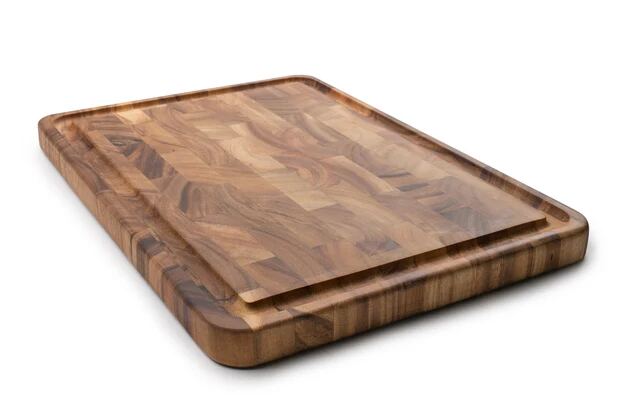
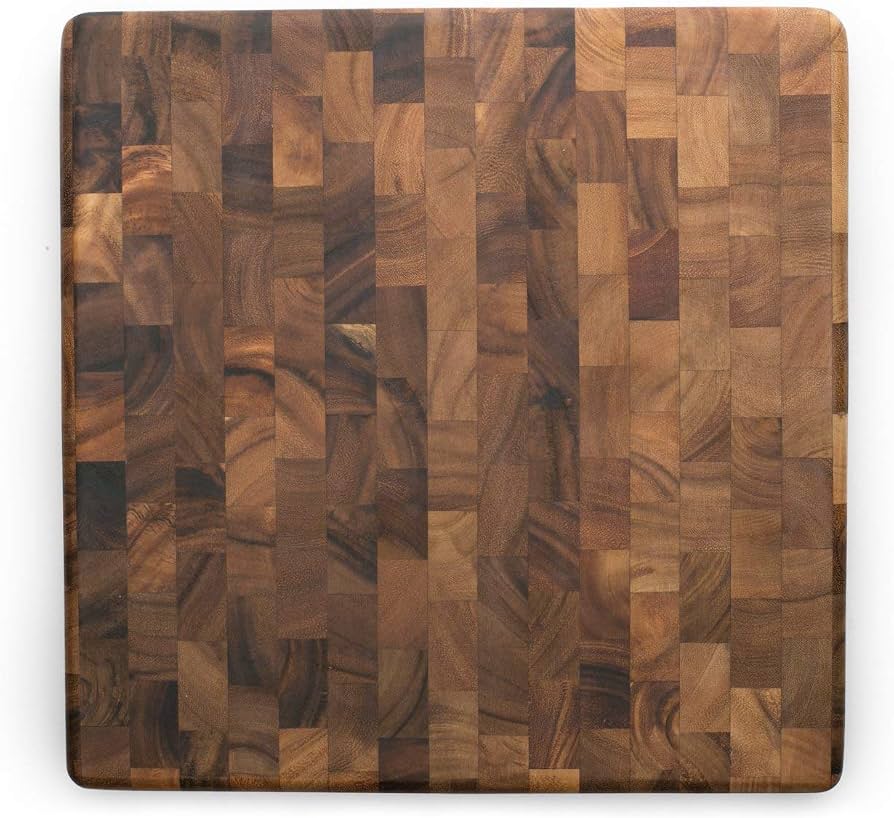
The defining characteristic of this board is its end-grain construction, which aligns the wood fibers vertically so that knife edges slip between them rather than slicing across them. This structural choice significantly reduces friction and wear on both the cutting surface and your blades. The acacia wood itself is softer than traditional hardwoods like maple or walnut, a trade-off that allows the material to be gentler on steel while still providing enough density for heavy-duty prep work.
Dave Fignar highlighted the substantial nature of this construction in his review, noting that the 1.25-inch thickness makes it incredibly durable and capable of withstanding years of rigorous use without warping or cracking under normal conditions. This depth provides a massive buffer against deep gouges, meaning the surface remains relatively smooth even after heavy chopping sessions. ReviewDock also pointed out that this end-grain configuration minimizes wear on both the knives and the board itself, reinforcing the idea that investing in proper wood grain alignment pays off in longevity for your entire kitchen toolkit.
14-inch square offers ample prep space
Measuring 14 inches by 14 inches, the board provides a generous surface area that accommodates multiple ingredients simultaneously. This size is particularly useful for home cooks who need to dice vegetables, chop herbs, and prepare proteins without constantly clearing off the workspace. The square shape maximizes the usable corner space compared to rectangular boards of similar width, allowing for versatile knife angles and movements.
The combination of its 14-inch dimensions and 1.25-inch thickness gives the board a commanding presence on any countertop, yet it remains manageable enough to move around when necessary. ReviewDock emphasized that this size strikes an ideal balance between being too small for serious cooking and so large that it becomes cumbersome to store or clean. For someone preparing a weeknight dinner with several components, having this much uninterrupted flat space reduces the need to transfer ingredients back and forth, streamlining the workflow in smaller kitchens.
Dual handles improve grip stability
Unlike many cutting boards that rely solely on weight or rubber feet for stability, this model features integrated handles on two opposing sides. This design choice serves a dual purpose: it makes lifting the heavy board easier and provides secure handholds to prevent slipping during vigorous chopping. Dave Fignar specifically praised these handles in his review, noting that they add to the modern aesthetic while providing practical utility when moving the board from the counter to the sink or table. The placement of the handles on opposite sides allows for balanced lifting regardless of which way you are facing the board.
The presence of side handles also facilitates its use as a serving platter, allowing users to carry charcuterie arrangements directly to the dining table without needing an additional tray. This dual functionality is particularly valuable in modern kitchens where counter space is at a premium, as it eliminates the need to dedicate separate surfaces solely for serving.
Acacia wood requires careful maintenance
While acacia is durable, it is softer than hardwoods like maple or walnut, making it more susceptible to knife marks and potential wear over time if not cared for properly. However, wood is a porous material that requires specific maintenance routines to prevent drying out or cracking.
The end-grain construction helps mitigate some wear issues by allowing knife edges to separate between fibers rather than cutting through them, but regular oiling is still necessary. This maintenance requirement means it is not ideal for users who prefer low-effort kitchen tools; those willing to spend five minutes conditioning their wood will find this investment pays off in both performance and aesthetic longevity.
Rich contrasting patterns enhance visual appeal
Beyond its functional attributes, the board is frequently praised for its striking appearance. The acacia wood features rich colors with beautiful contrasting patterns that range from light to dark tones, creating a visually appealing surface that looks like a piece of art when not in use. This aesthetic quality makes it suitable for display even on open shelving or countertops where visual clutter is minimized.
Dave Fignar highlighted the modern look of the board in his review, stating that its sleek design fits well in contemporary kitchens while still maintaining a classic butcher block feel. The combination of the dark and light wood stripes not only adds visual interest but also helps mask minor knife marks better than solid-colored boards might. For users who view their kitchen tools as part of their home's decor, this board offers a way to combine high-performance functionality with an upscale look that elevates the overall presentation of food preparation.
Versatile for both prep and serving
The design of this board allows it to function effectively as more than just a cutting surface. This versatility is particularly useful for entertaining, where users can prepare ingredients on one side of the board and then flip it over to serve them without transferring food to a separate platter.
The end-grain construction ensures that even when used for heavy chopping, the surface remains relatively flat and stable, preventing food from sliding off during slicing. This adaptability means users can rely on a single board for most of their daily cooking tasks, reducing the need to clutter countertops with specialized tools.
Strengths
- +End-grain acacia wood construction is gentle on knives, with one reviewer noting it did not dull blades after extensive use.
- +Substantial thickness of 1.25 inches provides a heavy-duty and durable surface for food preparation.
- +Versatile design functions effectively as both a cutting board and a serving platter for charcuterie or cheese displays.
- +Modern aesthetic with rich contrasting wood patterns makes it visually appealing in any kitchen setting.
Watch-outs
- −Requires specific maintenance including hand washing and prompt towel drying to preserve the wood's condition.
- −Constructed from acacia, which is softer than hardwoods like maple or walnut, potentially making it more susceptible to wear over time.
How it compares
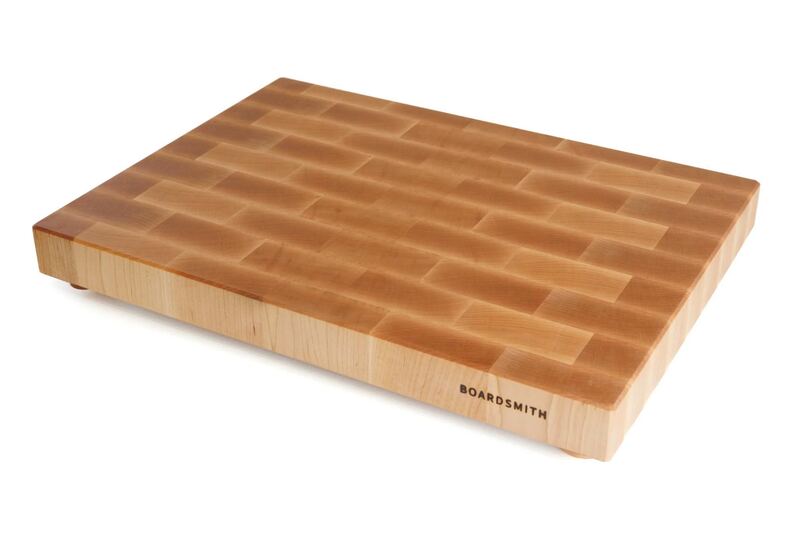
It offers a 1.25-inch thickness that provides substantial durability but lacks the extreme stability of the 2-inch thick Boardsmith options.
Rating sources
“I give it five out five stars”
“With proper care... you can expect this heirloom quality butcher block to last a lifetime.”
Our 4.8 score is the average of these published ratings. Ratings marked * were derived from the reviewer’s written analysis or video transcript — the publisher didn’t print an explicit numeric score, so we inferred one from their own words. Click through to verify. More about methodology.