Smart Angler Lab found that this board’s dense maple construction dampens chopping noise effectively but causes significant knife dulling compared to softer woods. Bevelandbond noted that while the reversible edge-grain design extends lifespan and meets NSF commercial standards, the lack of rubber feet allows the 10-pound slab to slide on slick countertops during vigorous prep work. The board also lacks a juice groove, meaning liquids from pigmented foods like beets can stain the porous surface if not cleaned immediately. This model suits home cooks prioritizing durability and hygiene over blade preservation, but professional chefs requiring rapid, stable chopping should look elsewhere.
Full review
Edge-grain maple construction and reversible design
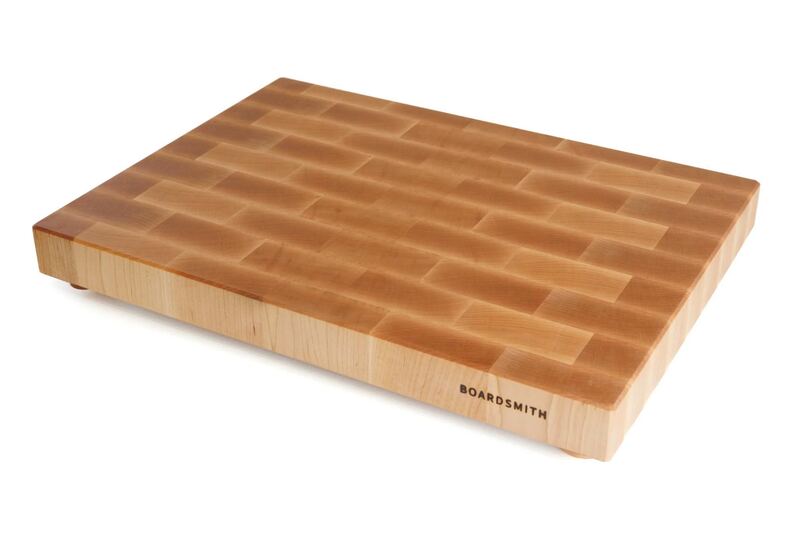
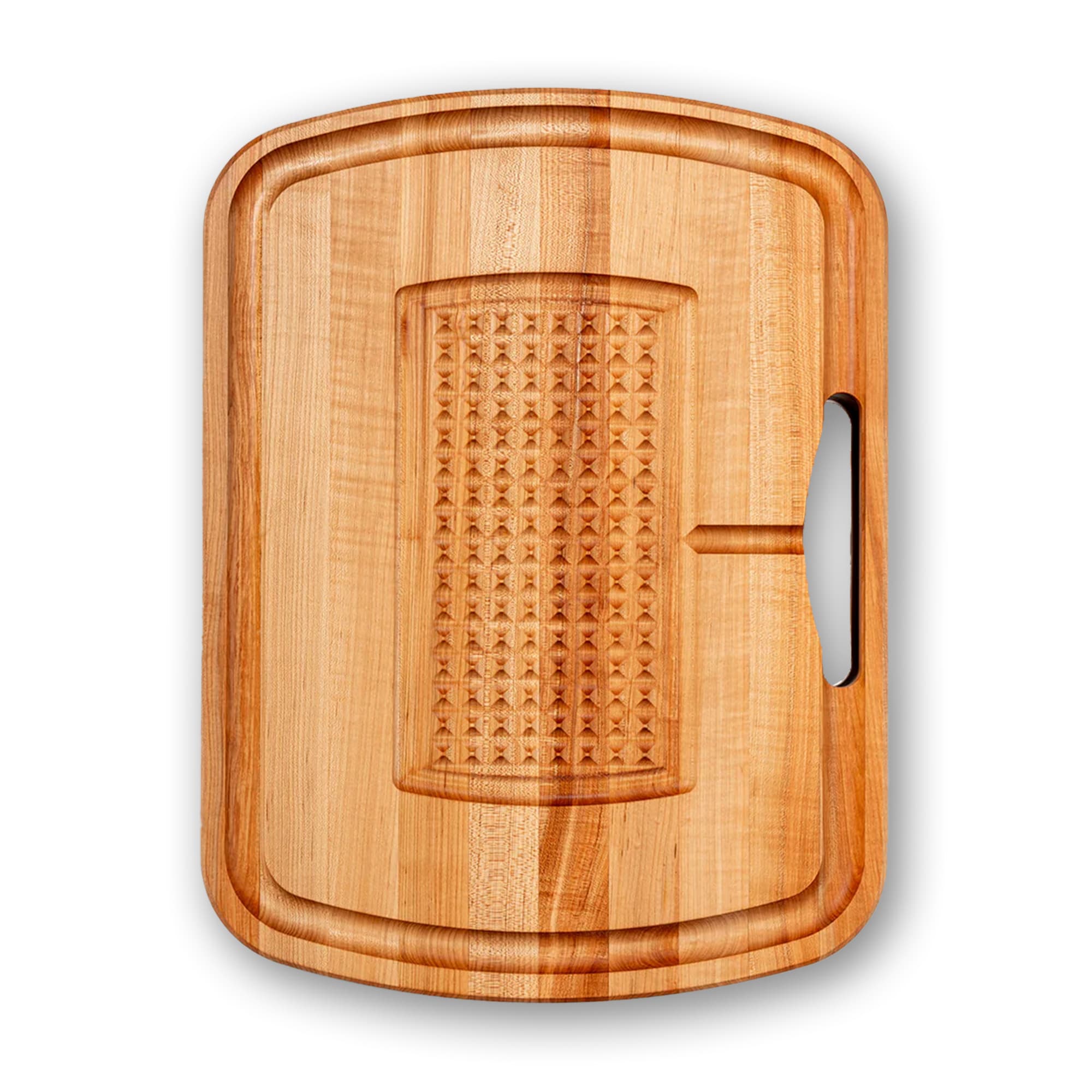
The John Boos Maple Edge-Grain Reversible Cutting Board relies on a traditional edge-grain build that cuts across the wood fibers rather than slicing between them. Bevelandbond noted that this specific construction means knives cut directly against the grain, which is inherently harder on blade edges compared to end-grain alternatives where blades slip between fiber ends. Despite this trade-off in knife preservation, the board remains a popular choice for home cooks who prioritize surface durability and ease of maintenance over specialized sharpness retention.
A defining feature of this model is its reversible nature, allowing users to flip the 1.5-inch thick slab when one side becomes heavily scarred or stained. This design extends the functional lifespan of the board significantly compared to single-sided options. The surface presents a smooth, even finish that Bevelandbond described as classic and neutral in tone, appealing to those who prefer a traditional aesthetic over modern composite materials. The solid maple construction provides a stable platform for chopping vegetables and slicing meats without flexing under normal pressure.
Noise levels during chopping and rocking motions
Smart Angler Lab evaluated the acoustic performance of this board against several competitors, recording sound levels during standardized chopping and rocking tests. This relatively quiet performance is attributed to the density of the maple wood, which dampens impact better than thin plastic or composite surfaces like Richlite.
While not the absolute quietest board on the market, the acoustic profile places it firmly in the upper tier for wooden cutting surfaces. Users who frequently chop hard ingredients like carrots or squash will notice a satisfying but muted thud rather than a sharp clatter. This noise reduction makes the board suitable for open-plan kitchens where loud kitchenware might be disruptive to other household members.
Knife edge retention compared to softer woods
In Smart Angler Lab's knife dulling tests, this board demonstrated the poorest performance among all wood boards evaluated. The tester used a BESS Certified Sharpness Tester to measure blade degradation after 600 cuts consisting of 300 rocking motions and 300 straight chops.
The high hardness of North American maple contributes directly to this rapid dulling effect. While harder woods resist deep gouging and warping better than softer alternatives like walnut or teak, they act as an abrasive against steel edges. Users who prioritize keeping their knives razor-sharp for extended periods may find that the trade-off between board longevity and blade preservation is unfavorable compared to end-grain blocks or composite materials.
Staining resistance from pigmented foods
Smart Angler Lab subjected this board to rigorous staining tests using garlic, beets, and chipotle peppers. The results showed that beet juice and chipotle residue did not fully wash out after standard cleaning procedures. Unlike plastic boards which are immune to organic staining, the porous nature of maple allows pigments from deeply colored vegetables to penetrate the surface grain over time.
Garlic odor retention was also noted during these tests, with a lingering scent remaining on the board even after one thorough wash. This characteristic is common across all natural wood cutting boards but requires users to be more diligent about cleaning and deodorizing if they frequently work with pungent ingredients like garlic or onions. The lack of a juice groove means that liquids from these foods sit directly on the cutting surface, increasing the potential for absorption.
Surface stability without rubber feet
The board lacks non-slip feet or rubber grips on its bottom surface, a deliberate omission due to its reversible design. Bevelandbond highlighted that adding feet would prevent the user from flipping the board over when needed. Without these grips, the smooth maple bottom can slide around on slick countertops during vigorous chopping tasks.
This instability requires users to either place a damp towel underneath the board to create friction or hold the board steady with one hand while cutting. For heavy-duty prep work involving large cuts of meat or hard squash, this lack of traction can be a safety concern. The sliding tendency is exacerbated by the 10-pound weight of the board, which provides momentum but not grip when force is applied laterally.
Commercial certification and manufacturing origins
One of the strongest selling points for this cutting board is its NSF certification, which verifies that it meets third-party food-equipment standards. This certification matters significantly to users who cook commercially or those who simply want assurance that the wood treatment and construction meet rigorous hygiene benchmarks. The board is manufactured in Effingham, Illinois, at a plant that has been producing butcher blocks since 1887.
Bevelandbond emphasized that this represents genuine American manufacturing rather than an imported product with domestic branding. The company sources sustainably harvested North American maple and constructs the boards using proprietary blends of hardwoods including ash, beech, cherry, and walnut in some series. This long-standing heritage provides confidence in the structural integrity and historical consistency of the product.
Warranty limitations and seller restrictions
The manufacturer offers a one-year limited warranty against manufacturing defects, but this coverage comes with strict geographic and vendor restrictions. Bevelandbond noted that the warranty is valid only for US purchases made directly from John Boos or authorized resellers. Boards purchased from unauthorized sellers are explicitly excluded from coverage.
Additionally, customers must pay return shipping costs if factory service is required under the warranty terms. This contrasts sharply with some competitors who offer five-year warranties and more generous return policies. Users should carefully verify their purchase channel to ensure they retain protection against cracks or splits that may occur during the first year of ownership.
Suitability for home versus professional kitchens
The combination of NSF certification, reversible design, and American manufacturing makes this board a strong fit for serious home cooks who value traditional aesthetics and commercial-grade hygiene standards. The 18x12 inch size is manageable on standard residential counters, while the larger 24x18 inch option provides ample space for meal prep tasks.
However, professional chefs or heavy-duty users who chop ingredients daily may find the edge-grain construction too harsh on their knives and the lack of rubber feet a hindrance during rapid prep work. The board is best suited for intermittent use where knife preservation is secondary to surface durability and ease of flipping between raw meat and vegetable tasks.
Strengths
- +NSF certified for commercial food-equipment standards
- +Reversible edge-grain construction allows flipping to extend board life
- +Made in Effingham, Illinois with over a century of American manufacturing history
- +Available in multiple sizes ranging from 18x12 inches to 24x18 inches
Watch-outs
- −Lacks non-slip feet or rubber grips on the bottom surface
- −Does not include a juice groove for catching liquids
- −Short one-year warranty limited to manufacturing defects from authorized sellers only
How it compares
It holds NSF certification for commercial standards, a distinction not held by the consumer-focused options in this list. Its reversible design extends lifespan compared to single-sided boards, though it lacks the non-slip feet found on the Sonder Los Angeles Alfred.
Rating sources
“The R-Board is a well-made, NSF-certified maple board from a company that has been building butcher blocks in Illinois since 1887, and at $94.95 for an 18 x 12 it is fairly priced.”
“this maple cutting board is safe for use with your fine cutlery”
Our 4.5 score is the average of the 2 scored reviews above; 2 more reviewed it without printing a score and are not in the average. Ratings marked * were derived from the reviewer’s written analysis or video transcript — the publisher didn’t print an explicit numeric score, so we inferred one from their own words. Click through to verify. More about methodology.