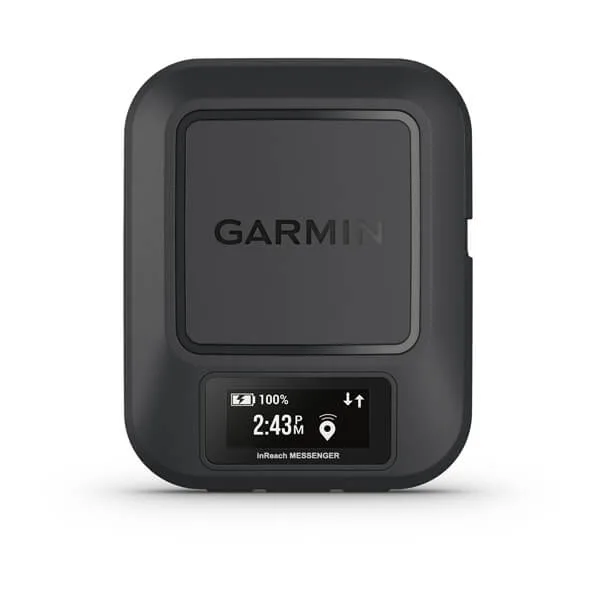
The Garmin inReach Messenger Plus is the first satellite communicator to support sending and receiving photos and 30-second voice messages via Iridium Messaging Transport, expanding text capacity from 160 to 1,600 characters. OutdoorGearLab found this multimedia capability transforms remote check-ins into a rich experience, while Gearjunkie noted that visual context aids rescue coordination in emergencies. However, on-device navigation is rudimentary and typing directly on the small monochrome screen is slow, making smartphone pairing via the Garmin Messenger app nearly essential for effective use. Recipients must also install the companion app to receive media files, a constraint Hikingguy warned limits sharing with standard SMS contacts. With up to 25 days of battery life in low-power mode and IPX7 water resistance, it fits tech-savvy adventurers who prioritize multimedia updates over standalone simplicity.
Full review
Iridium Messaging Transport enables multimedia
The Garmin inReach Messenger Plus represents a fundamental shift in satellite communication protocols by adopting Iridium Messaging Transport, which replaces the legacy Short Burst Data system. This hardware and software upgrade allows the device to transmit significantly larger data payloads than previous generations of two-way communicators. Treelinereview notes that this transition enables the sending of photos, 30-second voice messages, and text blocks up to 1,600 characters from anywhere in the world. The capability transforms the device from a simple text pager into a multimedia hub for remote environments.
OutdoorGearLab highlights that this is the first time such features have been readily usable for backcountry travelers on a compact satellite messenger. The ability to send and receive images allows users to document trail conditions or share scenic vistas with contacts at home. In emergency scenarios, Gearjunkie points out that sending an image of a specific injury or landmark can provide critical context to rescue coordinators who already know the general location but lack visual confirmation of the exact situation.
The 1,600-character text limit removes the frustration of the previous 160-character cap. Hikingguy explains that longer messages now go through in full when sent to a smartphone or another Plus device, eliminating the need to fragment information into multiple separate transmissions. This capacity supports more detailed check-ins and complex logistical coordination without consuming extra message credits for standard text delivery.
Smartphone pairing required for core functionality
The device relies heavily on a paired smartphone to unlock its full potential, as the standalone hardware interface is extremely limited. Hikingguy describes the experience of typing directly on the small monochrome screen with minimal buttons as slow and cumbersome, making the companion Garmin Messenger app nearly essential for regular use. Without the phone connection, users are restricted to basic SOS triggers and very rudimentary navigation functions that lack the detail required for serious trail work.
For effective route planning and tracking, the device must sync with the free Garmin Explore app on a smartphone. Treelinereview explains that this pairing allows the Plus to function as a GPS unit using offline maps, custom map downloads, track creation, and waypoint placement stored on the phone. The device itself does not provide a rich visual display for navigation; instead, it acts as the communication bridge while the phone handles the mapping interface.
Ultimatemotorcycling demonstrates this workflow by describing how they send check-in messages with precise location pins and quick phrases using intuitive clicks within the app. They also utilize the app to record 30-second voice notes for family members or share live photos from scenic stops during motorcycle rides. This dependency on a smartphone means users cannot operate the multimedia features independently of their mobile device.
Recipient app installation limits media sharing
A critical constraint for photo and voice message transmission is that recipients must have the Garmin Messenger app installed on their phones to receive these files. Hikingguy warns that standard SMS contacts will only receive a text notification, meaning family members or emergency contacts who do not install the specific app will miss visual and audio data entirely. This requirement necessitates pre-trip coordination to ensure all key contacts are set up correctly before leaving the trailhead.
Despite this limitation for media, the SOS emergency system routes through Garmin Response differently. Hikingguy notes that being able to send an image of an injury or describe a situation by voice is a significant upgrade in serious emergencies because Garmin Response can receive these files directly. This ensures that professional rescue coordinators get full context even if personal contacts do not have the app installed.
Gearjunkie acknowledges this friction but argues that the value of sharing real-time visuals and audio outweighs the setup hurdle for many users. They suggest that technophiles, parents wanting to send voice goodnights, and outdoor influencers will find the capability worth the effort of managing recipient apps. The feature set fundamentally changes how backcountry communication feels by bringing smartphone-like multimedia habits into remote areas.
Battery drain varies with signal strength
Garmin specifies a battery life of up to 600 hours, or roughly 25 days, in low-power messaging mode with tracking intervals set to every 10 minutes. Treelinereview confirms this specification and notes that users can extend longevity further by enabling Expedition Mode, which reduces GPS logging frequency to intervals as long as an hour between points. This setting is ideal for expeditions where battery preservation takes precedence over precise location tracking.
However, real-world performance fluctuates significantly based on environmental conditions and selected modes. Hikingguy reports that in heavy tree cover using Performance mode with multiple images sent, the battery drained to around 22 hours. This represents a stress test scenario rather than typical use, but it illustrates how intermittent signal search can accelerate power consumption when the Certus protocol attempts to maintain a constant link.
In contrast, Hikingguy found that on low-power mode with open sky conditions and 10-minute location tracking, the battery barely moved over a five-hour hike. OutdoorGearLab rates the battery performance highly at 9 out of 10, emphasizing the device's ability to offer weeks of standby time when used conservatively. Users are advised to default to low-power mode unless they require rapid back-and-forth messaging in open terrain.
Transmission speed suffers under dense canopy
The Iridium Certus network generally provides fast connectivity, but transmission times for media files are heavily dependent on line-of-sight to the satellite constellation. Hikingguy tested photo messaging in a dense Redwood forest and recorded send times exceeding 10 minutes under heavy tree cover. This environment serves as an extreme stress test where signal obstruction forces the device to wait longer for a clear transmission window.
Under normal conditions with open sky or light canopy, Garmin specifications and other testers place typical photo or voice send times closer to one to two minutes. Hikingguy notes that the Plus is about 20 to 30 percent faster overall compared to older models in standard messaging scenarios, though not dramatically so for basic text. Users operating primarily above treeline or in open alpine terrain will experience much quicker results than those navigating deep forest valleys.
The speed advantage becomes most apparent when sending the new 1,600-character texts compared to legacy systems that fragmented messages into smaller chunks. While media files require patience in obstructed areas, the underlying network upgrade ensures that critical text communications and location pings remain reliable and relatively swift across global coverage.
Build quality meets IPX7 waterproofing standards
The physical construction of the Messenger Plus prioritizes portability without sacrificing durability for outdoor use. The device weighs 4.1 ounces and measures 3.1 by 2.5 by 0.9 inches, making it small enough to fit in a shirt pocket as described by Treelinereview. OutdoorGearLab awards high marks for portability at 9 out of 10, noting that the compact form factor allows users to carry it discreetly on their person or pack.
Water resistance is rated at IPX7, meaning the unit can withstand submersion in up to one meter of water for 30 minutes. This specification protects against rain, splashing, and accidental drops into shallow streams. While it lacks a dust rating compared to some ruggedized competitors like the Ocean Signal rescueME PLB1 which offers IP68 protection, the IPX7 standard is sufficient for most hiking and motorcycle riding conditions.
Ultimatemotorcycling describes carrying the device facing outward in an inner jacket pocket during rides, verifying that messages are not delayed by body positioning or fabric. The robust antenna design connected to the Iridium network ensures consistent connectivity even when the device is tucked away on the rider's person, balancing physical protection with reliable signal transmission.
Reverse charging provides limited emergency power
The Messenger Plus includes a reverse charging feature that allows users to pull juice from the device to charge a smartphone or other electronics in a pinch. This capability adds value for travelers who might run their phone battery down while using navigation apps, providing a secondary power source when wall outlets are unavailable.
However, Hikingguy found this function to be finicky and limited in practical application. The reverse charging works only for a maximum of 20 minutes and requires the Plus device itself to be above a 25 percent charge level. The power transfer struggled to deliver meaningful续航, making it more of a novelty feature than a reliable backup strategy.
Users should view reverse charging as an emergency last resort rather than a primary way to extend their phone's life during multi-day trips. The device is primarily designed to preserve its own battery for satellite communications and location tracking, with the Iridium network ensuring global coverage regardless of local cellular infrastructure.
Strengths
- +First satellite communicator to support sending and receiving photos via Iridium Messaging Transport (IMT)
- +Enables up to 30-second voice memos for emergency descriptions or personal check-ins
- +Increases text message capacity from the legacy 160-character limit to 1,600 characters per message
- +Offers up to 25 days of battery life in low-power mode with 10-minute tracking intervals
Watch-outs
- −On-device navigation is rudimentary and requires pairing with a smartphone for effective trail use
- −Typing directly on the small monochrome screen is slow, making the companion app nearly essential
- −Recipients must install the Garmin Messenger app to receive photos and voice messages
How it compares
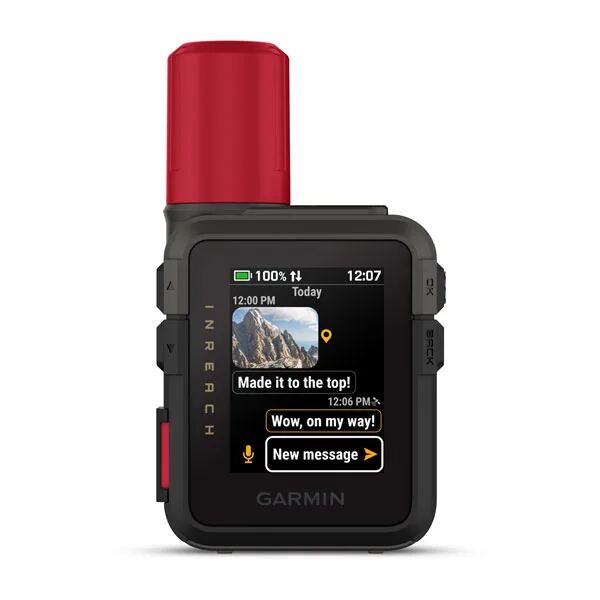
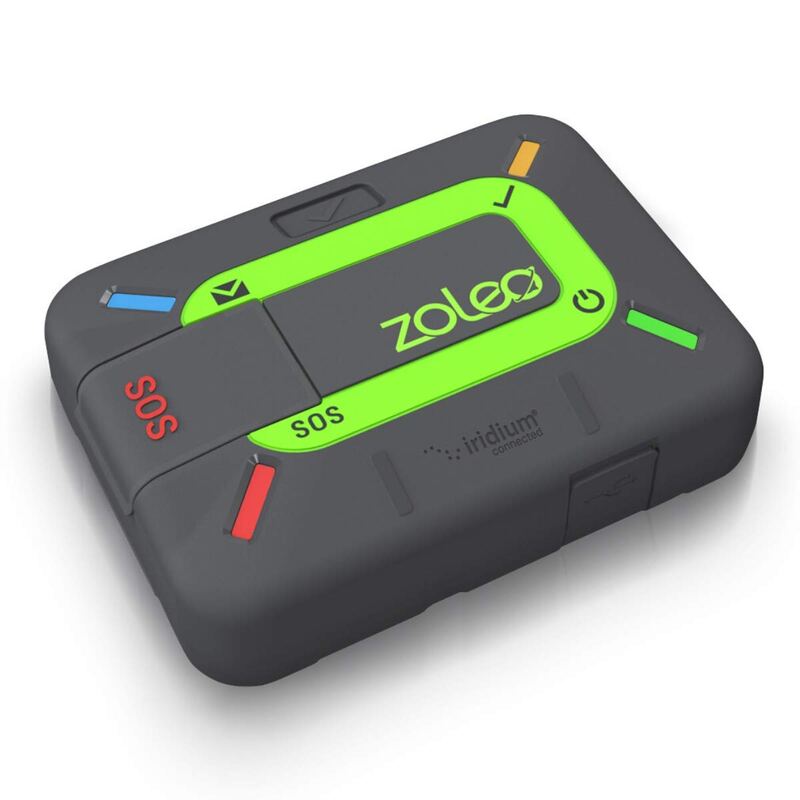
The Garmin inReach Messenger Plus sends photos and voice messages, as does the Garmin inReach Mini 3 Plus, but it has a small monochrome screen where the Mini 3 Plus has a 1.9-inch color touchscreen. At 4.1 oz it is lighter than the 5.3 oz Zoleo Satellite Communicator and is rated IPX7 where the Zoleo is rated IP68.
Rating sources
Counts as 4.76/5 in our score — this publisher's 149 scores on the site average 3.69, so its scores are adjusted up to compare fairly with other publishers.
Counts as 4.32/5 in our score — this publisher's 45 scores on the site average 4.03, so its scores are adjusted up to compare fairly with other publishers.
Our 4.5 score is the average of the 2 scored reviews above, each adjusted for how strictly its publisher scores; 3 more reviewed it without printing a score and are not in the average. More about methodology.