The FIFINE AmpliTank K688W offers dual USB and XLR connectivity, allowing creators to start with plug-and-play simplicity before upgrading to an audio interface later. However, Albert Kim points out that all onboard controls become inaccessible when connected via XLR, forcing reliance on software or mixer settings for adjustments. Additionally, the included windscreen is thin and fails to fully eliminate plosives, often requiring an aftermarket pop filter for clean vocal capture. This microphone fits podcasters and streamers seeking a versatile upgrade path who can manage level control through their interface, but it may frustrate those needing immediate tactile hardware access or pristine out-of-the-box audio clarity.
Full review
USB and XLR flexibility in creator workflows
The FIFINE AmpliTank K688W is positioned as a dual-path microphone that allows creators to begin with simple plug-and-play USB connectivity while preserving the option to upgrade to an audio interface via XLR. This hybrid approach means buyers can treat the K688W as a self-contained USB device with onboard controls and monitoring, then seamlessly transition to an XLR setup later by simply swapping cables rather than purchasing a new microphone.
This upgrade path is particularly relevant for podcasters and streamers who start on laptops or basic setups but anticipate moving toward more complex audio chains. The inclusion of both connection types in one metal-bodied unit removes the friction of committing to a beginner-only device that becomes obsolete upon upgrading gear. However, this dual nature introduces specific operational constraints depending on which port is active, requiring users to understand how the microphone behaves differently across its two modes.
Onboard controls become inaccessible over XLR
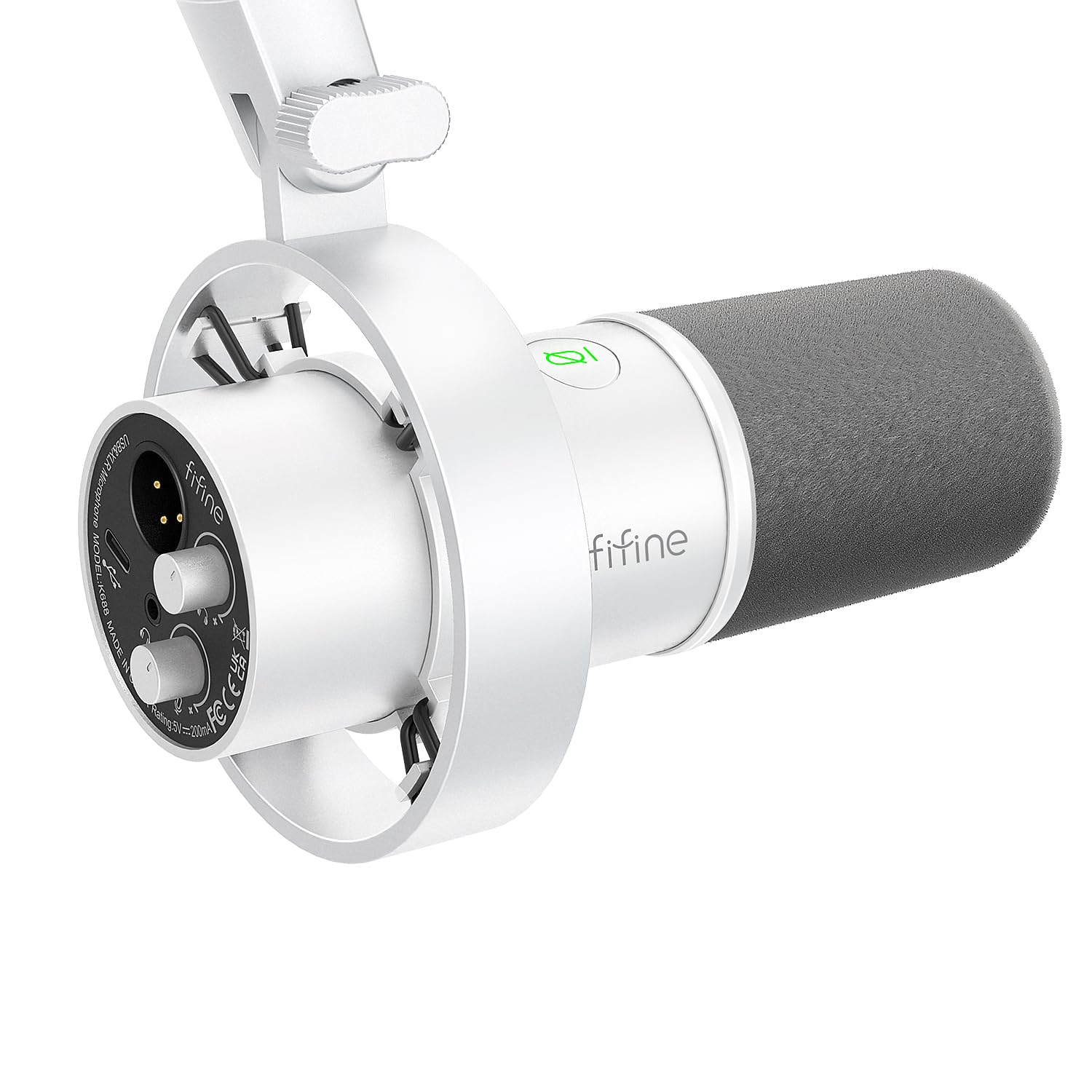
A significant functional limitation emerges when switching from USB to XLR mode: all onboard hardware controls, including the tap-to-mute button and gain knob, cease to function. Albert Kim points out that the physical dials on the rear of the unit stop responding once an XLR cable is engaged. This means users cannot adjust input levels or mute the microphone directly on the hardware when running through an audio interface; they must rely entirely on software settings or the mixer's own controls.
This restriction effectively turns the K688W into a passive dynamic microphone in XLR mode, stripping away the convenience features that define its USB utility. For streamers who need to quickly mute during live broadcasts without navigating menus, this loss of tactile control can be disruptive. The design choice prioritizes cost and internal circuitry simplification over full hardware parity between connection types, which may frustrate users expecting consistent physical controls regardless of their output method.
Dynamic cardioid pattern rejects ambient noise
The K688W utilizes a dynamic capsule with a cardioid polar pattern, which is specifically engineered to capture sound primarily from the front while rejecting noise from the sides and rear. This characteristic makes it highly effective in untreated home environments where computer fans, hard drive whirring, or keyboard clicks are prevalent. The directional pickup ensures that voice remains the dominant signal, keeping background distractions at a lower volume relative to the speaker's audio.
Because dynamic microphones require closer proximity to produce optimal output compared to condensers, this design inherently limits its ability to capture wide room ambience or distant voices. It is optimized for close-mic spoken-word content such as podcasting, voice-over work, and gaming commentary rather than capturing full acoustic instruments or large group discussions from a distance. Users must maintain consistent positioning relative to the microphone element to avoid fluctuations in volume and tonal quality.
Thin windscreen fails to fully suppress plosives
While the K688W includes a basic foam windscreen, reviewers have noted that its thin construction is insufficient for completely eliminating plosive sounds caused by sharp consonants like 'P' and 'B'. The lack of substantial filtration means users may still experience audible popping during energetic speech or aggressive vocal delivery. This limitation forces creators to either accept minor audio artifacts in their recordings or invest in additional aftermarket solutions.
To mitigate these issues, some reviewers suggest replacing the stock windscreen with a thicker, more robust pop filter designed for dynamic microphones. The inclusion of a separate external pop filter would provide better protection against low-frequency bursts from plosives, but out-of-the-box, the microphone relies on its internal grille and minimal foam layer, which may not satisfy users seeking pristine vocal clarity without post-processing or hardware modifications.
Metal build quality feels hollow
The K688W features a metal body and shock mount. The metal construction also helps dampen minor vibrations when mounted on a boom arm or desk stand.
However, some users report that despite the metal exterior, the microphone has a hollow feel when handled, suggesting internal components may not be as densely packed or rigidly secured as premium studio microphones. The suspension system uses rubber bands that can appear bulky in camera frames, and the connection point where the mic attaches to the stand is made of plastic rather than metal, which some find less reassuring for long-term durability.
Headphone monitoring lacks independent volume mixing
The 3.5mm headphone jack on the K688W provides real-time monitoring, allowing users to hear their voice and computer audio simultaneously while recording or streaming. This feature is valuable for maintaining consistent vocal levels and detecting issues like distortion or background noise without latency. The volume knob controls the overall output level of both sources combined.
A notable limitation is that the headphone volume control adjusts the mix of microphone input and computer signal together; there is no separate dial to balance the two independently. Users cannot lower their own voice while keeping game audio or music loud, nor can they raise their vocal monitoring without increasing background sounds from their PC. This lack of independent mixing requires creators to manage levels through software on their host device rather than directly on the microphone hardware.
Frequency response limits low-end instrument recording
The K688W has a frequency response range of 70 Hz to 15 kHz, which is well-suited for capturing the human voice but excludes sub-bass frequencies below 70 Hz. This specification makes it inappropriate for recording instruments that rely heavily on low-end resonance, such as cellos, double basses, or grand pianos, where fundamental tones often fall outside this upper-limited range.
For its intended use case of spoken-word content, the response curve provides a slight emphasis in the upper midrange and treble, which can help voice clarity. However, some reviewers note that this tuning may require careful gain staging to avoid harshness or sibilance if not managed properly. The dynamic nature of the capsule also introduces proximity effect, meaning voices sound deeper and warmer when positioned very close to the grille, but become thinner as distance increases.
Strengths
- +Dual USB and XLR connectivity allows users to start with plug-and-play simplicity and upgrade to an audio interface later without replacing the microphone.
- +Onboard controls including a tap-to-mute button, gain knob, and 3.5mm headphone monitoring jack offer practical workflow adjustments directly on the device.
- +Dynamic cardioid pickup pattern effectively rejects background noise from computer fans and hard drives while focusing on close-range voice capture.
Watch-outs
- −The included windscreen is thin and does not fully eliminate plosives, often requiring users to purchase a thicker aftermarket pop filter.
- −All onboard controls such as mute and gain adjustment are USB-only; they become inaccessible when the microphone is connected via XLR.
How it compares
The FIFINE AmpliTank K688W offers dual USB and XLR connectivity, allowing users to start with plug-and-play simplicity before upgrading, a flexibility not available in the purely XLR-based Audio Technica AT2020. However, its onboard controls become inaccessible when connected via XLR, unlike the AKG Pro Audio P120 which maintains physical switch functionality regardless of connection type.
Rating sources
“I would honestly steer you over towards the fafine ampl tank 3 because that one just feels a little bit heavier Duty I think it looks a little bit sleeker as well so I would go for that microphone instead of this one”
“So, I have adjusted it down... and I found that about this distance here, from my perspective, it sounds pretty clear.”
Our 3.6 score is the average of the 1 scored review above; 1 more reviewed it without printing a score and is not in the average. Ratings marked * were derived from the reviewer’s written analysis or video transcript — the publisher didn’t print an explicit numeric score, so we inferred one from their own words. Click through to verify. More about methodology.