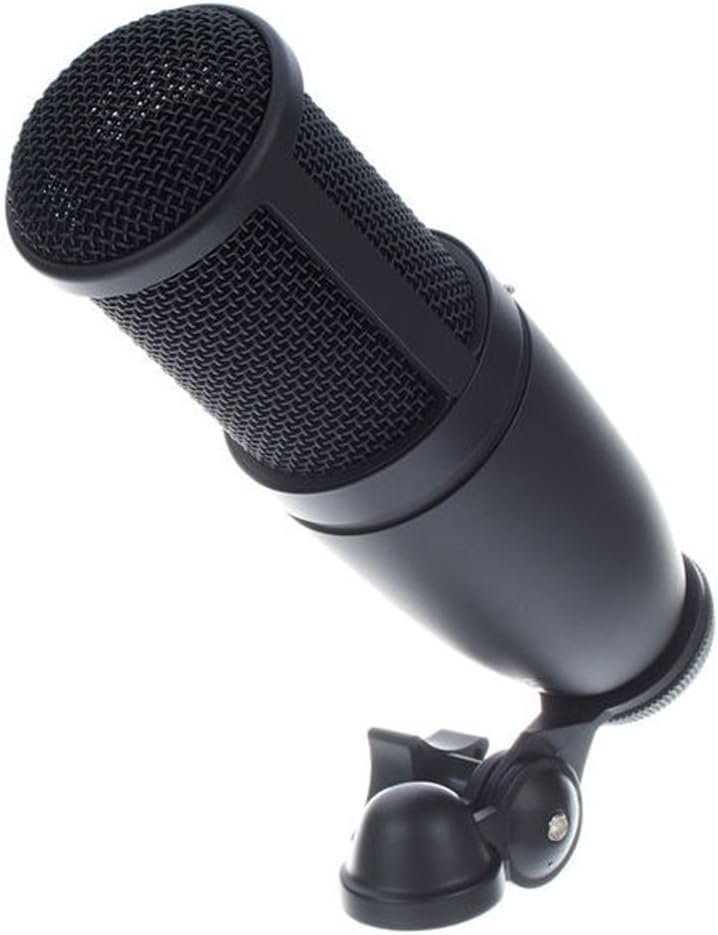
The AKG Pro Audio P120 delivers crisp sonic detail suitable for vocals, speech, and acoustic instruments, thanks to its low-mass diaphragm. Audio Tech TV found that it withstands sound pressure levels up to 150 decibels without distortion, a capability supported by the inclusion of a switchable -20 dB pad and bass cut filter rarely seen at this price point. However, self-noise is rated at 19 dB, which is substantially higher than competitors like the Røde NT-1, and its high-pass filter rolls off low frequencies starting at approximately 300 Hz, an aggressive cutoff that may alter tonal balance for bass-heavy sources. This rugged metal microphone fits first-time studio buyers seeking versatile utility switches, but those requiring ultra-low noise or precise frequency control should look elsewhere.
Full review
Sound character of the medium diaphragm
The AKG P120 utilizes a two-thirds-inch capsule that bridges the gap between small-diaphragm instrument mics and larger vocal condensers. Audio Tech TV describes this low-mass diaphragm as delivering surprisingly crisp and accurate sonic detail, making it highly suitable for vocals, speech, and acoustic instruments. This hybrid size provides enough surface area to capture a sense of fullness in voice recordings while retaining the transient response required for percussive sources like shakers or tambourines.
Reviewers note that the microphone's frequency profile is relatively neutral across the spectrum, though it exhibits a moderately hyped top end. This characteristic is common among budget condenser microphones and helps brighten up dull acoustic guitar recordings without requiring aggressive equalization in post-production. The cardioid polar pattern ensures that sound pickup is focused directly in front of the capsule, effectively rejecting noise from the sides and rear to maintain clarity in untreated home studio environments.
Handling extreme volume with pad and bass cut
A standout feature for this price tier is the inclusion of two physical switches on the microphone body: a -20 dB pad and a high-pass filter. The pad allows users to close-mic loud sound sources, such as guitar amplifiers or drum kits, without overloading the capsule. Audio Tech TV highlights that the P120 can handle sound pressure levels up to 150 decibels without introducing annoying distortion, making it a viable tool for capturing high-volume instruments alongside quieter acoustic performances.
The bass cut filter presents a more controversial design choice compared to industry standards. Instead of rolling off frequencies starting at the typical 80 Hz or 120 Hz range, this filter begins its gradual attenuation at approximately 300 Hz. While this aggressive cutoff can be beneficial for removing low-end rumble in poor acoustic environments, it significantly alters the tonal balance of sources with fundamental frequencies below that threshold. Users recording bass-heavy instruments may find this setting too restrictive unless they are strictly aiming to isolate mid-range presence.
Self-noise limitations versus competitors
The microphone's electrical self-noise is rated at 19 dB, a specification that places it at a distinct disadvantage when compared to higher-end alternatives. Produce Like A Pro explicitly notes that this noise floor is substantially greater than that of the Røde NT-1, which boasts an incredibly low self-noise of just 4 dB. This difference becomes critical in quiet recording scenarios where capturing delicate ambient textures or whisper-quiet vocals requires a silent preamp chain to avoid introducing audible hiss into the final mix.
Physical construction and build quality
Despite its entry-level positioning, the P120 avoids feeling fragile or disposable. Its rugged metal chassis is designed to withstand the day-to-day rigors of home studio use and live performance setups, ensuring longevity even when subjected to frequent handling and transport.
Power requirements for condenser operation
As a true condenser microphone, the P120 requires external phantom power to operate and cannot be plugged directly into a laptop or computer via an adapter. Users must connect the balanced XLR cable to an audio interface or mixer that supplies 48 volts of phantom power. The Audio Tech TV review demonstrates this by recording through an Arturia MiniFuse interface, noting that the gain dial was cranked to approximately three-quarters to achieve optimal signal levels without clipping.
Ideal applications for home studio creators
The combination of its affordable price point and professional-grade features makes the P120 a strong fit for first-time studio condenser buyers. Produce Like A Pro argues that anyone getting into home recording for the first time will find few to no faults with this microphone, particularly because it includes utility switches like the pad and bass cut filter that are often omitted in competing budget models to save costs. It serves as a versatile workhorse for podcasting, voiceovers, and multi-instrument tracking.
Strengths
- +Includes a switchable -20 dB pad and bass cut filter, features rarely found at this price point
- +Constructed with a rugged metal chassis that feels substantial rather than cheap
- +Handles sound pressure levels up to 150 decibels without distortion for loud sources
- +Delivers crisp sonic detail suitable for vocals, speech, and acoustic instruments
Watch-outs
- −Self-noise is rated at 19 dB, which is far higher than quieter condensers like the Røde NT-1
- −High-pass filter rolls off low frequencies starting at approximately 300 Hz, a more aggressive cutoff than standard options
How it compares
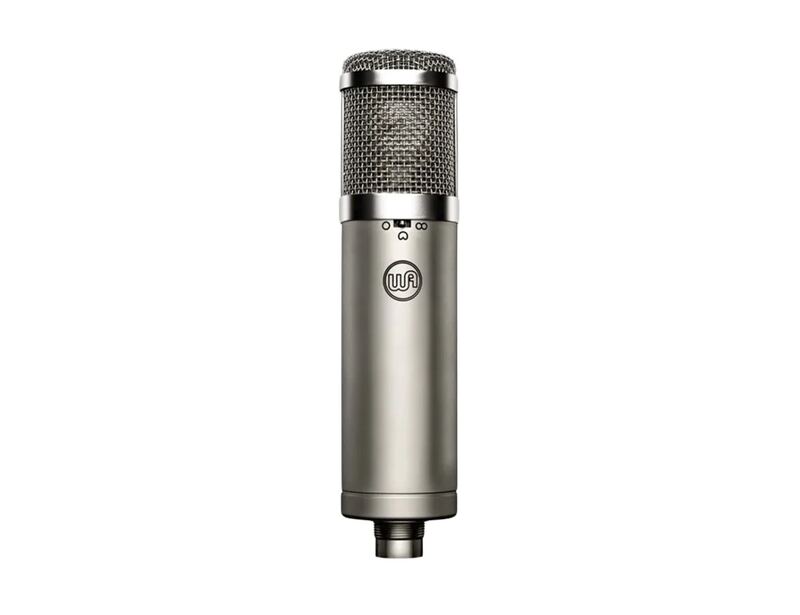
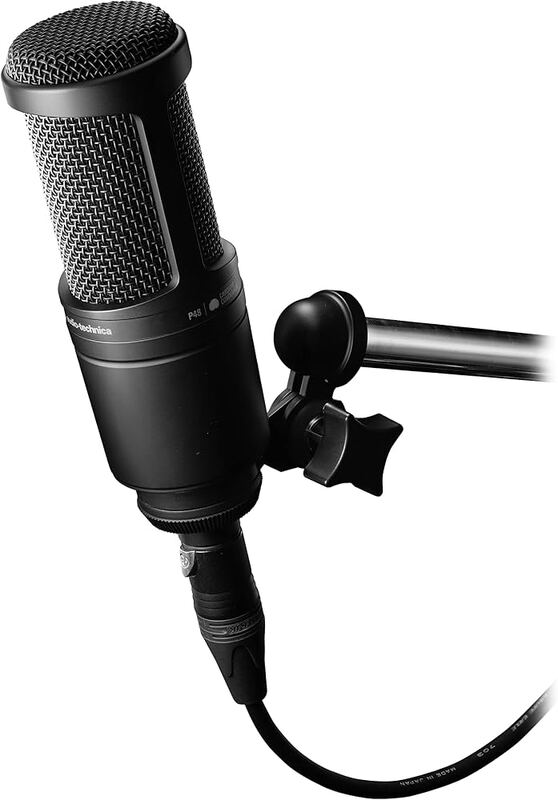
The AKG Pro Audio P120 distinguishes itself from the Audio Technica AT2020 by including a switchable -20 dB pad and bass cut filter, features absent on that model. However, its self-noise is rated at 19 dB, which is substantially higher than the Warm Audio WA-47 Jr's range of 9 dBA to 11 dBA, making it less suitable for ultra-quiet recording environments.
Rating sources
“it sounds pretty good on there and then I added some Shaker in there”
Our 4.0 score is the average of the 1 scored review above; 4 more reviewed it without printing a score and are not in the average. Ratings marked * were derived from the reviewer’s written analysis or video transcript — the publisher didn’t print an explicit numeric score, so we inferred one from their own words. Click through to verify. More about methodology.