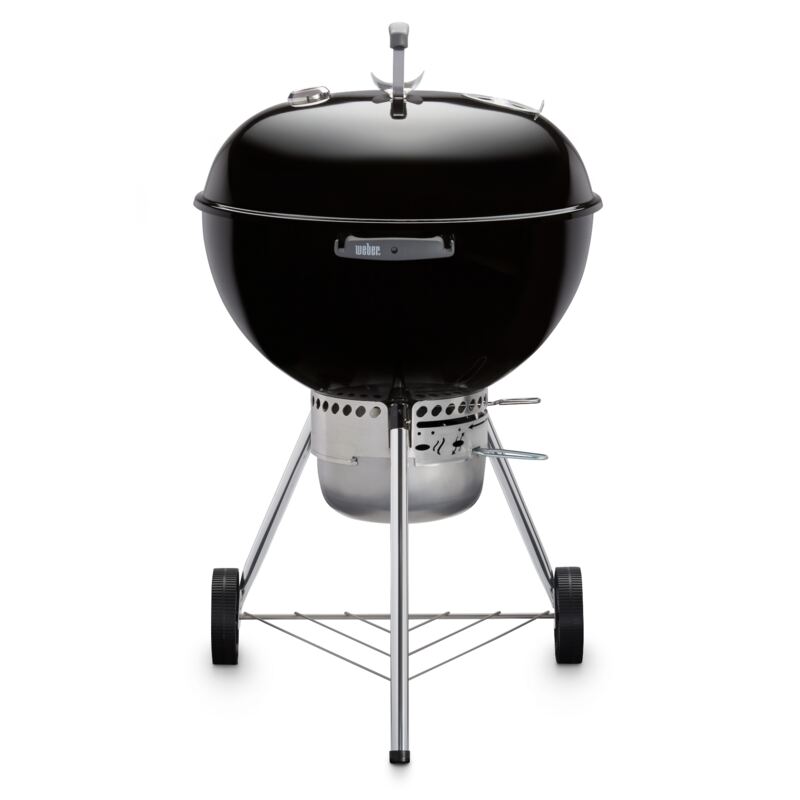
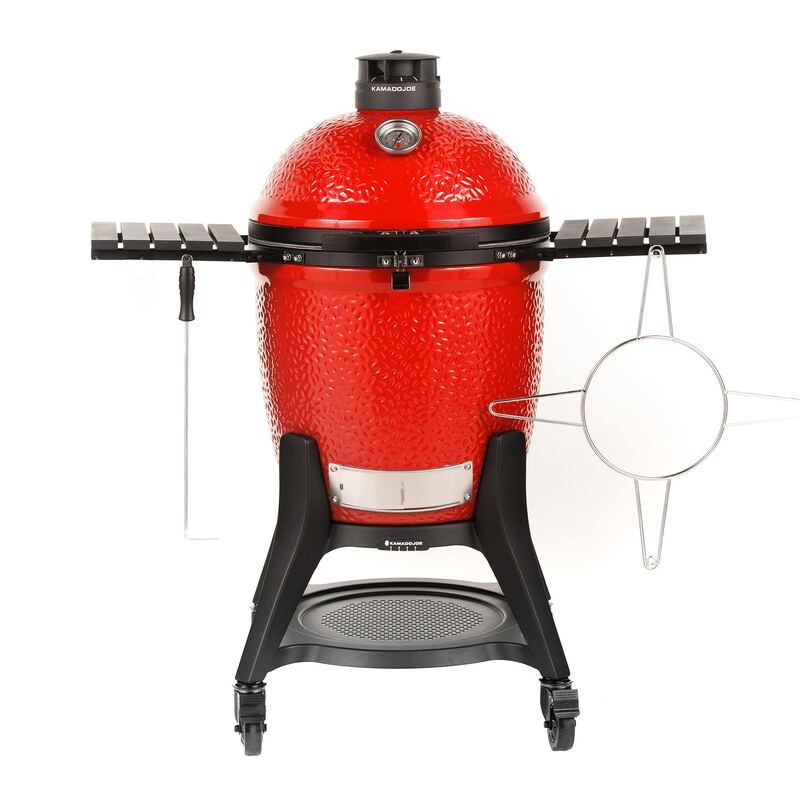
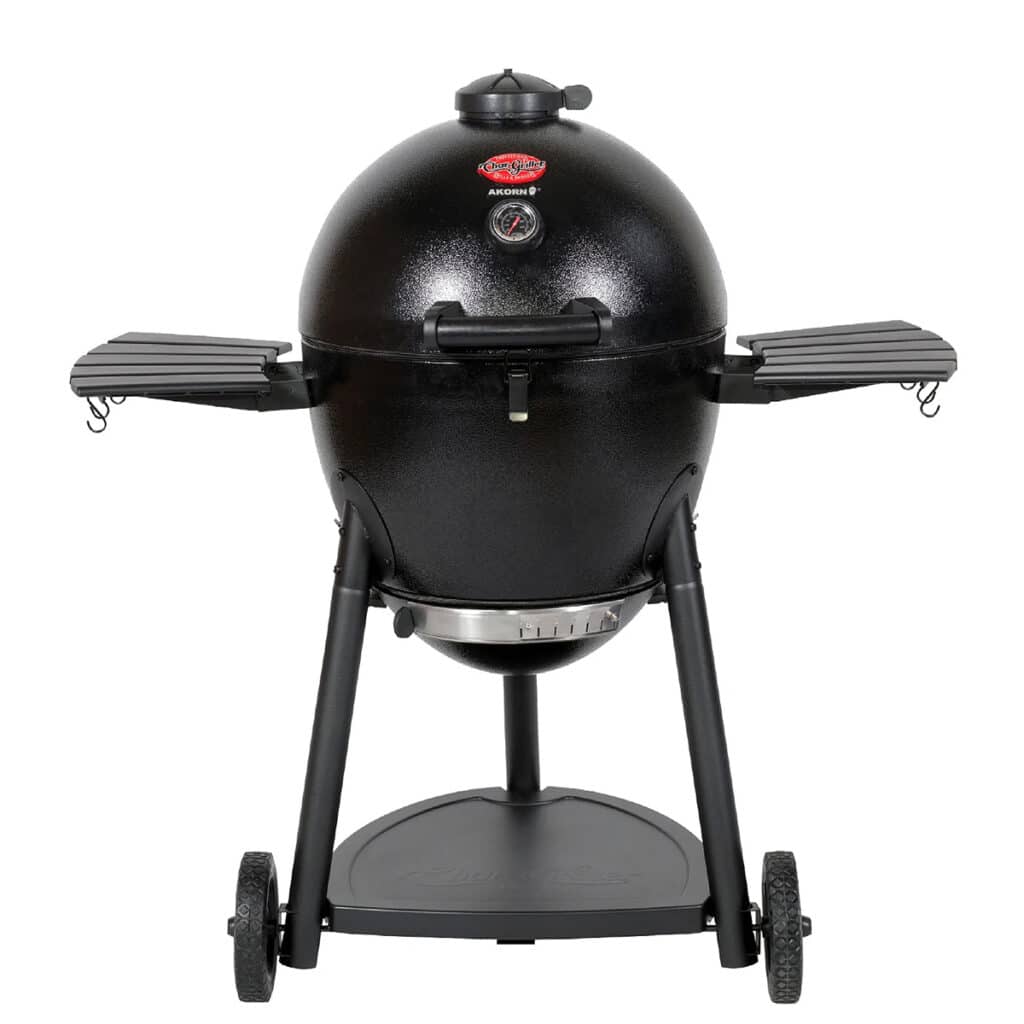
Ceramic-kamado pricing has a budget answer in the Char-Griller E16620 Akorn Kamado: triple-walled insulated steel construction, 445 sq in of total cooking area, cast iron grates, an EasyDump ash pan and a 5-year warranty for $369. Smoked BBQ Source called it 3-4x less expensive than comparable Big Green Egg or Kamado Joe models with most of the cooking benefit. The trade-offs are real: flimsier side shelves, a shorter warranty than ceramic, and a steeper learning curve for low-and-slow temperature management. For true ceramic durability and a lifetime warranty, step up to the Kamado Joe Classic III; for the best kettle, pick the Weber Original Kettle Premium 22-Inch.
Full review
Rapid temperature changes require careful damper control
The Akorn's triple-walled steel body is the engineering shortcut that gets you most of a ceramic kamado's heat-retention behavior at a fraction of the weight and cost. Smoked BBQ Source measured the operating range at 200 F to 700 F — wider than any kettle and within striking distance of a true ceramic kamado. The Char-Griller specification sheet confirms the dual adjustable dampers (one at the top, one at the bottom) and 3.1-lb charcoal capacity, which is enough for 6-to-8-hour cooks without refueling.
What the steel construction loses to ceramic is thermal mass. Smoked BBQ Source warned that the Akorn heats very quickly and is difficult to recover from if overheated — once you overshoot a 225 F target by 50 degrees, choking the dampers takes 30 to 45 minutes to bring the cook back into range, where ceramic's slower heat-up also means slower cool-down. New owners should plan two or three practice cooks dialing in damper-to-temperature feel before serious low-and-slow attempts.
5-year warranty shorter than ceramic rivals
Triple-walled carbon steel covers the bowl and lid, with two airspace gaps acting as insulation. Cast iron cooking grates, a chrome-plated steel warming rack, and carbon steel side shelves complete the cooking surfaces. Smoked BBQ Source noted that the cast iron grates and removable insert are genuine upgrades typically reserved for premium kamados, and Trim Jim called the Akorn a budget kamado that punches way above its weight.
Where the budget shows is the side shelves and the 5-year warranty. Smoked BBQ Source called the side shelves flimsy compared to the rest of the build, and the 5-year warranty is meaningfully shorter than the 10-year Weber kettle warranty or the lifetime ceramic warranty on a Kamado Joe. Triple-walled steel will eventually rust through where ceramic will not, and Trim Jim's long-term notes suggest 5-to-8-year effective service life with covered storage in non-coastal climates. That is shorter than a kettle but the price-per-year still pencils favorably.
High heat searing with limited low and slow endurance
700 F maximum dome temperature with all dampers open and a full charcoal basket is enough for serious steak sears. Smoked BBQ Source confirmed the kettle hits up to 700 F and produces some of the best results on a budget kamado. The cast iron grates contribute meaningfully to sear marks — cast iron stores and releases heat faster than the plated steel grates on most kettles, which is why steakhouse-grade crust formation is easier on the Akorn than on a comparably-priced Weber.
Low-and-slow is the Akorn's harder use case. With both dampers nearly closed and the grill stable around 225 F, you can hold smoking temperatures for 6 to 8 hours on a single 3.1-lb fuel load. That is meaningfully longer than the Weber Original Kettle Premium's 2-to-3-hour smoking burn but well short of the Kamado Joe Classic III's 18-hour overnight capacity. Trim Jim noted that the Akorn's biggest weakness is recovery time after damper adjustments — moves take 20 to 30 minutes to fully manifest in dome temperature, which requires patience.
Warms up faster than a true ceramic kamado
Char-Griller specifications list a 1-to-2-hour assembly with a Phillips screwdriver and an adjustable wrench. The bowl, lid, and stand come in separate pieces and the cart hardware is straightforward. Smoked BBQ Source called the Akorn suitable for both beginners and experienced grillers, with assembly instructions clear enough for first-time charcoal-grill owners.
First-cook setup follows the same kamado pattern as a Big Green Egg or Kamado Joe: lump charcoal in the basket, light from the top with a single tumbleweed or paraffin cube, dampers wide open until the dome stabilizes at target temperature. Plan 25 to 30 minutes of warm-up before cooking — slower than a kettle but faster than a true ceramic kamado because the steel walls heat through more quickly than ceramic does.
EasyDump pan makes cleanup effortless
The EasyDump ash pan is the Akorn's underrated convenience feature. The pan slides out from the base of the unit and dumps cleanly into a metal bucket — no shovel, no separate ash tool, no removable cap. Smoked BBQ Source specifically called this out as easier than the Big Green Egg's cap-and-shovel approach and on par with the Kamado Joe Classic III's slide-out drawer at a quarter of the price.
Long-term cleanup also benefits from the triple-walled construction: the outer skin stays cool enough to wipe down with a damp cloth without burning your hand, and the porcelain-coated interior doesn't require scrubbing — most owners run multiple cooks between any meaningful interior cleaning. The cast iron grates need standard cast-iron care: brush hot, oil lightly after cooking, store covered to prevent surface rust.
Versatility for Smoking, Searing, and Roasting
Trim Jim called the Akorn a punch-above-its-weight kamado that smokes ribs to perfection, sears steaks at 700 F, and roasts whole chickens with kettle-grill ease. The removable center insert in the cast iron grate accepts the same family of accessories as a Big Green Egg or Kamado Joe — pizza stones, sear grates, wok inserts — which extends the Akorn into pizza, stir-fry, and high-heat cooking territory most kettles can't reach.
Where the Akorn does not match a ceramic kamado is overnight low-and-slow capacity and 18-plus-hour brisket cooks. Triple-walled steel cools down faster than ceramic when the fire dies, so a fuel exhaustion event mid-cook means more dramatic temperature drop on the Akorn than on a Big Green Egg. For weekend cooks under 8 hours, the Akorn captures most of the kamado benefit; for true overnight cooks, the Kamado Joe Classic III is the right tool.
Side shelf screws need tightening within two years
Smoked BBQ Source's main critique is temperature recovery: the Akorn heats fast but is hard to recover from if overheated, which means low-and-slow takes more attention than on a ceramic kamado where the thermal mass naturally damps temperature swings. The side shelves are explicitly called out as flimsy compared to the rest of the build, and most owners report screw tightening at the 1-to-2-year mark on the shelf brackets.
The 5-year warranty is the other meaningful limitation. Ceramic kamados from Kamado Joe and Big Green Egg carry lifetime coverage on the shell; the Akorn's triple-walled steel will eventually rust through at the seams. Trim Jim's long-term notes suggest 5-to-8-year effective service life with covered storage, which is shorter than a kettle (12-to-18 years) and dramatically shorter than ceramic (20-plus years). Buyers planning to keep their grill for two decades should step up to ceramic; buyers planning to grill for 5-to-8 years and then upgrade get exceptional value from the Akorn.
80 percent of kamado benefit at 20 percent price
The Akorn is the right answer for the budget-conscious griller who wants the kamado heat profile without spending $2,000. If you want to learn ceramic-style temperature control, run 6-to-8-hour smoking cooks, sear steaks at 700 F, and bake the occasional pizza, but you can't justify a Big Green Egg or Kamado Joe Classic III, the Akorn captures roughly 80% of the cooking benefit at 20% of the price.
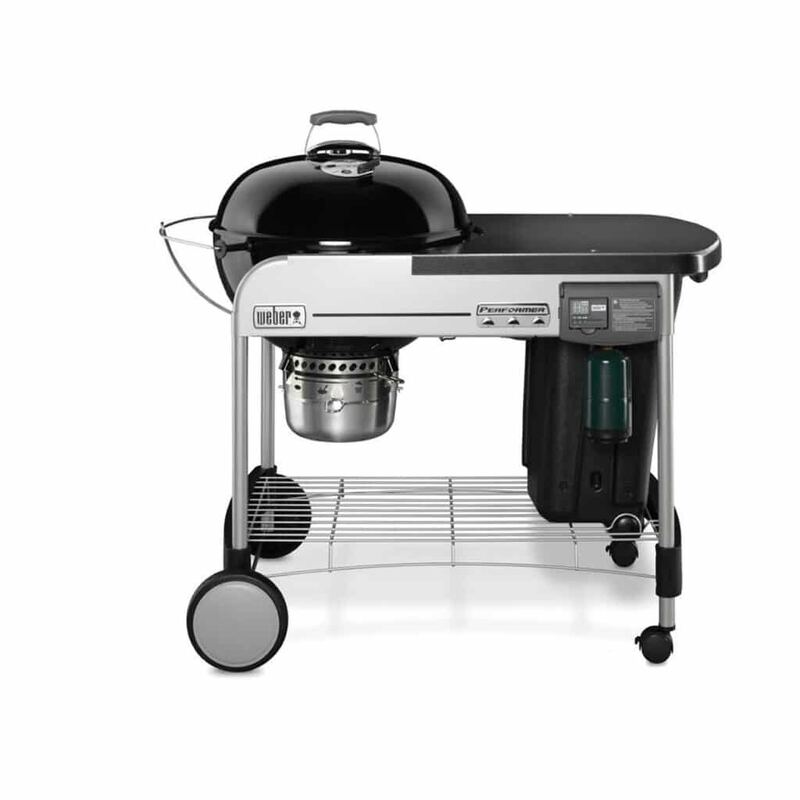
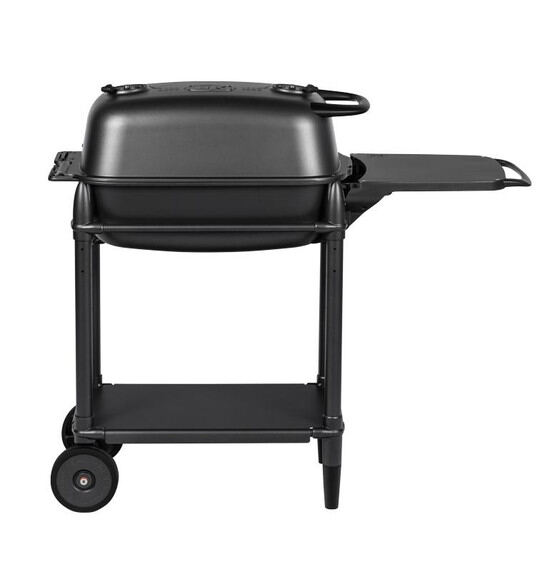
Who should look elsewhere: serious overnight smokers should jump to the Kamado Joe Classic III for ceramic durability and true 18-hour fuel efficiency. Buyers who want maximum cooking surface and stability should pick the Weber Performer Deluxe 22-Inch with its work table and four-leg cart. Buyers focused on portability belong on the PK Grills PK300, which is cast aluminum and actually moves between locations easily.
445 square inches more than the Performer's 363
Smoked BBQ Source's headline value statement is that the Akorn is 3-to-4 times less expensive than comparable Big Green Egg or Kamado Joe models with most of the cooking benefit. At $369, it sits below the Weber Performer Deluxe 22-Inch and well below any true ceramic kamado, while offering more cooking area (445 sq in total versus 363 sq in on the Performer) and a wider operating range (200-700 F versus the Weber kettle's 225-650 F practical ceiling).
Trim Jim's punch-above-its-weight characterization captures the value proposition: the Akorn is not as good as a $2,200 ceramic kamado, but at one-sixth the price it is the best value in kamado-style cooking. For first-time kamado owners and budget-conscious upgraders from a basic kettle, the Akorn is the most recommended entry point in the category.
Strengths
- +Triple-walled insulated steel body holds 200 F to 700 F across an 18-inch primary cooking area
- +445 sq in total cooking surface with cast iron grates and a removable warming rack
- +EasyDump ash pan slides out from the base for tool-free cleanup unlike most cap-and-shovel kamados
- +88 lb total weight (vs 280 lb on a ceramic kamado) and locking caster wheels make it actually mobile
- +Smoked BBQ Source called it 3-4x less expensive than comparable Big Green Egg or Kamado Joe models
Watch-outs
- −Temperature control requires practice — the grill heats fast and is hard to recover from after overshoots
- −Side shelves feel flimsy compared to premium kamados
- −5-year warranty is meaningfully shorter than ceramic kamado lifetime coverage
- −Triple-walled steel cannot match true ceramic insulation on 18-plus-hour overnight cooks
How it compares
Captures the kamado heat profile of the Kamado Joe Classic III at one-sixth the price, but trades a lifetime ceramic warranty for 5-year steel coverage and loses Divide & Conquer plus the SloRoller insert. Cooking area (445 sq in) exceeds the Weber Original Kettle Premium 22-Inch (363 sq in) at a similar price band but build quality is thinner. Weber Performer Deluxe 22-Inch is the same money in a kettle format with a workspace and gas ignition. PK Grills PK300 trades the kamado profile for cast aluminum portability — different cooking philosophy entirely.
Rating sources
“Get most of the benefits of a Kamado style grill without the high price tag.”
“The budget kamado that punches way above its weight.”
Our 4.5 score is the average of these published ratings. Ratings marked * were derived from the reviewer’s written analysis or video transcript — the publisher didn’t print an explicit numeric score, so we inferred one from their own words. Click through to verify. More about methodology.