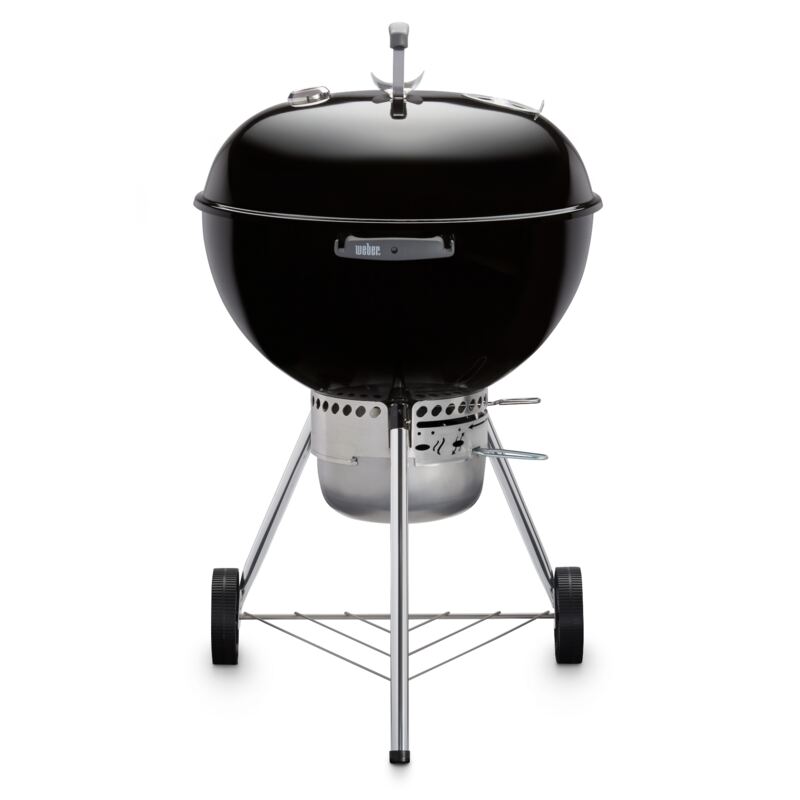
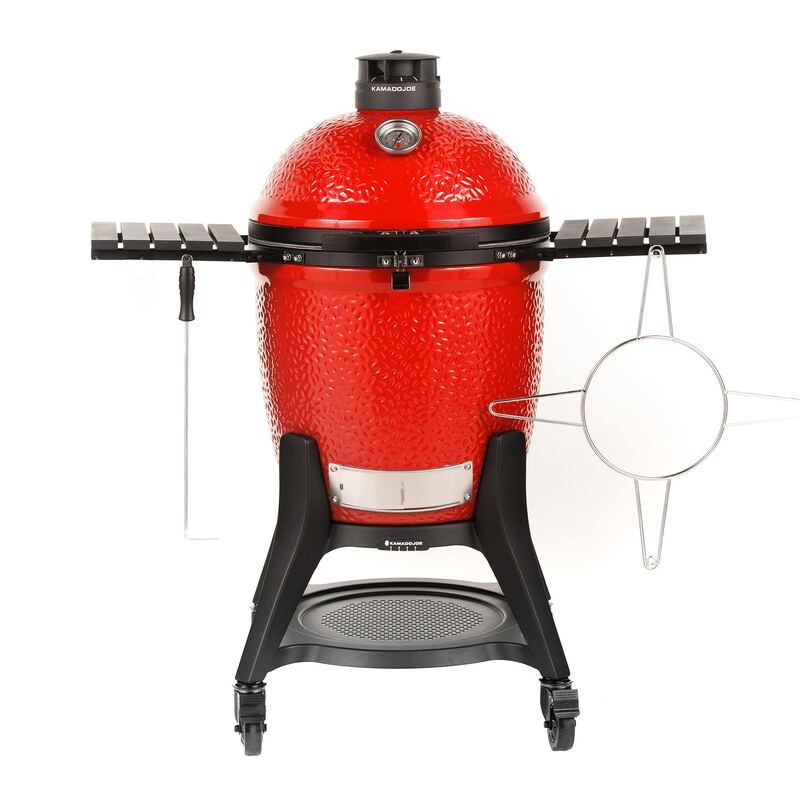
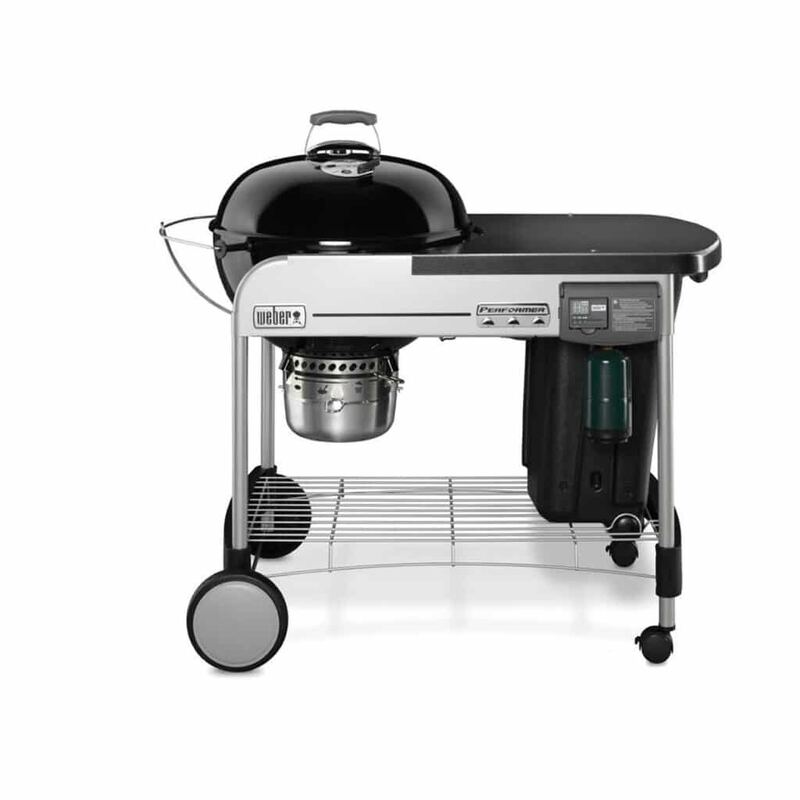
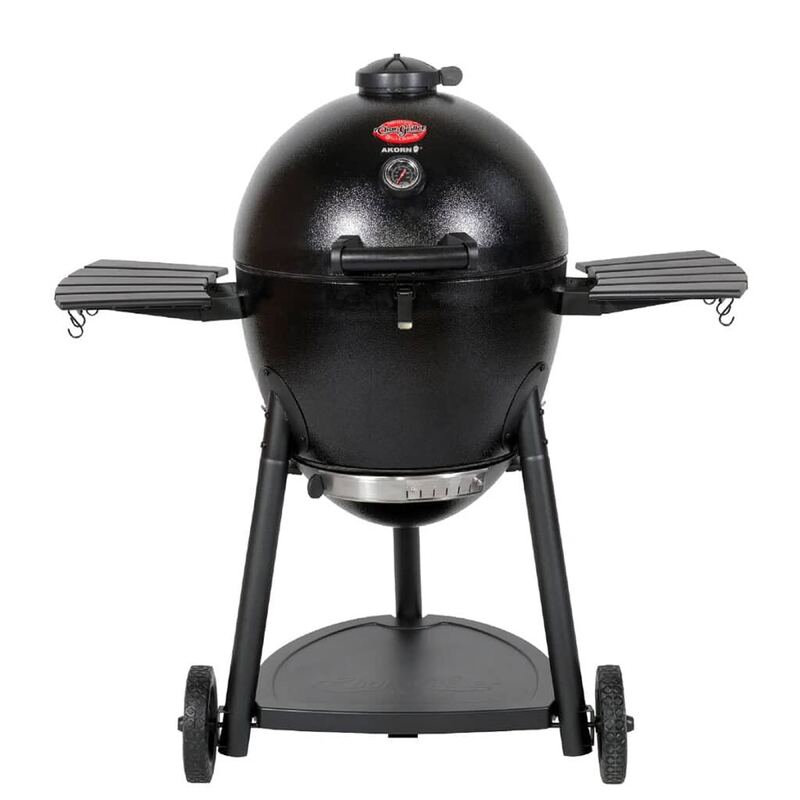
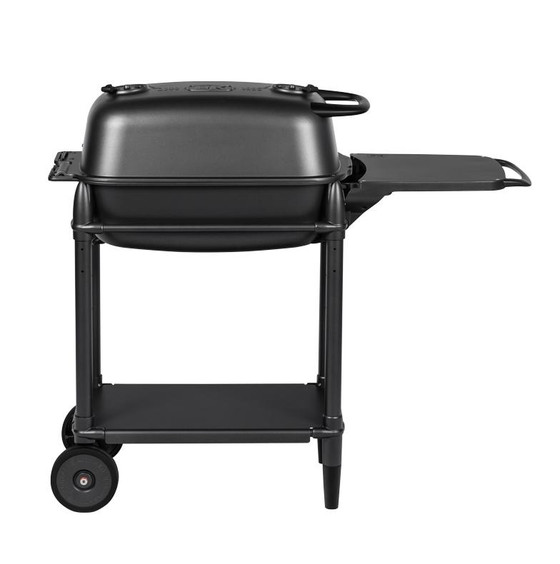
The PK Grills PK300 is the premium portable charcoal grill: a cast aluminum capsule with a 4-point precision venting system, a 30-inch cook height and a 20-year warranty on the bowl and lid. AmazingRibs called PK's quest to build a better mousetrap successful, and Girls Can Grill measured 500 F+ direct-zone sears and 275 F sustained indirect-zone smoking on the same fuel load. Cast aluminum conducts heat 4x faster than steel, which produces exceptionally even sear marks. The cooking surface is smaller than a kettle (315 sq in vs 363 sq in), so buyers prioritizing capacity should look at the Weber Original Kettle Premium 22-Inch instead, and buyers who want a workspace should look at the Weber Performer Deluxe 22-Inch.
Full review
Efficient heat distribution and superior airflow control
Cast aluminum conducts heat approximately 4 times faster than steel, which gives the PK300 unusually even temperature distribution across its 315 sq in cooking surface. Girls Can Grill measured direct-heat capacity above 500 F for searing steaks and 275 F sustained indirect-zone temperatures for smoking briskets on the same fuel load. The Precision 4-point venting system — two intake dampers at the bottom and two exhaust dampers at the top — gives finer airflow control than any 2-vent kettle, with the trade-off of a steeper initial learning curve.
AmazingRibs noted that PK's quest to build a better mousetrap has proven successful, with the 4-point venting system being the publication's main differentiator from kettle-style charcoal grills. The capsule shape — rectangular with rounded corners rather than circular — concentrates heat under the cooking grate more efficiently than a kettle's open hemispherical bowl, which is part of why the smaller cooking surface still produces sear marks comparable to a 22-inch kettle.
Cast aluminum bowl backed for 20 years
The PK300 cook chamber is constructed entirely from cast aluminum — both the top (lid) and bottom (bowl) are single-piece castings rather than welded steel sheets. This is the marquee construction choice and the reason PK can stand behind the bowl and lid for 20 years. Girls Can Grill emphasized that the walls are thick and solid and built to hold consistent heat. The aluminum cart with stainless steel hardware adds further corrosion resistance and Girls Can Grill specifically called out that the grill is durable wheels suitable for varied terrain.
The cooking grate is nickel-plated steel out of the box (a stainless steel upgrade is available), the charcoal grate is also stainless steel, and the side prep tray and bottom storage shelf are aluminum. The lid hinges are a heavy-duty Dura-hinge design upgraded from the older PK Original. AmazingRibs flagged the upgraded hinge as one of the key engineering improvements that justify the PK300 over the older PK platform.
Effective searing with precise temperature control
Girls Can Grill measured 500 F+ direct-zone sears with the intake dampers wide open and a full load of charcoal banked under one side of the cook chamber. That is below the 700 F that a Weber kettle or the Akorn can produce but is more than enough for steakhouse-grade crust formation on most cuts. The cast aluminum's even heat distribution means sear marks are visibly more uniform across the cooking surface than on most steel kettles where heat hot-spots over the central charcoal bed.
Low-and-slow performance with the intake dampers nearly closed and one indirect zone protected from direct heat gets you 275 F sustained for several hours per fuel load. The 4-point venting system gives precise indirect-zone temperature control, but Girls Can Grill flagged a learning curve — most owners need 2 to 3 cooks to dial in the damper relationship to maintain steady smoking temperatures. AmazingRibs noted the PK300 maintains PK's signature 2-zone cooking capability with dual intake/exhaust dampers, which is the platform's main cooking-philosophy distinction from kamados and kettles.
4-point venting system controls temperature
The PK300 ships in three main assemblies: the cast aluminum capsule, the cart base, and the side shelf/storage shelf hardware. Total assembly is 45 minutes to an hour with a Phillips screwdriver and a basic adjustable wrench. AmazingRibs noted that the cart construction with cast aluminum lugs and aluminum tube rails is a meaningful improvement over the older PK Original cart, which was a more basic welded steel design.
First-cook setup is straightforward but does require learning the 4-point venting system: open all 4 dampers fully during light-off, then close down to maintain target temperatures once stable. PK recommends lump charcoal over briquettes for the cast aluminum platform, and Girls Can Grill specifically called out the dual-zone setup with charcoal banked under one half of the grate as the right starting point for new owners.
Manual ash removal requires extra effort
The PK300 uses an interior ash containment system rather than a slide-out ash pan or sweep-and-catcher mechanism. Ash collects below the charcoal grate inside the capsule and is removed by lifting the charcoal grate and scooping or vacuuming the ash out. Girls Can Grill flagged this as a real cleaning friction — she ultimately moved on from the grill because of cleanup difficulty, specifically noting the ash removal process requiring a shop vacuum.
AmazingRibs noted the interior ash control system with airflow pre-heating capability is part of the 4-point venting design, so it is an engineering trade-off rather than an oversight. For owners who don't mind the manual scoop-and-vacuum approach, the trade is even heat distribution and excellent fuel efficiency. For owners who want sweep-and-catch convenience, the Weber Original Kettle Premium's One-Touch system is meaningfully easier day-to-day.
Versatility for Camping, Tailgating, and Backyard Use
The PK300's 60-lb weight and locking caster wheels make it genuinely portable in a way that no kettle and certainly no kamado can match. The lid latches to the bowl for transport, and the aluminum cart breaks down to fit in most SUV trunks. AmazingRibs noted this is what PK calls the grill's signature use case: it is the premium answer to portable charcoal grilling, designed to travel to tailgates, beach houses, and camping trips while still delivering heat-retention performance comparable to a heavier backyard grill.
In backyard use, the 30-inch cook height is ergonomically taller than the older PK Original's 27-inch height — AmazingRibs called this out as the single most-requested change from owners of the original platform, and the change makes a real difference for back fatigue on longer cooks. The side prep tray and bottom storage shelf give modest workspace, though not the full work surface of the Weber Performer Deluxe 22-Inch cart.
Smallest cooking surface here at 315 square inches
The 315 sq in cooking surface is the most immediate limitation — smaller than a 22-inch kettle (363 sq in) and meaningfully smaller than the Char-Griller Akorn (445 sq in total). For families regularly cooking for 6+ people, the PK300 will feel cramped. Girls Can Grill's ultimate complaint was cleanup difficulty: the interior ash containment system requires a shop vacuum or manual scoop, which is slower than the sweep-and-catch approach on the Weber kettles.
Pricing is the other friction point. At $599, the PK300 is at the top of the portable-grill price band, well above a Weber Smokey Joe or a Char-Griller Akorn Jr. That price pays for the cast aluminum durability and 20-year warranty rather than raw cooking capacity. Buyers focused on dollars-per-square-inch of cooking surface get more grill at the Weber Performer Deluxe 22-Inch price tier; buyers buying the PK300 are buying portability + heat retention + 20-year warranty as a package.
Holds heat like a backyard kettle on the road
The PK300 is the right answer for the premium-leaning weekend cook who wants a portable grill that genuinely travels — to tailgates, lake houses, camping trips, RV sites — but who also wants heat retention and even cooking performance comparable to a backyard kettle. The cast aluminum construction is the differentiator: a Weber Smokey Joe is more portable and cheaper, but does not hold heat the way the PK300 does, and won't give you the same sear quality on a tailgate burger.
Who should look elsewhere: buyers focused on backyard-only use with maximum cooking surface should pick the Weber Original Kettle Premium 22-Inch or the Char-Griller E16620 Akorn Kamado for more grill at lower price. Buyers focused on overnight smoking should pick the Kamado Joe Classic III. Buyers who want a workspace and gas ignition should pick the Weber Performer Deluxe 22-Inch — the PK300 is for the use case where portability is the constraint and quality is non-negotiable.
Works out to about $30 a year
At $599 the PK300 sits at the top of the portable-charcoal category and slightly above the Char-Griller Akorn in the broader charcoal field. The 20-year warranty on the cast aluminum bowl and lid is the longest coverage in the portable-charcoal category — twice the Weber kettle's 10-year warranty and four times the Char-Griller Akorn's 5-year coverage. Amortized over 20 years of expected service life, the PK300's price tag works out to about $30 per year, which is competitive with the much-larger Weber Original Kettle Premium on a cost-per-year basis.
AmazingRibs's positive review noting PK's quest to build a better mousetrap has proven successful captures the value proposition: the PK300 is not the most grill per dollar in the category, but it is the most premium portable charcoal grill on the market and its cast aluminum construction is a genuine engineering differentiator. For the portable-and-premium use case, no competitor matches it.
Strengths
- +Cast aluminum construction conducts heat 4x faster than steel, giving even sear across the entire 315 sq in cooking surface
- +Precision 4-point venting system supports two-zone direct + indirect cooking on the same load
- +30-inch cook height is ergonomically taller than the old PK Original and easier on the back
- +Rust-proof aluminum cart with locking caster wheels makes the 60 lb grill truly portable for camping and tailgating
- +20-year warranty on the cast aluminum bowl and lid — the longest in the portable-charcoal category
Watch-outs
- −315 sq in cooking surface is meaningfully smaller than a 22-inch kettle's 363 sq in
- −$599 price tag is high relative to other portables — pays for cast aluminum durability, not raw cooking capacity
- −Ash management uses an interior containment system rather than a slide-out pan — slower to clean than the Akorn or the Weber kettles
- −Girls Can Grill flagged a learning curve on the 4-point venting system that takes 2-3 cooks to master
How it compares
Smaller cooking surface than the Weber Original Kettle Premium 22-Inch (315 sq in vs 363 sq in) but offers cast aluminum heat retention that kettle steel can't match. Far more portable than the Kamado Joe Classic III (60 lb vs 280 lb) but cannot match a ceramic kamado's overnight fuel efficiency. Char-Griller E16620 Akorn Kamado offers more cooking area in the same price band but trades aluminum portability for triple-walled steel weight. Weber Performer Deluxe 22-Inch at this price gets you a kettle and a workspace cart; the PK300 trades workspace for actual portability.
Rating sources
“PK's quest to build a better mousetrap has proven successful so far and appears to be gaining momentum.”
“The walls are thick and solid and built to hold consistent heat.”
Our 4.4 score is the average of these published ratings. Ratings marked * were derived from the reviewer’s written analysis or video transcript — the publisher didn’t print an explicit numeric score, so we inferred one from their own words. Click through to verify. More about methodology.