The Celestron StarSense Explorer LT 80 AZ is an 80mm f/11 achromatic refractor with optics good enough for the moon, planets, and double stars. Reviewers found it simple to set up and use, with decent accessories included. The small aperture and narrow field of view cut the target list short, though, and reviewers considered the StarSense technology wasted on a scope this size. The mount has no fine adjustments, and while the tube cools quickly, its limited reach makes it a poor recommendation for beginners. It works as a basic, portable refractor at a budget price and not much more.
Full review
Optical Performance and Design
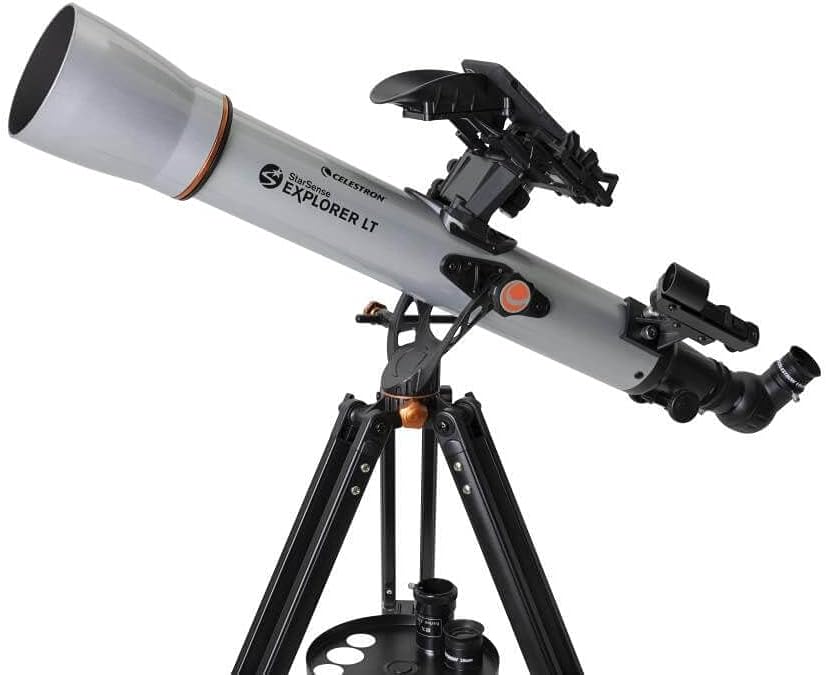
The Celestron StarSense Explorer LT 80 AZ is an 80mm (3.15") f/11 achromatic refractor with a focal length of 900mm, utilizing the same optical tube found in the Celestron Inspire 80AZ and similar 80mm refractors. According to TelescopicWatch reviewer Zane Landers, the optics in the LT 80 AZ are quite good and will serve well for lunar, planetary, and double star observation. The refractor lens on the front end and focuser on the back end provide a straightforward optical design that doesn't require collimation, which Landers notes is attractive for a 'grab n' go' telescope for quick peeks at bright targets from home. However, the small aperture (80mm) and slow focal ratio (f/11) result in only slight purple fringing on bright targets like the Moon and planets, which Landers confirms isn't enough to significantly hamper views through the LT 80AZ. The included 10mm eyepiece that Landers tested, however, added more chromatic aberration of its own, which he found to be a nuisance. The focuser on the LT 80 AZ is a plastic 1.25" rack-and-pinion unit that works fine with all but the heaviest eyepieces and diagonals, which are unlikely to be used anyway since most such eyepieces cost more than the LT 80 AZ itself.
Mount and Setup Experience
The mount design of the Celestron StarSense Explorer LT 80 AZ has received mixed reviews from reviewers. TelescopicWatch's Zane Landers rated the mount 3/5, noting that it's 'mediocre' with 'no fine adjustments' and that the StarSense Explorer technology is 'essentially unnecessary' with such a small, narrow-field telescope. The mount's design severely limits the telescope's ability to track celestial objects smoothly, particularly when compared to more robust mount designs found in higher-end scopes. Landers specifically mentions that the mount is 'not the most steady' and that aiming the telescope is 'annoying,' which he found to be a significant drawback for a telescope that's meant to be user-friendly for beginners. The telescope's portability is rated 4/5 by Landers, suggesting it's easy to transport, but the mount's limitations overshadow this advantage. The StarSense Explorer technology, while present, is noted as having 'no functional purpose' with such a small telescope that has little in the way of capabilities beyond viewing the Moon and planets anyway.
StarSense Explorer Technology Assessment
The StarSense Explorer technology in the LT 80 AZ is one of the most debated aspects of this telescope, with reviewers expressing strong disagreement about its value. According to TelescopicWatch, the StarSense Explorer technology is 'nice' but 'essentially unnecessary' with such a small, narrow-field telescope. Landers argues that the technology is 'a nice-to-have' but not required, as 'you simply don’t need its help for finding bright targets' and that 'the scope is too small to pull in dim ones.' The technology is described as having 'no functional purpose' with such a small telescope that has little in the way of capabilities beyond viewing the Moon and planets anyway. However, the technology does help with locating targets, which is a positive aspect for those who are just beginning their astronomy journey. The StarSense Explorer bracket can be attached to other telescopes, and some users reportedly sell the leftover LT 80 AZ at a good used price, indicating that while the technology may not be essential, it does add some versatility to the product. The technology's utility is further questioned by Landers, who notes that 'an 80mm refractor telescope generally isn’t my first choice for beginners for multiple reasons,' suggesting that the StarSense Explorer technology doesn't compensate for the fundamental limitations of the small aperture.
Performance and Target Capabilities
The performance of the Celestron StarSense Explorer LT 80 AZ is limited by its small aperture and narrow field of view, which severely restrict the types of targets that can be effectively observed. TelescopicWatch's Zane Landers rated the Moon & Planets category 3/5, indicating that while the telescope performs adequately for these targets, it's not exceptional. The 80mm aperture is considered small for any beginner telescope, and Landers notes that 'for the price, you could get a reflector with 50% more aperture.' The telescope's performance is further constrained by its narrow field of view, which makes it difficult to observe larger celestial objects. Landers also notes that the telescope's optics are good enough for lunar and planetary viewing, but 'the StarSense Explorer technology isn't needed at this aperture, and a larger aperture scope would be a much more rewarding purchase for the price.' The telescope's ability to observe dim objects is limited, which is a significant drawback for those interested in deep-sky observation. The included accessories, while decent, are not sufficient to overcome the fundamental limitations of the small aperture and narrow field of view.
Too small to pull in dim targets, reviewer says
The value proposition of the Celestron StarSense Explorer LT 80 AZ is a contentious issue among reviewers, with some finding it acceptable for its price point while others consider it overpriced for its capabilities. TelescopicWatch's Zane Landers rated the value 4/5, noting that 'if you’re fortunate enough to get a good deal on the StarSense Explorer LT 80 AZ or already own one, it’s a just fine scope with or without the StarSense Explorer technology.' However, Landers also points out that 'the StarSense Explorer technology is nice, but you simply don’t need its help for finding bright targets, and the scope is too small to pull in dim ones.' The telescope's positioning as a beginner-friendly option is somewhat undermined by its small aperture and mediocre mount design, which are not typical characteristics of a high-value beginner telescope. Landers suggests that 'an 80mm refractor telescope generally isn’t my first choice for beginners for multiple reasons,' indicating that the product's value is questionable for those seeking a quality first telescope. The telescope's performance is further limited by its narrow field of view and small aperture, which makes it difficult to observe larger celestial objects. While the included accessories are decent, they do not compensate for the fundamental limitations of the telescope's design.
User Experience and Practical Limitations
User experience with the Celestron StarSense Explorer LT 80 AZ is mixed, with many reviewers noting practical limitations that affect usability. TelescopicWatch's Zane Landers describes the telescope as 'nothing more than a run-of-the-mill cheap refractor, with the StarSense Explorer tech added as an afterthought,' which suggests that the technology doesn't enhance the telescope's overall quality. The mount design is criticized for being 'mediocre' with 'no fine adjustments,' making it difficult to achieve precise tracking of celestial objects. Landers also notes that the telescope's 'small aperture and narrow field of view severely limit targets,' which is a significant drawback for users who want to explore a variety of celestial objects. The telescope's performance is further constrained by its slow focal ratio (f/11) and small aperture (80mm), which result in limited magnification capabilities and poor performance when observing dim objects. The included accessories are described as 'decent,' but they don't compensate for the fundamental limitations of the telescope's design. Users who are looking for a telescope that can handle a variety of observing conditions will find the LT 80 AZ to be underwhelming, particularly when compared to other telescopes in the same price range.
Comparison to Alternative Telescopes
When compared to other telescopes in the same price range, the Celestron StarSense Explorer LT 80 AZ is positioned as a mid-tier option with significant limitations. TelescopicWatch ranks it #2 of 13 $200 telescopes and #1 of 10 $250 Refractor telescopes, but this ranking is based on its overall performance rather than its strengths. The LT 80 AZ is compared to other models like the SarBlue Mak70 with Tripod (ranked #1) and the Explore Scientific FirstLight AR80 Refractor (ranked #3), both of which offer better performance and value. Landers notes that 'for the price, you could get a reflector with 50% more aperture,' which indicates that the LT 80 AZ's value is significantly undermined by its small aperture. In contrast, other telescopes in the same price range, such as the Celestron StarSense Explorer LT 114 AZ, are noted for having 'bad optics' and a 'mediocre mount at best,' suggesting that the LT 80 AZ is actually a better option in terms of overall performance, despite its own limitations.
StarSense tech adds little value on this small scope
The Celestron StarSense Explorer LT 80 AZ is best suited for users who are on a tight budget and looking for a basic telescope to get started with astronomy. According to TelescopicWatch's Zane Landers, 'the StarSense Explorer LT 80 AZ isn't bad, but the StarSense Explorer Technology has no functional purpose with such a small telescope that has little in the way of capabilities beyond viewing the Moon and planets anyway.' The telescope is recommended for those who can get it for a good price, as 'if you’re fortunate enough to get a good deal on the StarSense Explorer LT 80 AZ or already own one, it's a just fine scope with or without the StarSense Explorer technology.' However, Landers also notes that 'an 80mm refractor telescope generally isn't my first choice for beginners for multiple reasons,' indicating that while it's not a terrible telescope, it's not ideal for those seeking a quality first telescope. The telescope is particularly unsuitable for users who are interested in deep-sky observation or who want to explore a variety of celestial objects. Those who are looking for a telescope that can handle a variety of observing conditions will find the LT 80 AZ to be underwhelming, particularly when compared to other telescopes in the same price range. The telescope's small aperture and narrow field of view severely limit its usefulness for advanced observing, making it more of a stepping stone than a serious instrument.
Strengths
- +Great optics for lunar, planetary, and double star observation
- +Easy to set up and use
- +Decent included accessories
- +Quick cooling down to ambient temperatures for 'grab n' go' observations
Watch-outs
- −Small aperture (80mm) and narrow field of view severely limit targets
- −Mediocre mount design with no fine adjustments
- −StarSense Explorer technology is essentially unnecessary with such a small, narrow-field telescope
How it compares
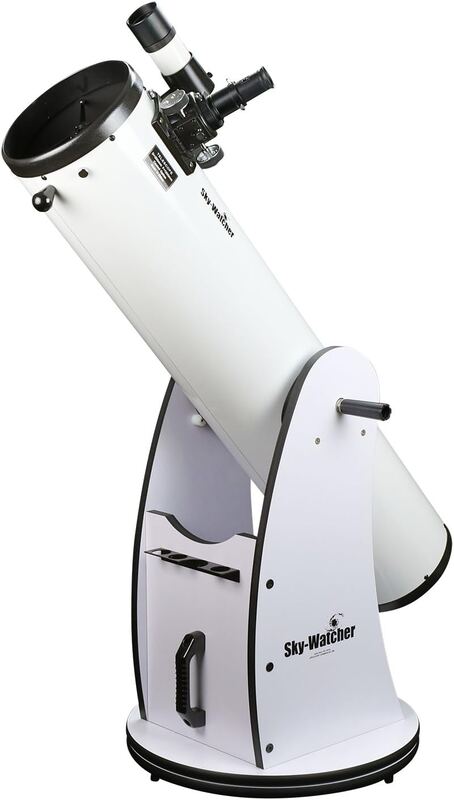
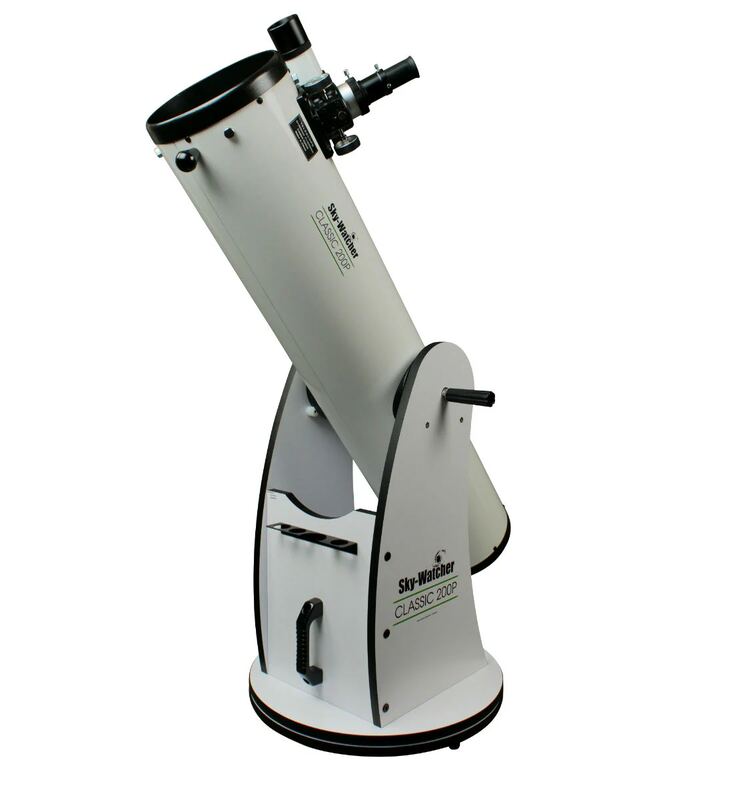
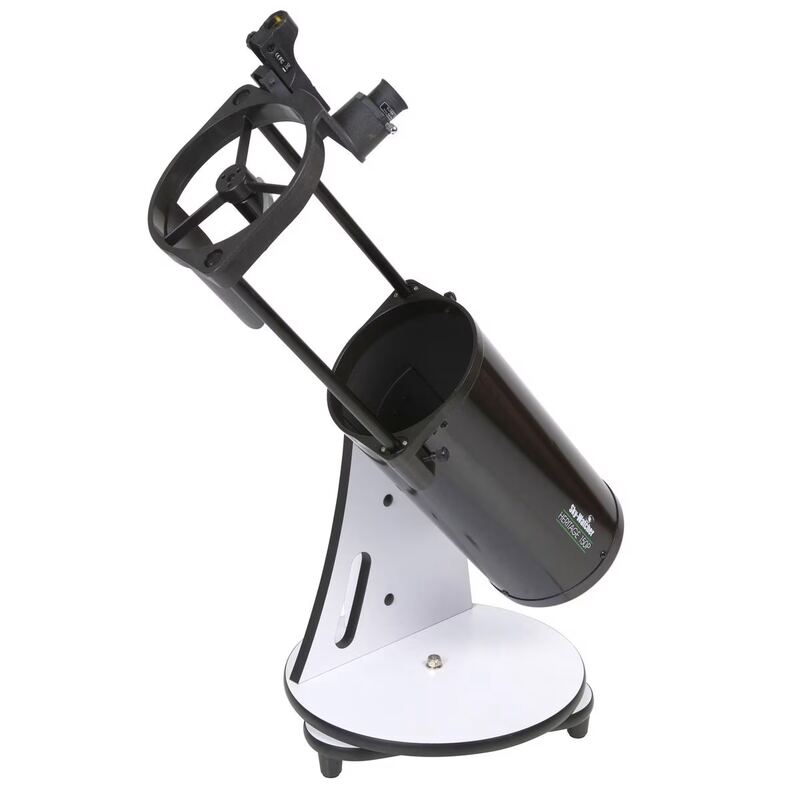
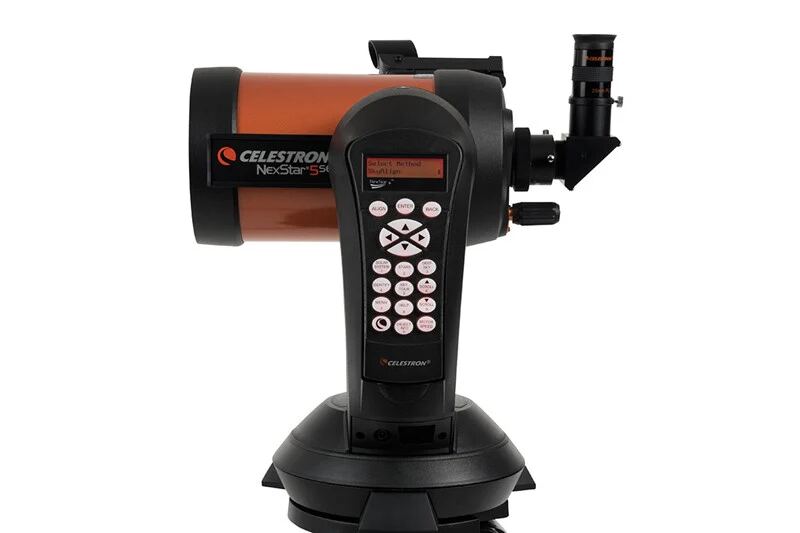
Unlike the ZWO Seestar S50, which offers automated astrophotography capabilities, the Celestron StarSense Explorer LT 80AZ is a basic refractor with no real advantage in smart features. While it's easier to set up than the Celestron NexStar 5SE, its small aperture and narrow field of view severely limit its usefulness compared to the Sky-Watcher Dobsonian telescopes, which offer far better value and aperture for the price.
Rating sources
“it's very pretty and when it gets dark we'll look at some deep sky objects and we'll try out the star sense”
“it's not there's no motors on these telescopes essentially what it does is it pairs with your cell phone”
Our 3.7 score is the average of these published ratings. Ratings marked * were derived from the reviewer’s written analysis or video transcript — the publisher didn’t print an explicit numeric score, so we inferred one from their own words. Click through to verify. More about methodology.