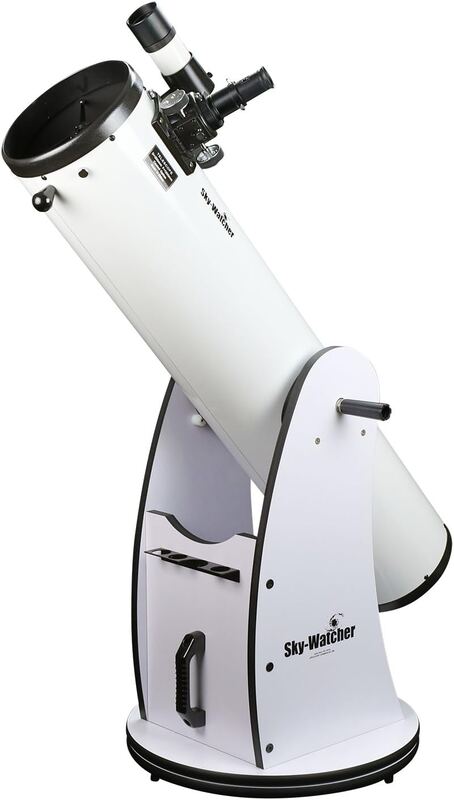
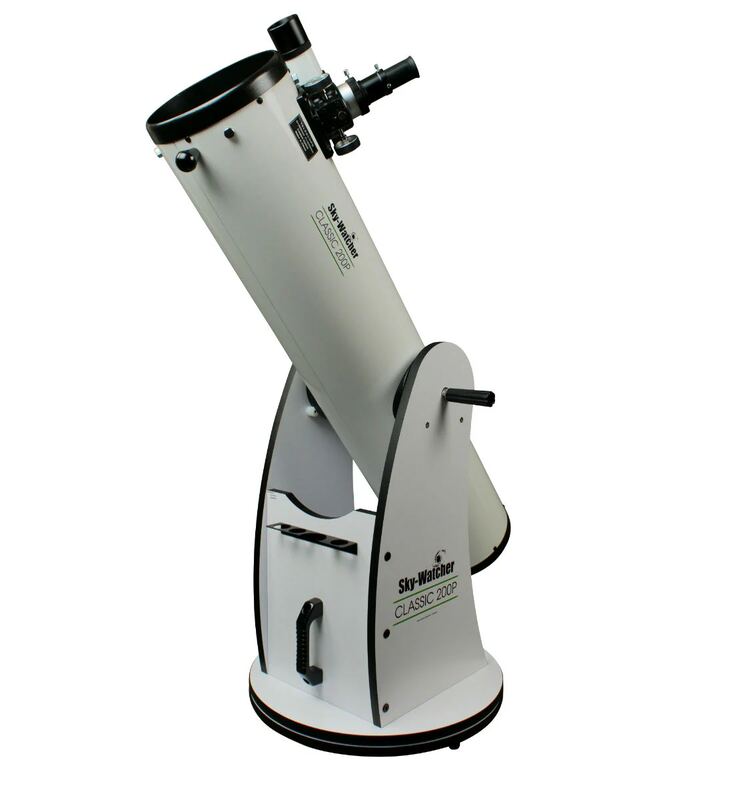
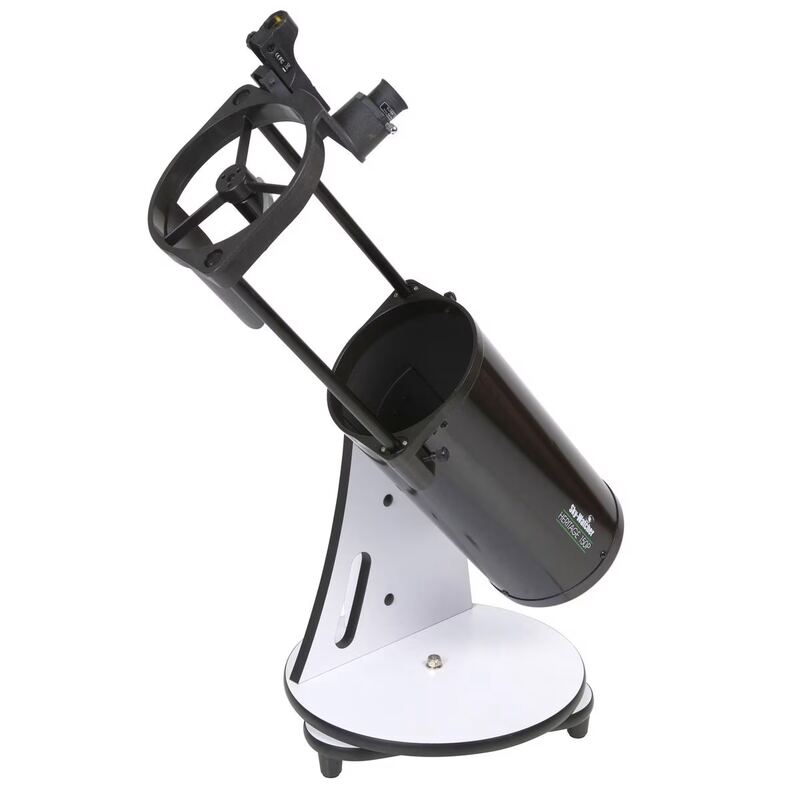
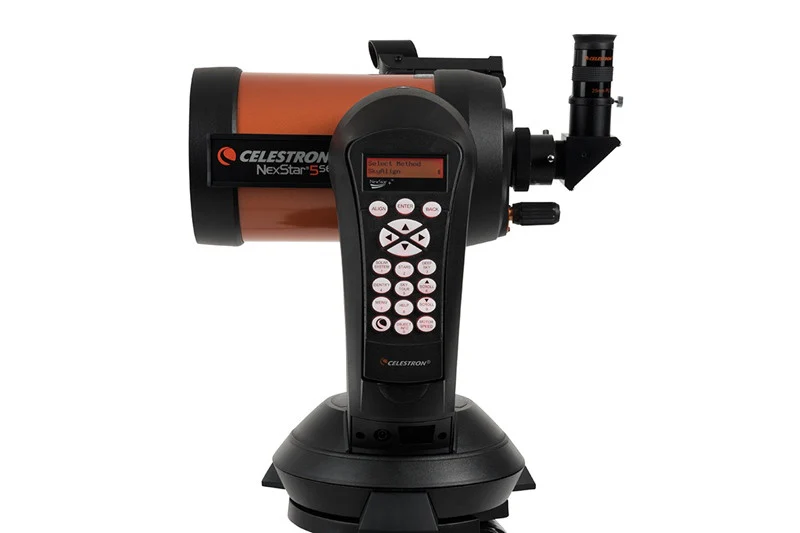
The Celestron NexStar 5SE is a Schmidt-Cassegrain with a 5" aperture and 1250mm focal length, sold on its astrophotography potential. Reviewers grant it decent optics and a sturdy mount, then knock the small aperture, the thin eyepiece selection, and how long it takes to set up. Beginners get some value, but experts point to the NexStar 6SE or the Sky-Watcher Virtuoso GTi 150P for more performance per dollar. Its large secondary mirror also blocks light and costs contrast against other designs.
Full review
Optical Performance and Design
The Celestron NexStar 5SE employs the C5 Schmidt-Cassegrain optical tube, a design with 45 years of heritage that has even flown on Space Shuttle missions. This tube features a 1250mm focal length despite its compact physical dimensions, which creates a narrow field of view. According to Zane Landers from TelescopicWatch, the 5SE's long focal ratio limits wide-field viewing, particularly with only one included 25mm Plossl eyepiece providing 50x magnification. The telescope's 5-inch aperture is sufficient for showing detail on the Moon and planets, but the large secondary mirror (covering 38% of the diameter) significantly reduces resolution and contrast compared to Newtonian or refractor designs. Landers notes that the C5 lacks Fastar/Hyperstar capability, which are popular aftermarket imaging kits, further limiting its astrophotography potential.
The telescope's design includes a Vixen-style dovetail that allows for easy tool-free attachment and balancing on its mount, as well as compatibility with numerous Celestron and third-party alt-azimuth and equatorial mounts. However, the Schmidt-Cassegrain design requires occasional collimation, which adds to the maintenance burden. Ian Hopkinson from ianhopkinson.org.uk describes the optical tube as feeling chunky and well-packed, with the corrector plate and dual mirror system creating a very short tube length that enhances portability. The telescope's focal length of 1250mm and F/ratio of 10 make it suitable for planetary observation but less ideal for wide-field deep-sky viewing without additional accessories.
Mount and Control System
The NexStar 5SE utilizes a computerized alt-azimuth mount with an equatorial wedge, allowing for both alt-azimuth and equatorial tracking modes. This mount supports the telescope's astrophotography capabilities, though it requires power to operate. According to Ian Hopkinson's review, the mount sits on a chunky tripod and can be attached using three screws, which theoretically allows for manual operation by converting it to a turntable setup. However, the mount's reliance on power is noted as a drawback, with Hopkinson pointing out that it doesn't operate without power, limiting its flexibility in field conditions. The mount includes a handset controller that allows alignment to three stars and subsequent goto capabilities for thousands of celestial objects, though the system's software (TheSkyX First Light edition) is described as somewhat limited in functionality.
The mount's battery compartment takes 8xAA batteries, which provide about 30 minutes of operation according to online sources. Hopkinson purchased both a mains adaptor and a 3rd party battery pack for convenience, noting that the add-on battery pack offers better operational flexibility. The telescope's computerized system allows for setting and adjusting azimuth and elevation, but lacks graduated scales on the mount movements, which Hopkinson finds frustrating. The mount's functionality is sufficient for basic astronomical observation, but lacks the precision and ease of more advanced systems.
User Experience and Setup
Setup and usability present mixed experiences according to reviewers. Zane Landers from TelescopicWatch notes that while the telescope is portable and looks good, it has a long setup time and lacks value for the price. Landers recommends the NexStar 6SE or Sky-Watcher Virtuoso GTi 150P as better alternatives for the same price range. The telescope comes with a single 25mm 1.25" Plossl eyepiece, which provides 50x magnification, but Landers argues this is insufficient for maximizing the telescope's potential. Ian Hopkinson reports that the finderscope is a Celestron Star Pointer with an LED spot, which took some time to get accustomed to but proved beneficial for guiding. The telescope's computerized system allows for pointing to three stars for alignment, after which it can goto any one of a huge catalogue of celestial objects selected using the handset.
The telescope's software includes TheSkyX (First Light edition) planetarium software and a NexRemote application for virtual control, though Hopkinson finds the latter somewhat pointless. The system's usability is enhanced by its computerized goto capabilities, but the setup process and limited accessories can be frustrating for beginners. Landers emphasizes that while the telescope is decent quality-wise, it provides inferior views compared to a 6" Dobsonian, which costs half as much. The telescope's design is functional but not particularly user-friendly for those new to astronomy.
Performance in Practice
In practice, the NexStar 5SE delivers adequate performance for planetary and lunar observation, but falls short in wide-field viewing capabilities. Ian Hopkinson reports successfully using the telescope for twilight observations and achieving fine views of terrestrial objects like a neighbor's chimney pot. The telescope's 125mm primary mirror allows for decent resolution of planetary features and lunar surface details, but the narrow field of view limits its effectiveness for deep-sky objects. The system's computerized goto capabilities are functional but not exceptional, with the telescope requiring a power source for operation. Hopkinson notes that the mount's lack of graduated scales makes precise adjustments difficult and that the finderscope's plasticky feel contrasts with the quality of the optics.
Landers from TelescopicWatch emphasizes that while the telescope offers decent optics and a sturdy mount, its high price and low capabilities make it questionable for beginners. The telescope's 5-inch aperture, while sufficient for some observations, is inferior to larger Dobsonian alternatives. The 38% secondary mirror obstruction significantly reduces light-gathering ability and contrast, making the telescope less effective for deep-sky viewing. The included accessories are minimal, with only one eyepiece and basic software, which limits the telescope's versatility for serious users.
$1,029 price outruns what it delivers
The NexStar 5SE's value proposition is questionable given its price point and capabilities. Zane Landers from TelescopicWatch assigns it a 3.7/5 rating and a 3/5 value score, citing its high price and low capabilities as major drawbacks. Landers recommends the NexStar 6SE or Sky-Watcher Virtuoso GTi 150P as superior alternatives for the same price range. The telescope's $1,029 MSRP is considered expensive for its performance, especially when compared to the $500-600 range where better telescopes with larger apertures and superior optics are available. Landers notes that while the telescope is portable and looks good, it offers little value for the money, particularly when compared to alternatives that provide more capability for similar or lower prices.
The telescope's positioning as a beginner-friendly computerized scope is challenged by its limited accessories and high price. Ian Hopkinson reports purchasing the telescope from Sherwood's for £650, which he notes is cheaper than many camera lenses but still represents a significant investment for a telescope with limited capabilities. The telescope's computerized system is appealing for beginners, but the lack of additional eyepieces, accessories, and the need for power to operate the mount make it less attractive than more comprehensive beginner packages. The telescope's design and features are adequate but not exceptional, leaving it in a difficult market position where it's neither the cheapest nor the best option available.
38 percent secondary obstruction cuts contrast
The NexStar 5SE suffers from several significant shortcomings that limit its appeal. According to Zane Landers from TelescopicWatch, the telescope's biggest problem is simply its price and lack of capability for the money. The telescope's 5-inch aperture, while adequate for some observations, is inferior to larger Dobsonian alternatives that cost half as much. The large secondary mirror obstruction (38% of diameter) reduces light-gathering ability and contrast, making it less effective for deep-sky viewing. Landers also notes that the telescope's high price and low capabilities make it a questionable choice for beginners, especially when compared to better alternatives like the NexStar 6SE or Sky-Watcher Virtuoso GTi 150P.
Ian Hopkinson's experience highlights the telescope's limitations in practical use. He notes that the mount's reliance on power is a significant drawback, as it doesn't operate without power, limiting its flexibility in field conditions. The lack of graduated scales on the mount movements makes precise adjustments difficult, and the plasticky feel of the finderscope contrasts with the quality of the optics. Additionally, the minimal included accessories, particularly the single 25mm eyepiece, prevent users from maximizing the telescope's potential. The telescope's computerized system, while functional, is limited in software capabilities and doesn't provide the comprehensive experience that more advanced users might expect.
Equatorial wedge enables basic astrophotography
The Celestron NexStar 5SE is best suited for users who prioritize portability and computerized automation over raw optical performance. According to Zane Landers from TelescopicWatch, it's recommended as a beginner telescope, but he argues that its high price and low capabilities make it a questionable choice for beginners. The telescope's computerized goto system and equatorial wedge make it suitable for astrophotography, but its limited accessories and power requirements may frustrate users who prefer more traditional operation. Landers recommends it primarily for those who want a portable, computerized telescope that can handle basic planetary and lunar observation without the need for extensive setup.
Ian Hopkinson's review suggests that the telescope is appropriate for users who want to experiment with astronomy but don't want to invest heavily in more complex systems. The telescope's compact design and computerized features make it appealing for those who want to observe the night sky without extensive technical knowledge. However, it's not recommended for users who want to maximize their telescope's potential or who are serious about astrophotography. The telescope's limitations in field of view, accessories, and power requirements make it less suitable for advanced users or those who want to explore deep-sky objects extensively.
Ranked 9th of 13 telescopes near $1,000
When compared to alternatives, the NexStar 5SE falls short in value and performance. Zane Landers from TelescopicWatch ranks it #9 of 13 $1000 telescopes and #9 of 12 Computerized $1000 Telescopes, noting that it's inferior to the Celestron StarSense Explorer 10" Dobsonian and the Apertura AD10 Dobsonian. The telescope's 5-inch aperture is significantly smaller than the 6" Dobsonian alternatives, which offer better value and performance. Landers recommends the NexStar 6SE as the best Schmidt-Cassegrain below $1200, suggesting that the 5SE's price point doesn't justify its capabilities. The telescope's lack of Fastar/Hyperstar capability also puts it at a disadvantage compared to more advanced systems.
Compared to the Sky-Watcher Virtuoso GTi 150P, the NexStar 5SE offers less capability for the same price. Landers notes that the Sky-Watcher telescope is extremely capable for the price and provides better value than the Celestron model. The Sky-Watcher telescope's larger aperture and superior optics make it more suitable for both planetary and deep-sky observation, while the NexStar 5SE's narrow field of view and limited accessories restrict its versatility. The comparison highlights that the NexStar 5SE's positioning as a premium beginner telescope is challenged by more affordable and capable alternatives that offer better performance and value.
Strengths
- +Decent optics with 5" aperture and 1250mm focal length
- +Sturdy mount with Vixen-style dovetail for easy attachment
- +Fairly low maintenance for a computerized telescope
- +Astrophotography-capable with mount that supports imaging
Watch-outs
- −Long setup time required for use
- −Small aperture limits light-gathering ability and resolution
- −Only includes one 25mm Plossl eyepiece
How it compares
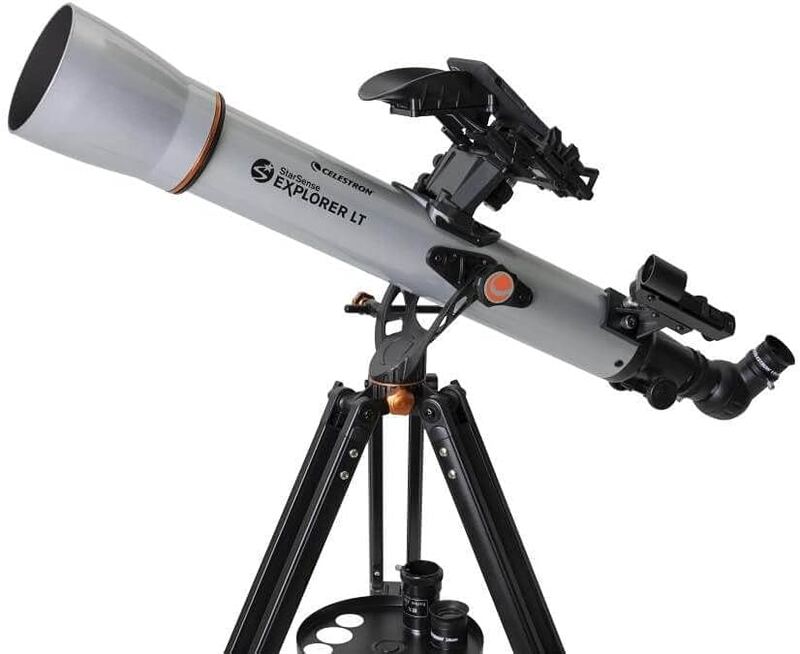
The Celestron NexStar 5SE is more versatile than the Celestron StarSense Explorer LT 80AZ due to its larger aperture and computerized GoTo system, but it's less user-friendly than the Sky-Watcher Dobsonian telescopes, which offer simpler setup and better value. Compared to the ZWO Seestar S50, it lacks smart automation but provides better optics for serious stargazing.
Rating sources
“The 5SE is a Schmidt-Cassegrain telescope with a 125mm (5 inch) primary mirror, a focal length of 1250mm and an overall F/ratio of 10.”
“I really like the five for that reason a lot of people say oh you got to get the eight inch you got to get the six inch it's more aperture well they're also heavier and that matters when you're going to be traveling with your scope”
Our 4.1 score is the average of these published ratings. Ratings marked * were derived from the reviewer’s written analysis or video transcript — the publisher didn’t print an explicit numeric score, so we inferred one from their own words. Click through to verify. More about methodology.