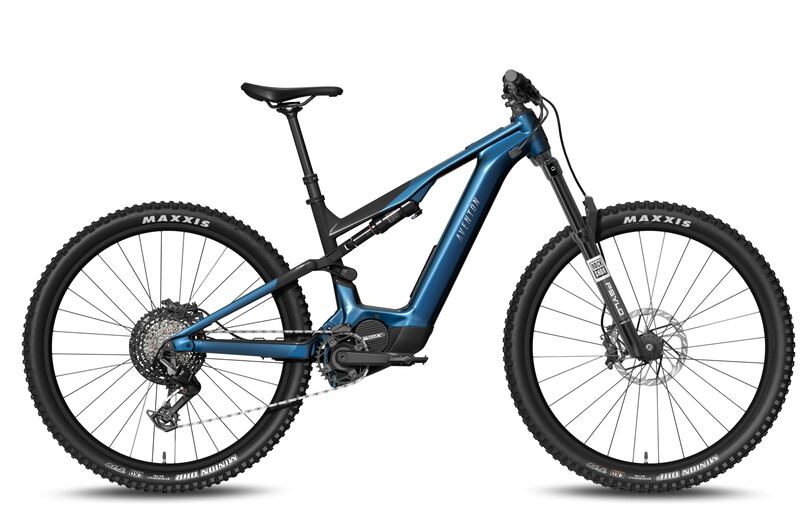
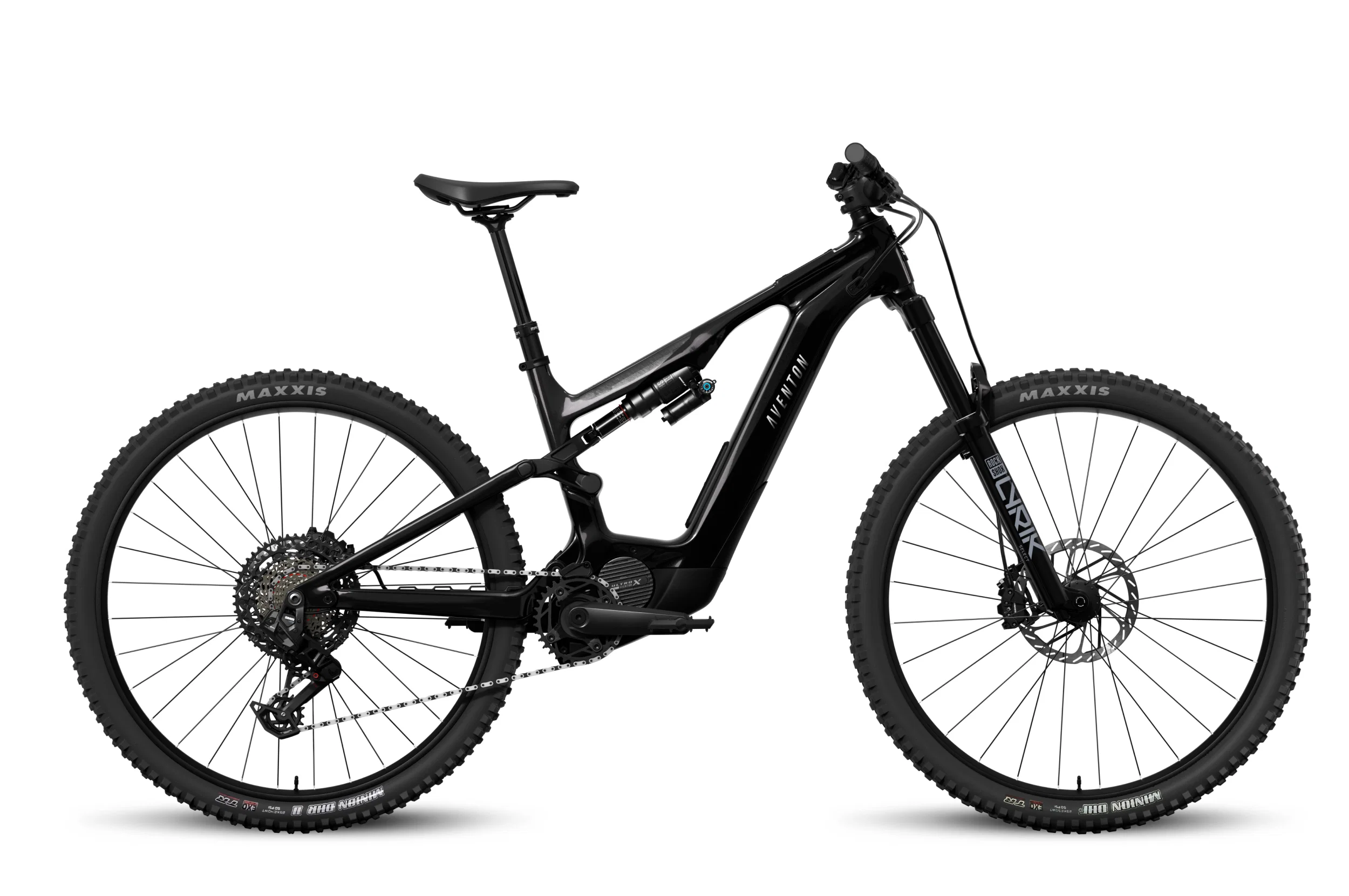
The Aventon Current EXP delivers premium full-suspension performance at a significantly lower price than legacy eMTB brands, featuring an 850W Ultro X motor and high-end SRAM S1000 wireless shifting. Freehub found the power delivery smooth and comparable to Specialized’s systems, while Electric Bike Review praised the build kit's value for its class. However, the handlebar-mounted remote is bulky and feels cheaply made, occupying excessive cockpit space that can interfere with brake access. The charging port cover also appears fragile, and the included charger requires approximately six hours for a full charge. Riders planning aggressive descents should reinforce the light EXO-casing Maxxis tires to prevent rim damage. This bike fits budget-conscious riders seeking high specs, but those prioritizing lightweight agility or robust physical controls may need to look elsewhere.
Full review
Ultro X motor power delivery and boost limitations
The Aventon Ultro X mid-drive system is the central pillar of the Current EXP, delivering 110 Nm of torque in standard mode and jumping to 120 Nm with 850 watts of peak power when Boost mode is engaged. Freehub noted that this motor feels remarkably similar in fluidity and power delivery to Specialized’s high-end systems, describing it as smooth with an intuitive overrun. The Ultro X provides a consistent churn on the trail rather than jarring surges, though ebikeescape highlighted that engaging Boost mode requires a five-minute cooldown period after each 30-second burst to protect the system components.
Despite the impressive peak numbers, rider technique and traction often dictate actual performance more than raw wattage. He found that lower output trail modes or Auto mode were sufficient for most climbing scenarios, noting that even a significantly more powerful competitor only shaved about 30 seconds off his time on a steep climb where both bikes took roughly 11 minutes to ascend.
The motor’s software tuning has drawn mixed reactions regarding its responsiveness in technical situations. The Loam Wolf testers reported an inconsistent Auto mode behavior where power would cut out completely when cadence dropped over obstacles, creating an unsettling weight transfer that forced the rider to manually manage momentum. Conversely, other reviewers found the transition between pedal input and motor assist to be seamless enough that they did not experience the same on-off feel, suggesting that individual riding styles heavily influence how the Ultro X behaves in undulating terrain.
Handlebar remote placement and charging port durability
The physical interface for controlling the motor presents a significant ergonomic compromise. Freehub criticized the handlebar-mounted wireless remote, describing it as feeling cheaply made while occupying an excessive amount of space on the cockpit. The reviewer noted that finding a comfortable position required extensive fiddling with brake and dropper post alignments, raising concerns about accidentally breaking the unit off during aggressive riding or getting a knee caught in its bulk. The Loam Wolf echoed this sentiment, noting that riders with smaller hands might struggle to reach their brakes comfortably depending on how far they tuck the remote selector into the bar tape.
The charging system introduces another point of vulnerability for long-term ownership. Freehub found the charger port located above the motor to be more fragile than comparable systems from established brands, warning that the plastic cover feels flimsy and the cable connection lacks durability. The reviewer expressed concern about easily shearing off the connector if not handled with extreme care during daily charging routines.
Charging speed is similarly limited by the stock hardware. ebike-mtb reported that the included 4-amp charger delivers only 168 watts of output, resulting in a full charge time of approximately six hours from empty. While Aventon has teased a faster 12-amp charger for future release, current owners must plan their charging cycles around this slower baseline, making rapid battery swaps between rides less practical despite the removable battery design.
Weight distribution and cockpit geometry fit
This mass is distributed across a carbon front triangle and aluminum rear swingarm, creating a ride character that some riders find agile while others feel unsettled. ebikeescape emphasized that the EXP build prioritizes weight savings over the full-aluminum ADV model, yet the substantial battery and motor still keep the overall package heavy compared to traditional mountain bikes.
Cockpit geometry has sparked debate regarding rider positioning on steep descents. One tester explicitly stated that this low stack made them feel pushed over the front of the bike, creating nervousness on fast, steep sections and forcing adjustments to fork settings to find a more neutral position. This sensation of being perched forward appears linked to the 64.5-degree head tube angle combined with the relatively short reach.
Despite the positioning complaints from some testers, other reviewers found the geometry dialed right out of the box. Electric Bike Review praised the 64.6-degree head angle for providing genuine confidence on descents and highlighted the 76.6-degree seat tube angle as excellent for maintaining a climbing position. They noted that the 475-millimeter reach felt perfectly proportioned for trail riding, suggesting that rider height and preferred stance play a massive role in whether this specific geometry feels stable or overly aggressive.
Suspension travel and component spec value
The Current EXP is equipped with 150 millimeters of front travel via a RockShox Lyrik Select fork and 140 millimeters of rear travel from a Super Deluxe Select+ shock. The Loam Wolf described this suspension package as stellar in terms of comfort and capability, noting that the air-adjustable components offer both rebound tuning and lockout functions suitable for varied trail conditions. This spec represents a significant step up from the ADV model, which utilizes RockShox Psylo Gold and Deluxe Select Plus units.
Drivetrain and braking hardware further distinguish the EXP build with high-end SRAM components. The bike features the wireless S1000 Eagle Transmission derailleur, eliminating shift cables entirely, paired with SRAM Maven Base four-piston hydraulic brakes running 200-millimeter rotors front and rear. Electric Bike Review rated these components highly for their performance relative to the price point, noting that wireless shifting and premium brakes are rarely found on bikes in this category.
The finishing kit reveals where cost-saving measures were applied to hit the $5,999 MSRP. The Loam Wolf identified the wheelset, handlebars, stem, and seatpost as non-brand alloy components sourced from Aventon’s internal supply chain rather than major manufacturers like Fox or Race Face. An X-Fusion Manic dropper post tops off a Selle Royal SRX saddle, creating a cockpit that feels functional but lacks the cachet of the premium suspension and drivetrain found elsewhere on the bike.
Tire casings and rim protection requirements
The stock tire selection has drawn specific warnings regarding durability under heavy e-bike loads. Electric Bike Review flagged the Maxxis Minion DHF and DHR II tires as utilizing light EXO casing construction, which they deemed insufficient for aggressive electric mountain biking where rim impacts are more likely due to increased speed and weight. The reviewer strongly recommended adding Tannus Armor inserts or upgrading to tougher casings to prevent costly rim dings and pinch flats during technical descents.
The Loam Wolf experienced this vulnerability firsthand by replacing the stock Maxxis tires with Schwalbe Magic Mary Gravity Pro and Tacky Chan Gravity Pro compounds before their group test. This swap was necessary to achieve predictable performance and avoid flat tires across varied terrain, highlighting that the factory tire choice may not survive extended use on rocky or root-filled trails without immediate reinforcement.
While the EXO casings are a notable weakness for aggressive riders, they do contribute to the overall weight management of the bike. The trade-off between stock convenience and long-term durability means that buyers planning to tackle steep, technical terrain should budget immediately for tire upgrades or protective inserts rather than relying on the factory specification.
Smart connectivity and app customization depth
The Aventon Control Unit (ACU) serves as the central nervous system of the bike, featuring a bright top-tube-mounted touchscreen display with 4G and GPS connectivity. Freehub praised the interface for being intuitive out of the box while offering deep customization options through the companion mobile app. Riders can adjust power curves, track their location, and unlock Class Three mode capabilities for speeds up to 28 miles per hour where local laws permit.
The ACU ecosystem includes unique features designed specifically for mountain biking applications. ebikeescape highlighted the inclusion of jump tracking, anti-wheelie modes to keep the front tire planted on steep ascents, and over-the-air software update capabilities. The system integrates seamlessly with the wireless handlebar remote, allowing riders to switch between power modes without removing their hands from the grips.
Electric Bike Review awarded high marks for the screen responsiveness and app usability, noting that Aventon has refined its proprietary software over several years to create a premium feel. However, the reliance on Bluetooth pairing for the handlebar controls means that battery life in the remote is a factor, though it utilizes a standard watch cell that should last an extended period between replacements.
Price positioning against legacy eMTB brands
At $5,999 for the EXP build and $4,599 for the ADV model, the Current line is positioned aggressively below established competitors. Freehub noted that the bike rivals Specialized’s S-Works motors in terms of raw output while costing almost a third of the price of comparable high-end models like the Turbo Levo. This pricing strategy forces legacy brands into difficult conversations with dealers and shoppers who are comparing spec sheets directly.
The value proposition is further complicated by the $1,400 difference between the two build options. ebikeescape broke down this gap as paying for a carbon front triangle, upgraded RockShox suspension (Lyrik Select over Psylo Gold), wireless SRAM shifting, and Maven brakes rather than any changes to the motor or battery platform. This split allows budget-conscious buyers to access the core Ultro X experience through the ADV while offering enthusiasts a lighter, more premium-feeling package in the EXP.
RiderGuide summarized this positioning by noting that the bike delivers carbon full-suspension geometry and big-name components for thousands less than a Trek Rail or Specialized Turbo Levo. However, they cautioned that buyers seeking a significantly lighter analog trail experience should look elsewhere, as the Current remains firmly in the heavy eMTB category despite its competitive pricing.
Strengths
- +Priced significantly lower than comparable full-suspension eMTBs from established brands like Specialized or Trek.
- +Equipped with a premium build kit including SRAM S1000 wireless shifting and RockShox Lyrik Select suspension.
- +Features the proprietary Ultro X mid-drive motor delivering 850W peak power in Boost mode.
- +Includes an integrated top-tube touchscreen display with GPS connectivity and app customization.
Watch-outs
- −Handlebar-mounted wireless remote is bulky, takes up significant bar space, and feels cheaply made.
- −Charging port cover feels fragile and the included charger has a slow charge time of approximately six hours.
- −Stock Maxxis tires use light EXO casings that reviewers recommend reinforcing for aggressive riding.
How it compares
The Aventon Current EXP features a premium build kit with SRAM S1000 wireless shifting, offering higher-end components than the Aventon Current ADV. It is also lighter at 53 pounds compared to the Aventon Aventure 3's 78-pound weight.
Rating sources
“The Current EXP rides better than I expected it would... There isn't currently a full-priced eMTB with this high quality spec at this price point.”
Our 4.6 score is the average of the 2 scored reviews above; 4 more reviewed it without printing a score and are not in the average. Ratings marked * were derived from the reviewer’s written analysis or video transcript — the publisher didn’t print an explicit numeric score, so we inferred one from their own words. Click through to verify. More about methodology.