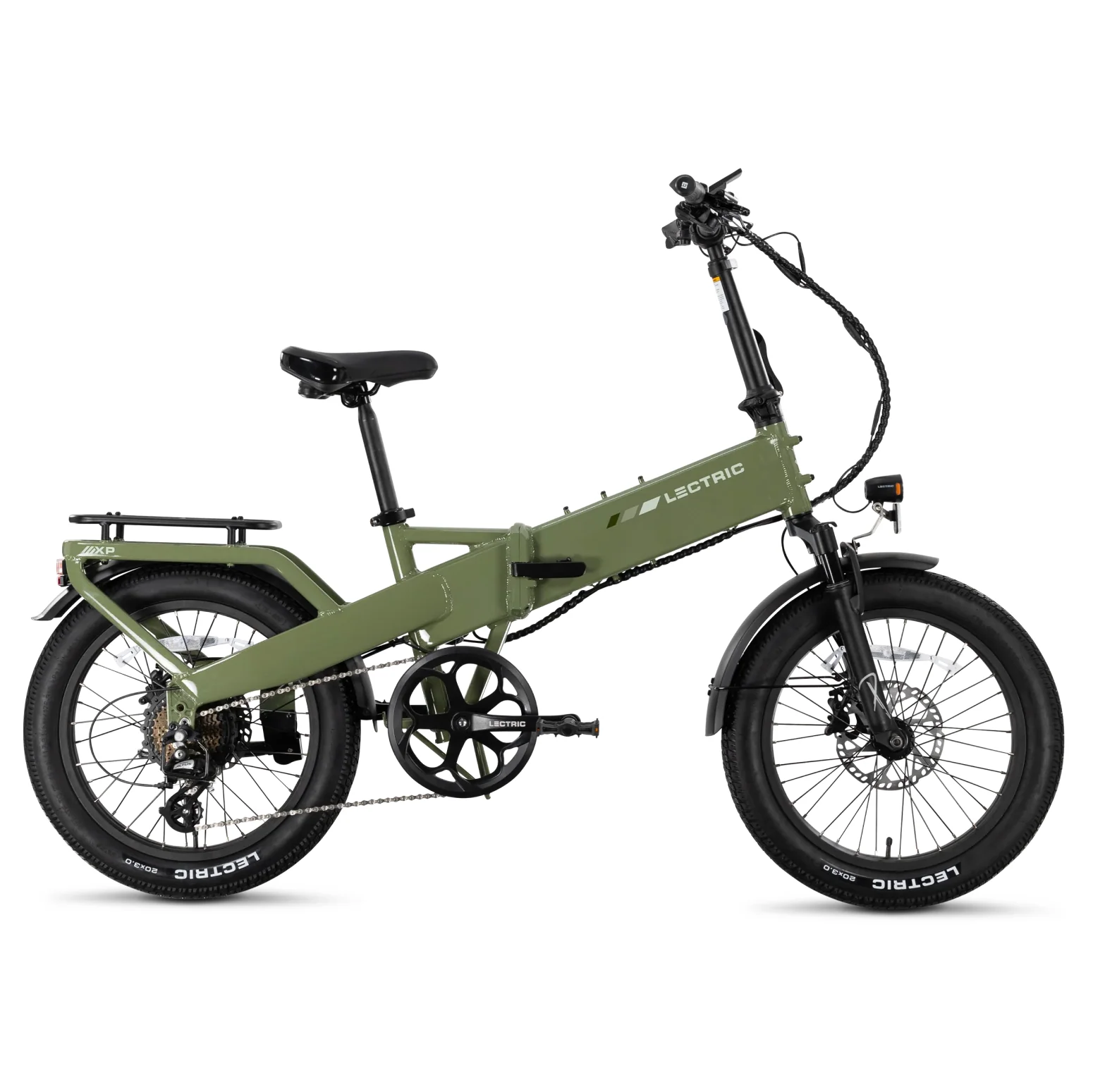
The Lectric XP4 750 delivers exceptional hill-climbing power and braking performance, with Electric Bike Review noting its responsive motor and BikeRide praising the Star Union hydraulic discs as some of the best in testing. The large 840Wh battery extends range significantly, though Rider Guide observed that the digital display updates only in coarse increments. However, the bike suffers from a rattling battery inside the frame and a folding mechanism where frame halves strike each other, potentially damaging the paint finish. Weighing approximately 74 lbs, it is cumbersome to lift when folded, making it unsuitable for users who need frequent portability or have limited strength.
Full review
Motor torque and hill climbing dominance
Electric Bike Review found that the Lectric XP4 750 Watt motor is very powerful, responsive, and controlled during use. The bike features a peak output of 1310 watts and delivers 85Nm of torque to the rear hub, which fundamentally changes how the machine handles elevation changes compared to its predecessor. Riders who rely on throttle-only ascent will notice that the base 500W model struggles significantly on steep inclines, often losing momentum rapidly without added pedaling effort. The upgraded motor eliminates this bottleneck, allowing the bike to maintain speed and power through grades that would stall a less capable machine.
Outdoor Gear Lab measured an average hill climbing speed of 18 mph for the XP4 750 model, which is significantly faster than comparable folding electric bikes in their testing. This performance metric highlights how the combination of high torque and the 8-speed Shimano Altus drivetrain works to keep the motor in its optimal power band. The bike feels intuitive to ride because it utilizes a torque sensor rather than a basic cadence sensor, meaning the motor output scales smoothly with the rider's pedaling force instead of jerking on or off at arbitrary thresholds.
Battery capacity and real-world range
Electric Bike Report found that the 17.5Ah battery upgrade provides a massive 67% increase in capacity over the standard model, resulting in an 840Wh energy store. This larger battery is one of the primary justifications for spending extra money on the upgraded version, as it directly translates to extended range without adding excessive weight outside the main frame. While manufacturer claims suggest up to 85 miles of range, realistic usage varies based on terrain and rider input; mixing pedal assist with throttle use typically yields between 30 and 45 miles depending on conditions.
Rider Guide tested the long-range XP4 in full-throttle mode without pedaling assistance and recorded a distance of 25.6 miles before depletion, which is considered respectable for stress testing an electric bike under wind and light hill conditions. The battery key placement has been moved from underneath the frame to the side, making access significantly easier during rides or when preparing for storage. However, the digital readout on the display only updates in 10% increments, leaving riders uncertain whether they have 9% or 2% remaining once the indicator hits that critical low threshold.
Hydraulic braking performance
BikeRide found that the Lectric XP4 features Star Union hydraulic disc brakes with 180mm rotors, and in testing, these brakes delivered some of the best stopping power observed among comparable e-bikes. The dual-piston calipers provide a substantial bite that is necessary for safely managing the bike's mass on descents or during emergency stops. This component represents a significant upgrade over budget mechanical systems, offering consistent modulation regardless of weather conditions or repeated use.
Electric Bike Report noted that these brakes are part of Lectric's signature line and delivered all-time performance in their specific testing categories. The large rotor diameter combined with the hydraulic fluid system ensures that heat dissipation is handled effectively during prolonged braking sessions. For a folding bike that often carries heavy loads on its rear rack, having reliable deceleration capability is essential for maintaining control at higher speeds.
Folding mechanism and frame durability
BikeRide reported a specific design flaw where the frame halves hit each other when the bike is folded, which can damage the paint finish over time. This contact point occurs because of how the folding latch engages with the main tube structure, creating friction between metal surfaces that should ideally be protected by rubber bumpers or spacers. Riders who frequently fold and unfold their bikes for storage in tight apartments or vehicle trunks will likely notice this wear pattern developing on the frame's exterior.
The folding process itself is quick, taking approximately 30 seconds to collapse the handlebars and main frame into a compact footprint of 37 by 19 by 29 inches. The bike fits easily into the back of a small hatchback without requiring rear seats to be folded down, which is a major advantage for commuters who do not own permanent roof or trunk racks. However, the mechanism relies on a basic Velcro strap rather than a locking latch when collapsed, meaning lifting the bike at certain angles can cause the frame to swing open unexpectedly.
Weight and portability challenges
BikeRide measured the weight of the 750W model at 74 lbs, while the base 500W version weighs in at 72 lbs. This mass makes the bike hard to lift and cumbersome when folded, especially for users who need to carry it up stairs or load it into vehicles without a tailgate. The substantial weight is largely due to the heavy-duty aluminum frame, the large integrated battery, and the robust rear cargo rack rated for 150 lbs of payload.
The quick-release pedals do help slightly by allowing them to be completely removed rather than just folded inward, which reduces the width of the package when stored in a car trunk or elevator. Nevertheless, moving the bike around on foot requires significant physical effort compared to lighter non-folding competitors.
Battery rattling and interior noise
BikeRide reported that two reviewers complained about the battery rattling inside the frame during rides. This loose fit creates an annoying noise that can be distracting, particularly on rougher surfaces where vibrations are transmitted through the chassis. The issue suggests that internal padding or securing mechanisms may have been omitted to save weight or reduce manufacturing complexity, leaving the heavy 48-volt pack free to shift slightly within its housing.
Outdoor Gear Lab also listed rattling inside the frame as a reason to avoid this specific model during their evaluation. While the noise does not appear to affect the electrical connection or long-term battery health based on available reports, it detracts from the overall refinement of an otherwise well-equipped machine. Riders sensitive to mechanical noises may find this constant clattering irritating over time.
Ride comfort and suspension limitations
Outdoor Gear Lab found that the Lectric XP4 750 offers a surprisingly comfortable ride for its class, thanks to the combination of 20-inch by 3-inch hybrid tires and a front suspension fork with preload adjustment. The geometry features a relaxed, upright position with a short reach that is easy on the back and wrists, making it suitable for riders ranging from 4 feet 10 inches to 6 feet 3 inches tall. The wide, well-cushioned saddle absorbs road imperfections better than many standard bicycle seats.
However, the rigid rear end means that the bike hits its limits on rocky sections or uneven dirt trails, where only pebble-sized bumps are smoothed out by the front fork. A YouTube reviewer noted that without adding aftermarket suspension like a Redshift seat post, the ride can feel harsh over larger impacts. The 3-inch tires help mitigate some vibration, but the lack of rear travel makes this bike strictly better suited for paved roads and smooth gravel paths rather than aggressive off-road exploration.
Throttle ergonomics and control sensitivity
A YouTube reviewer identified the thumb throttle as one of their least favorite features, describing it as uncomfortable during extended use compared to a twist grip. In Turbo mode, which accesses the bike's full power, the throttle is described as way too touchy, causing the bike to feel jumpy and making acceleration difficult to modulate smoothly at low speeds. The reviewer noted that the intermittent cutting in and out when reaching the 20 mph limit creates a surging sensation that disrupts the riding experience.
Rider Guide also mentioned that while moving from a twist throttle on previous models to a thumb throttle is more standard, it is less comfortable over long periods for some riders. The torque sensor helps smooth out pedal-assist delivery, but the throttle remains a direct input method that requires careful finger placement to avoid sudden lurches. Riders who prefer gradual acceleration may need time to adjust their hand positioning or consider aftermarket replacements.
Display clarity and utility features
Rider Guide found that the upgraded TFT display is clear in sunlight and menu-adjustable, providing riders with essential information about speed, battery level, and assist mode. The screen is removable, which allows users to take it with them when locking up the bike for security purposes. A USB-C port located on the bottom of the display enables charging of mobile devices while riding, adding practical value for commuters who rely on their phones for navigation or communication.
The integrated lighting system includes a bright front headlight and a rear taillight with both brake activation and turn signals. These features punch above the price point by enhancing visibility in low-light conditions without requiring aftermarket additions. The rear rack is sturdy and integrates well into the frame, offering mounting points for baskets or additional cargo solutions, though adding heavy loads can make maneuvering indoors slightly more difficult due to the bike's width.
Strengths
- +The 750W motor delivers high torque (85Nm) and climbs steep hills significantly faster than the base model.
- +The upgraded 17.5Ah battery provides a large capacity of 840Wh, extending range well beyond the standard version.
- +Hydraulic disc brakes with 180mm rotors offer strong stopping power that reviewers describe as all-time performance in testing.
- +Integrated safety features include bright headlights, taillights, and functional turn signals for visibility.
Watch-outs
- −The battery rattles inside the frame during rides, which reviewers find annoying and frustrating.
- −The folding mechanism allows the frame halves to hit each other, potentially damaging the paint finish.
- −At approximately 72 lbs (without battery), the bike is heavy and cumbersome to lift when folded.
How it compares
The Lectric XP4 750 delivers higher motor torque (85Nm) than the Ride1Up Roadster V3's 50Nm system. However, it is much heavier at 74 pounds compared to the lighter Tern Quick Haul Long D9.
Rating sources
“You may not find a better spec’d folding e-bike at $1,299.”
Our 4.7 score is the average of the 4 scored reviews above; 2 more reviewed it without printing a score and are not in the average. Ratings marked * were derived from the reviewer’s written analysis or video transcript — the publisher didn’t print an explicit numeric score, so we inferred one from their own words. Click through to verify. More about methodology.