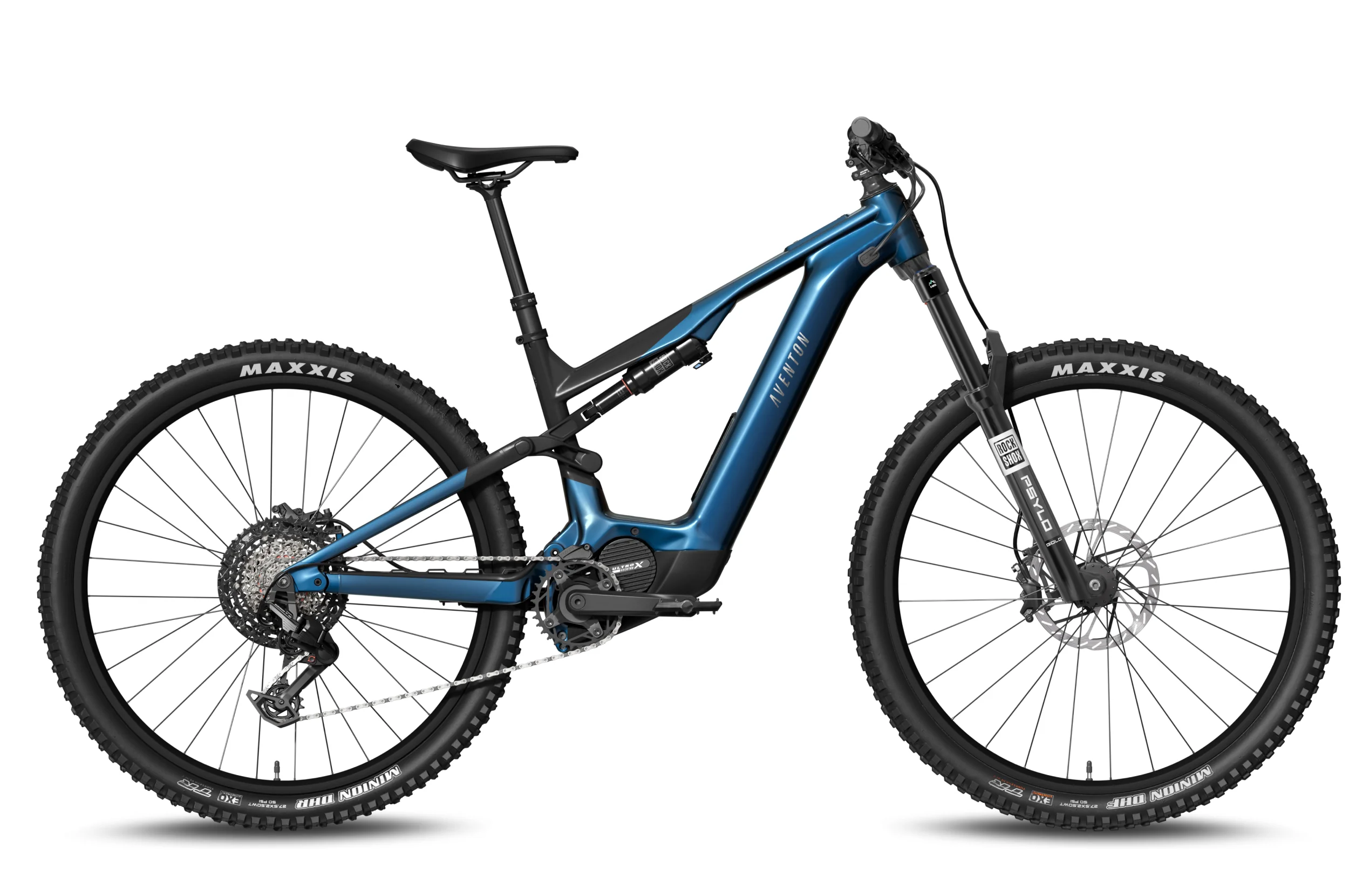
The Aventon Current ADV delivers outstanding value by pairing a robust Ultro X mid-drive motor and high-end RockShox suspension with an aggressive price point that undercuts legacy brands. OutdoorGearLab found its climbing performance strong, while Freehub highlighted the smart connectivity features integrated into the top-tube display. However, the bike’s 56-pound weight makes it difficult to carry or transport, a significant drawback for those prioritizing agility. Additionally, reviewers noted a noticeable motor clutch rattle and criticized the flimsy EXO tire casings as insufficient for aggressive trail use. This model suits riders seeking capable all-mountain performance on a budget who can tolerate its mass and minor mechanical quirks, but it is ill-suited for those needing lightweight handling or extreme durability.
Full review
Ultro X motor torque and power delivery characteristics
This motor produces 750 watts of peak power nominally, jumping to 850 watts during short bursts, which allows the bike to handle technical ascents with significant ease. The power delivery is described as smooth and intuitive, providing a fluid acceleration that mimics natural riding momentum rather than jerky electric surges. Riders can customize these output curves through the companion smartphone application or directly via the top-tube touchscreen interface, allowing for fine-tuning of assist levels to match specific trail conditions.
The Boost mode is restricted to thirty-second intervals followed by a five-minute cooldown period, a limitation designed to protect the motor electronics during sustained high-load climbs. This constraint forces riders into a rhythm of explosive bursts for technical obstacles followed by relaxed cadence maintenance.
The integration of this hardware with Aventon's Control Unit (ACU) adds layers of smart functionality that extend beyond simple power modulation. The system includes 4G connectivity, integrated GPS tracking, and an anti-theft alarm feature accessible through the app. A standout software feature is the Anti-Wheelie mode, which actively manages torque output to keep the front tire planted on steep inclines, a critical safety net for heavier e-bikes. While the hardware provides raw capability, the software ecosystem aims to make that power manageable and secure for owners who may be new to full-power electric mountain biking.
Battery capacity and charging port durability concerns
An 800 watt-hour battery is integrated cleanly into the down tube, providing a substantial energy reserve that supports the high-output Ultro X motor. OutdoorGearLab measured an effective range of 34.1 miles on the Current ADV during their standardized testing loop, a figure they ranked highly against competitors in their electric mountain bike category. While Aventon claims ranges up to 105 miles under ideal conditions and lowest power settings, real-world usage involving technical climbing and aggressive riding naturally depletes the cell faster. The battery is fully removable using an Allen wrench by accessing three bolts underneath the frame, though this process requires flipping the bike upside down or removing it entirely for off-bike charging.
Despite the impressive capacity, the physical interface for recharging has drawn criticism regarding its long-term durability. Freehub Magazine recorded that the charger port door feels flimsy and fragile compared to competitors like Specialized or Bosch systems. The reviewer noted a distinct lack of ruggedness in both the cable housing and the charging plug itself, expressing concern that an errant knee strike or accidental drop could shear the cable inside the port. This fragility is particularly notable given that the bike is marketed for aggressive trail use where such impacts are common.
Charging speed is another limitation inherent to the stock 4-amp charger provided with the system. The Loam Wolf noted that a full charge from empty takes approximately six hours, which can be inconvenient for riders planning multiple days of backcountry riding or those who need to top off between sessions. While no range extender is currently available from the manufacturer to mitigate this downtime, the high capacity means that most single-day rides will not exhaust the battery even on steep terrain. The trade-off between a secure internal integration and accessible charging remains a point of friction for users accustomed to quick-swap systems.
Suspension travel and geometry fitment
This configuration places the bike firmly in the all-mountain category, designed to handle chunky descents while maintaining enough efficiency for climbing. The geometry features a 64.6-degree head tube angle and a 76.6-degree seat tube angle, numbers that align closely with industry standards for this travel bracket. A size large frame offers a 475-millimeter reach and 445-millimeter chainstays, creating a balanced stance that feels predictable rather than radical. The lack of adjustable geometry tokens means the bike rides exactly as specified out of the box, which reviewers found to be competent enough that aftermarket headset swaps were unnecessary for most riders.
OutdoorGearLab awarded the Current ADV an 8.3 score for climbing performance and an 8.2 for downhill handling in their aggregated testing metrics, indicating strong capability across both disciplines. The suspension setup is tuned to provide adequate support on flow trails and larger compressions, though it may not match the plushness of top-tier RockShox Zeb or Lyrik Ultimate forks found on bikes costing significantly more.
Fitment can be a specific consideration depending on rider height and preferred handling style. The Loam Wolf reported that riders in their test crew ranging from 5’10” to 6’2” found the large size comfortable, but some individuals felt pushed over the front of the bike during steep descents. This sensation was attributed partly to the low 634-millimeter stack height on the large frame, which can make taller riders or those preferring a more upright position feel cramped. The geometry is not adjustable via flip chips, so riders sensitive to head angle or reach must rely on stem length and spacers to dial in their preferred cockpit setup.
Component spec value versus tire casing weakness
At its price point, the Current ADV includes a component list that typically appears on bikes costing thousands of dollars more. The build kit features SRAM DB8 Stealth four-piston hydraulic brakes with 200-millimeter rotors, providing substantial stopping power necessary for a vehicle weighing nearly fifty-seven pounds. The X-Fusion Manic dropper post and Selle Royal saddle offer functional comfort without adding unnecessary cost or weight compared to premium alternatives.
The most significant compromise on the build spec is the tire casing. Both the Maxxis Minion DHF front and DHR 2 rear tires are fitted with EXO protection, a lightweight sidewall reinforcement that reviewers found insufficient for aggressive trail riding. The Loam Wolf explicitly described the EXO casing as flimsy in the context of full-power e-bike testing, noting that they replaced the stock rubber with heavier-duty Schwalbe Gravity Pro tires to prevent punctures and improve durability during their shootout. Riders throwing the bike at rocks or hitting large drops risked sidewall tears or rim damage if they retained the stock setup.
OutdoorGearLab highlighted this tire weakness as a primary reason to avoid the bike for certain use cases, contrasting it with the otherwise outstanding value of the rest of the spec sheet. The wheelset itself, however, received praise for its durability. This suggests that while Aventon saved money on tire casings to hit the price target, they invested in a wheel structure capable of handling the motor's torque.
Handlebar remote ergonomics and display usability
The user interface for the Ultro X system centers on a top-tube mounted touchscreen display, which offers high visibility and intuitive swipe controls for navigating menus. This screen allows riders to monitor battery life, adjust power modes, and access smart features like jump tracking without looking away from the trail. The physical control is managed by a wireless Bluetooth remote mounted on the left side of the handlebar. While the display technology is advanced, the mounting position of the remote has drawn mixed reactions regarding ergonomics and durability.
The reviewer expressed concern that an errant knee strike could easily break off the unit during technical riding, a risk amplified by its protruding position. Riders with smaller hands may also struggle to reach their brake levers comfortably when the remote is mounted in close proximity, requiring careful cockpit setup to avoid interference.
Despite these ergonomic friction points, the software tunability available through the smartphone app compensates for some of the hardware limitations. The app provides granular control over pedal assist curves, allowing riders to dial in exactly how much power is delivered at different cadences. This level of customization ensures that even if the stock modes feel too abrupt or too soft, users can tailor the motor behavior to their specific riding style. The anti-theft features accessible via the same app add a layer of security that justifies the complexity for many urban and trail riders alike.
Motor clutch rattle and charging port fragility
A recurring mechanical complaint across user discussions and professional reviews involves a noticeable clutch rattle emanating from the motor housing when the bike is coasting or pedaled without assist. Freehub Magazine specifically noted that this rattling was more pronounced than in comparable systems from Bosch or Specialized, describing it as an annoyance rather than a critical failure. The sound persists even after routine maintenance and does not appear to affect performance, but it can be distracting on quiet trails where motor noise is usually minimal.
This mechanical quirk sits alongside concerns about the charging port's physical robustness. As noted by Freehub Magazine, the door protecting the charge inlet feels fragile compared to the rugged demands of mountain biking. The reviewer warned that the cable and charger itself do not feel super durable, raising fears of shearing the connection if the bike is handled roughly during transport or trailside repairs. These two issues—the auditory rattle and the tactile fragility—represent the most tangible compromises made to achieve the Current ADV's aggressive price point.
OutdoorGearLab categorized these durability concerns as key reasons to skip the bike for riders who prioritize silent operation or extreme off-road abuse over value. However, for those willing to accept minor mechanical quirks in exchange for high-end suspension and motor performance at a fraction of the cost of legacy brands, these flaws are manageable. The consensus suggests that while the frame and drivetrain are built to last, the ancillary electronics and interface components require careful handling to avoid premature wear.
Weight penalties and target rider suitability
This mass is driven by the large 800 watt-hour battery and the robust alloy frame construction required to house it safely. While the weight is inherent to any full-power e-bike with this capacity, it makes carrying the bike over portages or loading it onto a roof rack physically demanding for most riders.
This substantial weight dictates who will find the Current ADV suitable. Shoppers seeking a lightweight carbon hardtail for fast cross-country racing will find this machine too cumbersome and slow to accelerate. However, riders looking for a capable all-mountain trail bike that can handle steep technical climbs without exhausting their legs will appreciate the power-to-weight ratio provided by the 120 Newton meters of torque. The bike excels in scenarios where sustained climbing effort is replaced by motor assistance, allowing riders to extend their range and tackle more aggressive descents with reduced fatigue.
The value proposition becomes even clearer when comparing the spec sheet to legacy brands. By offering RockShox suspension and SRAM brakes at a price point thousands of dollars lower than comparable models from Specialized or Trek, Aventon targets budget-conscious riders who do not want to sacrifice component quality. Riders willing to upgrade their tires for better durability and accept the minor ergonomic compromises with the remote will find a highly capable platform that delivers performance far exceeding its cost.
Strengths
- +Outstanding value with a $3,999 price point that undercuts legacy brands by thousands of dollars.
- +The Ultro X mid-drive motor delivers robust torque (110Nm standard) and smooth power delivery suitable for technical climbs.
- +Includes high-end components such as RockShox suspension and SRAM DB8 hydraulic brakes, which are typically found on more expensive models.
- +Features advanced smart technology including a top-tube touchscreen display, 4G connectivity, GPS tracking, and anti-theft security.
Watch-outs
- −The bike is quite heavy at approximately 56 to 57 lbs, making it difficult to carry or transport easily.
- −The stock Maxxis tires use a flimsy EXO casing that reviewers found insufficient for aggressive trail riding and durability.
- −A noticeable clutch rattle from the motor system was reported by users, which some described as annoying.
How it compares
The Aventon Current ADV provides higher motor torque (110Nm) and a more aggressive mid-drive setup compared to the Aventon Aventure 3's rear hub motor. It is also lighter at 56 pounds, making it easier to transport than the heavier Aventon Level 4 REC.
Rating sources
Our 4.7 score is the average of the 1 scored review above; 4 more reviewed it without printing a score and are not in the average. More about methodology.