Verdict
Head-to-head · Best Mirrorless Cameras For Travel

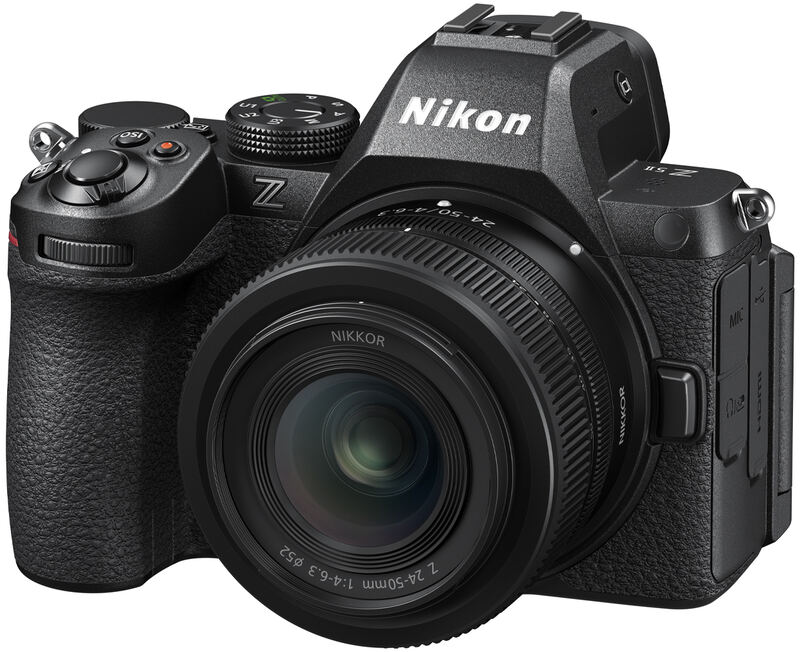
Nikon Z5II vs Sony α6700

Which is the better buy? Side-by-side on rating, price, strengths, and watch-outs — with the published ratings we averaged to get there.

The short answer

Nikon Z5II comes out ahead by a clear margin (4.4 vs 3.8). The gap is mostly about Professional full-frame buyers — read the strengths below before deciding.

Nikon Z5II
Higher ratedRanked #1 in Best Mirrorless Cameras For Travel
Nikon Z5II
$1,596.95as of May 29

The Nikon Z5II is a well-rounded full-frame mirrorless camera that delivers stabilized imaging, fast autofocus, and professional video features at a reasonable price point. PCMag called it 'the best value among the current slate of full-frame cameras,' while DPReview noted its improved burst rates and video capabilities over the Z5. It's ideal for photographers and videographers seeking a capable yet affordable full-frame option, though those wanting top-tier video performance may find better alternatives in higher-end models.

Strengths
  • 24MP BSI full-frame CMOS sensor with improved readout speeds
  • Up to 11 fps Raw capture with mechanical shutter
  • 3.69M dot 60Hz EVF with 3000-nit peak brightness
Watch-outs
  • Sensor readout speeds still slower than Z6III's
  • Limited video capabilities compared to higher-end models
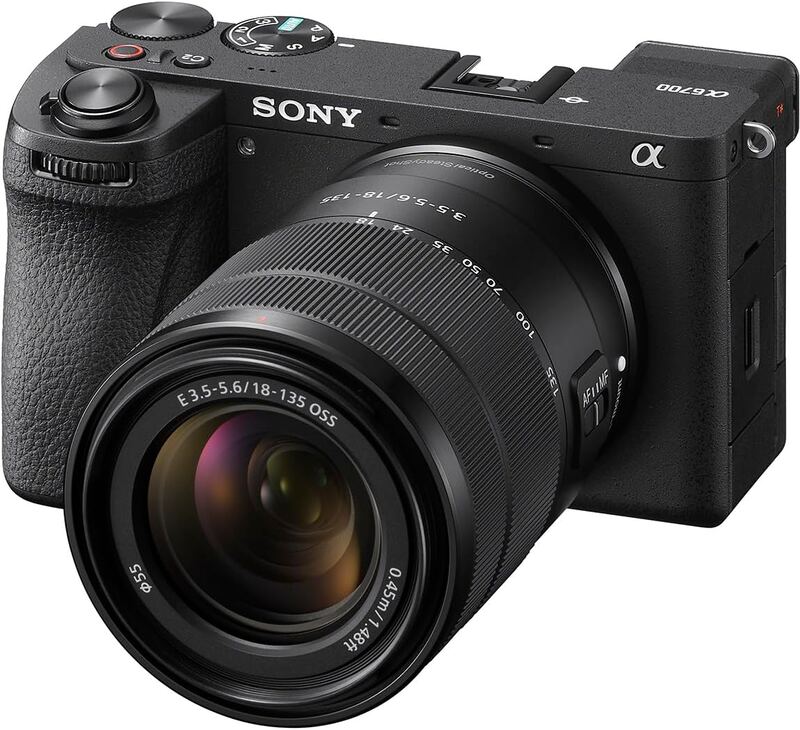
Sony α6700
Ranked #9 in Best Mirrorless Cameras For Travel
Sony α6700
$1,498as of May 29

The Sony α6700 is a high-end APS-C mirrorless camera featuring a 26MP BSI CMOS sensor and Bionz XR processor with dedicated AI processing capabilities. Reviews highlight its improved video features including 4K/60p recording and 10-bit color depth, alongside an upgraded 3" fully articulating LCD. The camera maintains the 11 fps shooting rate but lacks a focus point joystick, which some users find limiting for manual control. While praised for its handling and weather sealing, the single card slot is seen as a notable drawback for professional use. It's best suited for enthusiasts seeking advanced video capabilities and image quality in a compact form factor.

Strengths
  • 26MP BSI CMOS sensor with 93% AF coverage
  • 11 fps shooting with mechanical or electronic shutter
  • Full-articulated 3" LCD with 1.04M dot resolution
Watch-outs
  • No focus point joystick for manual AF point selection
  • Single SD card slot lacking backup option

How they stack up

Nikon Z5II

The Nikon Z5II provides better burst rates and dual card slots compared to the Canon EOS R6 Mark II, but lacks the in-body stabilization and 4K/60p recording of the R6. Unlike the Sony α7 IV, it has a more compact design and better low-light performance, though the α7 IV offers a higher resolution EVF and better video specs.

Sony α6700

The Sony α6700 surpasses the Canon EOS R50 in video features with 10-bit color depth and 4K/60p recording, but unlike the Fujifilm X-T5, it lacks the higher frame rate and in-body stabilization. Compared to the Sony α6400, it has a more advanced processor and better video specs, though it lacks the 425 AF points and 11 fps shooting rate.

Specs side-by-side

SpecNikon Z5IISony α6700
Sensor24MP BSI CMOS26MP BSI CMOS APS-C
Stabilization5-Axis IBIS, up to 7.5 stops5-axis in-body optical image stabilization
Video4K/30p full-width, 4K/60p (1.5x crop), 10-bit N-Log/N-Raw4K/60p, 10-bit with 4:2:2 color
Autofocus9 subject types, Expeed 7, -10 EV sensitivity759 with 93% coverage
Burst Rate11 fps Raw with mechanical shutter11 fps with mechanical or electronic shutter
Display3.2-inch fully articulating 2.1M dot LCD3" 1.04m-dot fully articulating touchscreen
EVF3.69M dot 60Hz2.36m-dot, 0.7x OLED EVF
Weight700g (with battery and SD card)493 g
← See the full ranking of best mirrorless cameras for travel