Verdict
Head-to-head · Best VR Headsets

Meta Quest 3S vs Pimax Dream Air

Which is the better buy? Side-by-side on rating, price, strengths, and watch-outs — with the published ratings we averaged to get there.

Verdict is reader-supported. As an Amazon Associate we earn from qualifying purchases. Some links on this page are affiliate links — if you click through and buy, we may earn a small commission at no extra cost to you. Our ratings are sourced from independent publications, not sponsors.
The short answer

Meta Quest 3S comes out ahead by a clear margin (4.6 vs 3.8). Read the strengths below before deciding.

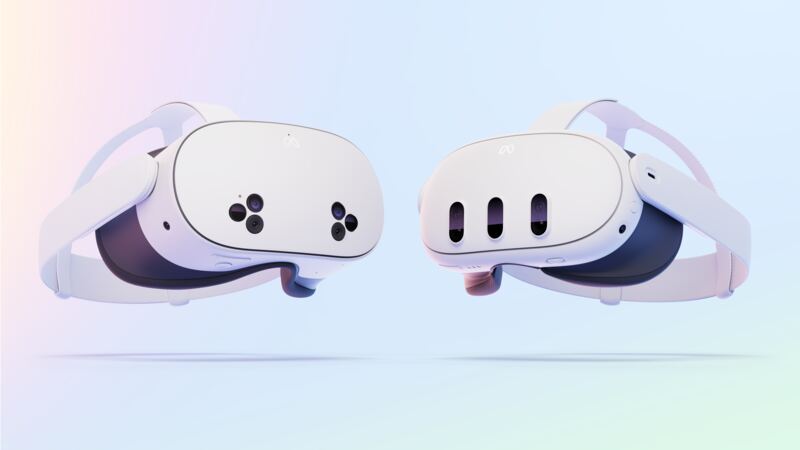
Meta Quest 3S
Higher ratedRanked #2 in Best VR Headsets
Meta Quest 3S
2 sources$349as of Nov 1

IGN found the Meta Quest 3S to be a cost-effective entry point into mixed reality that retains the high-performance Snapdragon XR2 Gen2 platform of its premium sibling. Club386 noted that while it utilizes older Fresnel lenses, the headset still supports up to 120Hz refresh rates and offers comparable performance across applications. Tom's Hardware highlighted the device as a compelling upgrade for users moving from the Quest 2 due to its inclusion of color passthrough technology at a lower price point. This model is best suited for new VR adopters or budget-conscious consumers who prioritize processing power over optical sharpness.

Strengths
  • — Priced at $299.99 for a significant discount compared to the standard Quest 3 model.
  • — Features the same Snapdragon XR2 Gen2 processor and 8GB of RAM as the more expensive Quest 3.
  • — Includes full-color passthrough cameras and tracking sensors for mixed reality applications.
Watch-outs
  • — Uses Fresnel lenses which result in a smaller sweet spot and narrower field of vision compared to pancake lens models.
  • — Limited IPD adjustment range restricted between 58mm and 68mm with only three fixed modes.
  • — Lacks an auxiliary headphone jack, requiring reliance on Bluetooth or USB-C audio.
Pimax Dream Air
Ranked #6 in Best VR Headsets
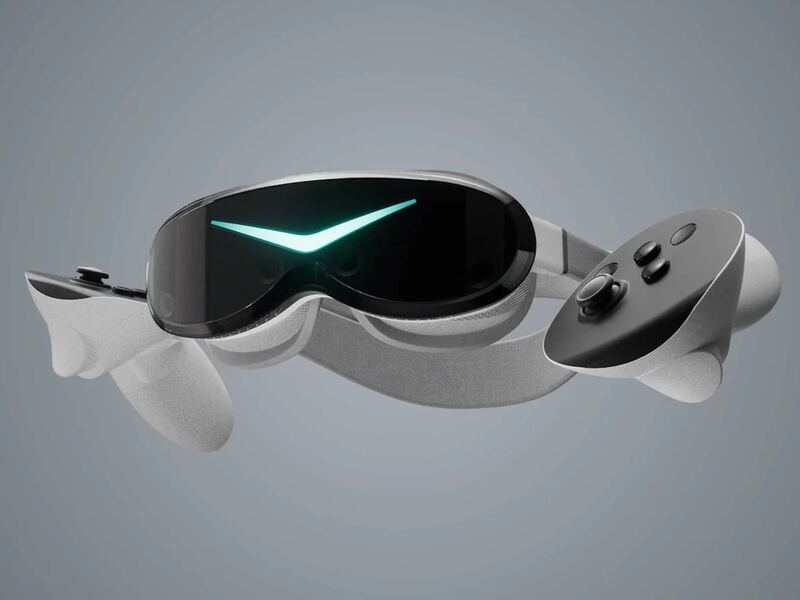
Pimax Dream Air
3 sources

The Pimax Dream Air dramatically reduces weight to under 170g and delivers exceptional visual clarity via Sony micro-OLED panels at 3840 x 3552 pixels per eye. Tom's Guide found that integrated Tobii eye tracking enables Dynamic Foveated Rendering, which helps maintain performance on recommended RTX 3080 or RTX 4070 GPUs despite the high pixel count. However, Gamesradar reported that the stock headstrap and face gasket can cause discomfort and significant light leakage if not adjusted properly. The headset is ideal for users prioritizing visual fidelity and low weight who have powerful hardware, but those seeking a wider field of view or plug-and-play comfort should look elsewhere.

Strengths
  • — Weighs under 170g, making it significantly lighter than previous Pimax models and competitors like the Bigscreen Beyond.
  • — Features Sony micro-OLED panels with a resolution of 3840 x 3552 pixels per eye for exceptional visual clarity.
  • — Includes integrated Tobii eye tracking that drives dynamic foveated rendering to optimize performance.
Watch-outs
  • — Requires a high-end GPU, with Pimax recommending at least an RTX 3080 or RTX 4070 for optimal performance.
  • — The stock headstrap and face gasket design can cause discomfort or light leakage if not adjusted properly.

How they stack up

Meta Quest 3S

The Meta Quest 3S offers a significant discount compared to the Meta Quest 3 while retaining the same Snapdragon XR2 Gen2 processor and full-color passthrough capabilities.

Pimax Dream Air

The Pimax Dream Air delivers exceptional visual clarity with Sony micro-OLED panels that far exceed the resolution of the Meta Quest 3S. It is significantly lighter than previous models, though it requires a high-end GPU unlike the standalone Meta Quest 2.

Specs side-by-side

SpecMeta Quest 3SPimax Dream Air
Resolution Per Eye1832 x 1920 per eye3840 x 3552 pixels
Refresh Rate90-120Hz72Hz / 90Hz
Display TypeLCD, 1832 x 1920 pixels per eyeSony Micro-OLED
Display Resolution1832 × 1920 pixels per eye23 million pixels total
Field Of View—~110 degrees horizontal
Tracking Type—SLAM tracking or Base Station ecosystem
Resolution—7680 x 3552
Dimensions—6.7"D x 3.5"W x 6.7"H
← See the full ranking of best vr headsets