Verdict
Head-to-head · Best VR Headsets

Meta Quest 3 vs Pimax Dream Air

Which is the better buy? Side-by-side on rating, price, strengths, and watch-outs — with the published ratings we averaged to get there.

Verdict is reader-supported. As an Amazon Associate we earn from qualifying purchases. Some links on this page are affiliate links — if you click through and buy, we may earn a small commission at no extra cost to you. Our ratings are sourced from independent publications, not sponsors.
The short answer

Meta Quest 3 comes out ahead by a clear margin (4.5 vs 3.8). Meta Quest 3 is best for: Mainstream buyers willing to pay for premium mixed-reality features. Read the strengths below before deciding.

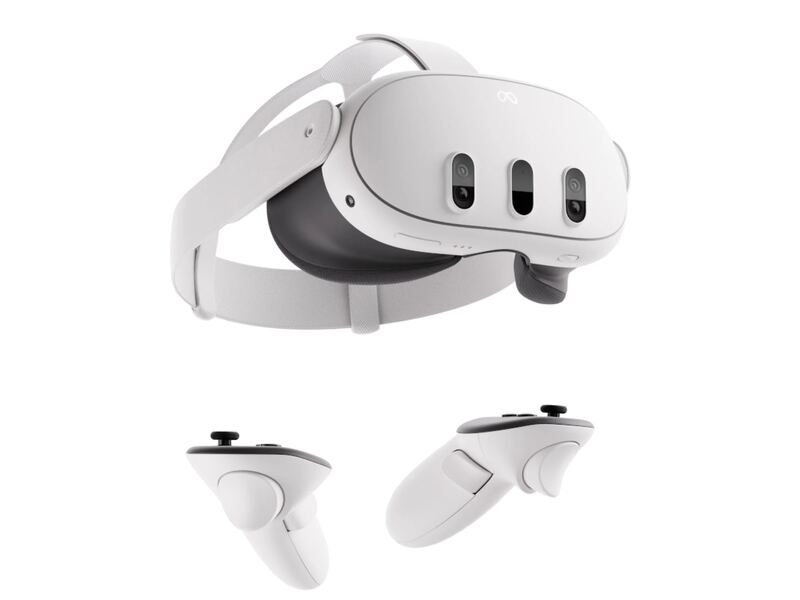
Meta Quest 3
Higher ratedRanked #3 in Best VR Headsets
Meta Quest 3
9 sources$599.99as of Nov 1

The Meta Quest 3 delivers high-resolution full-color passthrough and powerful standalone performance via the Snapdragon XR2 Gen 2 processor. WIRED found that this mixed-reality capability allows users to interact with digital objects layered over physical surroundings, while IGN recorded that the hardware upgrade supports complex games without a tethered PC. The redesigned Touch Plus controllers offer improved ergonomics and haptic feedback, though the stock facial interface and strap are often uncomfortable for extended sessions. WIRED noted that the software library still lacks fully integrated spatial computing applications despite the advanced hardware. The significant price increase over the Quest 2 targets mainstream buyers willing to pay for premium features, while budget-conscious users may find the cost prohibitive.

Strengths
  • — Delivers high-resolution full-color passthrough that enables genuine mixed-reality experiences by blending virtual objects with the real world.
  • — Powered by the Qualcomm Snapdragon XR2 Gen 2 processor for improved graphics performance in standalone mode.
  • — Includes an intuitive controller design that combines ergonomic improvements with self-tracking capabilities.
Watch-outs
  • — Stock facial interface and strap are often described as uncomfortable, prompting many users to purchase third-party upgrades like the Elite Strap.
  • — The $499 starting price represents a significant increase over the previous Quest 2 model.
Pimax Dream Air
Ranked #6 in Best VR Headsets
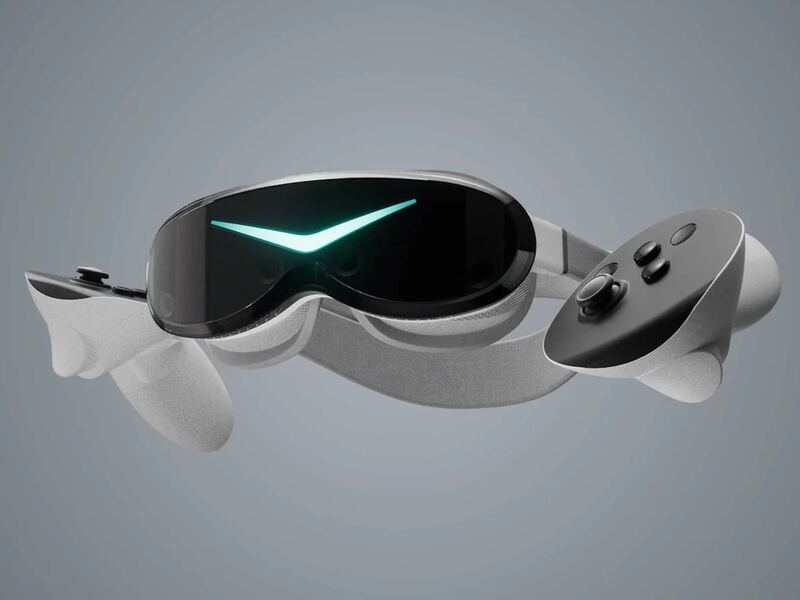
Pimax Dream Air
3 sources

The Pimax Dream Air dramatically reduces weight to under 170g and delivers exceptional visual clarity via Sony micro-OLED panels at 3840 x 3552 pixels per eye. Tom's Guide found that integrated Tobii eye tracking enables Dynamic Foveated Rendering, which helps maintain performance on recommended RTX 3080 or RTX 4070 GPUs despite the high pixel count. However, Gamesradar reported that the stock headstrap and face gasket can cause discomfort and significant light leakage if not adjusted properly. The headset is ideal for users prioritizing visual fidelity and low weight who have powerful hardware, but those seeking a wider field of view or plug-and-play comfort should look elsewhere.

Strengths
  • — Weighs under 170g, making it significantly lighter than previous Pimax models and competitors like the Bigscreen Beyond.
  • — Features Sony micro-OLED panels with a resolution of 3840 x 3552 pixels per eye for exceptional visual clarity.
  • — Includes integrated Tobii eye tracking that drives dynamic foveated rendering to optimize performance.
Watch-outs
  • — Requires a high-end GPU, with Pimax recommending at least an RTX 3080 or RTX 4070 for optimal performance.
  • — The stock headstrap and face gasket design can cause discomfort or light leakage if not adjusted properly.

How they stack up

Meta Quest 3

The Meta Quest 3 improves upon the Meta Quest 2 by adding full-color passthrough and a more powerful processor, enabling genuine mixed-reality experiences.

Pimax Dream Air

The Pimax Dream Air delivers exceptional visual clarity with Sony micro-OLED panels that far exceed the resolution of the Meta Quest 3S. It is significantly lighter than previous models, though it requires a high-end GPU unlike the standalone Meta Quest 2.

Specs side-by-side

SpecMeta Quest 3Pimax Dream Air
Resolution Per Eye2064 x 2208 pixels per eye3840 x 3552 pixels
Refresh Rate120Hz72Hz / 90Hz
Display TypeLCD, 2064 x 2208 pixels per eyeSony Micro-OLED
Field Of View110-degree FOV~110 degrees horizontal
Tracking TypeHead, hand, and eye trackingSLAM tracking or Base Station ecosystem
Display Resolution2412x228823 million pixels total
Resolution2064 x 22087680 x 3552
Dimensions—6.7"D x 3.5"W x 6.7"H
← See the full ranking of best vr headsets