Verdict
Head-to-head · Best Instant Cameras

Fujifilm Instax Mini LiPlay Hybrid vs Lomography Lomo'Instant Automat Glass

Which is the better buy? Side-by-side on rating, price, strengths, and watch-outs — with the published ratings we averaged to get there.

Verdict is reader-supported. As an Amazon Associate we earn from qualifying purchases. Some links on this page are affiliate links — if you click through and buy, we may earn a small commission at no extra cost to you. Our ratings are sourced from independent publications, not sponsors.
The short answer

Fujifilm Instax Mini LiPlay Hybrid comes out ahead by a narrow margin (4.1 vs 4.0). Fujifilm Instax Mini LiPlay Hybrid is best for: creative hybrid users. Read the strengths below before deciding.

Fujifilm Instax Mini LiPlay Hybrid
Higher ratedRanked #3 in Best Instant Cameras
Fujifilm Instax Mini LiPlay Hybrid
3 sources$169.99as of Oct 28

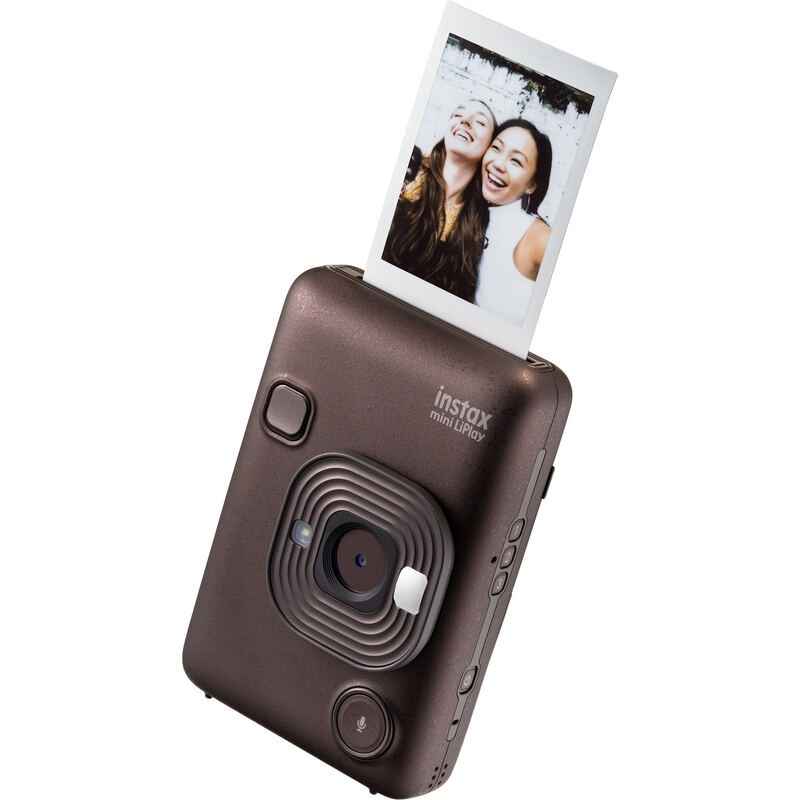
The Fujifilm Instax Mini LiPlay is a hybrid of instant film and digital: it saves shots to internal memory or a microSD card so you choose which to print, and it doubles as a printer for photos sent from a smartphone. Reviewers liked its compact body and its many filters and frames, and it can record sound and print it as a QR code on the photo, though Tom's Guide found that feature a hassle and low-light performance subpar. Ease of use is the priority, with creative photo modes and audio built around it.

Strengths
  • — Selfie mirror on the front for framing self-portraits
  • — Records sound and prints it as a QR code that plays back from the photo
  • — Supports printing images from smartphone via Bluetooth and QR code audio clips
Watch-outs
  • — Subpar low-light performance
  • — Filters can't be added after shooting
Lomography Lomo'Instant Automat Glass
Ranked #5 in Best Instant Cameras
Lomography Lomo'Instant Automat Glass
3 sources$129as of Oct 28

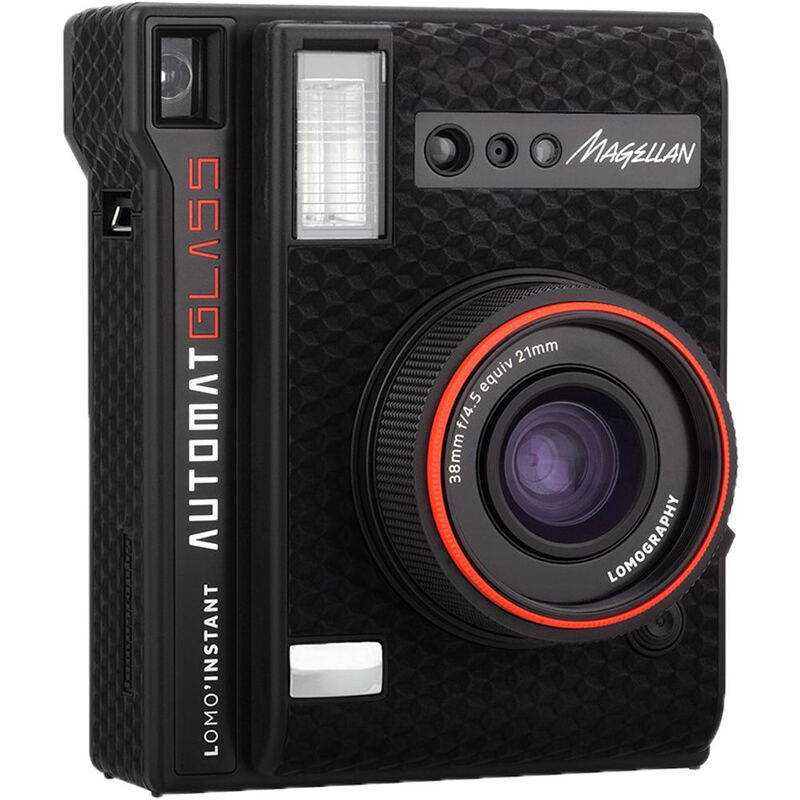
Reviewers call the Lomography Lomo'Instant Automat Glass the world's first instant camera with a wide-angle glass lens, a 38mm (21mm equivalent) f/4.5 design using 6 elements in 4 groups. Operation is fully automated with manual overrides for flash, exposure compensation, and multiple exposures, and the box includes creative accessories like colored filters and a Bluetooth shutter release. Critics flagged the large, non-pocketable body and the uncommon CR2 batteries. It shoots Instax Mini film and aims squarely at creative photography, mixing automation with manual control for artistic work.

Strengths
  • — Features a wide-angle 38mm glass lens (21mm equivalent in 35mm terms) with 6 elements in 4 groups
  • — Fully automated operation with manual controls for flash, exposure compensation, and multiple exposures
  • — Build quality with textured coating and robust design suitable for creative photography
Watch-outs
  • — Large, non-pocketable design with square form factor
  • — Uses uncommon CR2 (3V) batteries that are hard to find
  • — Limited LCD display - relies on LED indicators for settings

How they stack up

Fujifilm Instax Mini LiPlay Hybrid

The Fujifilm Instax Mini LiPlay Hybrid and the Fujifilm Instax Mini Evo are both hybrids that capture digitally and print on Instax Mini film. The LiPlay records sound and prints it as a QR code on the photo, while the Mini Evo offers 10 lens effects and 10 film effects. The LiPlay weighs about 255 g against the Mini Evo's 285g and costs less.

Lomography Lomo'Instant Automat Glass

The Lomography Lomo'Instant Automat Glass's wide-angle glass lens distinguishes it from the Fujifilm Instax Wide 400's basic design and manual focus. Unlike the Polaroid I-2, it lacks advanced manual controls but offers creative accessories like colored filters.

Specs side-by-side

SpecFujifilm Instax Mini LiPlay HybridLomography Lomo'Instant Automat Glass
Film FormatInstax Mini FilmInstax Mini
Lens28mm equivalent f/238mm (21mm equivalent)
Shutter Speed1/4 to 1/8000 second—
Battery TypeRechargeable li-ion battery—
FlashAuto, forced and suppressed flashBuilt In Flash
Dimensions82.5 mm × 122.9 mm × 36.7 mm—
WeightApproximately 255 g—
ConnectivityBluetooth—
Image Sensor1/5-inch CMOS, 2560 x 1920—
Screen2.7-inch LCD—
Battery—2x CR2 (3V)
Focusing—0.3m to infinity
Color—black with orange detailing
← See the full ranking of best instant cameras