Verdict
Head-to-head · Best Docking Stations

Anker 563 10-in-1 Docking Station vs Dell D6000 Universal Dock

Which is the better buy? Side-by-side on rating, price, strengths, and watch-outs — with the published ratings we averaged to get there.

Verdict is reader-supported. As an Amazon Associate we earn from qualifying purchases. Some links on this page are affiliate links — if you click through and buy, we may earn a small commission at no extra cost to you. Our ratings are sourced from independent publications, not sponsors.
The short answer

Anker 563 10-in-1 Docking Station comes out ahead by a clear margin (4.5 vs 3.9). The gap is mostly about multitasking enthusiasts needing reliable connectivity — read the strengths below before deciding.

Anker 563 10-in-1 Docking Station
Higher ratedRanked #2 in Best Docking Stations
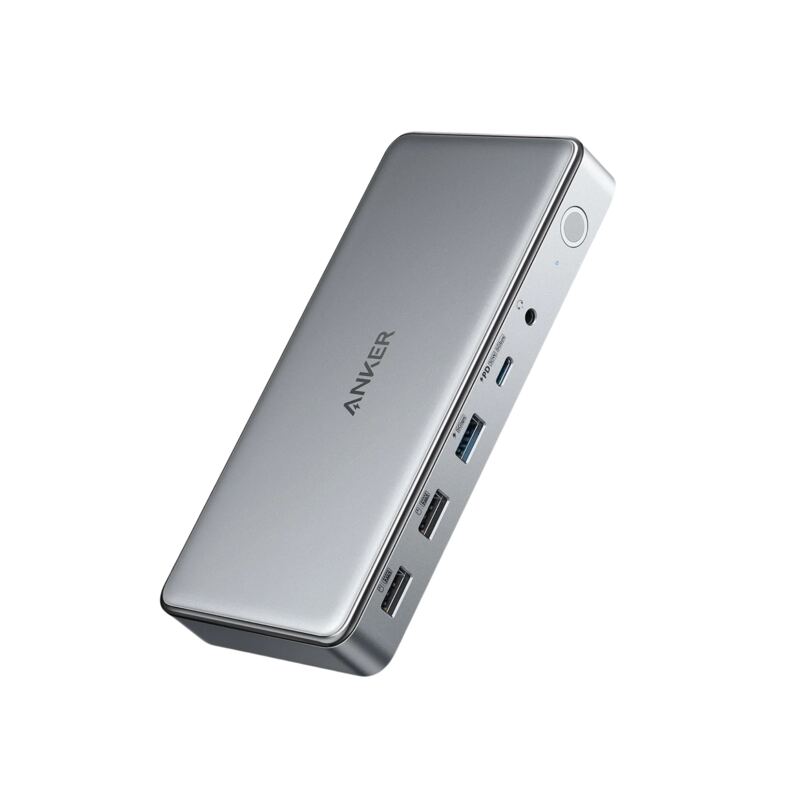
Anker 563 10-in-1 Docking Station
4 sources1 derived$130as of Aug 1

Anker's 563 USB-C Docking Station (10-in-1) draws praise for looks and capability alike, with triple display support, 100W charging, and a spread of ports covering dual HDMI, DisplayPort, USB-A, and Ethernet. MacSources rated it 95% for its performance and called it excellent for work and gaming. Reviewers noted the missing sleep mode and a port count below some competitors, plus a large power brick and unremarkable packaging. Multitaskers and professionals who need reliable connectivity will be happy; anyone chasing maximum portability or advanced features will not.

Strengths
  • Sleek and compact design that fits well in office or home workspaces
  • Triple display support with dual HDMI and DisplayPort for multitasking
  • 100W charging capability for fast laptop charging including MacBooks
Watch-outs
  • No sleep mode; continuously supplies power to all devices
  • Limited port selection compared to competitors in the same price range
  • Power brick is described as large and bulky
Dell D6000 Universal Dock
Ranked #10 in Best Docking Stations
Dell D6000 Universal Dock
3 sources$145as of Aug 1

USB Type-A and USB-C connections both work with the Dell D6000 Universal Dock, which is what makes it useful in mixed-device environments. Per docking-stations.info, it supports triple 4K displays over USB-C, a rare feature at this price point. The drawbacks are real: the cable is non-removable and can't be replaced, DisplayLink drivers are required on every OS, and software-based video compression limits its usefulness for gaming or creative work. As a budget multi-monitor option for an office it holds up, though reliability concerns and performance limits keep it in general productivity territory rather than power-user work.

Strengths
  • Supports both USB 3.0 and USB Type-C for universal compatibility with older and newer laptops
  • Outputs to up to three 4K monitors via USB-C (two at 4K@60Hz + third at 4K@30Hz)
  • Includes Gigabit Ethernet, multiple USB-A ports, and combo audio jack for office needs
Watch-outs
  • Non-removable USB-C cable means if it fails, the entire dock becomes unusable
  • Requires DisplayLink driver installation on all operating systems, not plug-and-play
  • DisplayLink compression makes it unsuitable for gaming or GPU-intensive creative work

Derived means the reviewer published no score, so one was inferred from their written verdict. Everything else is a number the publisher printed. How we rank.

How they stack up

Anker 563 10-in-1 Docking Station

The Anker 563 10-in-1 Docking Station offers triple display support and 100W charging, making it more feature-rich than the Plugable USBC-9IN1E which only supports one video output. It's more affordable than the CalDigit TS4 and provides better port variety, though it lacks the 98W power delivery and 18-port configuration of the CalDigit. Compared to the UGREEN Revodok Max, it offers better port selection and more reliable performance, but lacks the Thunderbolt 4 performance and build quality of the UGREEN.

Dell D6000 Universal Dock

The Dell D6000 offers universal compatibility with both USB-A and USB-C laptops, a feature the CalDigit TS4 and UGREEN Revodok Pro lack. It supports triple 4K displays at a lower price point than the Satechi 15-in-1, but requires DisplayLink drivers and has poor performance for creative work. Unlike the Anker 555, it doesn't support 4K60Hz HDMI output, and unlike the HyperDrive 12, it lacks 10Gbps USB speeds.

Specs side-by-side

SpecAnker 563 10-in-1 Docking StationDell D6000 Universal Dock
Power Delivery100W PD IN90W
Ports2× USB-A 3.1 Gen 1, 2× USB-A 2.0, 1× USB-C 3.1 Gen 1
Display Support2K HDMI, 2K DisplayPort
Ethernet1× 1Gbps RJ4510/100/1000 Mbps
USB SpeedUSB 3.2 Gen 2
ThunderboltNo
Weight0.99 lb
Audio1× 3.5mm Combo Jack
Host ConnectionUSB-C
USB-A Ports4
USB-C Ports1
Display Outputs2x DisplayPort 1.2, 1x HDMI 2.0
Card SlotsSD, microSD
Build MaterialPlastic
← See the full ranking of best docking stations