Verdict
The Best 5Reviewed by Mike Hunter·July 7, 2026·checked July 1, 2026

Best Vlogging Cameras Under $1000

Top 5 vlogging cameras under $1000 reviewed and ranked.

At a glance5 products
1Sony ZV-E10 IITop Score
(3 sources)
$1,298Best for: Aspiring YouTubers and creators who want the best autofocus under $1000 and plan to invest in lenses over time.
$1,298 · Check Price on Amazon
(3 sources)
$378Best for: Travel and run-and-gun vloggers who want gimbal-smooth handheld footage in a pocketable all-in-one with no extra gear.
$378 · Check Price on Amazon
(3 sources)
$849Best for: Vloggers who want one pocketable camera that nails wide walk-and-talk video and doubles as a travel point-and-shoot.
$849 · Check Price on Amazon
(3 sources)
$899Best for: Budget-minded filmmakers and gimbal users who want open-gate 6K, 10-bit color and interchangeable lenses for under $1000.
$899 · Check Price on Amazon
(3 sources)
$1,399.95Best for: Casual vloggers and travelers who want a truly pocketable camera with a bright lens for stills and short clips.
$1,399.95 · Check Price on Amazon
Verdict is reader-supported. As an Amazon Associate we earn from qualifying purchases. Some links on this page are affiliate links — if you click through and buy, we may earn a small commission at no extra cost to you. Our ratings are sourced from independent publications, not sponsors.

The full ranking

How we rank →
Sony ZV-E10 II
#1 · Top Score
Best for: Aspiring YouTubers and creators who want the best autofocus under $1000 and plan to invest in lenses over time.
Sony ZV-E10 II
from 3 sources$1,298as of Jul 1
Why it's ranked here

The Sony ZV-E10 II is the best all-round vlogging camera under $1000 for creators who want room to grow. It borrows the 26MP sensor and 759-point autofocus from Sony's far pricier bodies, shoots oversampled 4K/60p in 10-bit, and stays pocketable. The catch is the lack of IBIS, which means handheld walking shots lean on a cropped digital stabilizer rather than true sensor-shift correction.

Strengths
  • Best-in-class autofocus with a 759-point phase-detection system covering 94% of the frame, working down to -3EV
  • Oversampled 4K up to 60p with internal 10-bit recording and S-Log3 for serious color grading
Watch-outs
  • No in-body image stabilization, so handheld walk-and-talk relies on a heavy 1.33x digital crop
  • Rolling shutter is still visible in fast pans despite the faster sensor
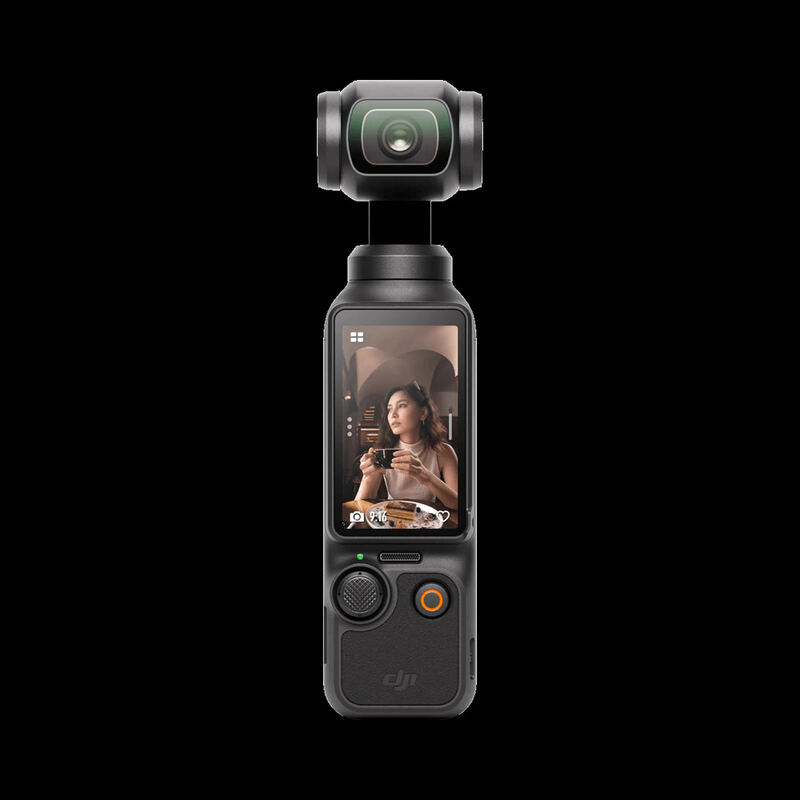
DJI Osmo Pocket 3
#2
Best for: Travel and run-and-gun vloggers who want gimbal-smooth handheld footage in a pocketable all-in-one with no extra gear.
DJI Osmo Pocket 3
from 3 sources$378as of Jul 1
Why it's ranked here

The DJI Osmo Pocket 3 is the most convenient vlogging camera under $1000 thanks to its built-in 3-axis gimbal, which produces stabilized footage no mirrorless body in this list can match handheld. Its 1-inch sensor shoots sharp 4K/120fps with 10-bit D-Log M, and the rotating screen makes vertical content effortless. The trade-offs are a fixed lens and lingering audio-sync quirks with the wireless mic.

Strengths
  • Built-in 3-axis mechanical gimbal delivers buttery-smooth handheld footage no other camera here can match
  • Large 1-inch CMOS sensor with 4K/120fps and 10-bit D-Log M for strong low-light and grading flexibility
Watch-outs
  • Fixed lens with no interchangeable-lens path and a relatively narrow field of view for tight selfie vlogging
  • Reported audio-sync issues between the Pocket 3 and the Mic 2 transmitter that firmware hasn't fully fixed
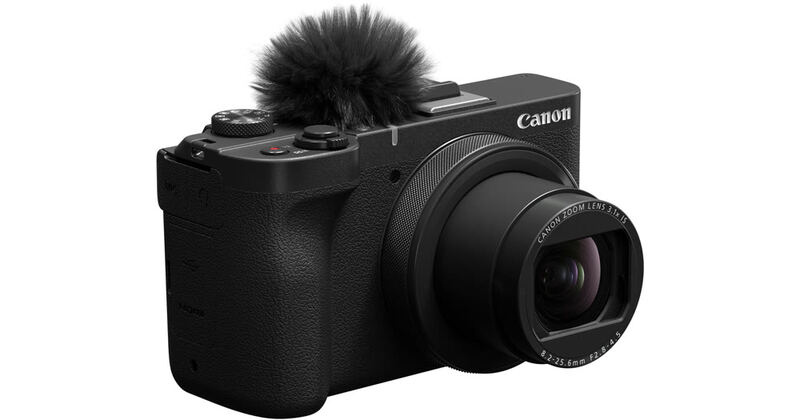
Canon PowerShot V1
#3
Best for: Vloggers who want one pocketable camera that nails wide walk-and-talk video and doubles as a travel point-and-shoot.
Canon PowerShot V1
from 3 sources$849as of Jul 1
Why it's ranked here

The Canon PowerShot V1 is the most capable fixed-lens compact for walk-and-talk vlogging under $1000. Its 1.4-inch sensor is bigger than the 1-inch chips in rival compacts, the 16-50mm equivalent lens goes usefully wide, and cooling vents plus a built-in ND filter mean unlimited 4K. The compromises are a modest maximum aperture and a heavy crop when you push to 4K/60fps.

Strengths
  • Large 22.3MP 1.4-inch sensor offers roughly twice the area of the 1-inch sensors in rival compacts
  • Wide 16-50mm equivalent zoom goes wider than most compacts, ideal for arm's-length vlogging
Watch-outs
  • 1.4x crop and no stabilization when shooting 4K/60fps
  • Small maximum aperture limits low-light and shallow depth of field
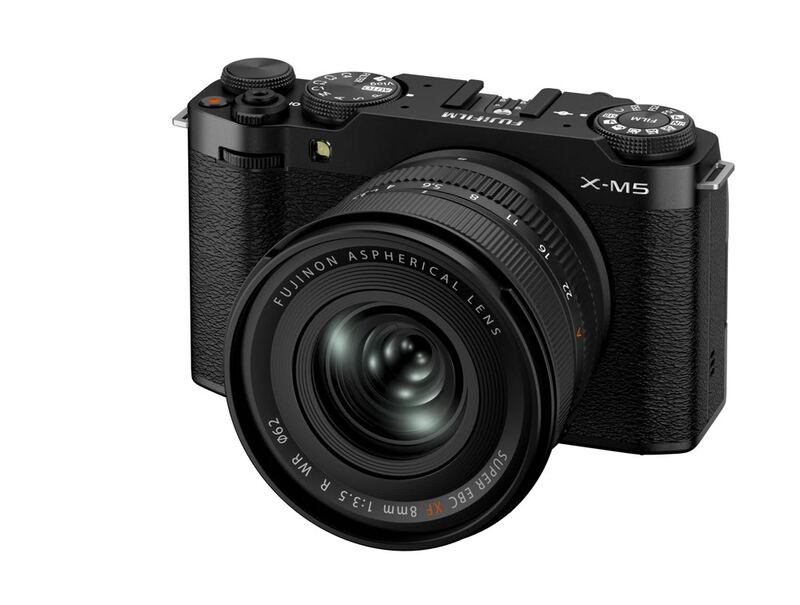
Fujifilm X-M5
#4
Best for: Budget-minded filmmakers and gimbal users who want open-gate 6K, 10-bit color and interchangeable lenses for under $1000.
Fujifilm X-M5
from 3 sources$899as of Jul 1
Why it's ranked here

The Fujifilm X-M5 is the best-value video-focused interchangeable-lens camera under $1000. It delivers open-gate 6.2K/30p 10-bit recording and 4K/60p in a body that weighs almost nothing, plus Fujifilm's celebrated color profiles. The compromises are no IBIS and no viewfinder, and its autofocus is a step behind Sony's for face-tracked vlogging.

Strengths
  • Open-gate 6.2K/30p 10-bit video from the full 3:2 sensor for reframing and vertical exports
  • 4K up to 60fps for half-speed cinematic slow motion
Watch-outs
  • No in-body image stabilization, so handheld footage needs a gimbal or steady hands
  • No electronic viewfinder
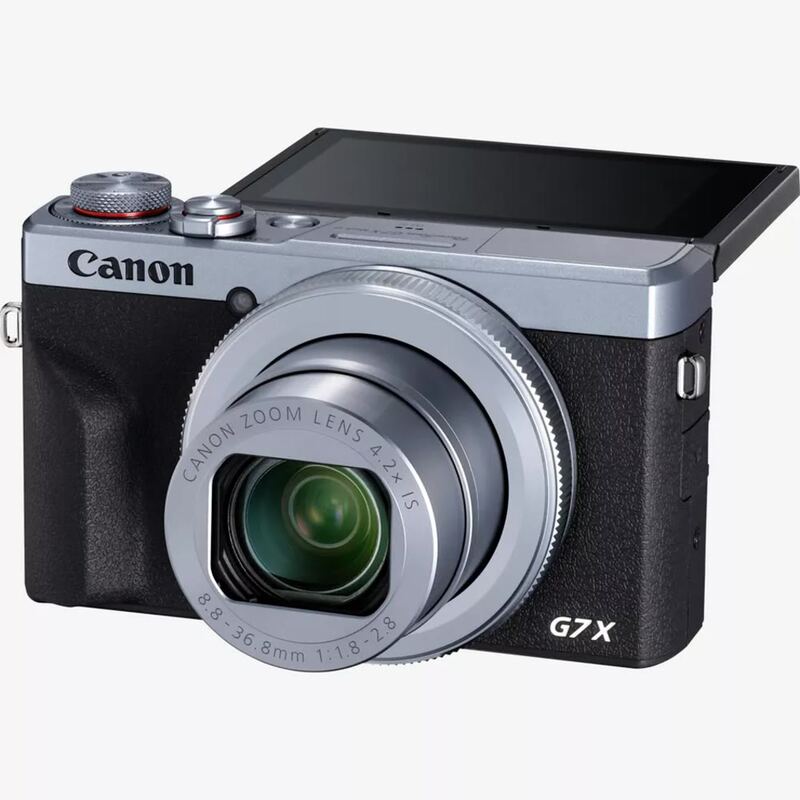
Canon PowerShot G7 X Mark III
#5
Best for: Casual vloggers and travelers who want a truly pocketable camera with a bright lens for stills and short clips.
Canon PowerShot G7 X Mark III
from 3 sources$1,399.95as of Jul 1
Why it's ranked here

The Canon PowerShot G7 X Mark III remains the most pocketable pick here, a 1-inch compact with a bright zoom, crop-free 4K, and built-in YouTube live-streaming. It's a proven creator favorite, but it's a 2019 design that overheats in 4K and lacks modern stabilization, so it's best for casual vlogging and stills rather than long video takes.

Strengths
  • Genuinely pocketable 1-inch sensor compact that's easy to carry everywhere
  • Bright f/1.8-2.8 24-100mm equivalent zoom for low light and flattering compression
Watch-outs
  • Overheats and shuts down quickly when recording 4K
  • No in-body or gimbal stabilization for video
Reviews aggregated from
Techradar.comDpreview.comPetapixel.comTomsguide.comEngadget.comDigitalcameraworld.comAmateurphotographer.com

Spec comparison

5 products
vs
SpecSony ZV-E10 IIDJI Osmo Pocket 3
Sensor26MP BSI APS-C CMOS1-inch CMOS
Video Resolution4K up to 60p (oversampled), 10-bit 4:2:24K up to 120fps, 10-bit D-Log M
StabilizationDigital only (no IBIS)3-axis mechanical gimbal
Autofocus759-point phase detection, 94% coverageSingle, Continuous, and Product Showcase mode
Display3.0-inch fully articulating touchscreen2-inch rotatable touchscreen
Weight377g (body)179g
AudioLPCM 2ch (48 kHz 16 bit), LPCM 2ch (48 kHz 24 bit), LPCM 4ch (48 kHz 24 bit)Built-in 3-mic array, DJI Mic 2 support
LensE PZ 16–50 mm F3.5–5.6 OSS II20 mm equivalent f/2.0

Frequently asked questions

What is the best vlogging cameras under $1000?
Sony ZV-E10 II is our top pick for vlogging cameras under $1000, with an averaged rating of 4.5/5 from 3 published reviews. The Sony ZV-E10 II is the best all-round vlogging camera under $1000 for creators who want room to grow. It borrows the 26MP sensor and 759-point autofocus from Sony's far pricier bodies, shoots oversampled 4K/60p in 10-bit, and stays pocketable. The catch is the lack of IBIS, which means handheld walking shots lean on a cropped digital stabilizer rather than true sensor-shift correction.
Is there a cheaper alternative worth considering?
DJI Osmo Pocket 3 (around $378) rates 4.5/5 in our analysis. The DJI Osmo Pocket 3 is the most convenient vlogging camera under $1000 thanks to its built-in 3-axis gimbal, which produces stabilized footage no mirrorless body in this list can match handheld. Its 1-inch sensor shoots sharp 4K/120fps with 10-bit D-Log M, and the rotating screen makes vertical content effortless. The trade-offs are a fixed lens and lingering audio-sync quirks with the wireless mic.
How does Verdict rank these products?
Every rating on Verdict is the numerical average of scores published by independent review sites, YouTube reviewers, and Reddit buyer reports. No editor adjusts the order — the ranking is whatever the source data produces. See our methodology page for the full process.
When was this guide last updated?
This guide was last re-checked in July 2026. We re-run our research pipeline for each category on a rolling basis so prices and rankings reflect current market reality.

Related guides

Browse all →