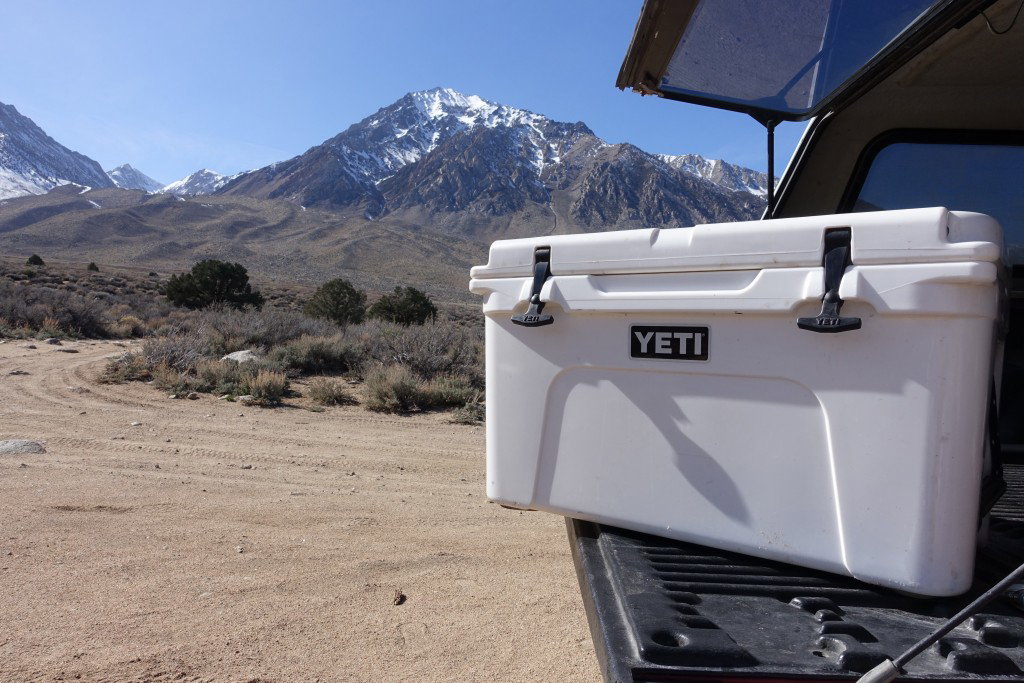
Every newer brand gets measured against the Tundra 65, the roto-molded hard cooler that defined the category. CleverHiker recorded 9 days of full ice retention and 13 days to reach 50 degrees, while Outdoor Gear Lab's controlled lab test returned a more conservative 4.8 days below 40 degrees. Construction is the real story: a single-piece roto-molded shell with three-inch PermaFrost walls and a T-Rex latch system that survives years of fishing boats, truck beds and overlanding abuse. The price is steep, though reviewers consistently describe it as a buy-once cooler.
Full review
Ice Retention in Real-World Testing
Ice retention is where the Tundra 65 earns its reputation, and the numbers depend heavily on whose lab you trust. CleverHiker's reviewers loaded the cooler with a 2:1 ice-to-contents ratio, kept the lid mostly closed, and recorded nine full days before the last cube of ice melted. They also clocked 11 days before the interior climbed past 40 degrees and 13 days before it reached 50 degrees, which puts the Tundra in genuine multi-week-shoulder-season territory if you only need beverages cold rather than food safe. Outdoor Gear Lab's controlled lab test is more conservative, measuring 4.8 days below 40 degrees and 5.3 days below 50 degrees in a 90-degree ambient.
The gap between the two numbers is not a contradiction. CleverHiker's test favors real-world camping conditions with a packed cooler, while Outdoor Gear Lab runs a standardized fill ratio with sensors at fixed points. Both methods are valid, and both put the Tundra 65 in the upper tier of roto-molded coolers. Reviewers from Outside Bozeman and the REI Co-op blog independently noted that the cooler routinely survives multi-day raft trips with ice still present at takeout.
Three inches of PermaFrost foam in the walls
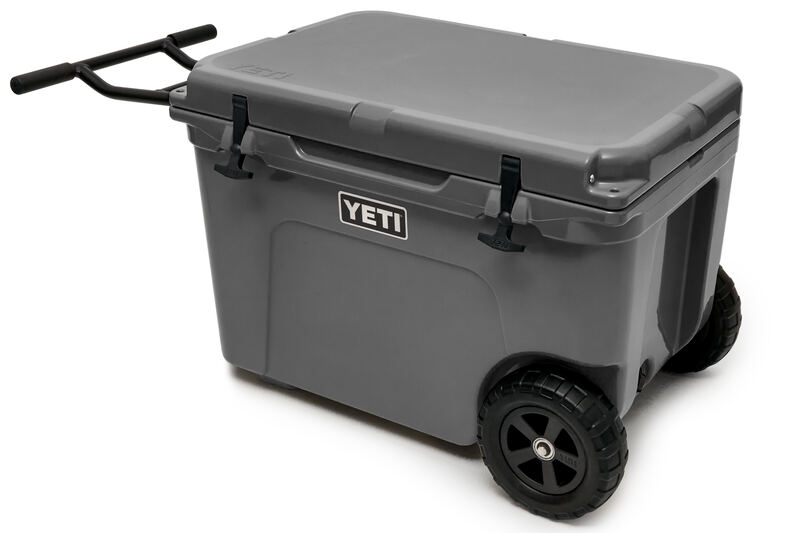
The Tundra is roto-molded as a single seamless piece of UV-resistant polyethylene, which is the construction method that put YETI on the map a decade ago. CleverHiker described it as 'made as a single piece, built without seams' and noted the cooler "features a hinge system built with two hinge pins and an interlocking design to prevent breakage." The walls are filled with three inches of pressure-injected PermaFrost polyurethane foam, which is the same insulation density YETI uses on its commercial-grade Tundra Haul and Tundra 105.
The lid latches are YETI's signature T-Rex rubber design — heavy enough that small children genuinely struggle to open them, which is a feature, not a bug, for families. Outside Bozeman called the build 'durably constructed by outdoorsmen' and noted that after years of raft frames and truck beds, the cooler shows no structural wear. The polyester rope handles can fray over time, but they are user-replaceable through YETI's parts catalog.
Capacity and Real-World Storage
The Tundra 65 is named for its nominal 65-quart capacity, but Outdoor Gear Lab's measurement put the actual usable interior at 56 quarts after subtracting the thick wall insulation. CleverHiker counted 74 12-ounce cans plus ice in a typical load. For a multi-day camping trip with two adults, that translates to roughly four days of beverages and three days of food before you start trimming. The interior is a clean rectangle with no shelves or compartments, though YETI sells optional short-side and long-side dividers separately.
Reviewers consistently noted the trade-off: the same three-inch walls that deliver the ice retention also eat into usable space. If maximum interior volume per external footprint matters more than ice retention, an injection-molded cooler like the Coleman Xtreme delivers more capacity at the same external size. If multi-day cold matters more than capacity, the Tundra is the better tool.
Bear Resistance and Lockability
The Tundra 65 is one of the small number of consumer coolers certified by the Interagency Grizzly Bear Committee (IGBC) when used with a padlock through the molded-in lock points. CleverHiker reported that 'it’s the only cooler we tested that is certified bear resistant by the IGBC (Interagency Grizzly Bear Committee)' in their roundup, and the certification is recognized by the National Park Service for backcountry food storage in grizzly habitat. This matters in Yellowstone, Glacier, the Tetons, and most BLM and forest-service land in the Rockies, where rangers actively check for IGBC-certified storage during patrols.
The lock setup requires two padlocks — one through each lock hasp — and YETI does not include them in the box. Plan to add roughly $20 for a pair of standard padlocks. The lock hasps themselves are molded into the cooler body and have held up across years of field reviews without breaking.
Drain plug has no leash and can vanish
The most consistent complaint across reviews is weight and price. At 30.8 pounds empty, a fully loaded Tundra 65 with ice and contents climbs past 80 pounds, which makes single-person carry genuinely difficult. CleverHiker called it 'awkward to carry solo,' and Outdoor Gear Lab noted that the polyester rope handles, while comfortable, do not change the basic problem of moving 80 pounds at arm's length. The drain plug also lacks a leash, which means it can disappear in tall grass — reviewers in two separate publications flagged this as a small but annoying oversight.
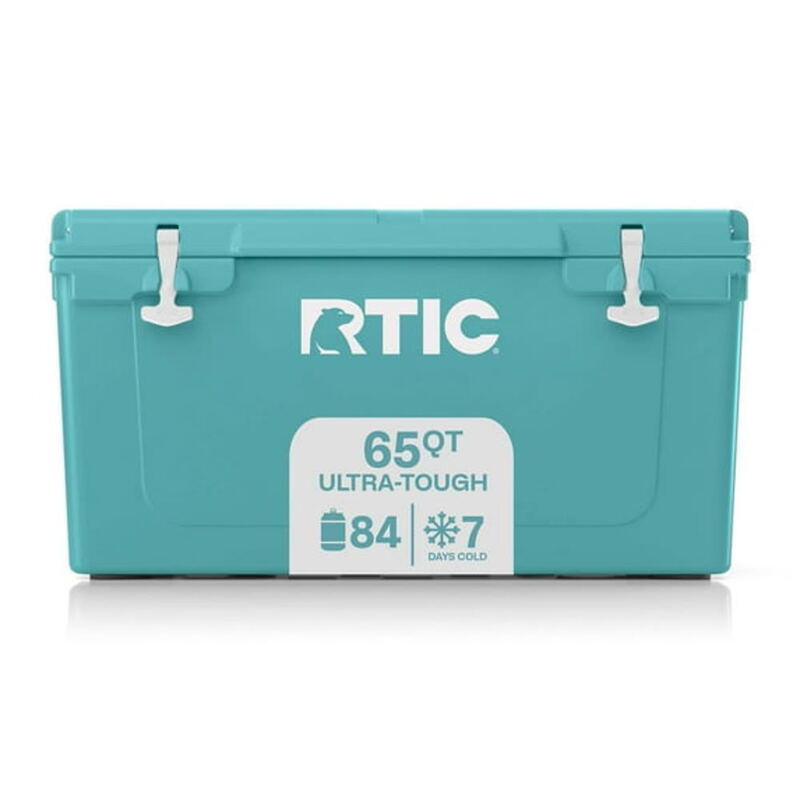
Price is the other obvious caveat. At $395 list, the Tundra 65 is roughly $125 more than the RTIC 65 for comparable measured ice retention and similar construction. The price gap buys you the bear-resistant certification, the better warranty, the resale value, and the YETI ecosystem of dividers, baskets, and dry-rack accessories — but if those features do not matter for your use case, the RTIC is a real alternative.
Built for grizzly country, not weekend tailgates
The Tundra 65 is the right cooler for multi-day raft trips, backcountry fishing boats, fall hunting camps in grizzly country, and any application where multi-day ice retention and bear certification matter more than upfront cost. It is also the right cooler for buyers who plan to keep it for 10-plus years — both Outside Bozeman and the REI blog reviewer reported their personal Tundras still in service after years of abuse, with resale values that hold roughly 60-70 percent of original price.
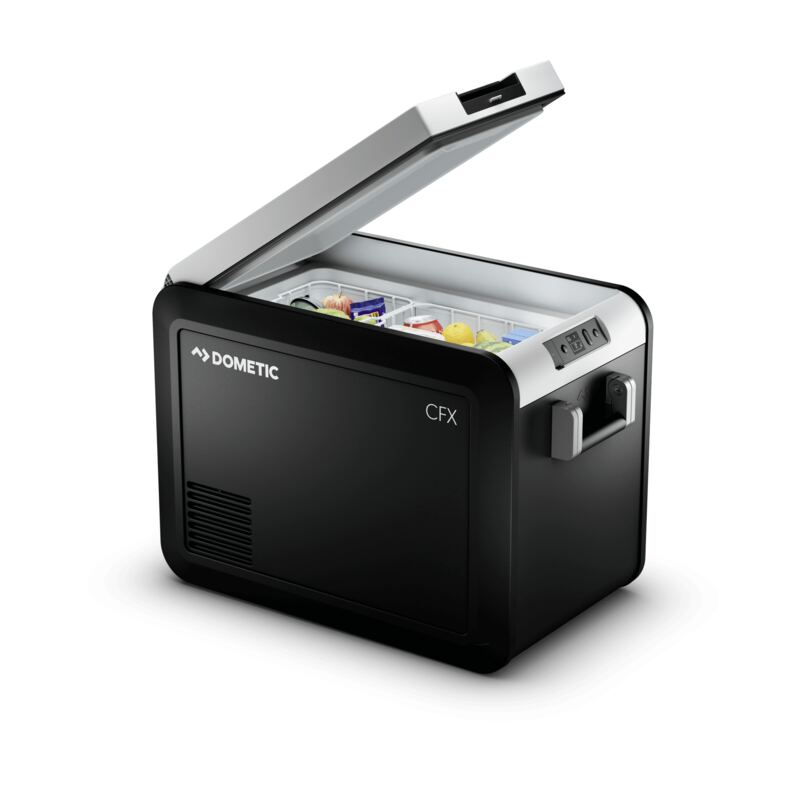
It is the wrong cooler for weekend tailgaters and beach days, where the price premium buys you ice retention you will not use. It is also the wrong cooler if you camp from a vehicle with grid power available, where the Dometic CFX3 45 replaces ice entirely. For overlanders, RV travelers, and anyone with reliable 12-volt power, the powered cooler category is now the better long-term investment despite its higher upfront cost.
Long-Term Durability and Resale Value
Few coolers hold their value on the secondary market the way the Tundra 65 does. Outside Bozeman's reviewer summed up the long-term ownership case bluntly: 'The only other cooler you'll ever purchase will be a different sized Yeti.' That sentiment shows up in the used market — Tundras in good condition routinely sell on Craigslist and Facebook Marketplace for 60-70 percent of original retail, even after years of use. The roto-molded construction has no seams to fail, the polyethylene resists UV degradation for over a decade in outdoor storage, and YETI's service network will replace gaskets, hinges, and rope handles individually rather than requiring you to scrap the cooler.
Service history matters here. YETI honors its five-year warranty aggressively and the parts catalog covers nearly every consumable component. CleverHiker noted the cooler "features a hinge system built with two hinge pins and an interlocking design to prevent breakage," which is a small but meaningful design choice — the most common point of failure on cheaper coolers is the plastic hinge bracket, and the Tundra simply does not have that part. Combined with the resale value, the effective lifetime cost of ownership drops well below the sticker price.
The five-year warranty horizon also affects how aggressively YETI engineers the cooler against edge-case failure modes. UV degradation, gasket compression set, latch fatigue, and rope-handle abrasion are all warranty-replaceable failures, which incentivizes Yeti to engineer them out in the first place. Reviewers in Outdoor Gear Lab and CleverHiker both noted that years-old Tundras they had access to showed surprisingly little visible wear, and the gasket compression in particular held up better than most competitors at the five-year mark.
Strengths
- +Bear-resistant certified by the IGBC when paired with a padlock
- +Rotomolded one-piece construction with no seams to fail
- +Three inches of PermaFrost pressure-injected polyurethane foam
- +Holds ice for 9 days in CleverHiker testing before complete melt
- +T-Rex lid latches and NeverFail hinge system rated for years of abuse
Watch-outs
- −Heavy and awkward to carry solo at 30.8 lbs empty
- −Holds 56 quarts of usable space despite the 65-quart name
- −Premium $395 price tag with no included divider or wire basket
How it compares
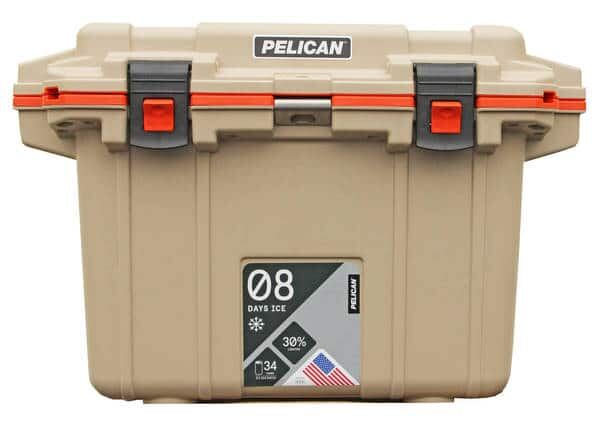
The Tundra 65 sits a step above the RTIC 65 on build quality and bear-resistance certification but costs roughly $125 more for similar measured ice retention. Unlike the wheeled Tundra Haul, the standard Tundra requires two-person carry when loaded. For buyers who want IGBC bear certification at a lower price, the Pelican 50QT Elite is the alternative; for ice-free cold storage entirely, the Dometic CFX3 45 replaces the cooler category outright.
Rating sources
“It does everything you want from a chest cooler and more...the Tundra is likely the last cooler you'll ever need.”
“If you need a cooler that can keep contents cold for over a week, the Tundra is a reliable choice.”
“The only other cooler you'll ever purchase will be a different sized Yeti.”
Our 4.5 score is the average of these published ratings. Ratings marked * were derived from the reviewer’s written analysis or video transcript — the publisher didn’t print an explicit numeric score, so we inferred one from their own words. Click through to verify. More about methodology.