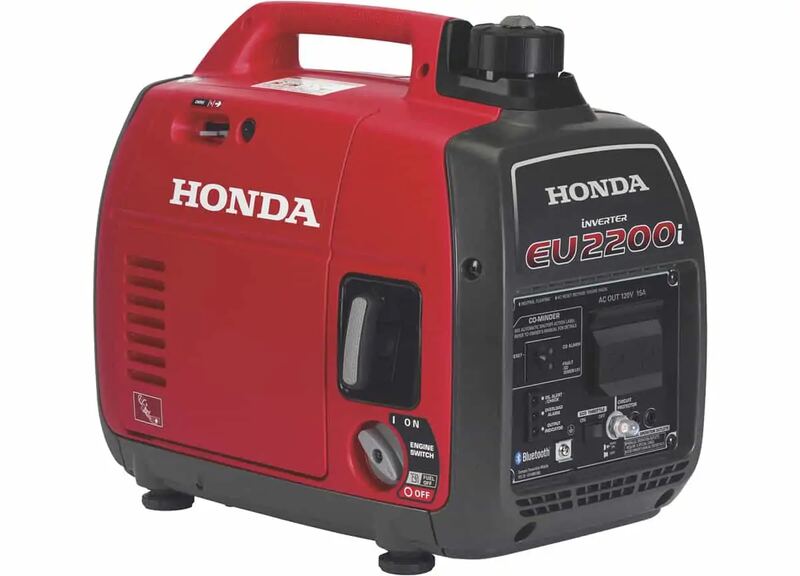
The Westinghouse iGen2800 is the value-buyer's answer to the Honda EU2200i. You get the same 52 dBA noise floor, the same clean inverter sine-wave power, and an extra 600 watts of peak headroom for roughly a third of Honda's asking price. Reviewers agree the engine won't last as long as Honda's commercial-series unit, but for buyers who use a generator a handful of times a year, the value math is decisive.
Full review
Power Output and Real-World Use
The iGen2800 produces 2,200 running watts and 2,800 peak watts from a 98cc Westinghouse OHV engine — that 600-watt surge headroom is the headline upgrade over the older iGen2500 line. In practical terms, the extra peak watts mean a 13,500 BTU RV air conditioner that wouldn't start on a true 2,000-watt inverter will start reliably on the iGen2800. Generator Bible's review confirms the inverter electronics produce less than 3% total harmonic distortion, putting the power quality in the same safe-for-electronics tier as Honda and Yamaha — which is the entire reason buyers choose inverter generators over older brush-style units that fry laptop power bricks.
Owners report no trouble running a refrigerator, a few LED lights, and a 1,000-watt coffee maker simultaneously, or alternating between a 1,500-watt space heater and a small microwave on a single circuit. The Westinghouse's overload protection trips before the engine can be damaged, which is more graceful than the Champion 200951's tendency to stall under sudden surge loads.
Noise Level and Neighborhood Use
At 52 dBA at 25% load and 23 feet, the iGen2800 is 4 dBA louder than the Honda EU2200i at the same load — a difference most listeners notice but few would call objectionable. Chainsaw Journal's review compares the noise floor to 'the average conversation' and confirms it's well within the limits of national park campground quiet hours. At full load the unit rises into the high 50s dBA, similar to a window air conditioner running indoors.
Like the Honda, the iGen2800 uses an economy throttle mode that idles the engine down when loads drop, which both quiets the unit and stretches the fuel tank. Some owners report the throttle response is slightly slower than Honda's — the engine takes 2-3 seconds to spool back up when a refrigerator compressor kicks on — but it doesn't cause brownouts on connected devices.
Fuel Efficiency and Runtime
The iGen2800 stretches a 1-gallon tank to 12 hours at 25% load — longer than the Honda EU2200i's 8.1 hours on a similar-sized tank, which is the one spec where Westinghouse actually beats Honda head-to-head. Real-world buyers running a refrigerator and a few LEDs report overnight runs are routine; 50% load (around 1,100 watts) drops the runtime to roughly 7-8 hours, which is enough to run a window AC unit through a hot afternoon.
The fuel shut-off feature is genuinely useful — flip the switch and the engine runs the carburetor dry before shutting down, which prevents the stale-gas gumming that kills cheap generators during 6-month-plus storage. Owners who only fire the unit up during hurricane season universally credit this feature with making the iGen2800 reliable on the second-year start.
Build Quality and Materials
The iGen2800's plastic clamshell housing and steel internal frame are typical for the price tier — sturdier than a Predator from Harbor Freight, lighter than the Honda EU2200i's housing. Owners on RV and prepper forums report 1,500-3,000 hours of service life before major repairs become necessary, versus the Honda's 5,000+ hour ceiling. For occasional use that translates to a decade of light duty.
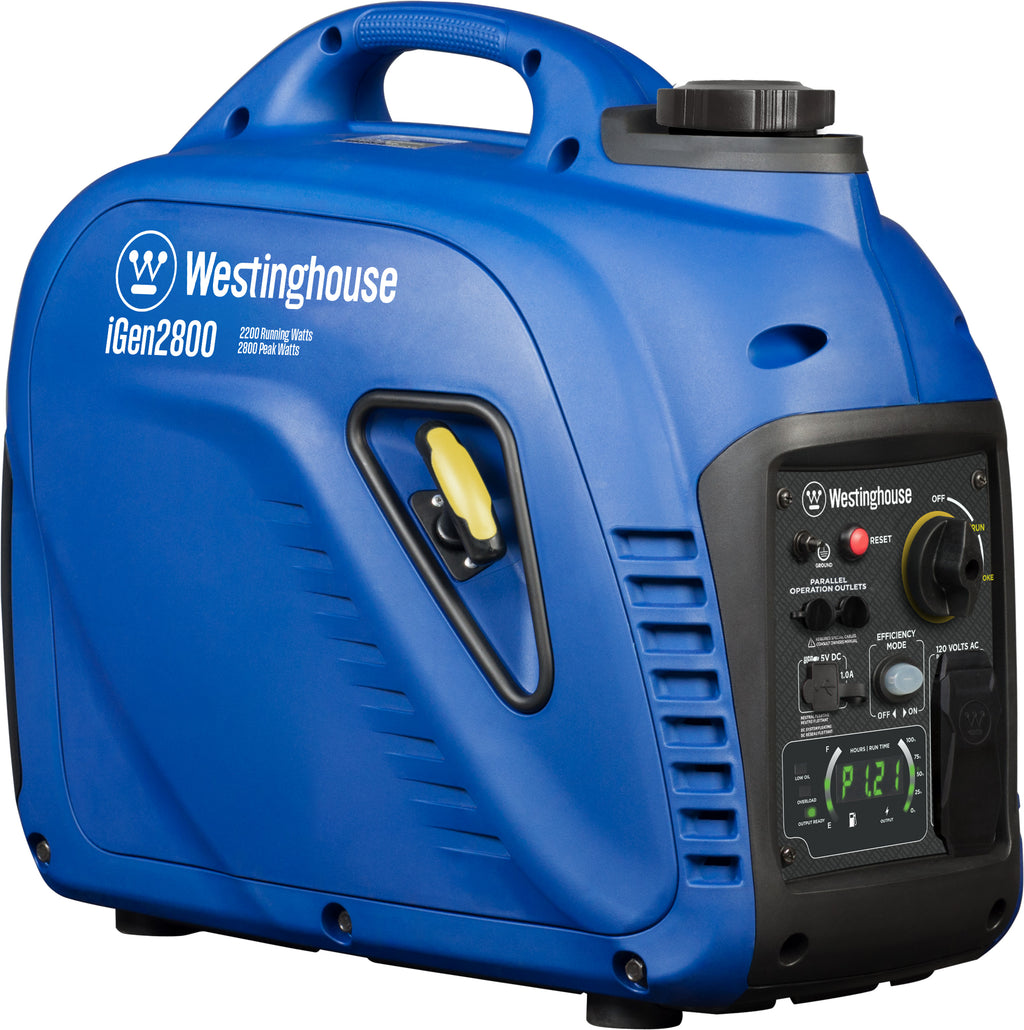
The control panel is a clear strength: a backlit LED display shows runtime hours, voltage output, fuel level, and current load — none of which the base-model Honda EU2200i includes. Westinghouse also includes a fuel gauge on the tank itself, which is genuinely useful for predicting when to refuel mid-overnight versus the Honda's smaller tank that buyers learn to top off on a schedule.
Outlets and Connectivity
The base iGen2800 ships with a single 120V 20A duplex household outlet and two 5V USB-A ports — the same outlet configuration as the Honda EU2200i. Owners who want a TT-30R RV outlet need to step up to the iGen2800c variant, which also adds a CO sensor that auto-shuts-down the generator if dangerous carbon monoxide levels are detected (Honda calls this CO-Minder; both Honda and Westinghouse use the same approach now).
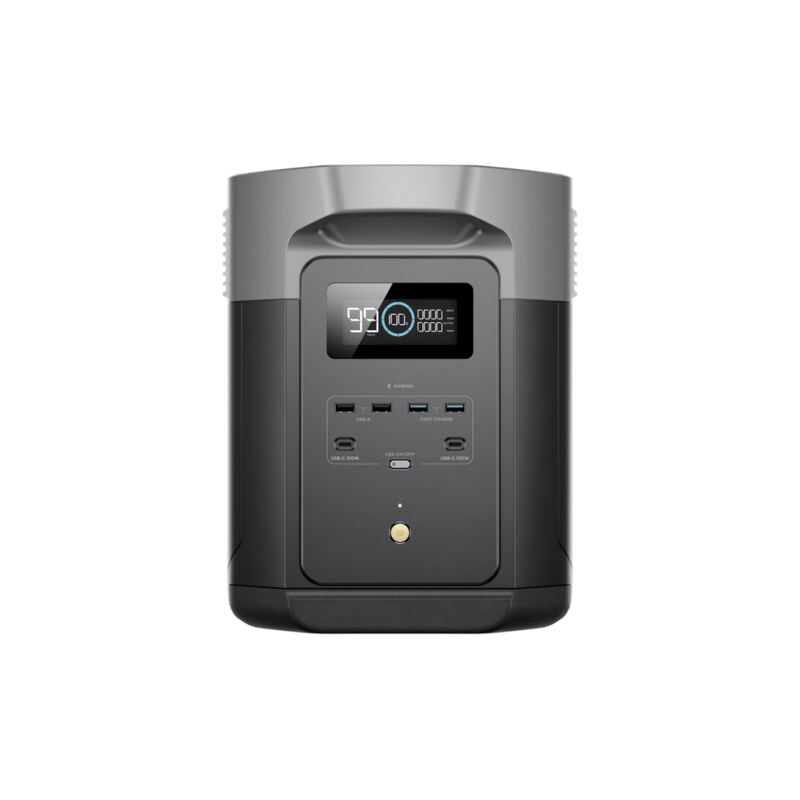
Both 120V outlets are GFCI-protected, which is required by code for any generator used at residential service entrances. The two USB-A ports max out at 5V/2.1A combined — enough for a phone and a tablet simultaneously, but no USB-C and no fast-charge spec. Buyers who want USB-C should look at the EcoFlow Delta 2 Max battery station instead, which offers 100W USB-C charging.
Where It Falls Short
Engine longevity is the honest answer. Westinghouse's 98cc OHV is a competent consumer engine but it's not Honda's GXR120 commercial unit — owners running the iGen2800 hard during multi-day outages, jobsite duty, or extended RV trips will reach valve-adjustment intervals and carburetor cleaning much sooner than Honda owners. For 100-200 hours per year of light use, the iGen2800 will easily outlast its 3-year warranty. For 1,000+ hours per year, the Honda is a better long-term investment.
The recoil-pull-only start is the other limitation. Even the higher-trim iGen2800c doesn't offer electric start at this wattage class — for that, buyers need to jump to the iGen4500 or larger. Most owners report the pull-start is easy on a warm engine and tolerable on a cold start, but anyone with shoulder issues should consider the Champion 200951 or move up to a generator with electric start as standard.
Who It's Best For
The iGen2800 is the right pick for storm-prep homeowners, occasional tailgaters, and RV campers who want clean inverter power without paying the Honda premium. Buyers who use the generator 50-150 hours per year — typical for hurricane season plus a few camping weekends — will never see the engine longevity ceiling, and they save roughly $670 versus the equivalent Honda configuration.
Anyone running a generator for jobsite duty, daily off-grid power, or as a primary RV camping rig should step up to the Honda EU2200i instead. The Westinghouse's value disappears past 500 hours per year of use; the Honda's commercial engine pays back its premium over a 5-10 year horizon.
Value at This Price
At $529 the iGen2800 is the easiest 2,200-watt inverter recommendation in the category. It does roughly 95% of what the Honda EU2200i does for 45% of the price, and Westinghouse's 3-year residential warranty is functionally equivalent to Honda's. Buyers who can afford the Honda and value 10-year ownership should still buy the Honda; everyone else gets the iGen2800 and pockets the $670 difference for fuel, extension cords, and a transfer switch.
Strengths
- +Roughly one-third the cost of the Honda EU2200i with similar 52 dBA noise and clean sine-wave power
- +12-hour runtime at 25% load on a 1-gallon tank — beats Honda's 8.1 hours despite the smaller capacity
- +98cc Westinghouse OHV engine paired with under 3% THD makes it safe for laptops and CPAP machines
- +Built-in suitcase handle and 46.3 lb weight keeps it genuinely one-hand portable
- +3-year residential warranty backed by Westinghouse's nationwide service network
Watch-outs
- −Engine longevity is consumer-grade — expect 1,500-3,000 hours versus Honda's 5,000+ hour service life
- −Recoil pull-start only, no electric start option even on the higher-trim iGen2800c variant
- −Only one duplex 120V outlet plus two USB-A ports — no TT-30R RV outlet without stepping up to the iGen2800c
How it compares
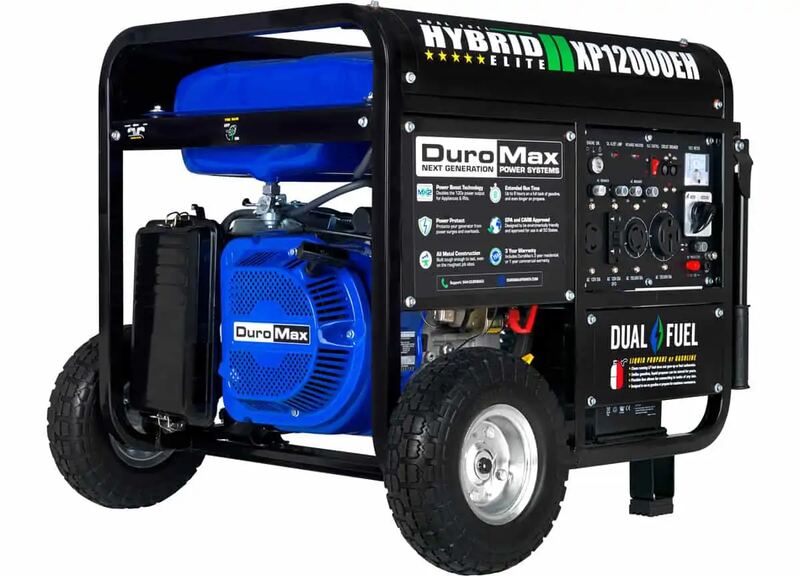
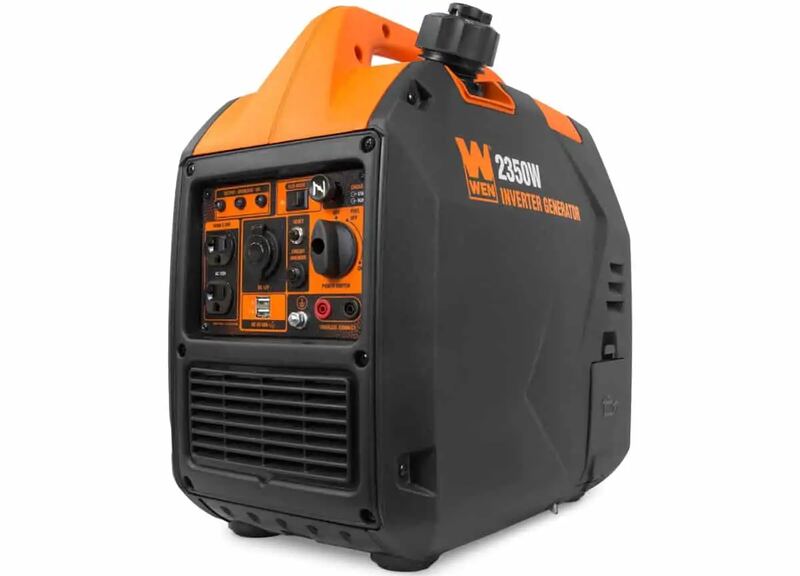
Costs roughly one-third of the Honda EU2200i with very similar noise and power-quality specs — the difference is engine longevity and resale value. Slightly more powerful than the WEN 56235i at 2,200W versus 1,900W running. The DuroMax XP12000EH is in a completely different power class for whole-home use, and the EcoFlow Delta 2 Max is the indoor-safe battery alternative.
Who this is for
At a glance: Campers, tailgaters, and storm-prep households who want clean inverter power without the Honda premium and don't need the generator to last 15 years.
Why you’d buy the Westinghouse iGen2800 2200W Inverter Generator
- Roughly one-third the cost of the Honda EU2200i with similar 52 dBA noise and clean sine-wave power.
- 12-hour runtime at 25% load on a 1-gallon tank — beats Honda's 8.1 hours despite the smaller capacity.
- 98cc Westinghouse OHV engine paired with under 3% THD makes it safe for laptops and CPAP machines.
Why you’d skip it
- Engine longevity is consumer-grade — expect 1,500-3,000 hours versus Honda's 5,000+ hour service life.
- Recoil pull-start only, no electric start option even on the higher-trim iGen2800c variant.
- Only one duplex 120V outlet plus two USB-A ports — no TT-30R RV outlet without stepping up to the iGen2800c.
Rating sources
“Inverter technology for clean power output with less than 3% Total Harmonic Distortion”
“Outstanding features whilst having a very reasonable price tag when compared to similar alternatives”
“Packs a whopping 2200 running watts in a tiny body; about the best in its class”
“One of the highest-selling and most popular portable inverter generators for outdoor use on the market”
Our 4.4 score is the average of these published ratings. Ratings marked * were derived from the reviewer’s written analysis or video transcript — the publisher didn’t print an explicit numeric score, so we inferred one from their own words. Click through to verify. More about methodology.