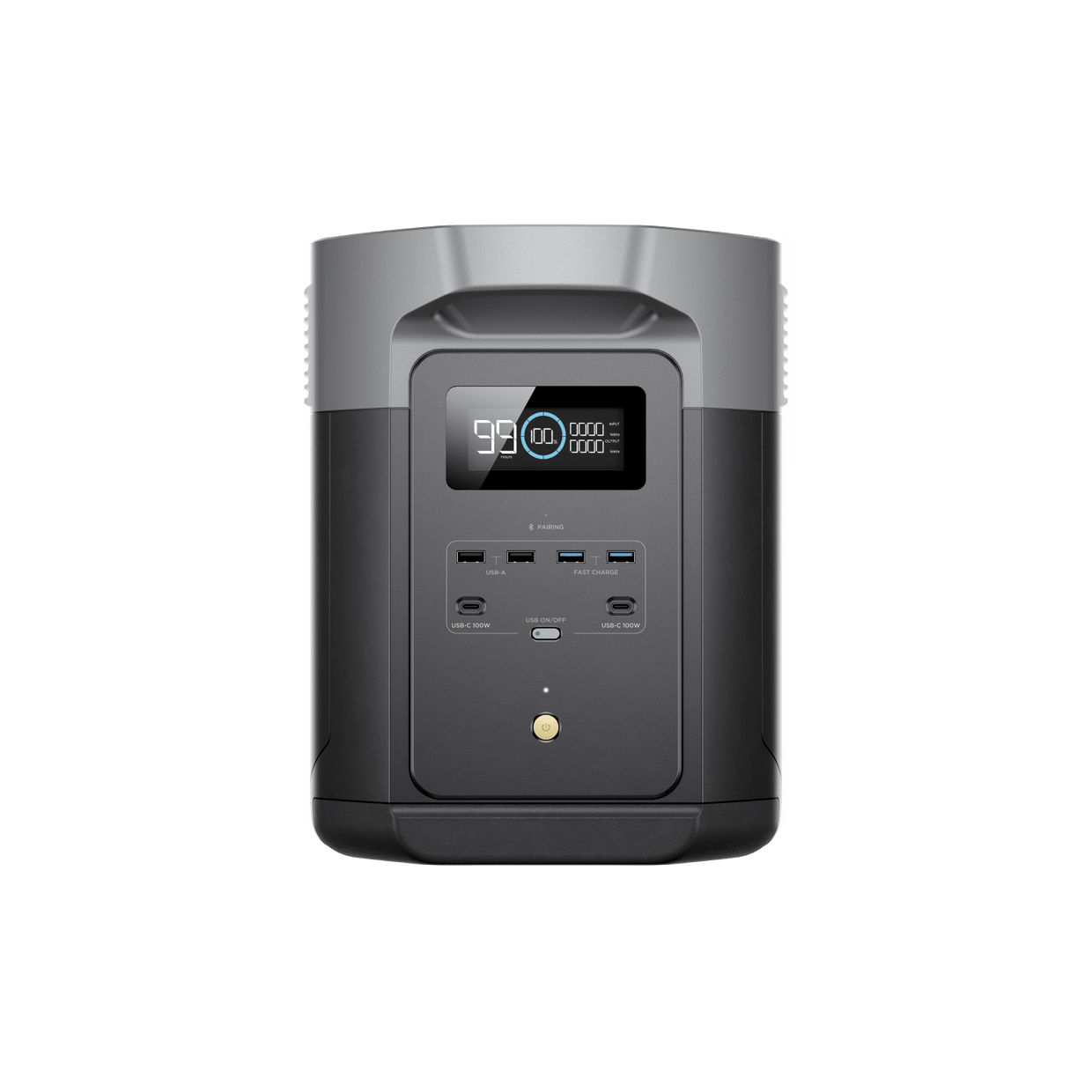
Digital Trends's Nick Mokey concluded: 'If you're buying for the long haul, there's no better option than the EcoFlow Delta 2 Max,' and Bob Vila scored it 9.4/10 for adaptability. It runs with zero emissions, is safe indoors, charges to 80% in 1.1 hours, and its LFP battery is rated for 10 years of daily use. The right pick for short multi-hour outages and for indoor backup where gas generators can't go.
Full review
Battery Capacity and Real-World Runtime
The 2,048 Wh LFP battery delivers roughly 14 hours of runtime on a full-size refrigerator, per Bob Vila's tested review by Mark Wolfe. For a typical fridge plus a few LED lights and a phone charger, that translates to a 12-16 hour overnight backup window — enough to bridge most weather-related power outages without losing food. For longer outages, the unit can be expanded to 6,144 Wh by daisy-chaining two Smart Extra Batteries, which roughly triples runtime to 36-40 hours on the same fridge load.
Real-world capacity discounts apply: Digital Trends's Nick Mokey tested the Delta 2 Max with a table saw, miter saw, and air compressor and reported only the miter saw tripped the unit briefly before powering through smoothly. For loads above 2,000 watts the X-Boost mode kicks in and reduces voltage at the receiving device to prevent the inverter from tripping — useful for resistive loads like coffee makers, less useful for motor-start loads like AC compressors.
AC Output and Surge Performance
EcoFlow rates the Delta 2 Max at 2,400 watts continuous AC output across six receptacles, peaking to 4,800 watts for motor-start surges. That's more sustained output than the Honda EU2200i (1,800W) or the Westinghouse iGen2800 (2,200W), and Digital Trends measured the highest sustained output of any unit in the 2kWh class. Six AC outlets is also more than any competitor — Jackery's Explorer 2000 Pro has three, Bluetti's AC200P has six but at higher weight and price.
The X-Boost mode that reaches 3,400 watts is genuinely useful for resistive loads but should not be relied on for motor-start equipment. A 1,500-watt space heater works fine in X-Boost; a 5,000 BTU window AC may or may not start, depending on the compressor inrush characteristics.
Charging and Solar Compatibility
Charge time is the Delta 2 Max's standout feature. The X-Stream Fast Charge tech brings the battery from 0 to 80% in 1.1 hours on AC alone, and the full charge cycle completes in roughly 2.3 hours. Bob Vila confirmed the unit fully charged in 2 hours 15 minutes. Competing power stations in the 2kWh class typically need 4-6 hours on AC, and the EcoFlow's speed is the difference between recharging once a day during a multi-day outage versus stretching the battery indefinitely.
Solar input handles up to 1,000W via dual MC4 ports, and the unit can charge from AC and solar simultaneously to reach 80% in 43 minutes under full-sun conditions. For owners building a true off-grid system, the Delta 2 Max plus a 400W panel kit will recharge fully in 6-8 hours of usable sun, which makes the unit a viable primary battery for a small cabin or boondocking RV setup.
Battery Chemistry and Long-Term Durability
The LFP (lithium iron phosphate) battery chemistry is what makes the Delta 2 Max a 10-year purchase instead of a 3-year one. EcoFlow rates the pack for 3,000 complete charge-discharge cycles to 80% capacity remaining — at one full cycle per day, that's just over 8 years to 80% capacity, and the unit continues working past that point with reduced runtime. Older lithium-ion power stations (including EcoFlow's own first-generation Delta) were rated for 800 cycles, roughly 2-3 years of daily use.
LFP chemistry is also significantly safer than traditional NMC lithium-ion — thermal runaway risk is much lower, and the cells tolerate cold-weather operation down to 14°F (versus 32°F for many lithium-ion competitors). Digital Trends called this the load-bearing reason the Delta 2 Max 'may well outlast its peers' and the key argument for paying the $1,899 premium over cheaper non-LFP units.
36 to 40 hours on a fridge before recharge
Price is the main objection: $1,899 for 2 kWh of battery is steep when a Honda EU2200i runs at $1,199 and provides indefinite runtime with a gas can. The math only works if you value indoor operation, zero emissions, and silent power — for apartment dwellers and basement-dwelling RV owners, those are decisive. For backyard storm prep where a gas generator is acceptable, the per-watt-hour cost of the EcoFlow is hard to justify versus a 5-gallon gas can.
Multi-day outages are also a structural limitation. Even fully expanded to 6,144 Wh, the Delta 2 Max runs a refrigerator for 36-40 hours before requiring recharge — and during a 5-day hurricane outage with no sun, that's a hard stop. Owners in hurricane and wildfire zones who plan for multi-day events typically pair the Delta 2 Max with a gas generator like the Honda EU2200i or DuroMax XP12000EH for layered backup.
Best for CPAP users needing clean power
The Delta 2 Max is the right buy for apartment dwellers, basement dwellers, urban condo owners, and anyone whose HOA or building rules forbid gas generators. It's also the right pick for sensitive-electronics households (people with CPAP machines, medical equipment, work-from-home setups) where the under-3% THD inverter output isn't a marketing claim but a safety requirement. Bob Vila ranked it the top adaptability pick for these reasons.
It's the wrong choice for multi-day backup in hurricane country without supplementary gas generation or for buyers on a tight budget. RVers who want power for a weekend boondocking trip with no shore power should weigh the EcoFlow against the Honda EU2200i — the EcoFlow is silent and emission-free but you can't refuel it in the middle of nowhere; the Honda needs a gas can but runs as long as you keep buying fuel.
Long-Term Durability and Warranty
EcoFlow's 5-year warranty is the longest in the portable power station category — Jackery offers 3-5 years depending on model, Bluetti offers 4-5, Goal Zero offers 2. The 5-year coverage plus 3,000-cycle LFP chemistry means the Delta 2 Max is genuinely a buy-once-keep-for-a-decade purchase, where most lithium-ion competitors will need battery replacement within 5-6 years of daily use. For owners who recharge weekly or monthly (storm-prep use only), the unit can easily last 15+ years of calendar life before LFP cell aging becomes a meaningful issue.
Charges three times faster than the Bluetti AC200P
Against the Bluetti AC200P (2,000 Wh, 2,000W), the EcoFlow charges roughly 3x faster (1.1 hours vs 3+ hours to 80%) and weighs the same. Against the Jackery Explorer 2000 Pro (2,160 Wh, 2,200W), the EcoFlow offers more AC outlets, faster charging, and LFP chemistry where Jackery uses NMC lithium-ion (shorter cycle life). Against the Goal Zero Yeti 1500X (1,516 Wh, 2,000W), the EcoFlow has 35% more capacity, more outlets, and is roughly $400 cheaper. Digital Trends's verdict that 'there's no better option' in the long-haul category holds up across the 2025-2026 product cycle.
Strengths
- +Indoor-safe operation with zero emissions — runs in basements, garages, and apartments where gas generators can't
- +Six AC outlets at 2,400W continuous output, more than any competitor in this capacity class
- +LFP (LiFePO4) battery chemistry rated for 3,000 cycles to 80% — roughly 10 years of daily use
- +Charges to 80% in 1.1 hours on AC alone, or 43 minutes with simultaneous AC plus 1,000W solar
- +Expandable to 6,144Wh with two Smart Extra Batteries for multi-day off-grid use
Watch-outs
- −$1,899 MSRP is steep for 2kWh of capacity — a full-size refrigerator runs only 14 hours per charge
- −50 lb weight is portable for one person but harder to move than a 25-lb battery station
- −X-Boost mode that reaches 3,400W reduces voltage on the receiving device — not suitable for resistive loads like space heaters or hair dryers
How it compares
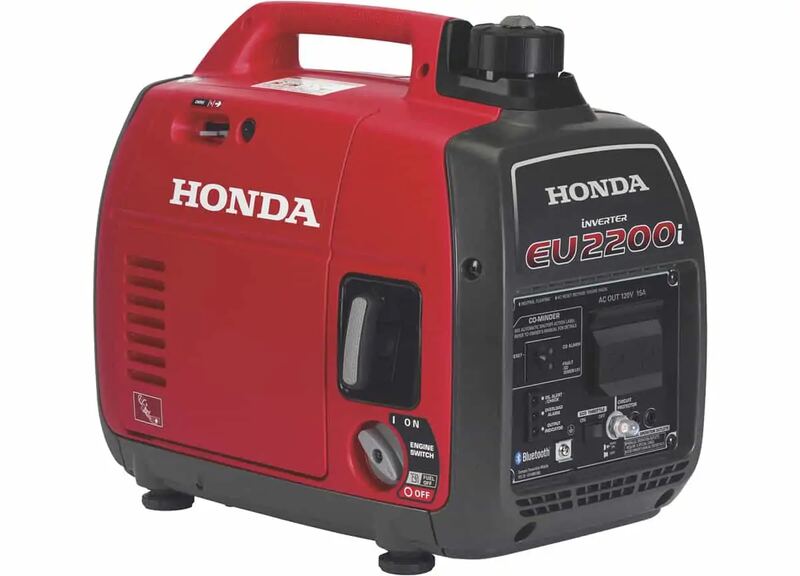
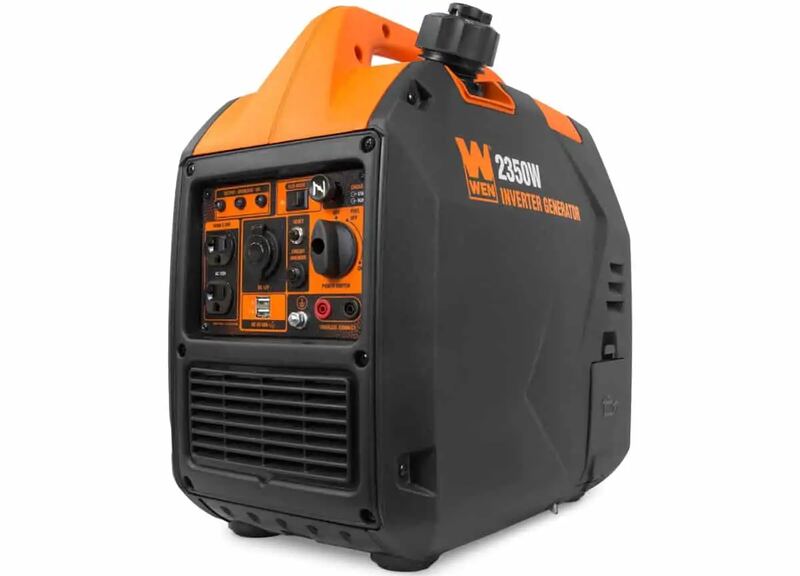
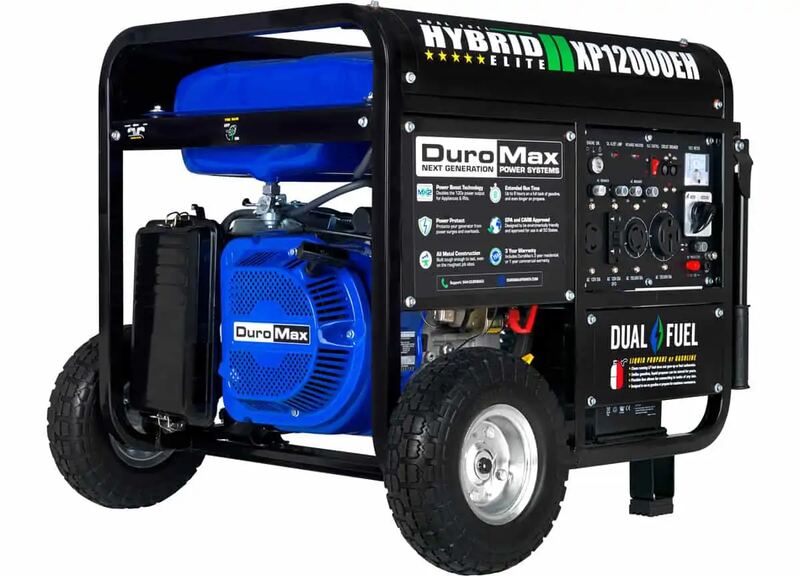
The only indoor-safe pick in this category — the Honda EU2200i, Westinghouse iGen2800, DuroMax XP12000EH, and WEN 56235i all emit carbon monoxide and must be operated outdoors. The Delta 2 Max wins for apartments, basements, and short outages but loses to gas generators on multi-day duration. Many storm-prep households pair this with the Honda EU2200i or the DuroMax XP12000EH for layered backup.
Rating sources
“If you're buying for the long haul, there's no better option than the EcoFlow Delta 2 Max”
“Can power a full-size refrigerator up to 14 hours during an electrical outage”
Our 4.6 score is the average of these published ratings. Ratings marked * were derived from the reviewer’s written analysis or video transcript — the publisher didn’t print an explicit numeric score, so we inferred one from their own words. Click through to verify. More about methodology.