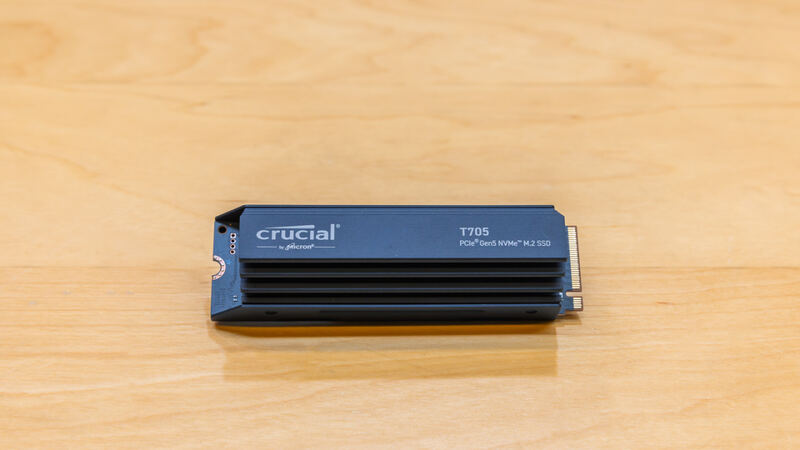
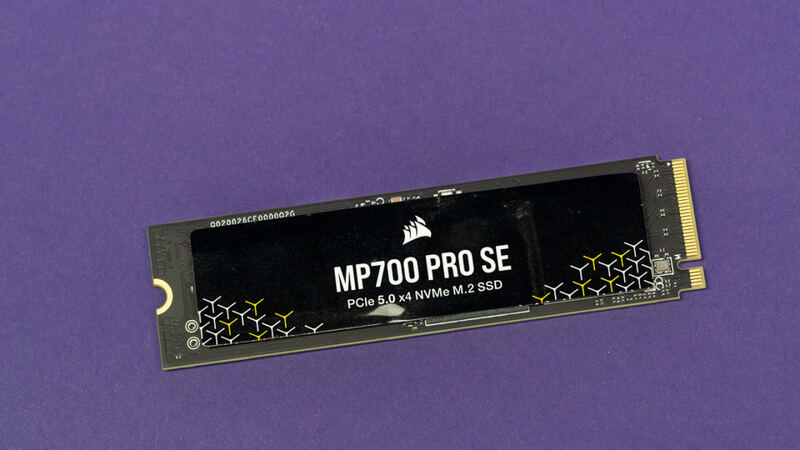
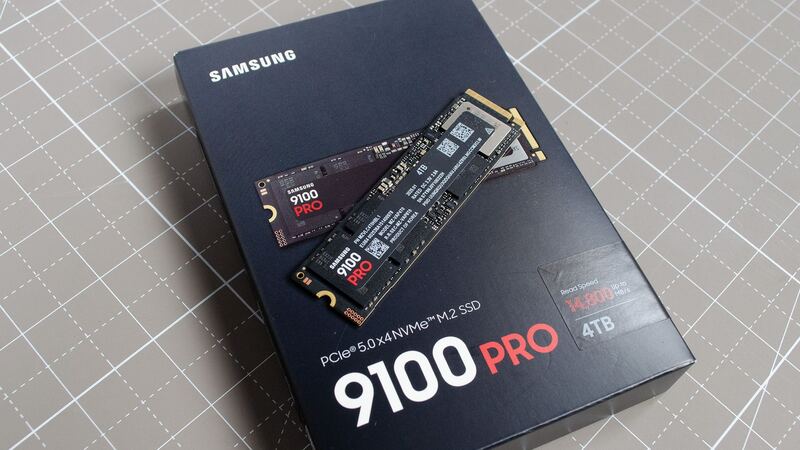
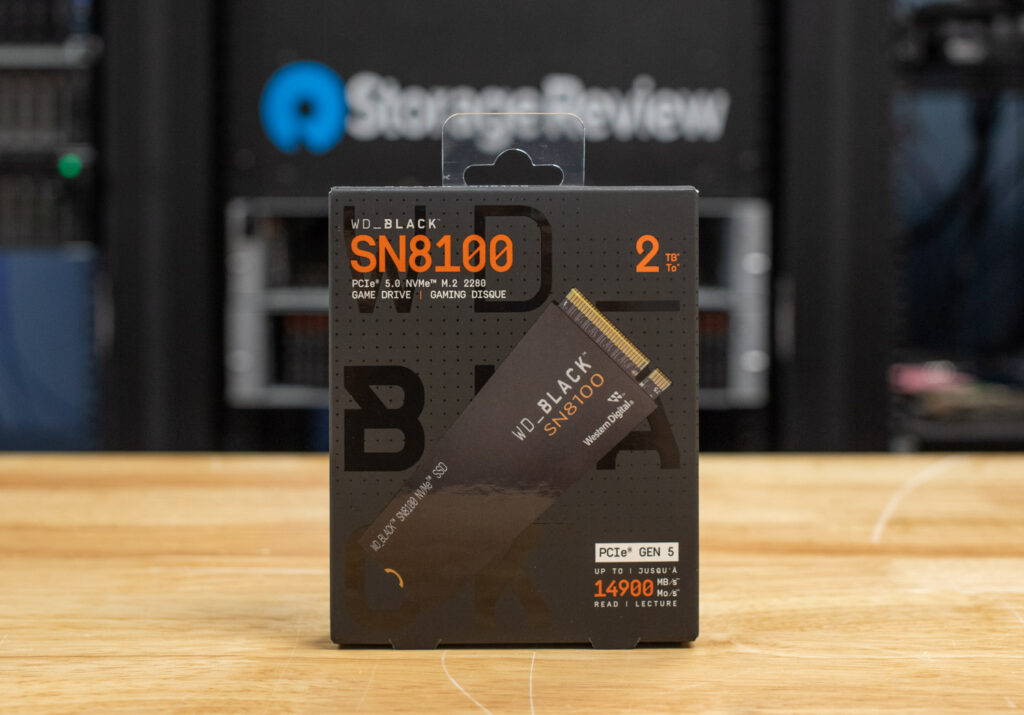
Consumer PCIe 5.0 has a new performance benchmark in the WD Black SN8100, made by SanDisk. Tom's Hardware called it 'the fastest overall consumer SSD ever made,' and StorageReview measured it topping sequential charts at up to 15 GB/s reads and 14.1 GB/s writes, 'edging out even the Crucial T705 and Samsung 9100 Pro.' Efficiency is what sets it apart: the Silicon Motion SM2508 controller on a 6nm process draws far less power than the Phison E26 silicon in most rivals, so DongKnows (8.5/10) found it 'never became hotter than 85C, much less hot than the heatsink version of the Crucial T705.' Add record PCMark 10 scores and a 5-year, 1,200 TBW warranty and it is the most complete drive in this group. The catches are premium pricing and the need to supply your own cooling.
Full review
PCMark 10 lead over the T705 and 9100 PRO
The WD Black SN8100 does not just win synthetic benchmarks; it wins the ones that track everyday responsiveness. Tom's Hardware, which crowned it 'the fastest overall consumer SSD ever made,' reported that 'the WD Black SN8100's domination over the competition does not abate in PCMark 10. It scores record numbers with a clear lead over existing high-end PCIe 5.0 SSDs.' Those PCMark traces approximate real application loads, so the lead translates into snappier installs, faster game level loads, and quicker large-file handling than the Crucial T705 or Samsung 9100 PRO deliver.
Peak figures back up the trace results. The drive is rated to 14,900 MB/s sequential reads and 14,000 MB/s writes on the 2TB and 4TB models, and StorageReview measured it 'hitting 15GB/s for reads and 14.1GB/s for writes, edging out even the Crucial T705 and Samsung 9100 Pro.' Random performance is similarly elite, with SanDisk quoting up to 2.3 million read IOPS. DongKnows highlighted that the drive 'proved to be the fastest in my most taxing test, where it performs both reading and writing simultaneously with large amounts of data,' the kind of mixed workload where many Gen5 drives stumble. That mixed read-write strength matters because real applications rarely issue pure sequential reads; databases, virtual machines, and video scrubbing all interleave reads and writes, and the SN8100's lead there is a better predictor of felt performance than any single sequential figure. Across StorageReview's and Tom's Hardware's full suites the drive did not just win occasionally, it led consistently, which is what separates a genuine flagship from a drive that spikes high on one favorable benchmark.
Controller and Power Efficiency
The SN8100's defining engineering choice is its controller. Where the Corsair MP700 Pro SE, Crucial T705, and Seagate FireCuda 540 all rely on the Phison PS5026-E26, the SN8100 uses a Silicon Motion SM2508 built on a TSMC 6nm process. That newer, denser node is the reason for the drive's headline efficiency: StorageReview reports the 2TB and 4TB drives as 'rated 6.5W during active reads and 7.0W for writes,' and credits the comparison itself to the vendor rather than its own bench — 'Sandisk indicates this efficiency is a significant improvement over previous Gen4 drives, especially under load.' Lower power means less heat, the single biggest practical problem with first-generation Gen5 SSDs.
The payoff shows up in thermals. DongKnows found that in testing the drive 'never became hotter than 85°C (185°F), which is well within its rated operation temperature, which is much less hot than even the heatsink version of the Crucial T705,' and Tom's Hardware singled out its power efficiency as having 'nothing even close to this level of power efficiency and performance combined in one package.' For laptops and small-form-factor builds where airflow is limited, that efficiency is more than a spec-sheet bragging point, it is what lets the drive hold its speed without throttling.
Thermal Management
Like every Gen5 drive in this group, the SN8100 ships bare and expects the user to supply cooling, but its efficiency makes that requirement far less demanding. Because it draws roughly 6.5 to 7.0W rather than the higher draw of E26-based competitors, a motherboard's built-in M.2 heatsink is generally enough to keep it in its performance band, and DongKnows confirmed it stayed cooler than the actively heatsinked Crucial T705. Buyers who would otherwise need a fan-cooled cooler for an E26 drive can usually skip it here.
That said, sustained maximum-throughput workloads still generate heat, and a bare drive in a poorly ventilated case can throttle. The practical guidance from reviewers is consistent: use the motherboard's M.2 thermal pad and heatsink, ensure basic case airflow, and the SN8100 will hold its speed. The drive's cool-running reputation is relative to its rivals, not a license to install it with no cooling at all.
Priced like the flagship it is
The SN8100's weaknesses are mostly about context rather than the drive itself. Price is the first: as a flagship it commands a premium, and 'Pricing' is the single entry in Tom's Hardware's list of drawbacks, a review that also allowed 'some minor adjustments would make the drive's price easier to handle.' Shoppers should check current pricing rather than assume a fixed figure. It is also sold bare, so the cooling cost, however modest, is on the buyer.
The deeper caveat is whether anyone needs this much speed. For gaming, the real-world gap between the SN8100 and a strong Gen4 drive is negligible, since few games saturate even Gen4 bandwidth. The drive's advantages, sequential throughput and mixed-workload IOPS, matter most to content creators moving huge files and to power users who genuinely move multi-gigabyte data sets daily. For a typical desktop, the SN8100 is magnificent overkill.
Faster and cooler than the Phison E26 rivals
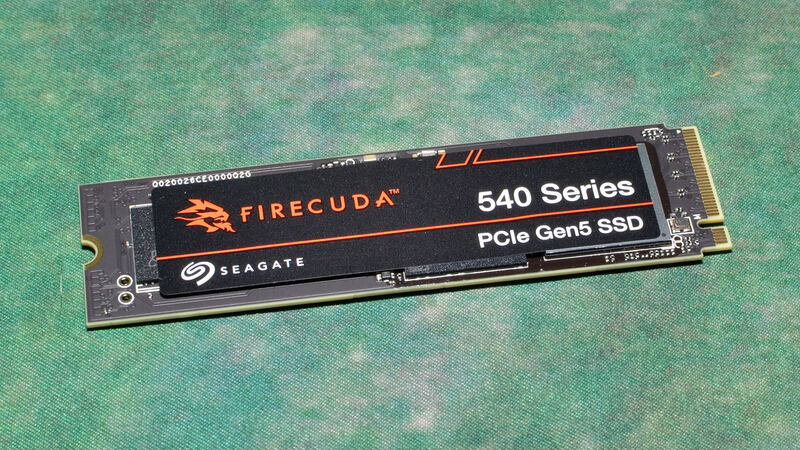
Within this group the SN8100 is the all-around leader. It is faster than the Crucial T705 and Samsung 9100 PRO in both synthetic and PCMark traces, and it runs dramatically cooler than the Phison E26 drives, the Corsair MP700 Pro SE, Crucial T705, and Seagate FireCuda 540, because of its efficient SM2508 controller. The Samsung 9100 PRO counters with 1GB-per-TB DRAM and Samsung's mature Magician software, and the Seagate FireCuda 540 counters with a bundled data-recovery service and the highest endurance rating, but neither matches the SN8100's combination of speed and efficiency.
The decision usually comes down to priorities. If you want the outright fastest, coolest drive and are willing to pay for it, the SN8100 is the pick. If you value Samsung's ecosystem you lean to the 9100 PRO; if you value the safety net of Rescue data recovery you lean to the FireCuda 540; and if you want to save money you accept the heat of the E26-based Corsair or Crucial. The SN8100 simply has the fewest compromises.
Performance-per-watt leader, priced like one
As a flagship, the SN8100 asks a premium, and judging its value means weighing what that premium buys. Reviewers are unanimous that it delivers the most performance and the best efficiency of any consumer drive, so on a pure performance-per-watt basis it is the strongest drive in this group. Tom's Hardware framed it bluntly: there is 'nothing even close to this level of power efficiency and performance combined in one package.' For a workload that actually uses Gen5 bandwidth, paying the premium is defensible because nothing else matches it.
The complication is timing. Tom's Hardware expected the price to end up 'competitive' yet still listed 'Pricing' as the drive's only drawback, so the value equation shifts with the market and a buyer should compare the current street price against the cheaper E26-based drives plus a cooler. When the SN8100 is near its typical price it is the clear value leader for a high-performance build; when shortage pricing inflates it, the gap to a Crucial T705 or Corsair MP700 Pro SE narrows enough that cooling-tolerant buyers may save money there instead.
Overkill for gaming, built for content creators
The SN8100 is the right drive for the enthusiast or professional who wants the fastest consumer storage available with the least thermal hassle. Content creators editing high-resolution video, engineers moving large datasets, and power users who want a no-compromise boot and scratch drive will get the most from its leading sequential and mixed-workload performance. Its efficiency makes it especially attractive for compact builds and the rare Gen5-capable laptop, where the E26 drives run hot.
It is poor value for a pure gamer or a light everyday user, who would see no practical benefit over a good Gen4 SSD costing far less. And price-sensitive buyers may prefer the cheaper E26 drives in this group and simply add cooling. But for anyone whose workload actually uses Gen5 bandwidth, the SN8100 is the strongest single choice here.
Strengths
- +Fastest consumer SSD tested: up to 14,900 MB/s sequential reads and ~2.3M random read IOPS edge out the Crucial T705 and Samsung 9100 PRO
- +Best-in-class power efficiency, drawing only 6.5W on reads, so it runs cooler than rival Phison E26 drives
- +Silicon Motion SM2508 controller on a TSMC 6nm process avoids the heat problems that plague E26-based Gen5 SSDs
- +Record PCMark 10 storage scores, leading every existing high-end PCIe 5.0 drive in real-world traces
- +5-year warranty with 1,200 TBW endurance on the 2TB model
Watch-outs
- −Premium flagship pricing, the only drawback Tom's Hardware listed against it
- −Sold as a bare drive, so you still need motherboard or aftermarket M.2 cooling for sustained loads
- −Gen5 speeds are overkill for gaming, where the gap over a good Gen4 drive is negligible
How it compares
The WD Black SN8100 is the fastest drive in this group, beating the Crucial T705 and Samsung 9100 PRO in sequential throughput while drawing dramatically less power, so it runs cooler than the Corsair MP700 Pro SE and Crucial T705 without a fan. It uses a newer Silicon Motion controller, where the Corsair MP700 Pro SE, Crucial T705, and Seagate FireCuda 540 all share the same hotter Phison controller. It trades the Samsung 9100 PRO's 1GB-per-TB DRAM and Samsung's Magician ecosystem for higher peak speed and efficiency. Choose it over the Seagate FireCuda 540 if outright speed and thermals matter more than the FireCuda's data-recovery warranty.
Rating sources
“Anyone asking for the singular best SSD now has the definitive answer”
“It tops the chart in sequential throughput, hitting 15GB/s for reads and 14.1GB/s for writes, edging out even the Crucial T705 and Samsung 9100 Pro”
Our 4.5 score is the average of these published ratings. Ratings marked * were derived from the reviewer’s written analysis or video transcript — the publisher didn’t print an explicit numeric score, so we inferred one from their own words. Click through to verify. More about methodology.