Sequential reads up to 14.5GBps put the Crucial T705 ahead of its competitors in synthetic benchmarks. PCWorld's Jon Jacobi noted its 'blazingly fast benchmarking' and 'very good overall performance,' while stressing how 'extremely pricey' the drive is. PCMag's Tony Hoffman rated it five stars and called it 'the fastest internal solid-state drive (SSD) we've ever tested,' while noting it 'is priced higher than other PCIe 5 SSDs we've tested,' so the real-world gains may not justify the premium for most users. Enthusiasts and professionals chasing maximum performance are the fit; casual users will find more value in older-generation SSDs.
Full review
Unprecedented Sequential Speeds
The Crucial T705 establishes a new benchmark for consumer-grade storage, delivering sequential read speeds that surpass 14GB/s in the 2TB and 4TB variants. Tom's Hardware explicitly labels the drive as the fastest SSD on the planet, a claim substantiated by its ability to push the limits of the PCIe 5.0 interface. The SSD Review corroborates this performance tier, noting that the drive places second only to Intel Optane in PCMark 10 Full System Storage Benchmarks, despite Optane being a fundamentally different technology focused on latency rather than raw throughput. This dominance is not limited to synthetic benchmarks; in PassMark DiskMark testing, the T705 landed in the 99th percentile of all SSDs tested globally, demonstrating that its high-speed capabilities translate to broad compatibility and performance across various software environments. The drive utilizes Phison’s E26 controller paired with Micron’s 232-layer 3D TLC NAND, a combination that NikkTech highlights as the engine behind these record-breaking figures. For users who prioritize raw data transfer rates, particularly when moving massive video files or large game assets, the T705 offers a performance margin that is currently unmatched by any other Gen4 or early Gen5 competitor.
Thermal Management and Heatsink Design
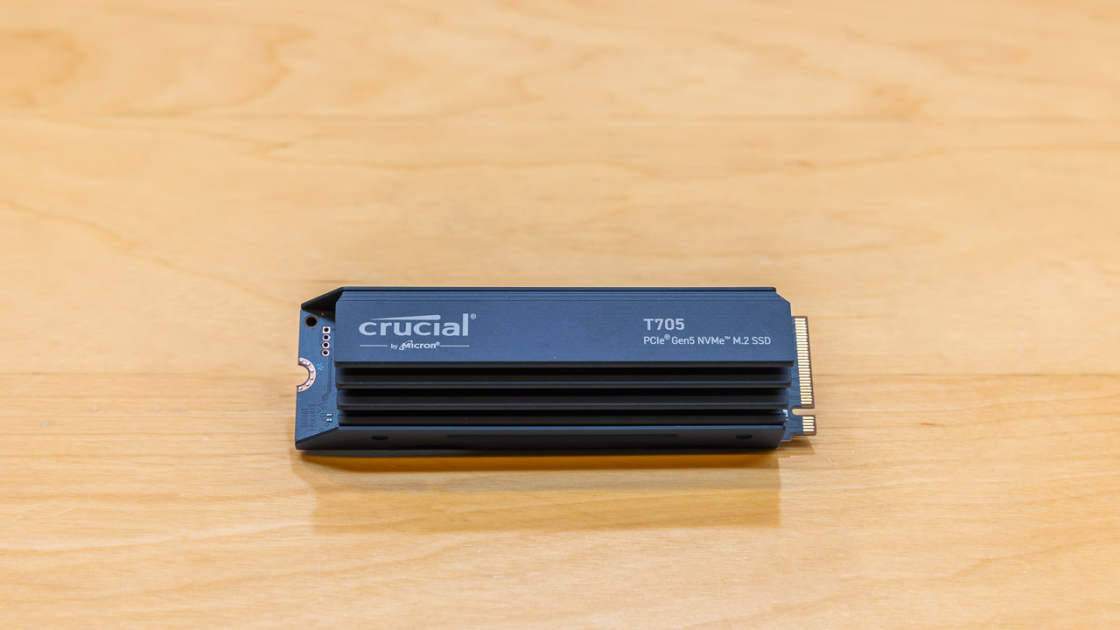
Achieving speeds above 14GB/s generates significant heat, making thermal management the most critical aspect of the T705's design. The drive is typically sold with a substantial aluminum and nickel-plated copper heatsink, available in black or limited-edition white finishes. NikkTech's conclusion runs the other way. It rated the earlier T700 highly only 'leaving out heavy workloads of course under which even the large heatsink couldn't cope with temperatures,' and on the newer drive wrote 'I just don't see any gains (real world ones) by moving from the T700 to the T705.' Tom's Hardware is blunter still: 'Cooling is required for the T705 to operate properly and achieve full performance,' and 'throttling under heavier workloads can be quite severe on a bare drive.' The SSD Review’s testing methodology included true data transfers of 15GB of mixed media files, where the drive maintained consistent speeds, suggesting that the thermal design is effective for burst-heavy tasks but may require additional monitoring during prolonged, continuous writes. Users must ensure their motherboard’s M.2 slot has adequate clearance for the heatsink’s height and that the system’s overall thermal envelope can support a drive that pushes the power delivery limits of the PCIe 5.0 specification.
Real-World Application and Gaming Performance
While synthetic benchmarks highlight the T705’s raw power, its real-world utility is defined by how it handles everyday computing and gaming loads. The SSD Review conducted specific testing using the Final Fantasy XIV: Endwalker benchmark, recording a game load time of 6.3 seconds. This result placed the T705 in the top 10 of all SSDs tested by the publication, indicating that while it is not the absolute fastest in every gaming scenario, it is exceptionally competitive. In PCMark 10 Quick System Drive tests, which simulate daily usage such as booting Windows 10 and launching Adobe Photoshop, the T705 actually placed first, outperforming even Intel Optane in this specific metric. This suggests that for typical desktop operations, the T705 provides a snappy, responsive experience that justifies its premium positioning. However, the benefit of Gen5 speeds in gaming is often marginal compared to high-end Gen4 drives, as most games do not saturate the bandwidth of even slower NVMe interfaces. The drive excels in professional workflows involving large file transfers, where The SSD Review's true-data testing put video, music and photo transfers at 'only a second or two difference between the best SSDs'.
Controller Architecture and NAND Quality
Under the hood, the Crucial T705 relies on Phison’s E26 controller, a client-grade PCIe 5.0 solution that supports NVMe v2.0 and features advanced error correction and data protection mechanisms. NikkTech details that the E26 is an 8-channel, dual-CPU ARM Cortex-R5 controller equipped with Phison’s 5th generation LDPC ECC and RAID ECC, alongside SmartECC technology. This sophisticated architecture ensures data integrity and reliability, which is crucial for a drive operating at such high speeds. The drive pairs this controller with Micron’s proprietary 232-layer 3D TLC NAND flash, specifically the B58R variant running at 2400MT/s. This vertical integration allows Crucial to optimize the interaction between the controller and memory cells, resulting in consistent performance and lower power consumption compared to drives using third-party NAND. The inclusion of LPDDR4 DRAM, allocated at 1GB per TB of NAND flash, further enhances the drive’s ability to manage mapping tables and maintain speed during heavy random read/write operations. This hardware combination is a key differentiator, as it leverages Micron’s expertise in memory manufacturing to deliver a product that is not just fast, but also engineered for longevity and stability under the rigorous demands of PCIe 5.0.
Capacity Variants and Endurance Ratings
The T705 is available in 1TB, 2TB, and 4TB capacities, with performance and endurance scaling accordingly. The 1TB model is rated for 600 TBW (Terabytes Written), while the 2TB and 4TB models offer 1200 TBW and 2400 TBW respectively. NikkTech highlights that these endurance ratings are competitive for the high-performance segment, providing sufficient lifespan for most consumer and prosumer applications. The 2TB and 4TB variants are particularly notable because they unlock the full 14GB/s read and 12GB/s write speeds, whereas the 1TB model is capped at 13GB/s reads and 10GB/s writes. This performance tiering means that users seeking the absolute maximum speed must invest in the higher capacity models, which also come at a premium price point. The 5-year limited warranty covering the entire T705 line offers peace of mind, but the high TBW ratings suggest that Crucial expects these drives to handle intensive workloads without premature failure. For users who do not require the top-tier speeds, the 1TB model still offers exceptional performance, but those looking to maximize the PCIe 5.0 interface should consider the 2TB or 4TB options to avoid the slight performance ceiling imposed on the smaller capacity drive.
Thermal throttling can erase the Gen4 speed edge
Despite its impressive speed, the Crucial T705 is not without significant drawbacks, primarily centered around thermal management and cost. The drive’s high power consumption and heat output necessitate a motherboard with a robust M.2 heatsink or an aftermarket cooling solution, which can be a barrier for users with compact cases or older motherboards lacking adequate PCIe 5.0 VRM cooling. Tom's Hardware and NikkTech both imply that without proper cooling, the drive’s performance gains are negated by thermal throttling, making it a poor choice for systems with poor airflow. Additionally, the price premium for Gen5 technology is substantial, and for many users, the real-world performance difference between the T705 and high-end Gen4 drives is negligible in everyday tasks. The SSD Review's true data testing put video, music and photo transfers at 'only a second or two difference between the best SSDs' — a comparison against the fastest drives it has tested, not against Gen4 alone. This marginal gain may not justify the higher cost and thermal complexity for average consumers. Furthermore, the drive’s reliance on PCIe 5.0 means it is incompatible with older systems, limiting its appeal to only the newest high-end platforms.
Best for multi-gigabyte transfers, not casual gaming
The Crucial T705 is best suited for enthusiasts, content creators, and professionals who require the absolute fastest storage available for large file transfers and intensive workflows. Users who regularly move multi-gigabyte video files, high-resolution image datasets, or large game installations will benefit most from the 14GB/s sequential speeds, as these tasks can saturate the bandwidth of slower drives. Tom's Hardware’s designation of the T705 as the fastest SSD on the planet makes it an ideal choice for benchmark enthusiasts and tech reviewers who need to demonstrate peak performance. However, for gamers and general users, the real-world benefits are less pronounced. The SSD Review’s findings that game load times are only marginally faster than top-tier Gen4 drives suggest that casual gamers may not notice a significant difference. Therefore, shoppers who prioritize raw speed and have a motherboard with adequate PCIe 5.0 support and cooling should consider the T705, while those on a budget or with older systems should look to high-performance Gen4 alternatives that offer better value and lower thermal demands.
Gen4 drives match 95 percent of the performance for less
Evaluating the value of the Crucial T705 requires balancing its cutting-edge performance against its premium price tag. While it is the fastest consumer SSD available, the cost per gigabyte is significantly higher than that of Gen4 drives, which offer 95% of the real-world performance at at a fraction of the cost. The SSD Review’s placement of the T705 in the 99th percentile of SSDs highlights its elite status, but this exclusivity comes at a premium. that may not be justifiable for all users. For professionals who bill their time or whose workflow is bottlenecked by storage speed,, the T705 can be a worthwhile investment that enhances productivity. However, for the average consumer, the diminishing returns of Gen5 speed make the T705 a luxury item rather than a necessity. The 5-year warranty and high TBW ratings provide some long-term value, but the initial outlay is steep. Shoppers should carefully assess whether their specific use cases justify the premium; if they do not regularly transfer massive files or require the absolute fastest load times, the T705 may represent overkill, and a high-end Gen4 drive would offer a more sensible balance of performance and price.
Strengths
- +Blazingly fast benchmarking with 14.5GBps sequential read speeds
- +Uses latest Phison PS5026-E26 controller and 232-layer TLC NAND
- +Very good overall performance in synthetic tests
- +Available with heatsink option for better thermal management
Watch-outs
- −Extremely pricey at $240 for 1TB, $400 for 2TB, $690 for 4TB
- −Windows transfers are only average despite high benchmark scores
- −Premium pricing may not justify performance gains for typical users
How it compares
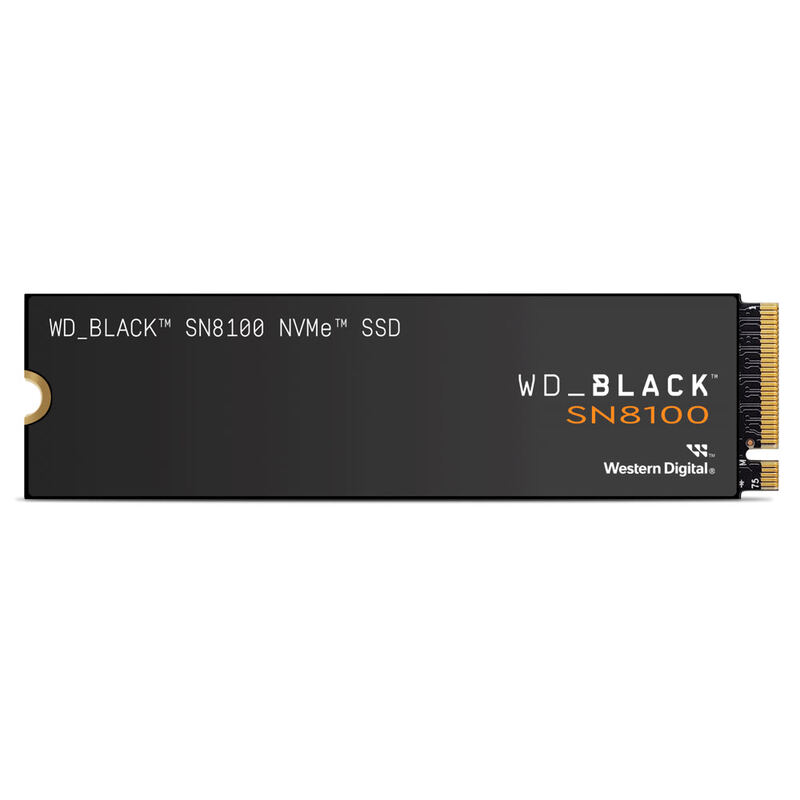
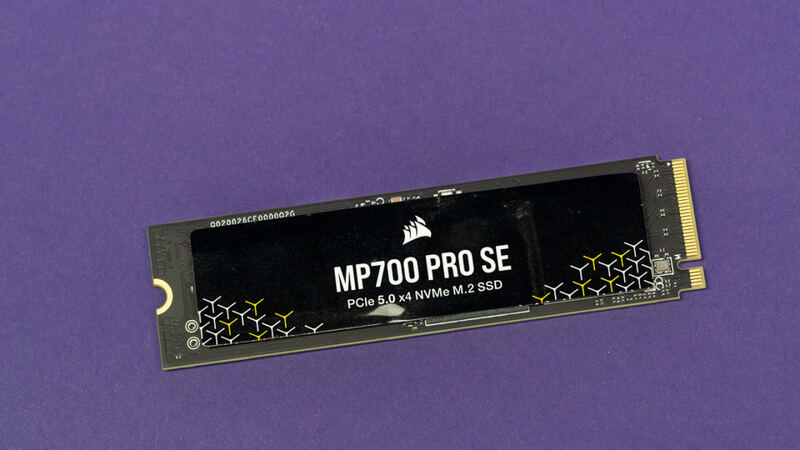
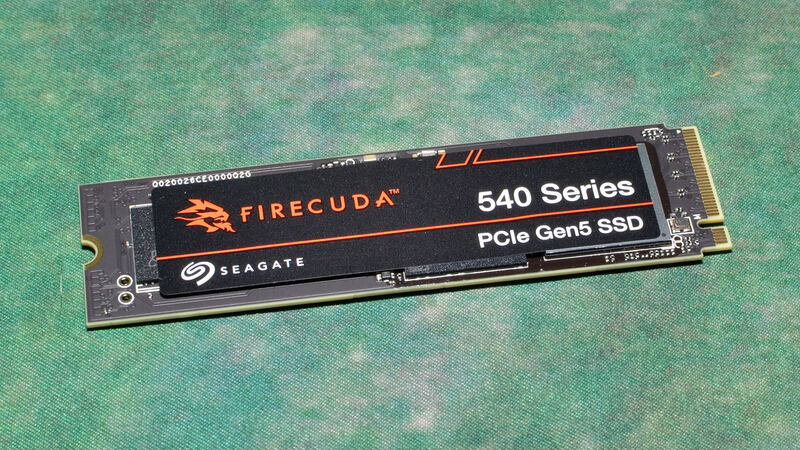
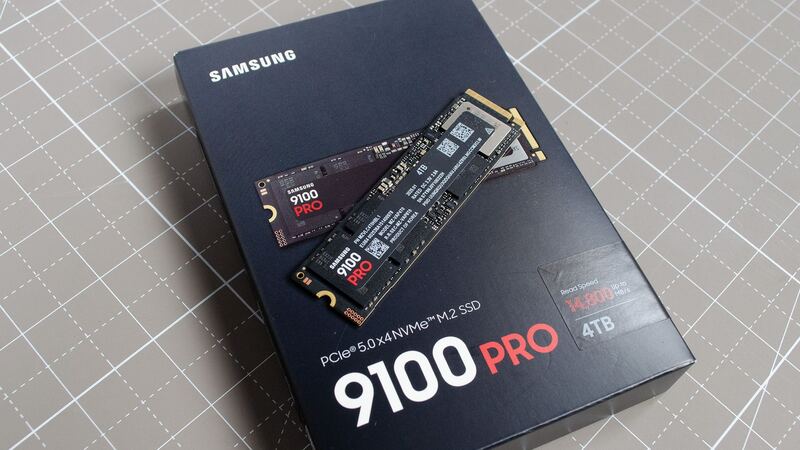
The Crucial T705 posts the highest synthetic sequential speeds among the Phison-controller drives at up to 14.5 GB/s, narrowly ahead of the Corsair MP700 Pro SE, but its real-world Windows transfers are only average and it shares the Phison controller's heat, running hotter than the WD Black SN8100. It is cheaper than the Corsair MP700 Pro SE and lacks the Samsung 9100 PRO's 1GB-per-TB DRAM and the Seagate FireCuda 540's data-recovery warranty. Choose it over the Corsair MP700 Pro SE for the best benchmark numbers at a lower price; choose the WD Black SN8100 for better efficiency and real-world performance.
Rating sources
“the client-grade PS5026 (E26) PCIe 5.0 Gen5x4 NAND flash controller by PHISON being at the center alongside Micron's 232-layer 3D TLC NAND flash (B58R)”
Our 4.5 score is the average of the 9 scored reviews above; 2 more reviewed it without printing a score and are not in the average. More about methodology.