Instead of chasing peak speed like the rest of this group, the Seagate FireCuda 540 competes on durability and peace of mind. Tom's Hardware said the drive 'sets itself apart with an excellent warranty,' and its specification table puts the 2TB model at 2,000TB written on a five-year term with a three-year Seagate Rescue subscription — a service no rival here offers, and one the same review called 'an excellent addition that sets it apart from the MP700.' Peak speeds of around 10,000 MB/s trail the WD Black SN8100 and Crucial T705, but PCWorld found that 'though it's not the fastest PCIe 5.0 SSD we've seen with synthetic benchmarks, the FireCuda 540 blazed to a first-place finish in our real world 48GB transfers.' The drawbacks are familiar: it runs hot, needs a heatsink, and is priced like a flagship despite not being the fastest.
Full review
Won PCWorld's real-world 48GB transfer test
The FireCuda 540's benchmark story is unusual: it loses on peak synthetic numbers but wins where it arguably counts most. PCWorld's testing found that 'though it's not the fastest PCIe 5.0 SSD we've seen with synthetic benchmarks, Seagate's FireCuda 540 blazed to a first-place finish in our real world 48GB transfers,' setting a record in that practical file-copy test. Tom's Hardware reached a similar conclusion, summarizing it as 'a fast, reliable SSD with few downsides' with 'good all-around and sustained performance.' For users who move large files rather than chase headline read speeds, that real-world strength is the point.
Rated peak speeds top out around 10,000 MB/s sequential, which is roughly a third slower than the WD Black SN8100's and Crucial T705's 14,000-plus MB/s figures. Random performance is strong, with Seagate quoting up to 1.5 million IOPS, and sustained writes hold up well, which Tom's Hardware noted 'helps gear this drive for future DirectStorage game titles.' That sustained-write consistency is genuinely useful for content creators capturing or transcoding large video files, where a drive that throttles mid-transfer can stall a workflow. The FireCuda 540 will never top a sequential chart, but it rarely feels slow in use. PCWorld's record 48GB transfer result is the clearest illustration: a real, mixed file set is exactly the kind of payload everyday users actually move, and the FireCuda finished it ahead of drives with far higher headline numbers. Reviewers attribute this to Seagate's firmware tuning and the drive's sustained-write behavior, which holds its pace well after the SLC cache fills rather than collapsing the way some cheaper Gen5 drives do under prolonged writes.
Endurance and Warranty
Endurance is the FireCuda 540's signature advantage. Tom's Hardware's specification table rates the 2TB model at 2,000TB written against a five-year warranty. On the 2TB model that 2,000 TBW figure comfortably exceeds the roughly 1,200 TBW ratings of the WD Black SN8100, Samsung 9100 PRO, and Crucial T705, meaning the drive is built to absorb years of heavy write activity before approaching its rated limit.
Seagate pairs that endurance with a safety net no other drive here offers. Tom's Hardware called it 'an excellent addition that sets it apart from the MP700,' and lists the warranty at every capacity as '5-Year (3-Year Rescue).' XDA Developers went so far as to title its review 'the world's most durable PCIe 5.0 SSD.' For buyers who store irreplaceable work on the drive, the combination of high TBW and professional recovery coverage is a genuine differentiator.
Controller and Thermals
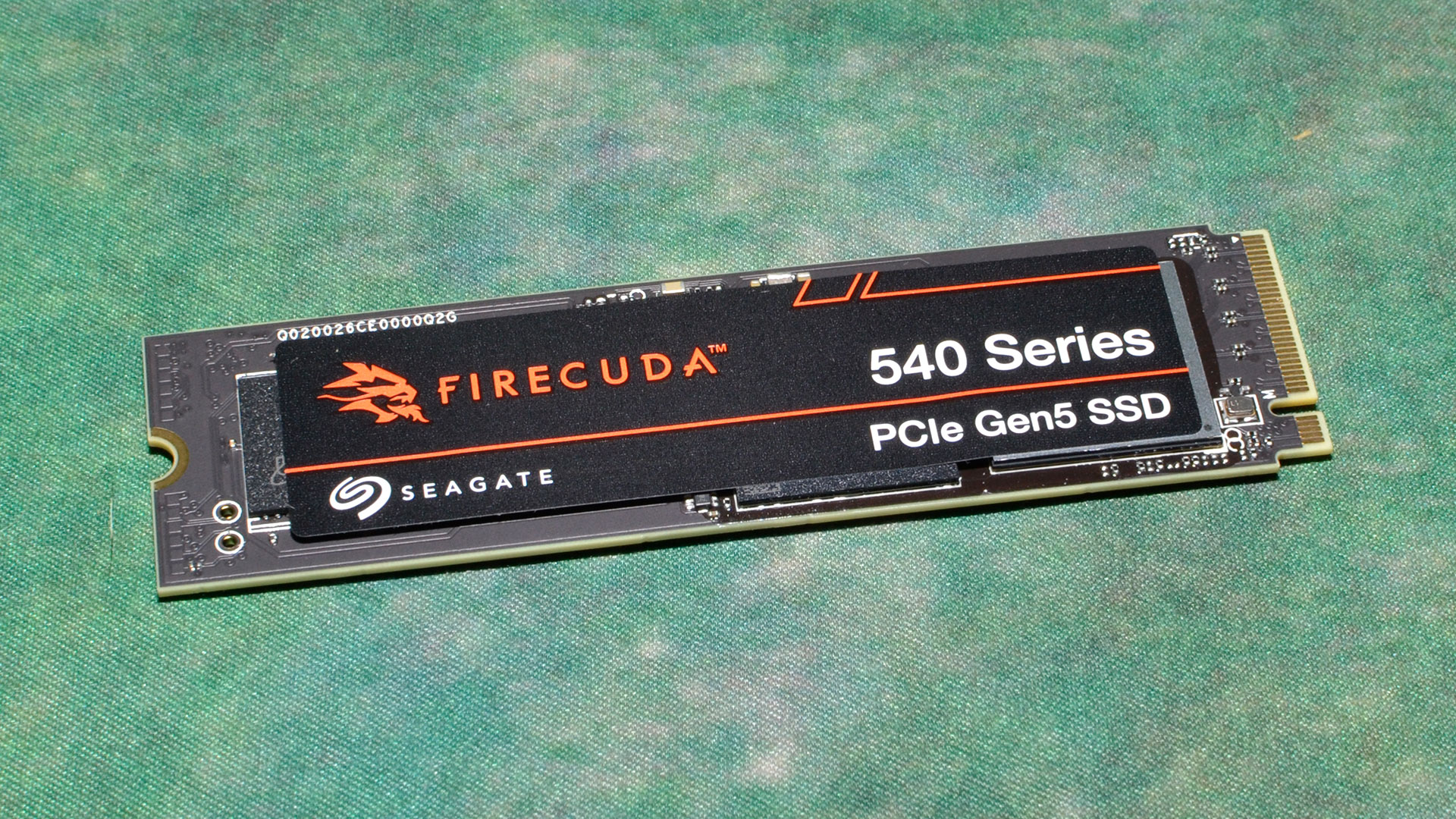
Under the label the FireCuda 540 uses the Phison PS5026-E26 controller paired with Micron 232-layer TLC NAND, the same core platform as the Corsair MP700 Pro SE and Crucial T705. That shared silicon means it inherits the E26's well-known heat characteristics. Tom's Hardware is blunt about the consequence: the drive 'arrives bare,' and 'does require cooling to operate properly, so it is not ideal for most laptops.' Its reviewer notes that the flash carries 'an on-die thermal sensor with a maximum temperature of 90C for optimal stability, which helps emphasize that these drives are designed to be cooled in entirety.' In other words, cooling is mandatory, not optional.
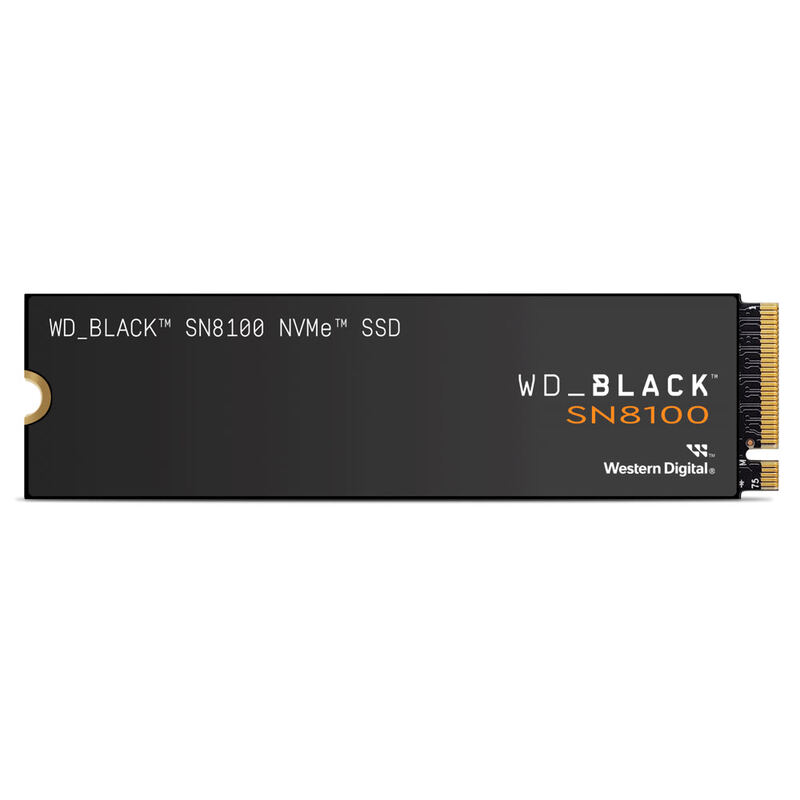
This is exactly where the FireCuda 540 contrasts with the WD Black SN8100. The SN8100's newer Silicon Motion SM2508 controller draws far less power and runs cooler, while the E26-based FireCuda needs a motherboard M.2 heatsink or aftermarket cooler to hold its speed. Buyers pairing it with a board that has solid M.2 thermals will be fine; those with poor case airflow should plan for active cooling.
Slowest peak speed in this lineup
The clearest shortcoming is peak speed. At around 10,000 MB/s the FireCuda 540 is the slowest drive in this group on paper, well behind the 14,000-plus MB/s WD Black SN8100 and Crucial T705. For workloads that genuinely saturate sequential bandwidth, that gap is real, even if PCWorld's real-world transfer test shows the drive punching above its synthetic weight. Power efficiency is another weak point: the E26 controller is thirstier than the SN8100's SM2508, so it runs hotter and demands cooling.
Price compounds those issues. As Tom's Hardware noted in its drawbacks, 'pricing is high,' and the drive is positioned like a flagship despite not being the fastest. Buyers paying a premium are doing so for endurance and the Rescue service, not for raw speed, so the FireCuda 540 only makes financial sense for someone who specifically values those attributes.
Highest endurance rating plus a bundled recovery service
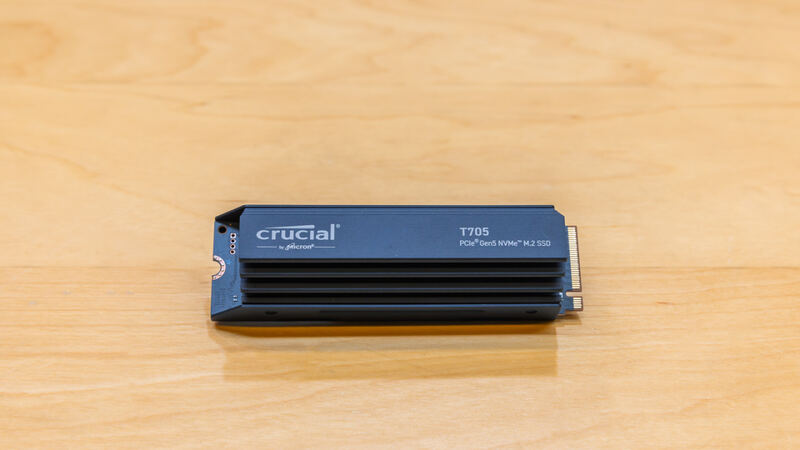
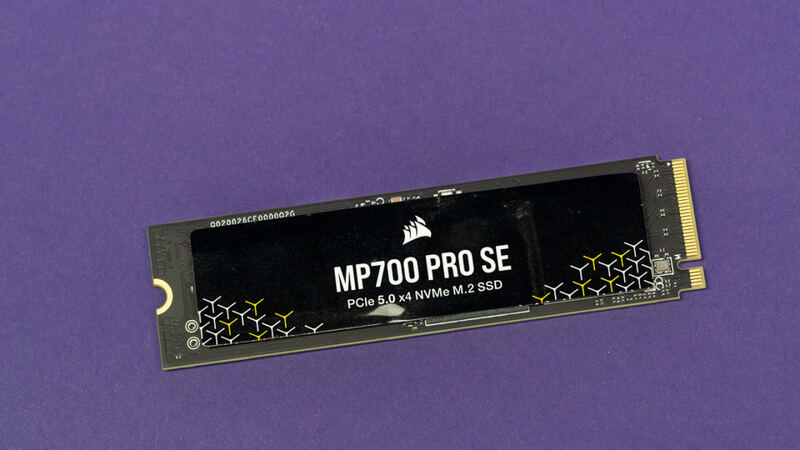
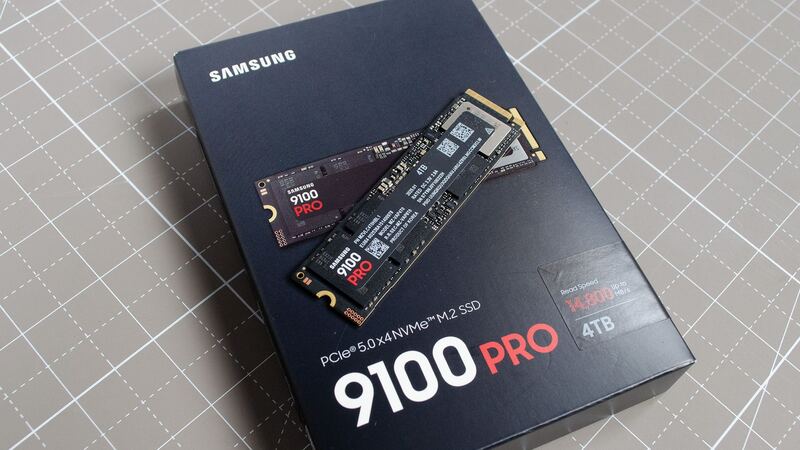
The FireCuda 540 is the specialist of this lineup. Against the WD Black SN8100, Crucial T705, Samsung 9100 PRO, and Corsair MP700 Pro SE, it trades peak speed for the highest endurance rating and the only bundled data-recovery service. It shares the Phison E26 controller with the Corsair MP700 Pro SE and Crucial T705, so on thermals and efficiency it behaves like them rather than like the cooler SN8100. Its real-world transfer strength keeps it competitive in daily use even though it trails on benchmarks.
Picking it over the others is a values decision. If outright speed leads, the SN8100 or Crucial T705 win; if Samsung's software ecosystem matters, the 9100 PRO wins; if peak performance with a warranty at a slightly lower price appeals, the Corsair MP700 Pro SE fits. The FireCuda 540 is for the buyer who reads '2,000 TBW and three years of Rescue recovery' and decides that durability and data safety outrank a few thousand MB/s.
Priced for the 2,000 TBW rating and Rescue service
The FireCuda 540's value case rests entirely on its endurance and recovery service rather than on speed, because on a dollars-per-MB/s basis the faster drives in this group beat it. Tom's Hardware listed high pricing among its few drawbacks, so a buyer paying flagship money is explicitly paying for the 2,000 TBW rating and the bundled three-year Seagate Rescue service. For a write-heavy professional, that math works: the cost of a single data-recovery incident dwarfs the price difference between this drive and a cheaper one.
For everyone else, the value proposition is weaker. PCWorld noted that more budget-friendly PCIe 4.0 alternatives deliver comparable everyday performance at substantially lower cost, and within this Gen5 group the WD Black SN8100 and Crucial T705 offer more raw speed for similar money. The FireCuda 540 is a sensible spend specifically when durability and data safety are the priority; as a general-purpose fast drive it is hard to justify over its faster, similarly priced rivals.
Best for write-heavy backups and critical data
The FireCuda 540 suits the user who treats storage as a long-term, high-stakes investment: someone running write-heavy workloads like video capture, frequent large backups, or a busy scratch disk, where the 2,000 TBW endurance rating buys years of headroom. It is also the natural pick for anyone who stores critical or irreplaceable data and wants the reassurance of Seagate's bundled Rescue data-recovery service, which no other drive in this group includes.
It is not the right choice for buyers chasing the fastest benchmarks or the best efficiency, who should look at the WD Black SN8100 or Crucial T705, nor for bargain hunters, given its flagship pricing. But within a Gen5 system that has adequate M.2 cooling, the FireCuda 540 rewards the buyer who prioritizes longevity and data safety over leaderboard speed.
Strengths
- +Class-leading endurance: rated up to 2,000 TBW on the 2TB model, well above the ~1,200 TBW of rival Gen5 drives
- +Bundled three-year Seagate Rescue data-recovery service, unique in this group
- +First-place finish in PCWorld's real-world 48GB transfer test despite lower peak synthetic numbers
- +Strong sustained-write performance suited to future DirectStorage game titles
- +5-year warranty backs the high endurance rating
Watch-outs
- −Peak sequential speeds of ~10,000 MB/s trail the 14,000+ MB/s WD Black SN8100 and Crucial T705
- −Bare drive throttles without a heatsink; needs motherboard or aftermarket M.2 cooling
- −Poor power efficiency compared to the SM2508-based WD Black SN8100
- −Pricing is high for a drive that is not the fastest on paper
How it compares
The Seagate FireCuda 540 is the endurance-and-safety pick of this group: its ~2,000 TBW rating on the 2TB model tops the ~1,200 TBW of the WD Black SN8100, Samsung 9100 PRO, and Crucial T705, and it is the only drive here with a bundled data-recovery service. It uses the same Phison controller as the Corsair MP700 Pro SE and Crucial T705, so it runs hot and trails the WD Black SN8100's efficiency, and its ~10,000 MB/s peak speeds are slower than every other drive in this lineup. Choose it over the faster WD Black SN8100 or Crucial T705 specifically when long-term endurance and the Rescue recovery service matter more than peak benchmarks.
Rating sources
“A fast, reliable SSD with few downsides”
“Though it's not the fastest PCIe 5.0 SSD we've seen with synthetic benchmarks, Seagate's FireCuda 540 blazed to a first-place finish in our real world 48GB transfers”
“The world's most durable PCIe 5.0 SSD”
Our 4.2 score is the average of these published ratings. Ratings marked * were derived from the reviewer’s written analysis or video transcript — the publisher didn’t print an explicit numeric score, so we inferred one from their own words. Click through to verify. More about methodology.