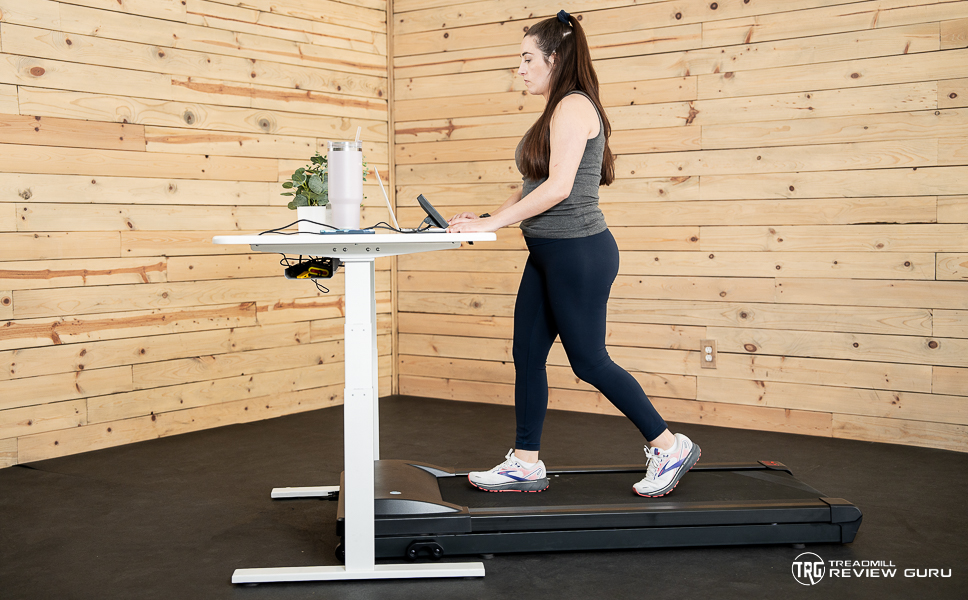
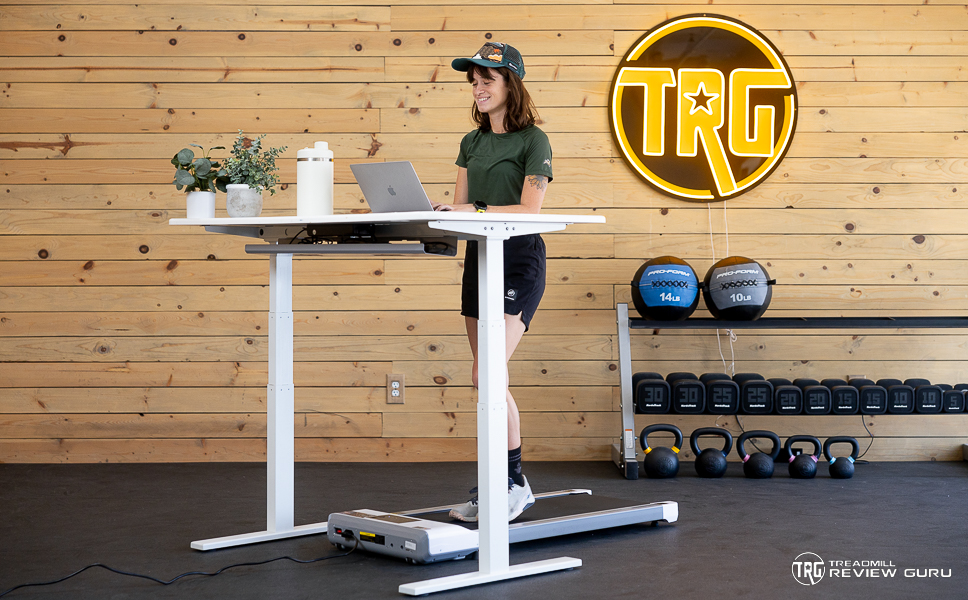
The WalkingPad P1 is the original under-desk walking pad and remains the reference point that competitors are still chasing. The 180-degree fold is genuinely useful for renters and small apartments, and the KS Fit app integration is more mature than what most competitors ship. The 220 lb capacity and modest 1 HP motor are the limits that keep it from being an all-day workhorse.
Full review
Real-World Walking Performance
The WalkingPad P1 essentially defines the walking-pad category. TreadmillReviewGuru notes the brand is 'now synonymous with under-desk treadmills,' and the P1 is the silhouette every competing brand is iterating on. Top speed is 3.75 mph, which is faster than most users will use during typing-heavy work and slow enough that the pad never invites the temptation to jog. The 47" by 16.5" walking belt is shorter than the LifeSpan TR1200-DT3 GlowUp but generous enough for users under 6'0" walking at desk-typing speeds.
Barbend's tester noted the motor is a 1 HP brushed unit, which is adequate for casual one-to-two-hour daily walking but underpowered against the LifeSpan's continuous-duty motor for true all-day use. The P1's FootSense automatic speed control adjusts belt speed based on where you stand on the deck, slowing when you drift forward and speeding up when you move back. It is a feature that works better than reviewers expect and reduces remote fumbling during meetings.
Build Quality and Stability
At 62 lbs the P1 is genuinely portable but still substantial enough to feel planted under a walking user. The chassis is aluminum with a steel deck frame, and Tom's Guide noted the unit shipped fully assembled with transport wheels for room-to-room movement. The walking surface uses an EVA cushion layer that BarBend's tester found absorbs heel strike comfortably for sub-220 lb users.
The 220 lb maximum user weight is the limiting spec. WalkingPad publishes an 'optimal' capacity of 265 lbs, but the published warranty load is 220 lbs and the unit is not built for sustained use by heavier walkers. If you are over 220 lbs, the DeerRun Walking Pad (300 lbs) and LifeSpan TR1200-DT3 GlowUp (350 lbs) are the appropriate alternatives in this draft.
Setup and Storage
Setup is the P1's strongest category. The unit ships pre-assembled in a single box and the only step before use is plugging in the power cord. Tom's Guide's reviewer noted the unit was ready to use 'as soon as its power cord was plugged into an electrical outlet,' an experience the DeerRun and UREVO competitors largely match but no other pad in this draft genuinely beats.
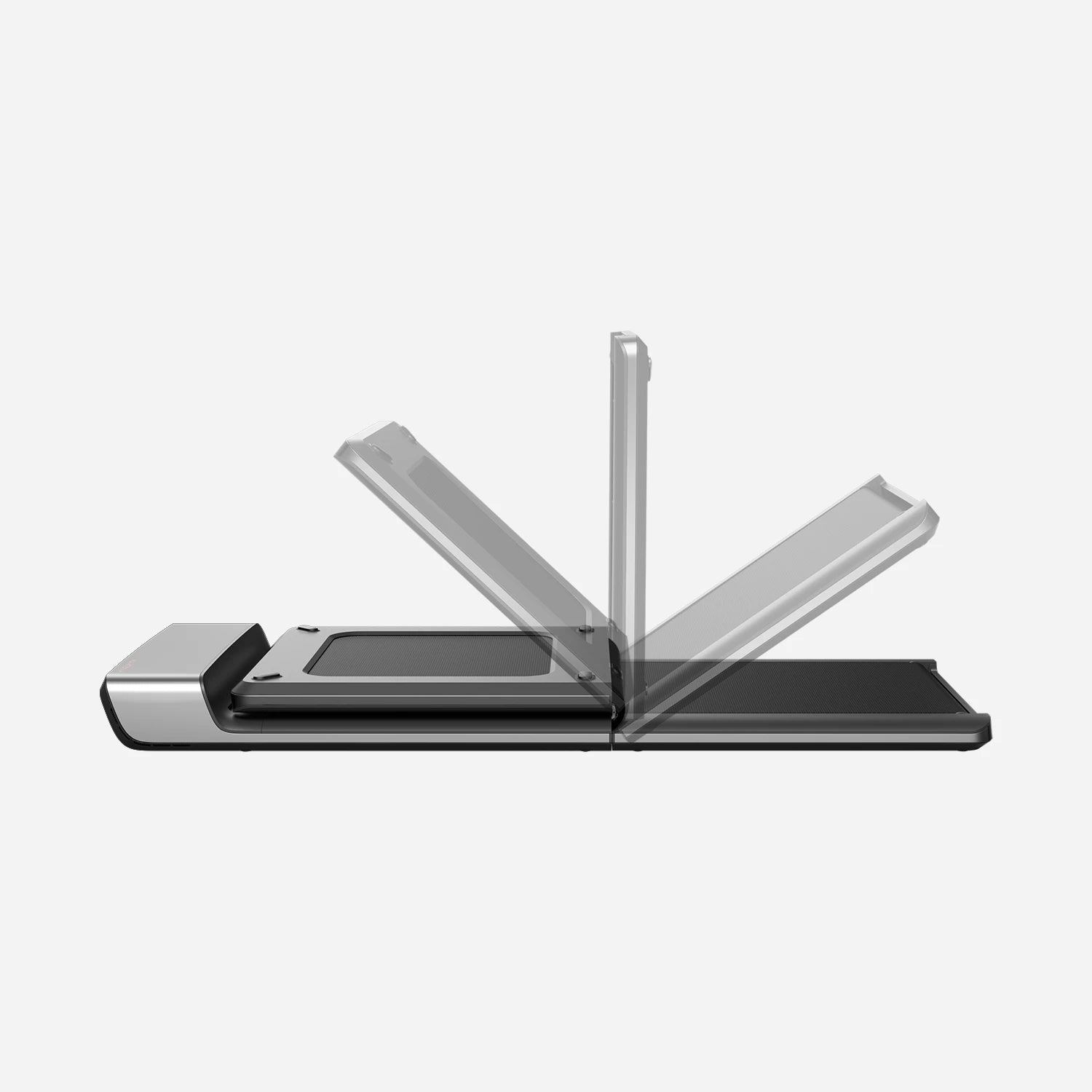
The 180-degree fold is the P1's signature feature and the reason it stays on most short-lists. Folded dimensions of 32.5" by 21.5" by 5" fit under a couch, behind a door, or in a closet between sessions. The 62 lb weight plus the attached transport wheels mean a single user can move the folded pad without help. This combination of one-step setup and one-step storage is the P1's strongest claim against the heavier LifeSpan TR1200-DT3 GlowUp, which is essentially a permanent fixture once positioned.
App and Smart Features
The KS Fit companion app is the most polished software in this draft. It syncs steps and distance to Apple Health and Google Fit, tracks workout history, and provides remote-control functionality from your phone so you can leave the physical remote at home. The handheld remote is the only on-pad control surface, and Tom's Guide's reviewer flagged it as 'confusing' relative to a desk-top console; the app sidesteps that complaint when you keep your phone within reach.
FootSense is the differentiating smart feature: the pad reads your position on the belt via sensors and adjusts speed automatically. Drift forward and the pad speeds up; drift back and it slows. In practice, this reduces the moments where you have to dig for the remote during a meeting and is one of the features that makes the WalkingPad feel newer than the LifeSpan despite costing one-third the price.
Noise During Meetings
Noise is the P1's most polarizing aspect. BarBend's tester scored noise level a 3 out of 5, writing that the motor is 'a bit less powerful and louder than the A1 Pro model,' WalkingPad's newer flagship. Tom's Guide added the caveat that the P1's motor 'has a perceptible whirring sound,' enough that some users will not want to take Zoom calls while walking on it.
Independent third-party listicle measurements suggest the P1 sits around 45 dB at walking speeds, which is below the conversational-speech threshold of 60 dB but louder than the LifeSpan TR1200-DT3 GlowUp's 48.9 dB measurement (which sits below the P1 despite a heavier motor because LifeSpan's continuous-duty design runs at lower internal RPMs). For most home offices the P1 is quiet enough; for shared spaces, test on a call before committing.
Where It Falls Short
The 220 lb capacity is the hard ceiling. Users approaching that weight should consider it a structural limit, not a marketing soft cap. The 1 HP brushed motor is not built for 6-hour daily duty cycles, and the absence of an on-deck display means metrics live on a small handheld remote that is easy to misplace. The warranty is also notably short for the price: 1 year on the P1 versus 10 years on the LifeSpan's frame.
BarBend's tester also noted that 'the P1 doesn't have a display, the remote is confusing, and the motor is a bit less powerful and louder than the A1 Pro model.' If you are choosing between WalkingPad models specifically and you do not need the absolute thinnest folded profile, the A1 Pro is a quieter, more capable option from the same brand. The P1 also lacks any handrail, even an optional one, meaning users who want occasional grab-bar stability during faster walks will find themselves wanting; WalkingPad sells a detachable handrail accessory for both the P1 and A1 Pro, but it ships separately and adds to the total cost.
Who It's Best For
Buy the WalkingPad P1 if you live in a small apartment, if you need to store the pad between sessions, if you weigh under 220 lbs, and if you want the most mature companion-app experience in the under-desk category. The 180-degree fold and 62 lb weight are the features that make it stay in daily use long-term: pads that cannot disappear between sessions tend to migrate to closets after a few weeks.
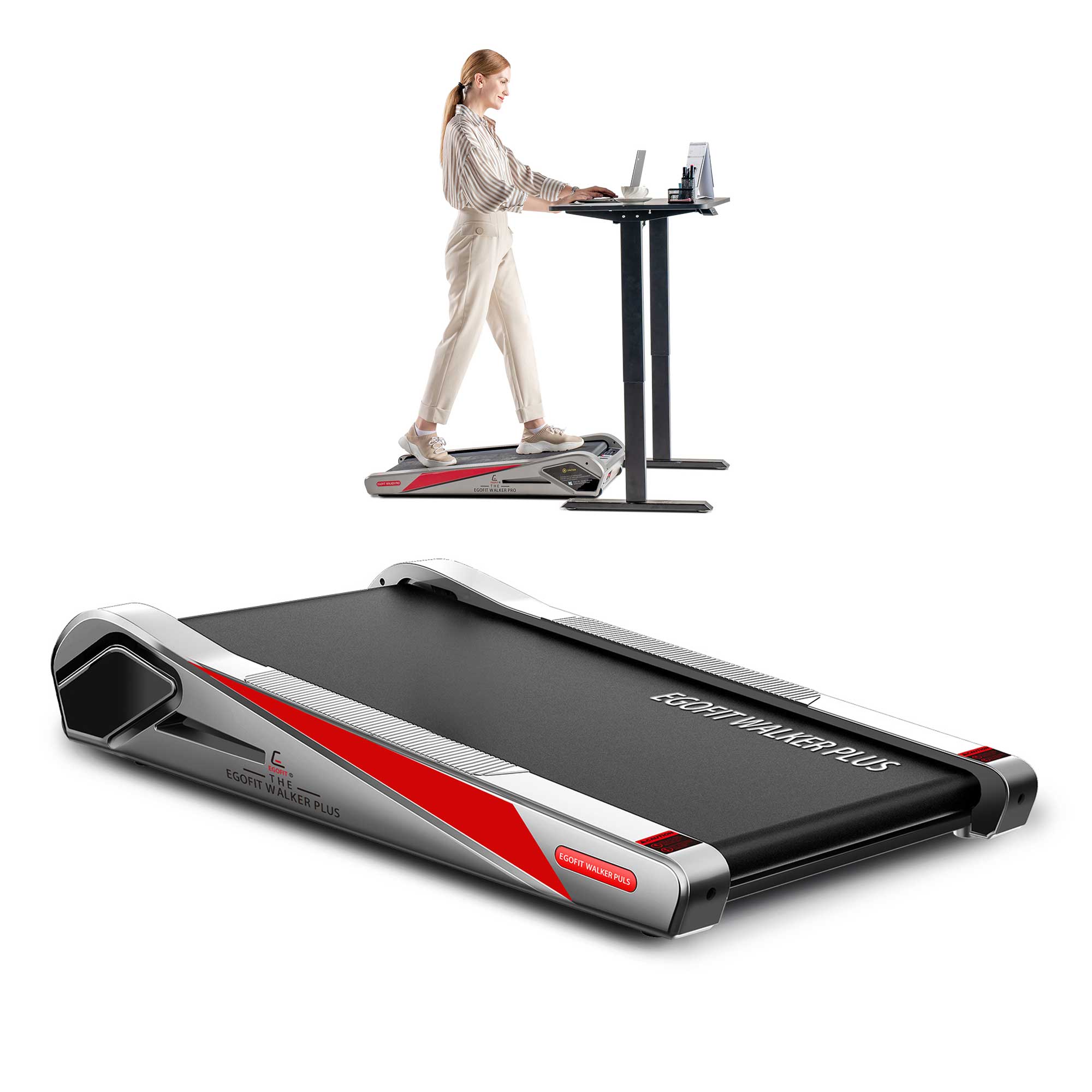
Skip it if you weigh over 220 lbs (go DeerRun or LifeSpan), if you walk more than 2-3 hours per day (go LifeSpan), or if you want a built-in incline to bump cardio (go Egofit Walker Pro M1). For most casual WFH walkers under the 220 lb threshold, the P1 remains the default pick and the reason the walking-pad category exists in the first place.
How It Compares to Alternatives
Against the LifeSpan TR1200-DT3 GlowUp, the WalkingPad P1 is one-third to one-half the price and one-third the weight, but lacks the daily-duty motor, the wired desk console, and the 10-year warranty. The LifeSpan is overkill for users who walk 30-90 minutes a day; the P1 is right-sized for that use case and adds genuine portability the LifeSpan cannot match.
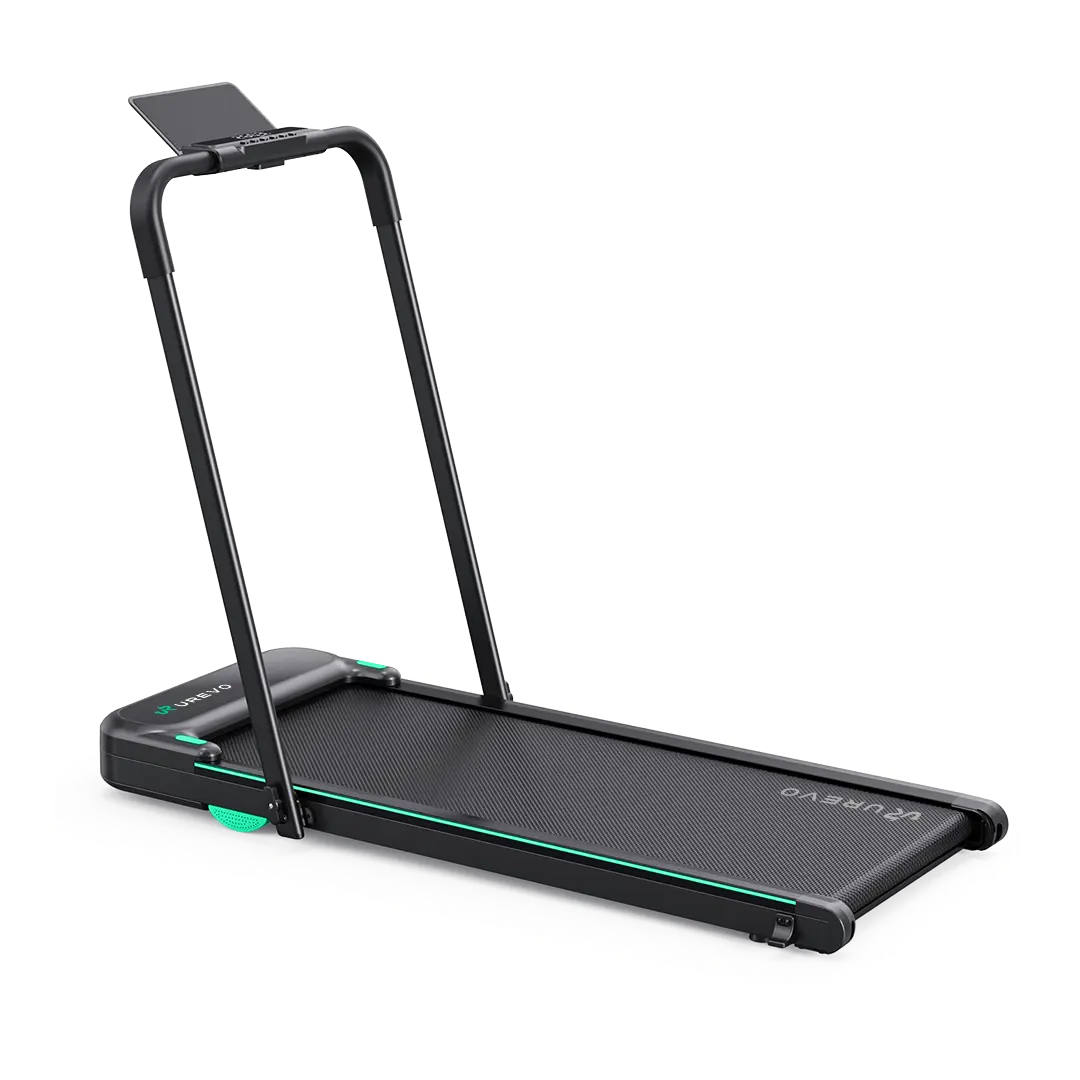
Against the UREVO Strol 2E, the P1 is more expensive and lacks the 2-in-1 jogging mode, but offers a more polished companion app, a more mature ecosystem (WalkingPad accessories include integrated standing desks), and the FootSense automatic speed control. The Strol 2E wins on raw value; the P1 wins on brand maturity and refinement. Against the DeerRun Walking Pad, the P1 folds in half where the DeerRun does not, but the DeerRun has a higher 300 lb weight capacity and a free companion app where WalkingPad's KS Fit is also free. The P1's edge is the fold; the DeerRun's edge is capacity and price. Against the Egofit Walker Pro M1, the P1 offers a meaningfully larger belt and the fold, while sacrificing the built-in incline.
Strengths
- +180-degree folding design collapses to 32.5 inches long for under-bed or under-couch storage
- +Brand-defining walking-pad incumbent: WalkingPad essentially invented this product category
- +62 lb chassis with transport wheels is genuinely portable between rooms
- +KS Fit companion app syncs steps and distance to Apple Health and tracks workout history
- +FootSense automatic speed control adjusts pace based on your position on the belt
Watch-outs
- −220 lb weight capacity is among the lowest in this category and excludes heavier users
- −1 HP brush motor is not rated for multi-hour daily use the way commercial-grade motors are
- −Tom's Guide and TreadmillReviewGuru testers both reported the motor is louder than newer A1 Pro model
- −No on-deck display; all metrics live on a small handheld remote that is easy to misplace
How it compares
The WalkingPad P1 is more portable than the LifeSpan TR1200-DT3 GlowUp (62 lbs versus 114 lbs) but trades off capacity and motor power. Versus the DeerRun Walking Pad, the P1 folds in half while the DeerRun does not, but the DeerRun has a higher 300 lb weight capacity. Versus the UREVO Strol 2E, the P1 is the more mature app and walks-better-for-typing pad; the Strol 2E is faster and cheaper.
Who this is for
At a glance: Apartment dwellers and renters who need a pad that disappears between sessions, brand-loyal buyers who want the original walking-pad pedigree, and Apple Health users who want clean step-count integration.
Why you’d buy the WalkingPad P1
- 180-degree folding design collapses to 32.5 inches long for under-bed or under-couch storage.
- Brand-defining walking-pad incumbent: WalkingPad essentially invented this product category.
- 62 lb chassis with transport wheels is genuinely portable between rooms.
Why you’d skip it
- 220 lb weight capacity is among the lowest in this category and excludes heavier users.
- 1 HP brush motor is not rated for multi-hour daily use the way commercial-grade motors are.
- Tom's Guide and TreadmillReviewGuru testers both reported the motor is louder than newer A1 Pro model.
Rating sources
“WalkingPad is now synonymous with under-desk treadmills.”
“It folds completely in half, and with the attached transport wheels it was pretty easy to move it around when I wasn't using it.”
“Our tester scored its noise level a 3 out of 5, so consider your workplace environment before purchasing.”
Our 4.4 score is the average of these published ratings. Ratings marked * were derived from the reviewer’s written analysis or video transcript — the publisher didn’t print an explicit numeric score, so we inferred one from their own words. Click through to verify. More about methodology.