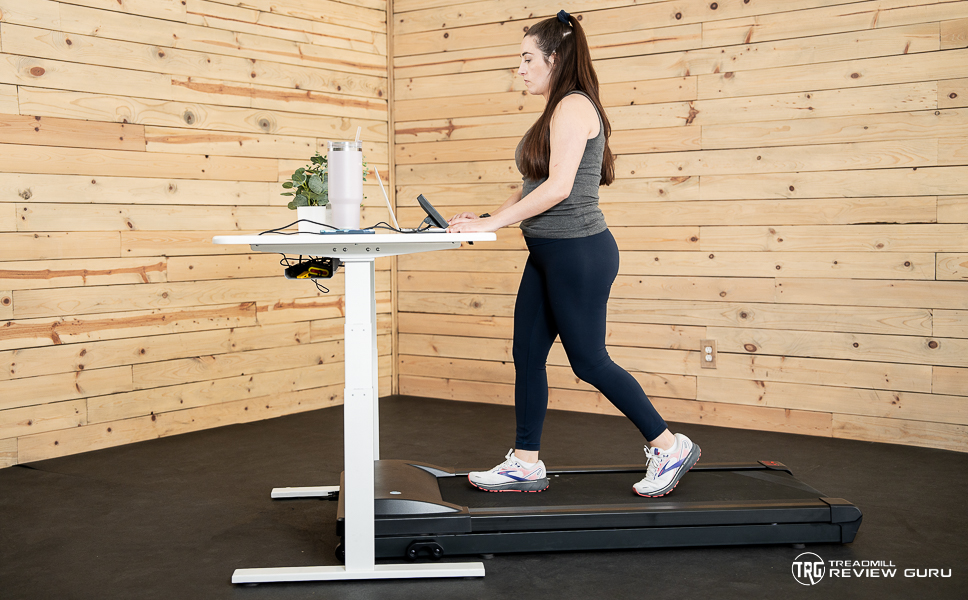
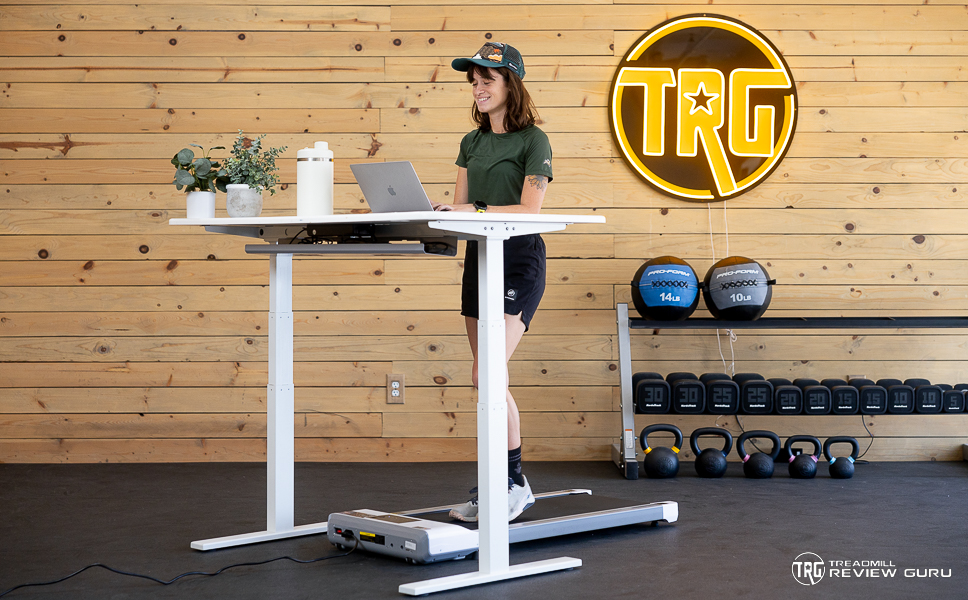
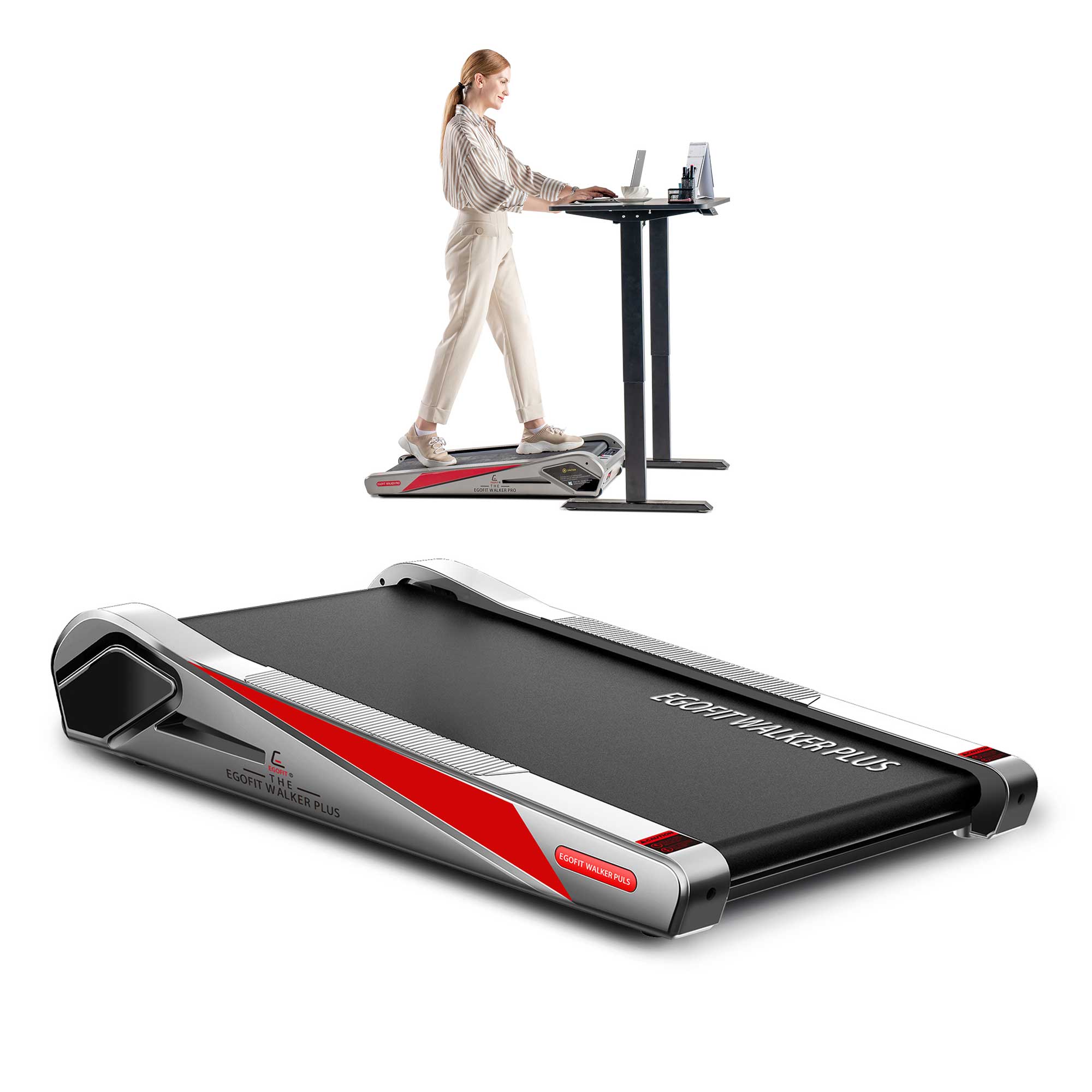
The Egofit Walker Pro M1 trades belt size and weight capacity for two things competitors cannot match: a built-in 5% incline that actually elevates heart rate and the smallest unfolded footprint in the category. It is the right pick for shorter users (under 5'6") who want cardio benefit from desk walking and need a unit that fits in tight workspaces. Taller and heavier users should look elsewhere.
Full review
Real-World Walking Performance
The Egofit Walker Pro M1 is the only pad in this draft with a built-in incline. The 5% fixed grade is not adjustable, which is both the headline feature and the constraint. BarBend's review notes that 'a 5% incline definitely makes a difference' to heart rate elevation compared to flat-deck walking, and Mindbodygreen's testers found the same: 'The 5% incline definitely makes a difference. The noise is very low.' At a typing speed of 1.5-2 mph, the incline alone bumps heart rate into the low cardio zone where flat-deck walking stays near resting.
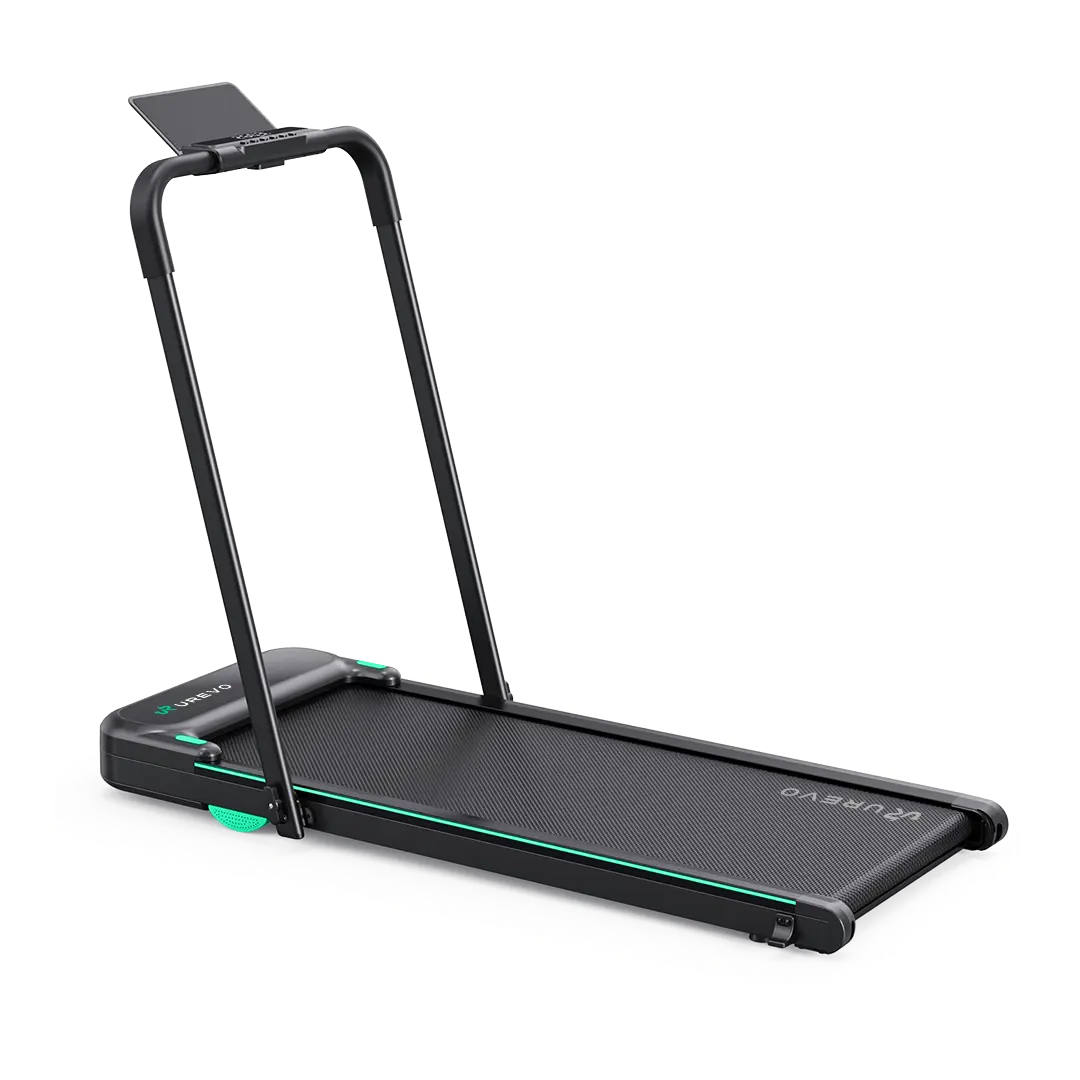
Top speed is 3.11 mph, the lowest in this draft. Egofit positions the M1 explicitly as a desk-walking unit, not a jogging-capable pad. If you have any desire to use the same unit for occasional brisk walking or light jogging, the UREVO Strol 2E or WalkingPad P1 will both be better fits. The M1 trades top-end for the unique incline feature.
Build Quality and the Compact Footprint
The Egofit Walker Pro M1's 38.4-inch unfolded length is the shortest in this draft, meaningfully shorter than the WalkingPad P1 (56.5") and the UREVO Strol 2E (48-51"). For users with shallow desks or wall-bumping workspace constraints, this is sometimes the only pad that will physically fit. The 21.85" width is in line with the others.
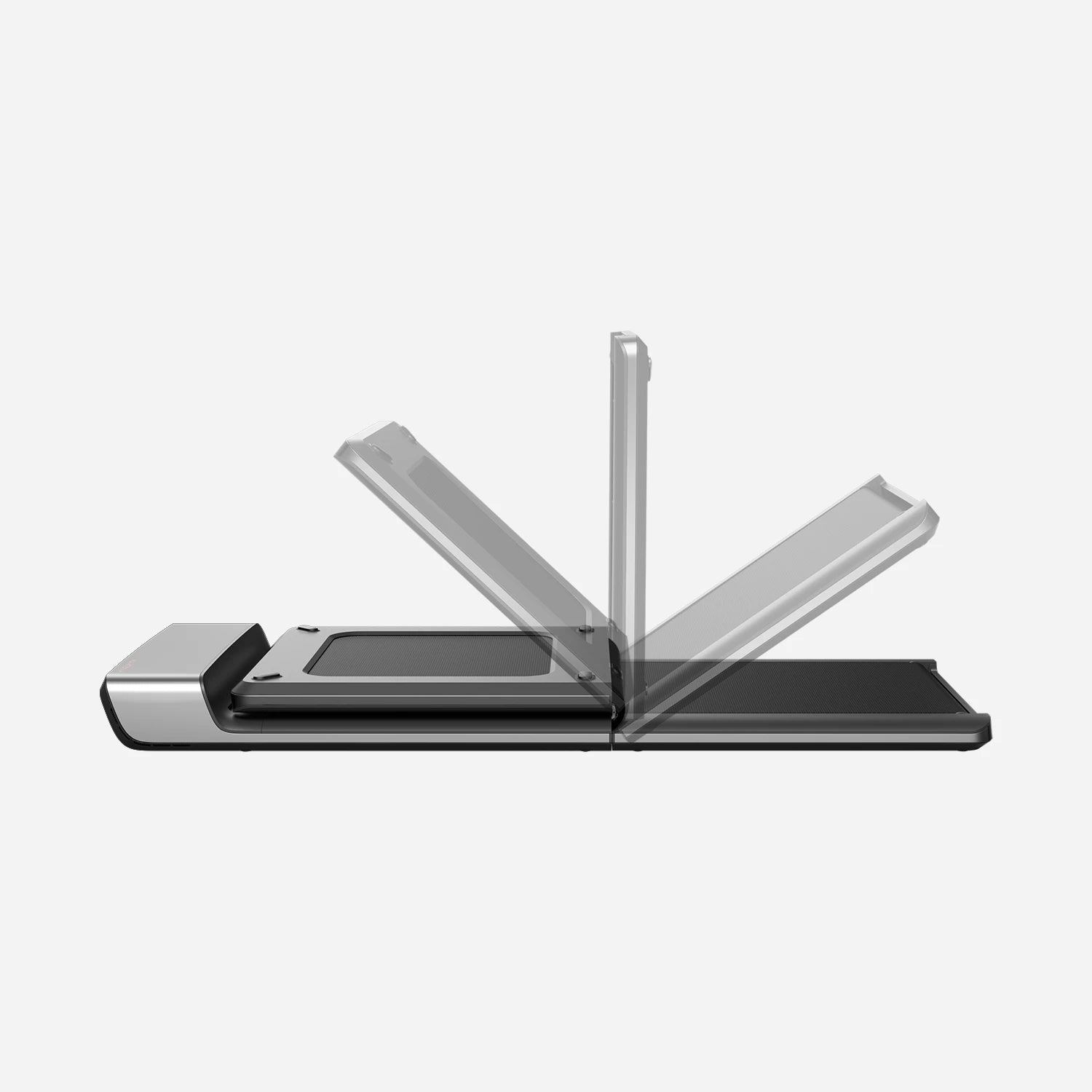
The trade-off is belt size: 34.25" long by 16.54" wide. Garage Gym Reviews flagged 'small deck' as one of the unit's primary limitations and scored the unit 3.3/5 in part for this reason. Users over 5'5" will find the belt forces a shorter-than-natural stride; the unit is specifically suited to shorter walkers. At 48.5 lbs the M1 is on the lighter end of this draft and can be stored upright against a wall when not in use, which Mindbodygreen's Amazon reviewer specifically noted as part of the daily storage routine: 'I store it upright leaned against the wall next to me.' That vertical storage option is genuinely useful in tight workspaces where laying the pad flat under a desk is not viable, and is a real advantage the heavier LifeSpan and non-folding DeerRun cannot match.
Noise and the Quiet Motor
Egofit publishes a noise spec of under 70 dB at maximum speed. Mindbodygreen's tester quoted an Amazon reviewer noting 'the noise is very low,' and BarBend's reviewer wrote that the M1 'operates quietly and smoothly so I can walk while working, scrolling through TikTok, or catching up with my parents on the phone.' At desk-walking speeds of 1.5-2.5 mph the actual noise floor is meaningfully below the 70 dB max-speed spec.
Crucially, one negative review on workwhilewalking.com (a publication oriented toward heavier business users) rated the unit 1.0/5 and called it 'very noisy when being walked on.' That outlier reflects a fundamental mismatch: the M1's 220 lb cap and small belt are not appropriate for the user base workwhilewalking.com tests for, and at the upper end of the weight range the small motor does work harder. Within its design envelope, multiple independent reviewers report it as quiet. The DC motor design is a meaningful contributor to the quiet operation: at lower walking speeds the motor draws less current and runs at lower RPMs than an AC motor would, which produces less audible whine. For a sub-200-lb user walking at typing speeds, the M1 is genuinely quiet enough for meetings, and the 4.5/5 average rating across 1,000+ Amazon reviews reflects that the majority of buyers fall within the design envelope.
App and Controls
The M1 ships with an LCD display tracking steps, distance, calories, and speed, plus a companion app and a wireless remote. The remote is the primary control surface during walking, and the on-deck LCD is large enough to glance at without breaking stride. Garage Gym Reviews specifically noted the unit lets you 'control speed with app or remote,' giving redundant control surfaces that protect against a misplaced remote.
The app integrates with major fitness ecosystems for step-count export. The Egofit app is less polished than the WalkingPad KS Fit or UREVO companion apps, but functional for tracking workout history and remote-controlling speed. The Mindbodygreen tester noted that the remote is the more reliable control surface and that the app feels more like an afterthought than a fully realized companion experience. For users who do most of their tracking through Apple Health or a separate fitness tracker like a Garmin or Apple Watch, the Egofit app's gaps are less important and the LCD plus remote combination is fully sufficient; for users who want a single integrated app experience driving the pad, the WalkingPad or UREVO ecosystems are noticeably more polished and stable.
Where It Falls Short
The two real limitations are belt size and weight capacity. The 34.25" belt is the shortest in this draft and forces a shorter stride than any of the other picks. The 220 lb weight cap matches the WalkingPad P1's but is well below the DeerRun (300 lbs) and LifeSpan (350 lbs). Workwhilewalking's harsh 1.0/5 review specifically noted the unit is 'too narrow and short for all but the smallest individuals to use without significant safety risk,' which is the strong version of the same critique.
The fixed 5% incline is also a double-edged spec. It cannot be turned off, meaning every walking session is at slight grade. For users who want to walk casually during long meetings without elevating heart rate, this is a feature against them rather than for them. A 0% mode or adjustable incline would dramatically widen the use case.
Who It's Best For
Buy the Egofit Walker Pro M1 if you are under 5'5", if you specifically want to elevate heart rate during desk walking via the built-in incline, or if your workspace footprint genuinely cannot fit a longer pad. The combination of small footprint, fixed incline, and quiet motor makes it the right answer for a narrow but real buyer profile.
Skip it if you are over 5'8" (belt is too short), if you weigh over 200 lbs (capacity headroom is thin), or if you sometimes want to walk without working up a sweat (incline cannot be disabled). For most users in this category, the WalkingPad P1, UREVO Strol 2E, or DeerRun Walking Pad will be a better all-around fit.
How It Compares to Alternatives
The Egofit Walker Pro M1 occupies a deliberate niche. Against the WalkingPad P1, the Egofit offers the built-in incline but loses on belt size (34.25" versus 47"), top speed (3.11 mph versus 3.75 mph), and weight (48.5 lbs versus 62 lbs is closer than expected; the P1 wins on portability via the fold but loses on raw footprint). Buyers choosing between these two are essentially choosing between incline and fold.
Against the UREVO Strol 2E, the Egofit costs roughly double for a smaller belt and lower top speed, and loses the 2-in-1 jogging mode entirely. The trade in return is the built-in incline, which the Strol 2E cannot match. Against the DeerRun Walking Pad, the Egofit is twice the price for a smaller belt and lower top speed, again trading those specs for the incline feature. Against the LifeSpan TR1200-DT3 GlowUp, the Egofit is fundamentally a different product: the LifeSpan is the all-day workhorse, while the Egofit is the compact-and-inclined niche pick. The Egofit makes sense when its specific feature combination (small footprint + incline + quiet) lines up with your needs; otherwise, every other pad in this draft offers more pad for the money.
Strengths
- +Only pad in this draft with a built-in fixed 5% incline, raising heart rate beyond what flat-deck walking can do
- +Smallest footprint in the category at 38.4" x 21.85", fits under shallower desks where the P1 and Strol 2E will not
- +Pre-assembled with transport wheels and ready to walk on out of the box
- +Companion app and remote control, plus LCD display tracking steps, distance, and speed
- +BarBend gave it 4.5/5 stars based on 1,000+ Amazon reviewer averages with consistently positive feedback on noise
Watch-outs
- −220 lb weight capacity excludes heavier users
- −Belt is just 34.25" long, the shortest in this draft, and constrains anyone over 5'5" to a shorter-than-natural stride
- −Garage Gym Reviews scored only 3.3/5, citing 'small deck' and limited weight capacity as the main issues
- −Top speed of 3.11 mph is the lowest in this draft and rules out faster walking or any jogging
How it compares
The Egofit Walker Pro M1 is the only pad in this draft with a built-in incline; the WalkingPad P1, UREVO Strol 2E, DeerRun Walking Pad, and LifeSpan TR1200-DT3 GlowUp are all flat-deck units. Capacity-wise the Egofit matches the WalkingPad P1 and trails the DeerRun Walking Pad and LifeSpan TR1200-DT3 GlowUp by a meaningful margin. Belt size is shorter than every other pad in this category, including the UREVO Strol 2E.
Who this is for
At a glance: Shorter desk walkers (under 5'6") who want cardio benefit from incline, anyone with a tight workspace where the 38.4" unfolded length is the only thing that fits, and users who specifically want a small footprint over a roomy walking surface.
Why you’d buy the Egofit Walker Pro M1
- Only pad in this draft with a built-in fixed 5% incline, raising heart rate beyond what flat-deck walking can do.
- Smallest footprint in the category at 38.4" x 21.85", fits under shallower desks where the P1 and Strol 2E will not.
- Pre-assembled with transport wheels and ready to walk on out of the box.
Why you’d skip it
- 220 lb weight capacity excludes heavier users.
- Belt is just 34.25" long, the shortest in this draft, and constrains anyone over 5'5" to a shorter-than-natural stride.
- Garage Gym Reviews scored only 3.3/5, citing 'small deck' and limited weight capacity as the main issues.
Rating sources
“Compact treadmill with incline set to 5%, arrives assembled, control speed with app or remote.”
“Operates quietly and smoothly so I can walk while working, scrolling through TikTok, or catching up with my parents on the phone.”
“The 5% incline definitely makes a difference. The noise is very low.”
Our 4.2 score is the average of these published ratings. Ratings marked * were derived from the reviewer’s written analysis or video transcript — the publisher didn’t print an explicit numeric score, so we inferred one from their own words. Click through to verify. More about methodology.