The DeerRun Walking Pad is the budget pick that punches above its price. TreadmillReviewGuru's scoring placed it competitively against pads costing twice as much, and the 300 lb weight capacity is unusual at this price point. Two trade-offs to know: the belt is short, and the PitPat companion app pushes a $199/year subscription for premium features.
Full review
Real-World Walking Performance
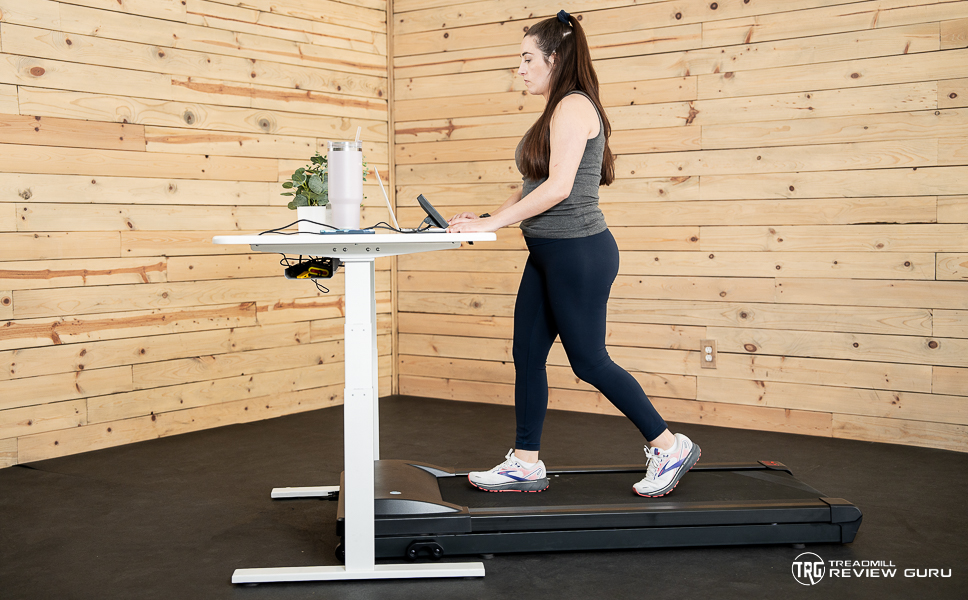
The DeerRun Walking Pad is the budget pick that does not feel cheap. TreadmillReviewGuru's testers scored it 63/100 overall with a 7 for Workout Experience and a strong 8 for Storability, calling out that 'the steel frame on the DeerRun Walking Pad is quite impressive' and noting the motor is 'fairly quiet, which is a huge plus for using this treadmill in an office setting.' Top speed is 3.8 mph, in line with the WalkingPad P1 and UREVO Strol 2E's walking modes.
The 2.5 HP motor is sized for casual one-to-two-hour daily use rather than the LifeSpan's all-day duty cycle. Tom's Guide's Q1 Mini reviewer wrote that the DeerRun is 'ideal for casual remote workers who want to get their steps in at their desk,' which is the right characterization: this is a pad for the user who walks during meetings and stand-up calls, not for the user who walks for 5 hours every workday.
Build Quality and Stability
TreadmillReviewGuru rated Build Quality 6 out of 10, which is reasonable for the price band but trails the WalkingPad P1 and LifeSpan TR1200-DT3 GlowUp. The steel frame is the meaningful upgrade over aluminum-frame budget pads and provides a more planted feel under heavier walkers. At 43 lbs the unit is light enough to move room-to-room but heavy enough to stay put during walking.
The 300 lb weight capacity is the headline spec at this price. The WalkingPad P1 and Egofit Walker Pro M1 both cap at 220 lbs and the UREVO Strol 2E at 265 lbs; only the LifeSpan TR1200-DT3 GlowUp (350 lbs) goes higher. For users in the 220-300 lb range, the DeerRun is the only pick in this draft under $500 that is rated for their weight.
The PitPat App and Subscription Concern
The PitPat companion app is the DeerRun's most differentiated feature, and TreadmillReviewGuru noted it is 'more fun than most under-desk treadmill apps that have been tested.' The app frames walking as an 'online competition platform' where users join virtual challenges, compete on leaderboards, and unlock content tied to mileage targets. For users who struggle to build the walking habit, the gamification is genuinely useful.
The catch is pricing: PitPat's premium tier starts at $199 per year, a recurring cost that meaningfully changes the total cost of ownership. Basic functionality (step counting, distance tracking, Bluetooth remote control) is free, but the competitive features that make the app fun are subscription-gated. Factor this into the buying decision if the app is central to your interest. The TreadmillReviewGuru tester was clear that the app's free tier is functional but bare-bones, and that the paid tier's value depends entirely on whether you actually use the competitive features. For users who track walking through other apps (Apple Health, Garmin Connect, Strava) the PitPat subscription adds zero value and the DeerRun functions identically as a non-app pad.
Noise During Meetings
TreadmillReviewGuru explicitly called the DeerRun 'fairly quiet' and listed office use as a primary use case. Manufacturer measurements peg the brushless motor at under 45 dB during walking speeds, in line with the WalkingPad P1 and UREVO Strol 2E. The pad has a beep on speed changes that some users will want to mute; the remote provides a silence toggle.
TechRadar's reviewer raised one caveat about the DeerRun line specifically: 'a compact, no-fuss walking pad — but one for the ground floor.' At higher walking speeds on the wood-floor model in their testing, downstairs neighbors reported audible thumping. For apartment dwellers with downstairs neighbors, plan to add a rubber mat under the pad. The DeerRun's brushless motor is a meaningful contributor to the quiet operation; brushless motors avoid the carbon-brush-on-commutator contact that produces the audible buzz characteristic of cheap brushed motors. Among budget pads, brushless is the spec to look for, and the DeerRun delivering it at a sub-$200 price point is part of why TreadmillReviewGuru's scoring was so favorable despite the budget price.
Setup and Storage
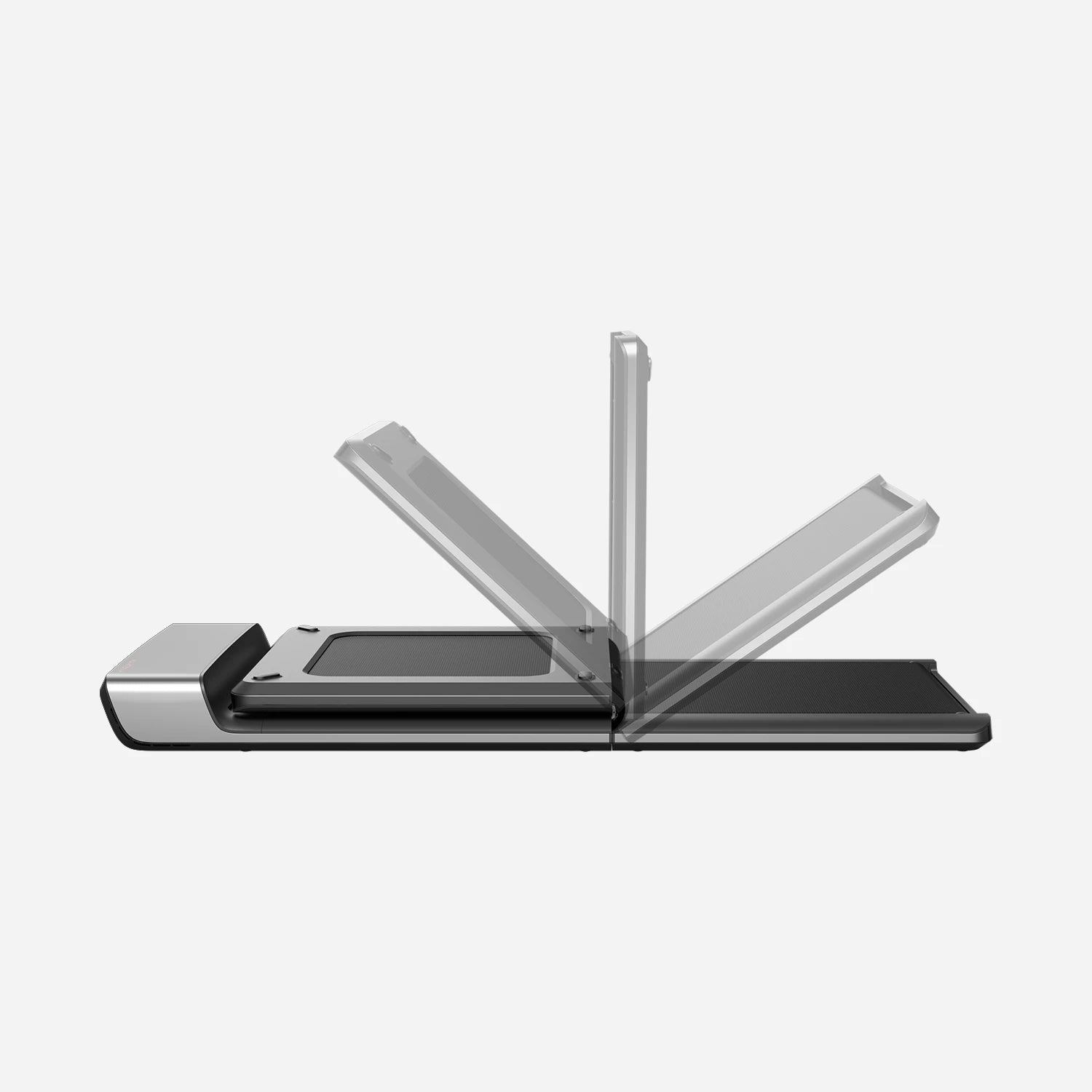
The DeerRun ships pre-assembled and ready to walk on out of the box, the same one-step setup as the WalkingPad P1 and Egofit M1. There is no folding mechanism: the pad is a single flat unit that stores under a couch or against a wall but does not collapse to half its length the way the WalkingPad P1 does. The 4.5" unfolded height is low enough to slide under most beds.
At 43 lbs the unit is the second-lightest in this draft (only the UREVO Strol 2E is lighter at 47 lbs), making it genuinely portable between rooms. If under-bed or under-couch storage is critical, the WalkingPad P1's 32.5" folded length still gives it the edge. TreadmillReviewGuru's Dimensions and Storability category specifically scored the DeerRun 8 out of 10, which is solid for a non-folding unit, reflecting that the low 4.5" deck height handles most storage situations without the fold being strictly necessary. The included transport wheels work well for room-to-room moves and the chassis balances easily for one-handed wheeling.
Where It Falls Short
The belt size is the main constraint. At 39.4" long, the DeerRun is roomier than the Egofit M1 (34.25") but shorter than the WalkingPad P1 (47") and well behind the LifeSpan TR1200-DT3 GlowUp (50"). Taller users will feel the limit, and TechRadar's review specifically noted that users over 5'8" should test before committing.
The PitPat subscription model is the other concern. Most walking-pad apps are free; PitPat's $199/year premium tier is high enough that it changes the value proposition of an otherwise budget-friendly pad. The 2-year limited warranty is reasonable for the price but still well short of the LifeSpan's 10-year frame coverage.
Who It's Best For
Buy the DeerRun Walking Pad if you are price-sensitive, if you weigh between 220-300 lbs (where the WalkingPad P1 and Egofit M1 do not fit your warranty profile), or if you want to validate the walking-pad format before committing to a $500+ purchase. The Tom's Guide-reported promotional pricing as low as $127 makes the DeerRun the cheapest entry point in this category by a wide margin.
Skip it if you live above the ground floor in an apartment and have noise-sensitive neighbors below, if you are over 5'10" (the 39.4" belt is the constraint), or if subscription apps are a non-starter for you (PitPat's premium tier locks meaningful features). For most users, the DeerRun is the right first walking pad and the right answer at this price point.
How It Compares to Alternatives
Against the WalkingPad P1, the DeerRun is cheaper (often under $200 versus $349 for the P1), has a higher 300 lb weight capacity (versus the P1's 220 lbs), and includes a more game-oriented companion app. The P1's edge is the 180-degree fold and the more mature brand ecosystem. Buyers in the 220-300 lb weight range should specifically choose the DeerRun over the P1: the P1's warranty does not cover users in that range.
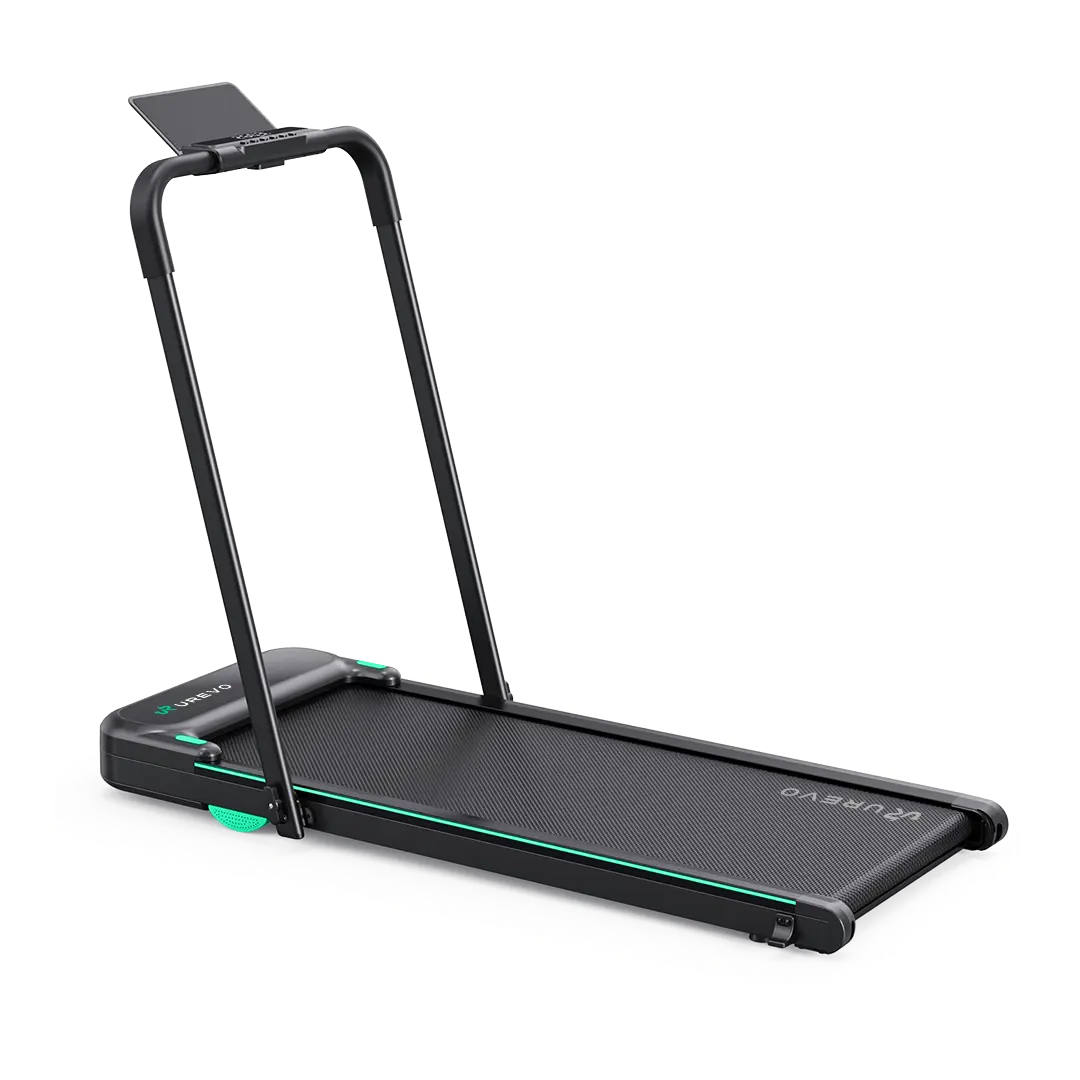
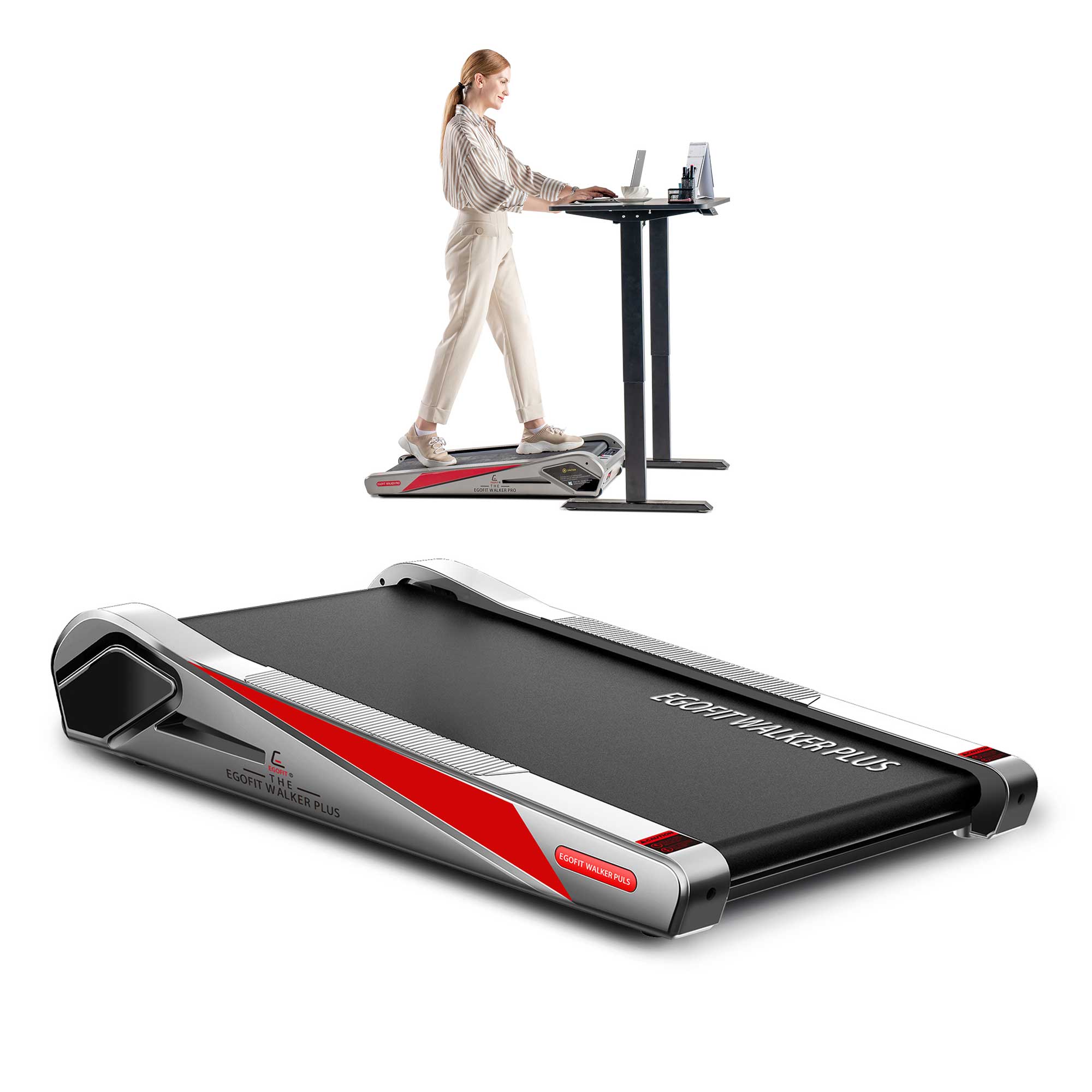
Against the UREVO Strol 2E, the DeerRun is similarly priced and offers a slightly larger belt (39.4" versus 40.1" is essentially the same length; the DeerRun's 15.4" width edges the Strol 2E's 15"). The Strol 2E adds the 2-in-1 handrail jogging mode the DeerRun lacks. Against the Egofit Walker Pro M1, the DeerRun offers a larger belt, higher weight capacity, and lower price; the Egofit adds the built-in incline. Against the LifeSpan TR1200-DT3 GlowUp, the DeerRun is one-tenth the price at promotional levels but is not engineered for the same duty cycle. The DeerRun is the right pick for the casual walker who weighs over 220 lbs and wants to spend less than $250.
Strengths
- +300 lb weight capacity at the budget end of the market, only outdone by the LifeSpan's 350 lbs
- +Steel frame construction TreadmillReviewGuru called 'quite impressive' for the price
- +PitPat companion app described as 'more fun than most under-desk treadmill apps' by TreadmillReviewGuru
- +Tom's Guide notes street prices have hit $127 on promotion, the lowest entry point in this draft
- +2.5 HP motor is fairly quiet, which TreadmillReviewGuru called 'a huge plus for using this treadmill in an office setting'
Watch-outs
- −PitPat app's premium tier starts at $199/year for unlocked features, a meaningful aftermarket cost
- −Belt is just 35-39" long depending on model variant, suitable mainly for users under 5'8"
- −1-year warranty matches the budget tier; no extended warranty options
How it compares
The DeerRun Walking Pad's 300 lb capacity is higher than both the WalkingPad P1 (220 lbs) and the Egofit Walker Pro M1 (220 lbs) and only trails the LifeSpan TR1200-DT3 GlowUp (350 lbs). It does not fold flat the way the WalkingPad P1 does, and it lacks the UREVO Strol 2E's 2-in-1 handrail mode. The PitPat app provides a more game-oriented experience than the KS Fit (WalkingPad) or UREVO app, but locks meaningful features behind a paid tier.
Who this is for
At a glance: Cost-conscious WFH walkers who weigh over 220 lbs and need the higher capacity, first-time walking-pad buyers who want to validate the format before spending $500+, and users who enjoy gamified fitness apps.
Why you’d buy the DeerRun Walking Pad
- 300 lb weight capacity at the budget end of the market, only outdone by the LifeSpan's 350 lbs.
- Steel frame construction TreadmillReviewGuru called 'quite impressive' for the price.
- PitPat companion app described as 'more fun than most under-desk treadmill apps' by TreadmillReviewGuru.
Why you’d skip it
- PitPat app's premium tier starts at $199/year for unlocked features, a meaningful aftermarket cost.
- Belt is just 35-39" long depending on model variant, suitable mainly for users under 5'8".
- 1-year warranty matches the budget tier; no extended warranty options.
Rating sources
“It is fairly quiet, which is a huge plus for using this treadmill in an office setting.”
“The DeerRun Q1 Mini is ideal for casual remote workers who want to get their steps in at their desk.”
“A compact, no-fuss walking pad — but one for the ground floor.”
Our 4.1 score is the average of these published ratings. Ratings marked * were derived from the reviewer’s written analysis or video transcript — the publisher didn’t print an explicit numeric score, so we inferred one from their own words. Click through to verify. More about methodology.