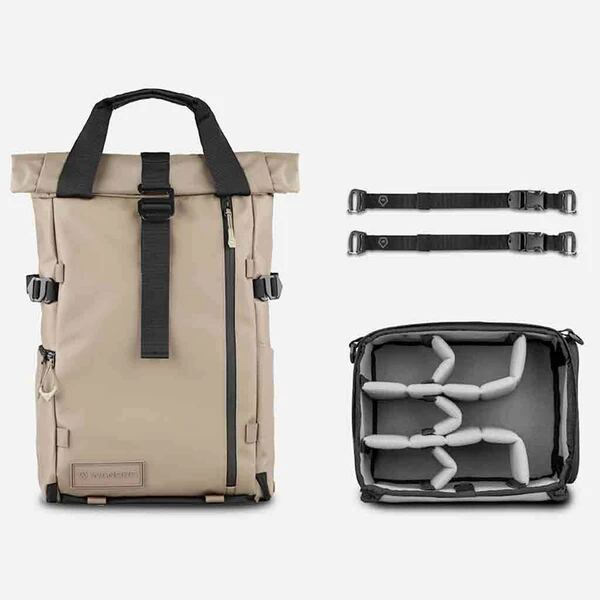
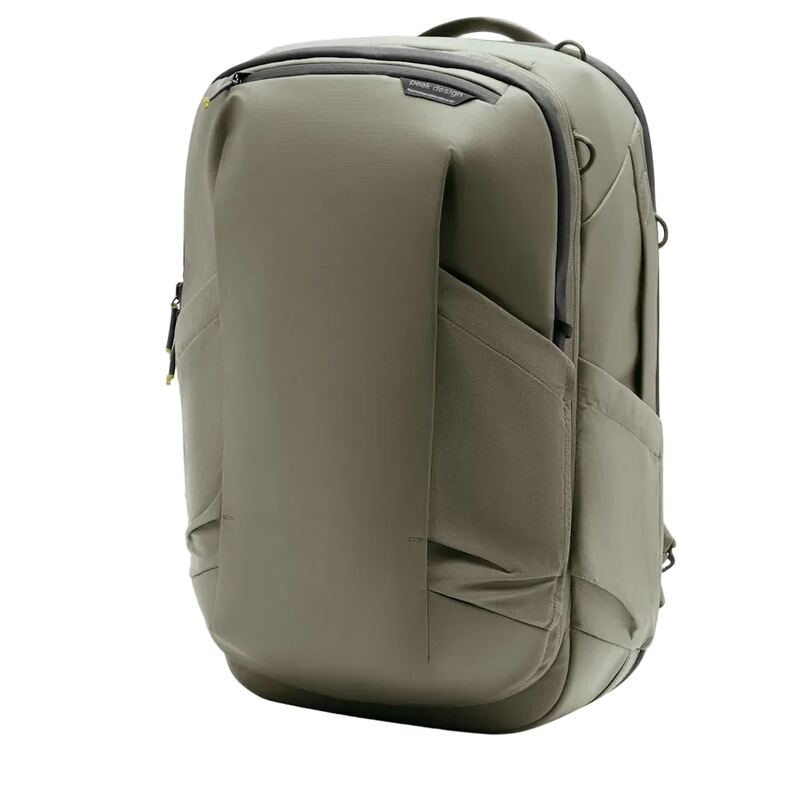
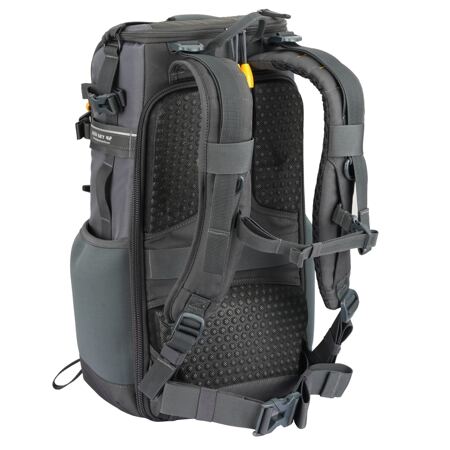
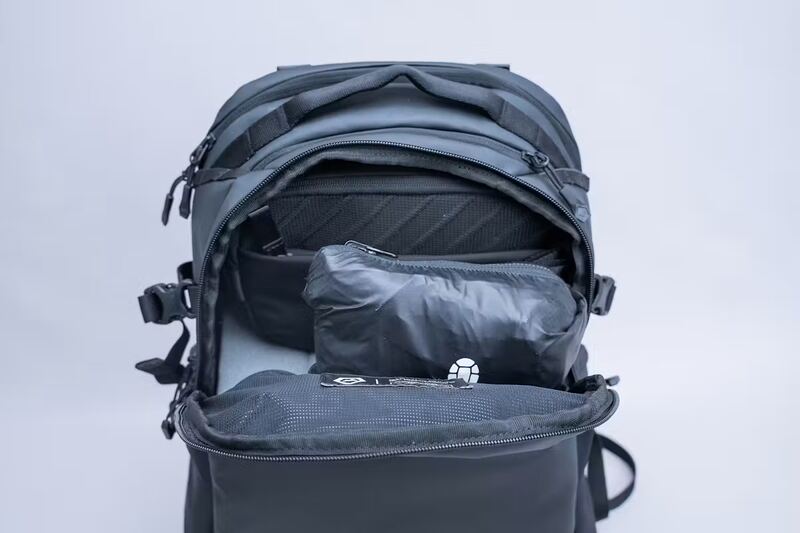
The Vanguard VEO Metro B25L combines urban styling with professional protection, featuring an internal metal frame and generous padding that Amateur Photographer found essential for securing full-frame bodies and large telephotos. It offers versatile access points and a rear compartment capable of holding both a 16-inch laptop and a tablet, making it suitable for hybrid creators who need to carry extensive gear and electronics. However, the main camera section is not deep enough to accommodate a vertical grip, forcing users to detach bulky accessories before storage. Additionally, stiff internal dividers complicate layout adjustments, so photographers requiring frequent reconfiguration or those relying on vertical grips should look elsewhere.
Full review
Urban styling meets professional camera protection
The Vanguard VEO Metro B25L is built from a lightweight yet tough 300D polyester fabric that carries a durable water repellent treatment on both the interior and exterior surfaces. This material choice gives the bag a sleek, modern aesthetic suitable for urban environments while providing basic weather resistance against light drizzle or accidental spills.
Amateur Photographer found that this construction results in a highly functional and nicely made bag with an appealing 'urban' styling profile. Digital Camera World noted the wipe-clean exterior as a significant bonus for photographers who find themselves shooting in wintry or damp conditions, allowing them to easily maintain the bag's appearance without needing to remove all contents. The combination of durable materials and thoughtful design ensures the backpack can handle daily commutes and travel while keeping gear secure.
Internal metal frame provides rigid structural support
Unlike many soft-sided camera bags that rely entirely on fabric tension for shape, this model incorporates an internal metal frame that gives the backpack its structure. Amateur Photographer highlighted this feature as a key element in protecting precious kit, noting that it is complemented by generous padding all around the camera section and a soft inner lining to prevent scratches or impacts from damaging equipment during transit.
The rigid construction allows the bag to stand upright on its own when placed on the ground, preventing it from tipping over and exposing gear. This structural integrity ensures that even when fully loaded with heavy telephoto lenses and bodies, the backpack maintains its shape without sagging excessively. The metal frame works in tandem with the EVA dividers to create a secure environment for photography equipment.
Camera compartment depth limits vertical grip usage
A significant limitation of the main camera section is its depth, which Amateur Photographer explicitly noted as being insufficient to accommodate a camera body attached to a vertical grip. When filling the bag with a Sony Alpha A7R V equipped with a 24-105mm f/4 zoom, along with additional lenses like a Sigma 100-400mm and Zeiss Batis 40mm, the internal space is fully utilized without room for protruding accessories.
This constraint means that photographers who frequently use vertical grips for portrait orientation shooting will need to detach the grip before storing their camera in the main compartment. While the bag can hold a high-end full-frame camera and four or five lenses comfortably, those relying on bulkier battery grips must plan accordingly, as forcing the setup into the compartment is not feasible due to the fixed internal dimensions.
Stiff dividers complicate internal layout customization
Digital Camera World reported that while the bag includes plenty of moveable dividers to organize space, these components are notably stiff. This rigidity makes reconfiguring the internal layout difficult when photographers need to adjust spacing for different lens combinations or remove sections entirely to create a more open everyday carry configuration.
The stiffness of the EVA dividers can be frustrating during quick setup changes in the field. Users looking to rapidly swap from a wide-angle prime setup to a telephoto-heavy kit may find that adjusting the divider positions requires considerable effort. This design choice prioritizes structural rigidity over flexible internal organization, which could be a drawback for photographers who frequently change their gear loadout.
Magnetic closures on inner pockets lack reliability
Digital Camera World identified weak magnets on two of the internal pockets as a notable flaw in an otherwise well-organized interior. These magnetic closures are intended to keep small items like memory cards, batteries, or cables secure within their designated slots, but reviewers found that they do not hold firmly enough to prevent contents from shifting during vigorous movement.
This issue affects the bag's ability to safely store smaller accessories in its numerous organizational pockets. While the sheer number of compartments is a strength, the reliability of individual closures varies. Photographers carrying valuable small items should be aware that these specific internal pockets may not provide the security expected for such gear, potentially requiring alternative storage solutions within the main camera section.
Multiple access points balance speed and security
The backpack offers three distinct ways to reach the contents: a full rear opening that unzips completely for maximum visibility, a wide side panel for quick camera retrieval without removing the bag, and top entry into the upper daypack section. Designinfo.in confirmed that the main access compartment is accessed through the back for security, while the side access allows photographers to be ready to shoot in seconds.
Amateur Photographer praised the versatility of these access points, noting that users can get at the contents of the top section from the back as well. This multi-directional access ensures that whether a photographer needs to quickly grab their camera on a street corner or securely pack away gear in a crowded airport, there is an appropriate opening for the task without compromising the integrity of the other compartments.
Rear laptop compartment accommodates large devices
A dedicated rear pocket provides space for both a 16-inch laptop and a separate 13-inch tablet or portable monitor. Amateur Photographer demonstrated this capacity by fitting a 13-inch MacBook Pro alongside a 16-inch portable monitor in the compartment, highlighting its utility for hybrid creators who need to edit footage on location.
This rear section is separated from the camera gear, ensuring that electronic devices are protected from potential impacts or moisture originating from the photography equipment. The padding around this compartment adds an extra layer of safety for laptops and tablets, making it suitable for professionals who commute with both their shooting kit and work computers in a single bag.
Extensive pocket array aids organizational workflow
Reviewers consistently noted the abundance of pockets throughout the backpack, including concealed passport storage on the back, a fold-out smartphone pouch integrated into one shoulder strap, and a dedicated power bank pocket with a cable pass-through to the exterior. Amateur Photographer described an AirTag holder as spectacularly well-hidden within the design, adding a layer of security for tracking the bag.
Digital Camera World emphasized that this array of pockets contributes significantly to the value proposition of the backpack, allowing photographers to separate personal items from camera gear efficiently. The inclusion of specific compartments for power banks and cables streamlines the charging workflow on the go, while external attachment points allow for mounting LED lights or carrying jackets externally via supplied straps.
Side pocket access orientation limits convenience
The quick-access panel opens on one side only, which forces users to either adjust their stance or remove the bag entirely if they naturally gravitate toward accessing gear from the opposite shoulder.
The single-sided quick access can feel awkward for users who prefer immediate camera retrieval without repositioning their body, representing a significant ergonomic oversight in an otherwise highly functional design.
Strengths
- +Holds a full-frame camera body and up to four lenses, including large telephotos like a 70-200mm f/2.8 or 100-400mm zoom.
- +Includes a dedicated rear compartment for a 16-inch laptop and a separate pocket for a tablet.
- +Features multiple access points: full rear opening, wide side panel, and top entry to the upper daypack section.
- +Equipped with an internal metal frame that provides structural support and generous padding for kit protection.
Watch-outs
- −The main camera compartment is not deep enough to accommodate a camera body attached to a vertical grip.
- −Internal dividers are stiff, making reconfiguration of the layout difficult.
How it compares
The Vanguard VEO Metro B25L includes a dedicated rear compartment for both a 16-inch laptop and tablet, providing more electronic organization than the CADeN Camera Backpack which lacks such features.
Rating sources
Counts as 4.72/5 in our score — this publisher's 16 scores on the site average 4.53, so its scores are adjusted down to compare fairly with other publishers.
Our 4.7 score is the average of the 1 scored review above, each adjusted for how strictly its publisher scores; 4 more reviewed it without printing a score and are not in the average. More about methodology.