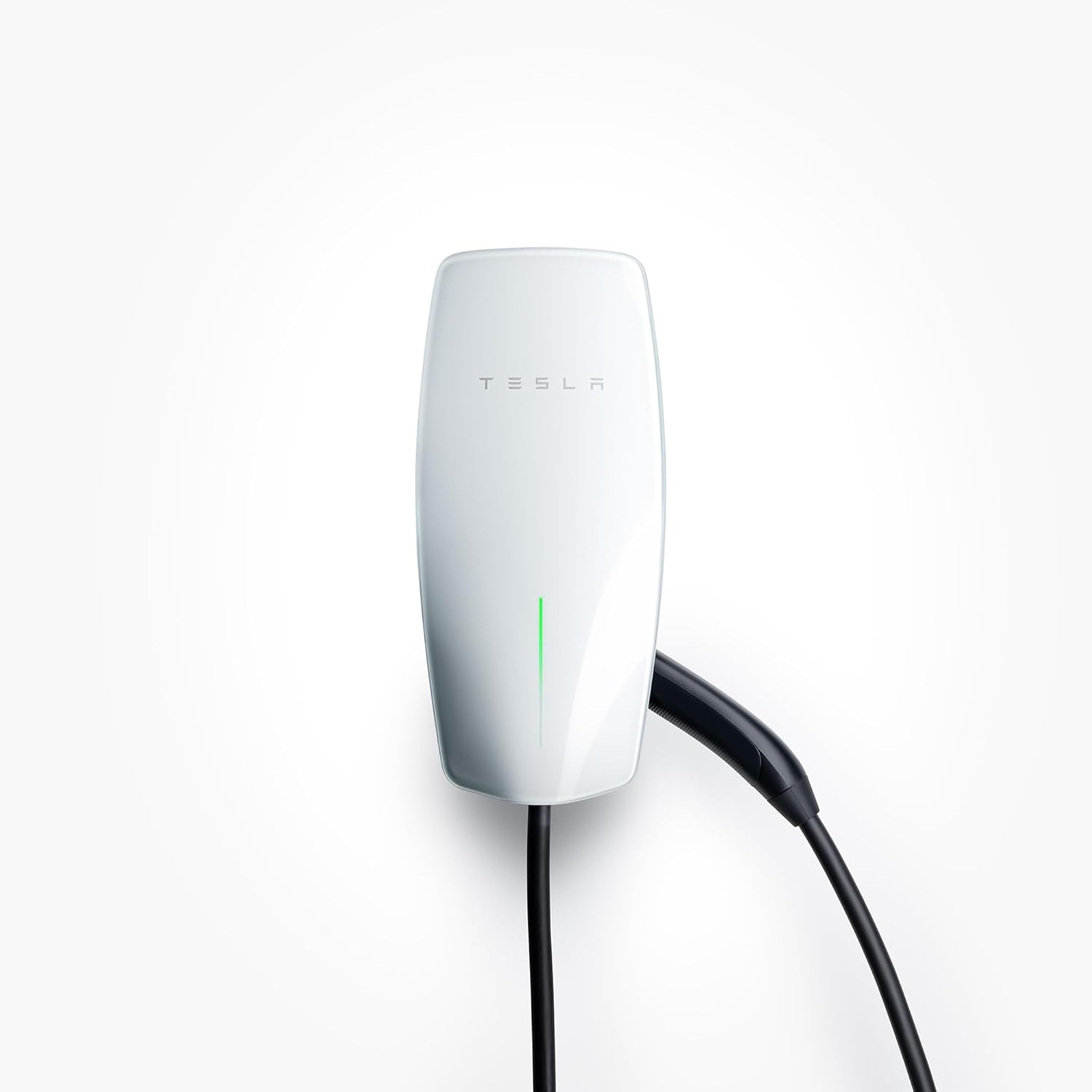
The Tesla Universal Wall Connector stands out as a unique offering in the EV charging market due to its integrated Magic Dock that supports all North American EVs without adapters. Tom Moloughney of EVChargingStations.com praised its high-powered 48-amp capability and smart features, though noted the adapter lock feels flimsy. Everyday EV reviewer highlighted its sleek design, integrated cable management, and flexible cable that's easier to handle than previous models. The unit is only available as a hardwired installation and lacks a functional app at time of review, but it's positioned as a strong contender for both residential and commercial use.
Full review
Design and Integration
The Tesla Universal Wall Connector represents a significant design evolution from Tesla's previous offerings, incorporating an integrated adapter system that allows charging of both NACS and J1772 vehicles without external accessories. According to Car and Driver's Dave VanderWerp, the unit's thick profile accommodates the built-in adapter mechanism, which includes an electronic locking system that prevents loss of the adapter. The device maintains the same core specifications as the Gen 3 Wall Connector, including 48-amp capacity and 11.5 kW maximum power output. Tesla's own review notes that the unit comes with a 24-foot cable and includes a mounting template with six hole options, though the installation process requires hardwired electrical work and is recommended to be performed professionally. The integrated connector holster and cable management system provide convenience for users, though some reviewers noted the adapter lock mechanism feels flimsy according to the EVChargingStations.com review.
The mounting bracket and installation hardware include a hex driver, mounting template, and multiple screws for securing the unit to the wall. The design approach addresses the industry shift toward NACS standard, with Tesla's own documentation indicating that the unit integrates into the Tesla mobile app for monitoring energy use and charging sessions. However, the app functionality was not fully available at the time of initial testing, according to the EVChargingStations.com review, and the device requires commissioning via a separate Tesla One app for setup.
Reviewers noted that the unit's build quality appears robust, with the Tesla Gen 3 Wall Connector scoring 91/100 in ChargerRater tests conducted by Tom Moloughney, who emphasized its competitive pricing and performance. The unit supports power sharing with up to 16 other Wall Connectors, a feature that enhances its commercial appeal. The integration of smart features like Wi-Fi connectivity and power sharing capabilities positions it as a premium offering in the home EV charging space. However, the lack of plug-in option and the requirement for hardwired installation limits its flexibility compared to some competitors in the market.
Charging Performance
The Tesla Universal Wall Connector delivers identical performance to the Gen 3 Wall Connector, providing up to 11.5 kW of power through its 48-amp capacity. EVChargingStations.com reviewer Tom Moloughney noted that Tesla estimates users can regain up to 44 miles of range per hour when charging at maximum power. This performance level is consistent with the Gen 3 Wall Connector's specifications, which EnergySage's Casey McDevitt confirmed as 48 amps and 11.5 kW maximum power output. The charging speed is sufficient for overnight charging of most electric vehicles, with the 24-foot cable length allowing for convenient placement in various garage or driveway configurations.
During testing, the Universal Wall Connector demonstrated reliable performance across multiple vehicle types, though Car and Driver's testing revealed a specific issue with the Rivian R1T where the charge port light would initially turn red, requiring unplugging and replugging before charging would initialize. This appears to be a vehicle-specific compatibility issue rather than a fundamental flaw with the charging unit itself. The device's ability to charge both NACS and J1772 vehicles seamlessly was confirmed by multiple reviewers, including those in the Tesla Motors Club forum who noted that the J1772 adapter is easily removable and locks securely in place. The unit's cable management system and integrated connector design minimize the risk of losing adapters during use.
The charging unit's smart features include Wi-Fi connectivity and the ability to monitor energy use and charge time through the Tesla mobile app. While the app functionality was not fully operational during initial testing, the unit's integration with Tesla's ecosystem was noted as a key selling point. The device supports power sharing with up to 16 other Wall Connectors, which enhances its utility in multi-car households or commercial settings. The ability to set charging preferences, including specifying which Teslas can charge at the unit, was also highlighted as a valuable feature for Tesla owners.
Installation and Setup
Installation of the Tesla Universal Wall Connector requires hardwired electrical work, with EVChargingStations.com reviewer Tom Moloughney noting that the unit comes with all necessary mounting hardware including a mounting template, bracket, screws, and a hex driver. The installation process involves drilling holes along the center of a stud for extra stability and attaching the mounting bracket using provided screws. The unit can be fed power from a dedicated 60-amp circuit either from the top or through one of two knockouts in the bracket, requiring proper torque tightening of connectors. The installation instructions provided by Tesla are comprehensive, though Moloughney recommends professional installation to reduce the risk of electrical failure.
The setup process involves commissioning the unit and connecting it to Wi-Fi, which according to EVChargingStations.com, requires a separate Tesla One app for configuration. The initial provisioning process includes setting the charger to charge all cars, as some users reported issues with charging J1772 vehicles when configured for Tesla-only charging. Tesla's own documentation indicates that the device requires a firmware update upon first setup, which can be accomplished by connecting wirelessly via phone or laptop directly to the charger. The unit's integration with Tesla's ecosystem allows for monitoring of energy usage and charge sessions, though the app functionality was not fully available during initial testing periods.
According to the Tesla Motors Club discussion, users reported that the initial setup process required careful attention to configuration settings, particularly regarding which vehicles could charge at the unit. Some users noted that firmware updates were necessary for optimal performance, with one user reporting that they had to update firmware after installation. The installation process also requires careful consideration of breaker capacity, with the unit rated for up to 48A when using a 60A breaker. The device's ability to communicate with other Tesla chargers on the same breaker for power management was noted as a useful feature for multi-car charging scenarios.
User Experience and Features
The Tesla Universal Wall Connector's user experience centers on its integrated adapter system that allows switching between NACS and J1772 connectors without external accessories. The system includes a button for each connector type that releases the appropriate adapter when pressed. The user noted that the J1772 adapter is easily removable and locks securely in place, while the NACS connector is released when the corresponding button is pressed. The 24-foot cable length provides sufficient reach for most garage or driveway configurations, and the unit's design minimizes adapter frustration.
Car and Driver's testing revealed a minor issue where pushing buttons to release connectors would cause nearby Tesla vehicles to automatically open their charge ports, though Tesla support confirmed this issue was resolved in a firmware update. The device's smart features include Wi-Fi connectivity and the ability to monitor energy use and charge sessions through the Tesla mobile app. The unit supports power sharing with up to 16 other Wall Connectors, which enhances its utility in multi-car households or commercial settings. Users can specify which Teslas can charge at the unit and block others, though this functionality doesn't extend to non-Tesla vehicles.
The Tesla Universal Wall Connector's ability to charge both NACS and J1772 vehicles from a single unit was highlighted as a significant advantage by multiple reviewers. The device's integration with Tesla's ecosystem allows for monitoring of energy usage and charge sessions, though the app functionality was not fully available during initial testing periods. The unit's smart features include over-the-air updates and remote monitoring capabilities, positioning it as a premium offering in the home EV charging space. The device's build quality and integrated design were noted as superior to competitors, though some reviewers expressed concerns about the adapter lock mechanism feeling flimsy.
Where It Falls Short
Despite its advanced features, the Tesla Universal Wall Connector has several notable drawbacks that reviewers have identified. The most significant limitation is the lack of plug-in option, requiring hardwired electrical installation that many users may find challenging or costly. EVChargingStations.com reviewer Tom Moloughney noted that the adapter lock mechanism feels flimsy, which could be problematic for users who frequently switch between connector types. Additionally, the unit's app functionality was not fully operational at the time of initial testing, limiting some of its smart features.
The device's performance in cold weather conditions was also a concern, with EnergySage's Tom Moloughney reporting that the Gen 3 Wall Connector's cable became stiff and unmanageable at -7°F, though the Universal Wall Connector maintained a more manageable cable despite being tested at -11°F. However, the Universal Wall Connector's cable management system still presents challenges in extremely cold climates.
Another limitation is the device's requirement for specific configuration settings during setup, with some users reporting issues with charging J1772 vehicles when configured for Tesla-only charging. The need for firmware updates and the complexity of initial provisioning were noted as potential barriers for less tech-savvy users. The device's inability to charge non-Tesla vehicles without an adapter, while not a major flaw, does limit its versatility compared to some competitors who offer plug-in options for both connector types. The lack of a plug-in model means users must commit to hardwired installation, which may not be feasible for all home setups.
Who It's Best For
The Tesla Universal Wall Connector is best suited for Tesla owners who want to future-proof their home charging setup and are willing to invest in a premium product with integrated dual-connector capability. According to EnergySage's Casey McDevitt, the Gen 3 Wall Connector is worth a serious look for Tesla drivers in moderate climates who want reliable, high-speed home charging at a competitive price. The device's 48-amp capacity and 11.5 kW maximum power output make it ideal for overnight charging of most electric vehicles, with the 24-foot cable providing convenient reach for typical garage or driveway configurations.
The Universal Wall Connector is particularly attractive to households with mixed EV ownership, such as those who own both Tesla and non-Tesla vehicles, or those planning to add non-Tesla vehicles in the future. Tesla Motors Club users noted that the device's ability to charge both connector types from a single unit eliminates the need for multiple chargers or bulky adapters. The device's integration with Tesla's ecosystem, including monitoring capabilities and power sharing features, makes it an excellent choice for Tesla owners who want comprehensive control over their charging setup.
However, the device is not ideal for users who prefer plug-in models or those who cannot commit to hardwired installation. The $595 price point is also higher than the Gen 3 Wall Connector's $485, though the added functionality justifies the premium for users who need dual-connector capability. Users in cold climates may also find the cable performance concerning, as the Gen 3 Wall Connector's cable became stiff at -7°F, though the Universal Wall Connector maintained better performance at -11°F. The device is best suited for users who value convenience, future-proofing, and integration with Tesla's ecosystem over cost savings or plug-in flexibility.
How It Compares to Alternatives
The Tesla Universal Wall Connector competes directly with other high-end home EV chargers, though it stands out due to its integrated dual-connector capability. The Universal Wall Connector's advantage lies in its ability to charge both NACS and J1772 vehicles without additional adapters, which is a unique feature not available in competing products. However, the Gen 3 Wall Connector's lower price point makes it more attractive for users who only own Tesla vehicles.
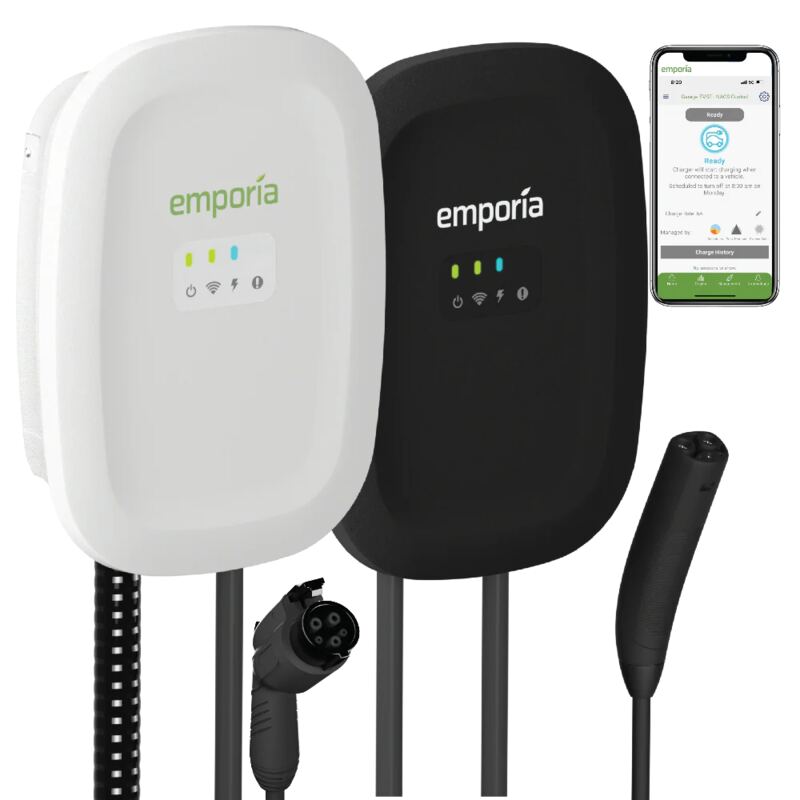
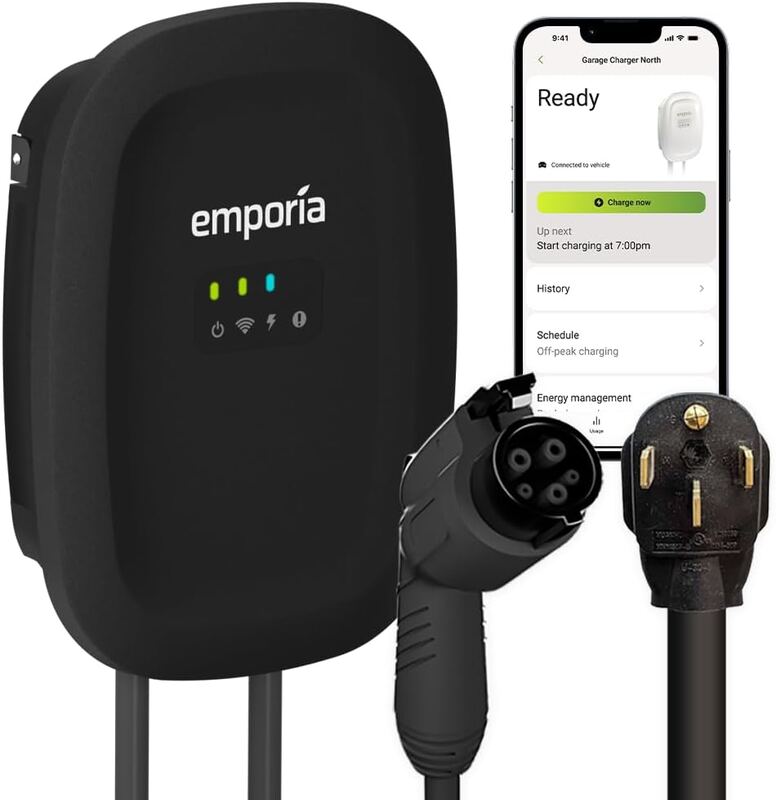
Competitors like the Emporia Pro Grizzl-E Ultimate 48A EVIQO Evipower Gen2 offer similar specifications but with different connector options and pricing. The Emporia Pro and Grizzl-E Ultimate 48A both offer plug-in options, unlike the Tesla Universal Wall Connector which requires hardwired installation. The Emporia Pro and Grizzl-E Ultimate 48A both cost around $599, making them comparable to the Tesla Universal Wall Connector's $595 price point. However, these competitors don't offer the same integrated dual-connector capability as the Tesla Universal Wall Connector, which is its primary selling point.
The Tesla Universal Wall Connector's unique selling proposition is its integrated adapter system that allows charging of both NACS and J1772 vehicles without external accessories. This feature sets it apart from competitors like the ChargePoint Home Flex, which offers both connector types but requires separate adapters. The Tesla Universal Wall Connector's integration with Tesla's ecosystem, including monitoring capabilities and power sharing features, also provides a comprehensive solution for Tesla owners. However, the device's higher price point and requirement for hardwired installation limit its appeal to users who prefer plug-in models or are on a tight budget.
Value and Warranty
The device's price point of $595 is competitive with other high-end chargers, though it's $115 more expensive than the Gen 3 Wall Connector's $485 price. The added functionality of integrated dual-connector capability justifies the premium for users who need to charge both NACS and J1772 vehicles. The warranty provides peace of mind for users who invest in the premium product, with Tesla's reputation for reliability supporting the warranty's value.
The device's smart features, including Wi-Fi connectivity, power sharing capabilities, and integration with Tesla's mobile app, contribute to its overall value proposition. The ability to monitor energy use and charge sessions through the Tesla mobile app, though not fully functional at the time of initial testing, represents a significant advantage over competitors who lack such integration. The device's ability to communicate with other Tesla chargers on the same breaker for power management enhances its utility in multi-car households or commercial settings.
The Tesla Universal Wall Connector's value is further supported by its build quality and performance, with Tom Moloughney's ChargerRater score of 91/100 for the Gen 3 Wall Connector demonstrating its strong performance in testing. The device's ability to charge up to 44 miles of range per hour at maximum power, combined with its 24-foot cable length and integrated cable management system, provides a comprehensive charging solution. The device's four-year warranty, which outlasts most competitors, adds significant value for users who want long-term reliability and support.
Strengths
- +Innovative integrated Magic Dock allows charging any EV in North America without additional adapters
- +High-powered 48-amp, 11.5 kW charging capacity with adjustable current from 12-48 amps
- +Compact and aesthetically pleasing design with integrated cable management system
- +Smart Wi-Fi connectivity for remote monitoring and over-the-air updates
Watch-outs
- −Adapter lock seems flimsy based on early user feedback
- −Charging app not yet functional at time of initial testing
How it compares
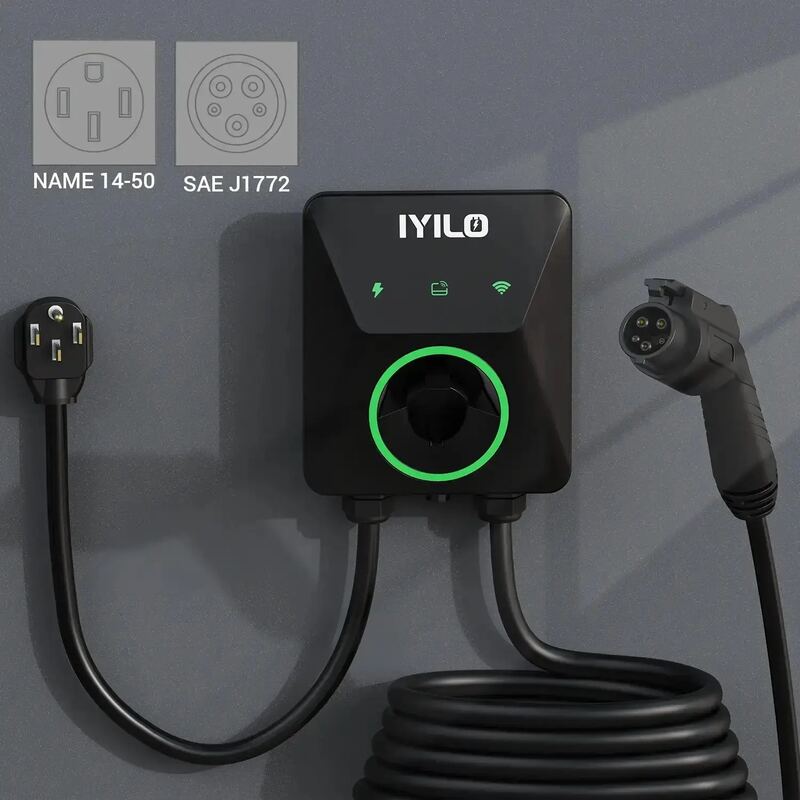
The Tesla Universal Wall Connector sets itself apart from the Emporia Pro and IYILO models by offering a unique Magic Dock that supports all North American EVs without adapters. Unlike the Emporia Pro's PowerSmart technology and IYILO's dynamic load management, the Tesla provides a plug-and-play solution with integrated cable management, though it lacks app functionality at time of review and has a flimsy adapter lock based on early feedback.
Who this is for
At a glance: Tesla owners wanting universal compatibility.
Why you’d buy the Tesla Universal Wall Connector
- Innovative integrated Magic Dock allows charging any EV in North America without additional adapters.
- High-powered 48-amp, 11.5 kW charging capacity with adjustable current from 12-48 amps.
- Compact and aesthetically pleasing design with integrated cable management system.
Why you’d skip it
- Adapter lock seems flimsy based on early user feedback.
- Charging app not yet functional at time of initial testing.
Rating sources
“The Universal Wall Connector has a built-in adapter to switch seamlessly between J1772 and NACS plug types.”
“Like you said K. I. S. S. Go with the Tesla wall connector. If and when you get a non-Tesla vehicle, just use an adapter.”
Our 4.6 score is the average of these published ratings. Ratings marked * were derived from the reviewer’s written analysis or video transcript — the publisher didn’t print an explicit numeric score, so we inferred one from their own words. Click through to verify. More about methodology.