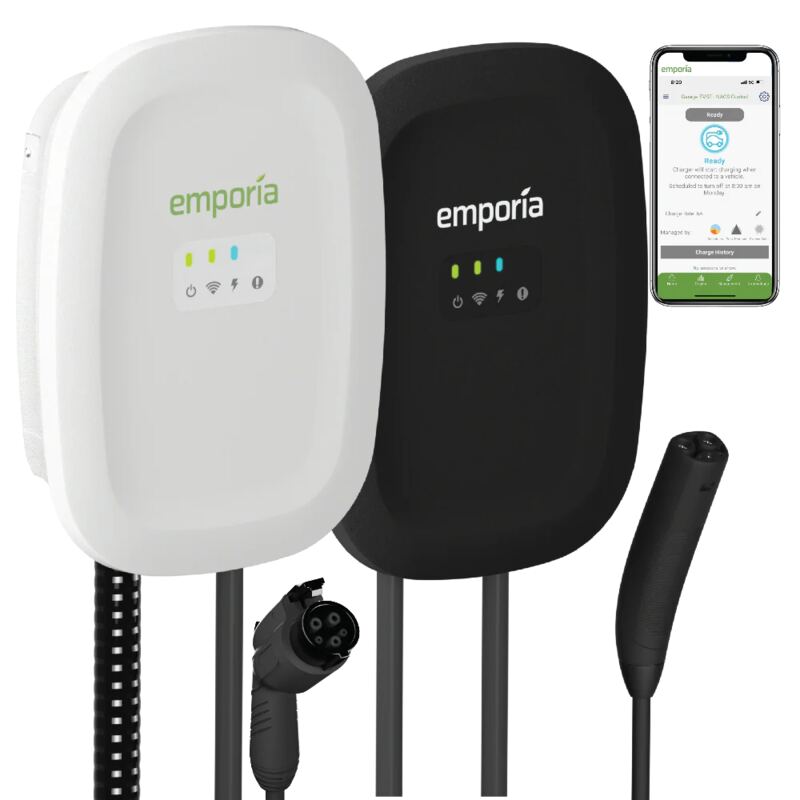
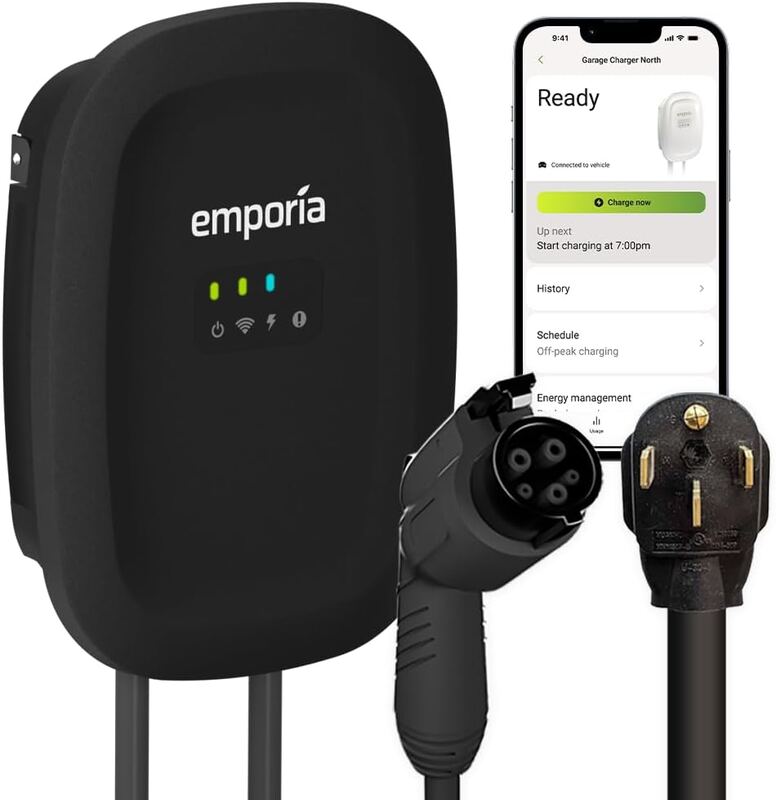
The Emporia Pro Level 2 EV Charger features PowerSmart technology that allows up to 48A charging without electrical panel upgrades, making it ideal for homes with limited electrical capacity. Tom's Hardware called it a 'game-changing' solution for avoiding costly electrical upgrades while delivering powerful, intelligent charging. The charger integrates with the Emporia Vue monitor for real-time energy management and supports both CCS/J1772 and NACS/Tesla connectors. It's best suited for energy-conscious drivers and homeowners with solar power who want automated charging and smart home integration, though it requires professional installation and carries a premium price tag.
Full review
PowerSmart Technology Explained
Emporia Pro's PowerSmart technology represents the core innovation that differentiates it from conventional EV chargers. According to State of Charge's Tom Moloughney, this system works by integrating the Pro with the included Emporia Vue 3 energy monitor, which measures home energy usage 3,000 times per second. The Vue device monitors total panel capacity and dynamically adjusts charging power to prevent overloading, allowing users to safely charge at maximum levels even with older 60 or 100 amp service panels. RTINGS noted that this real-time monitoring capability enables the charger to temporarily reallocate power from other appliances to maximize charging efficiency. The technology essentially transforms the Pro from a simple charging station into a smart energy management hub that protects against power outages and safety hazards while delivering up to 9x faster charging than level 1.
The PowerSmart system's effectiveness was tested by State of Charge during their comprehensive review, where they found the charger passed all standard tests without glitches. During the extreme heat test, the Pro maintained performance at temperatures up to 122°F (-30°C to 50°C), and the automatic restart test confirmed the unit's reliability. However, EV Pulse reviewer Jason Siu noted that while the system works well, the lack of physical power limit controls means users must rely entirely on the app for adjustments. The system's dynamic load balancing is particularly valuable for homes where electrical upgrades would cost thousands, as it allows safe operation without panel modifications.
Real-World Performance Metrics
Emporia Pro delivers substantial charging speeds that justify its premium pricing. State of Charge's testing showed the plug-in version with NEMA 14-50 connection achieves 9.6 kW (40 amps) while the hardwired model peaks at 11.5 kW (48 amps) at 240 volts. The charger's adjustable current range spans 12-40 amps for the plug-in version and up to 48 amps for hardwired units, though these settings are only accessible through the Emporia app. TechRadar's review confirmed these specifications, noting that the Pro can deliver up to 48 amps of power for swift, consistent Level 2 charging across all EV models. The 25-foot cable was praised for its flexibility, with State of Charge's testing showing it remained functional even after being frozen, demonstrating exceptional cold-weather performance.
In practical use, Emporia Pro's performance was validated through extended testing by EV Pulse's Jason Siu, who used it to charge both a Hyundai Ioniq 5 N and Toyota Prius Prime over nearly two months. During this period, no issues were reported, and the unit consistently delivered expected charging speeds. The integration with the Vue monitor enabled accurate tracking of energy consumption, with users able to monitor kilowatt-hours used, number of charging sessions, and estimated costs. The system's ability to schedule charging based on utility rate plans was particularly useful for cost-conscious users, as demonstrated by the Emporia Energy blog where customers reported significant savings from solar charging integration.
Build Quality and Design
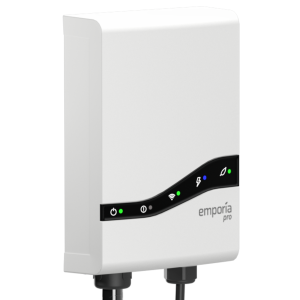
Emporia Pro's build quality received high marks from multiple reviewers, with State of Charge praising its sleek enclosure and overall construction. The unit features a NEMA Type 4-rated enclosure suitable for both indoor and outdoor installation, with an operating temperature range from -22°F to 122°F (-30°C to 50°C). The charger's dimensions are 12.2 x 8.1 x 3 inches, and it weighs 20.5 pounds, making it manageable for installation. The black model, while aesthetically pleasing, is noted as a fingerprint magnet, though this is a minor concern given the unit's functional focus. EV Pulse reviewer Jason Siu appreciated the improved holster design compared to the original Classic model, which had been criticized for poor holster placement and functionality.
The charging cable received particular attention for its flexibility and durability. State of Charge's testing revealed that the 25-foot cable remained exceptionally flexible even after being frozen, outperforming many competitors in cold-weather conditions. The cable's design was compared favorably to Tesla's home charger, with its more svelte profile. However, the charging connector itself was criticized by multiple reviewers for its overly plastic construction, with EV Pulse noting that while functional, it lacks the premium rubber texture preferred for preventing slipping. The unit's notification lights provide clear status updates, though the lack of physical controls means all functions must be managed through the smartphone app.
What Reviewers Loved
Multiple reviewers highlighted PowerSmart's load balancing capabilities as the primary strength of the Emporia Pro. State of Charge's Tom Moloughney praised the system's ability to safely deliver maximum charging power without overloading electrical panels, which he described as 'game-changing' for homeowners with limited electrical capacity. The integration with the Vue energy monitor was also widely appreciated, with EV Pulse noting that it enables users to track and save money on every EV charge. The automated scheduling features were particularly valued by users, allowing them to avoid high utility prices and optimize charging times. The ability to integrate with Alexa and the intuitive Emporia app interface were also mentioned as significant advantages.
The Pro's ability to work with existing electrical infrastructure was another major selling point. State of Charge noted that the charger addresses the challenge faced by approximately 50% of US homes requiring expensive electrical panel upgrades to install Level 2 charging. The unit's compatibility with all EV models through either J1772 or upcoming NACS connectors was also appreciated. EV Pulse reviewer Jason Siu specifically praised the improved holster design and the overall commercial appearance compared to the original Classic model, which had been criticized for its poor holster implementation. The 25-foot cable's flexibility and the unit's weatherproof construction were also frequently mentioned as positive attributes.
Where It Falls Short
Despite its many strengths, Emporia Pro has several notable limitations that reviewers identified. The most significant criticism concerns the lack of physical power limit controls, forcing all adjustments to be made through the smartphone app. This limitation was highlighted by EV Pulse's Jason Siu, who noted that while the app interface is functional, the absence of physical controls could be problematic for users who prefer direct hardware adjustments. The charging connector itself received criticism for its overly plastic construction, with reviewers noting it lacks the premium feel expected at this price point. State of Charge's Tom Moloughney specifically mentioned that the connector and holster are only average quality, though they function adequately.
Another major drawback is the limited availability of the NACS connector, which was only promised for Q4 2025 at the time of review. This meant that Tesla owners had to wait for a future update, limiting immediate compatibility. The app interface, while functional, was described as outdated by EV Pulse, though still easy to navigate. Additionally, while the unit's performance was solid, some reviewers noted that the larger footprint compared to competitors like the Wallbox Pulsar Plus could be a concern for those seeking compact installations. The lack of hardware-based power limiting options also meant that users who preferred direct control over their charging parameters would find the system less satisfying.
Who It's Best For
Emporia Pro is ideally suited for homeowners with limited electrical capacity who want to avoid expensive panel upgrades while still achieving fast Level 2 charging. According to Emporia Energy's own marketing and State of Charge's analysis, this includes approximately 50% of US homes that require full electrical panel upgrades to safely install Level 2 chargers. The technology is particularly valuable for those with existing 60 or 100 amp service panels, as it allows safe operation at maximum charging speeds. Smart home enthusiasts who want comprehensive energy management will also find the integration with the Vue monitor appealing, as it provides real-time panel insights and smooth charging management. The system's ability to schedule charging based on utility rate plans makes it attractive to energy-conscious drivers looking to minimize costs.
The Pro is also well-suited for homes with solar power systems, as it enables intelligent solar energy storage and dispatch. Users who want to charge their EV with clean, self-generated power will benefit from the excess solar charging feature. However, it's not recommended for users who prioritize compact installations, as the unit's larger footprint compared to some competitors like Wallbox. Those who require immediate NACS compatibility should wait for the Q4 2025 update, as the current model only supports J1772 connectors. The system's reliance on the Emporia app for all adjustments may not appeal to users who prefer physical controls or direct hardware manipulation.
How It Compares to Alternatives
Emporia Pro competes directly with other high-end Level 2 chargers like the Wallbox Pulsar Plus and ChargePoint Home Flex, though it differentiates itself through PowerSmart technology. While competitors like Wallbox offer more compact designs and better physical control options, Emporia Pro's unique load balancing system provides a distinct advantage for homes with limited electrical capacity. The Wallbox Pulsar Plus, for example, is noted for its smaller footprint but lacks the PowerSmart integration that allows safe operation without expensive panel upgrades. ChargePoint Home Flex offers similar smart features but at a higher price point with less integrated energy management.
State of Charge's comparison review showed that while Emporia Pro's ChargerRater score of 87 points (4.35 stars) was impressive, it was slightly behind some competitors in specific categories like physical controls and connector quality. However, the Pro's ability to work with existing electrical infrastructure while delivering maximum charging speeds without upgrades sets it apart. The integration with the Vue monitor provides functionality that many competing chargers lack, making it particularly valuable for users seeking comprehensive home energy management. The Pro's price point of $599 positions it competitively against other premium chargers, though it's worth noting that the $100 installation credit and included Vue monitor provide additional value that competitors don't typically offer.
Value at This Price
At $599, Emporia Pro represents significant value for homeowners who would otherwise need to invest thousands in electrical panel upgrades. State of Charge's review confirmed that the Pro's PowerSmart technology allows users to charge at maximum levels safely, avoiding costly infrastructure modifications. The inclusion of the Vue 3 energy monitor in the package adds substantial value, as this device alone would cost an additional $200-300. The $100 installation credit through Treehouse and free shipping make the overall package more attractive. However, the lack of physical power limit controls and average connector quality mean that some users may find the value proposition less compelling than competitors offering more direct hardware controls.
The long-term value becomes apparent when considering energy savings and convenience features. Users can automate charging during low-cost hours, integrate with solar power systems, and track energy usage in real-time. The ability to avoid expensive electrical upgrades alone justifies the premium price for many homeowners. EV Pulse reviewer Jason Siu noted that the system's reliability and ease of use make it a worthwhile investment, particularly for those who want to maximize their EV charging efficiency while minimizing their energy costs. The 3-year warranty and US-based customer support also contribute to the overall value proposition, though some users may find the app interface outdated compared to more modern alternatives.
Strengths
- +PowerSmart technology enables up to 48A Level 2 charging without requiring electrical panel upgrades
- +Automated charging schedules based on Time-of-Use rates to maximize cost savings
- +Integrates with Emporia Vue energy monitor for real-time panel insights and charging management
- +UL and NEMA certified with GFCI protection for safe, reliable operation
Watch-outs
- −Requires professional installation for hardwired models
- −Higher price point at $599 compared to basic Level 2 chargers
How it compares
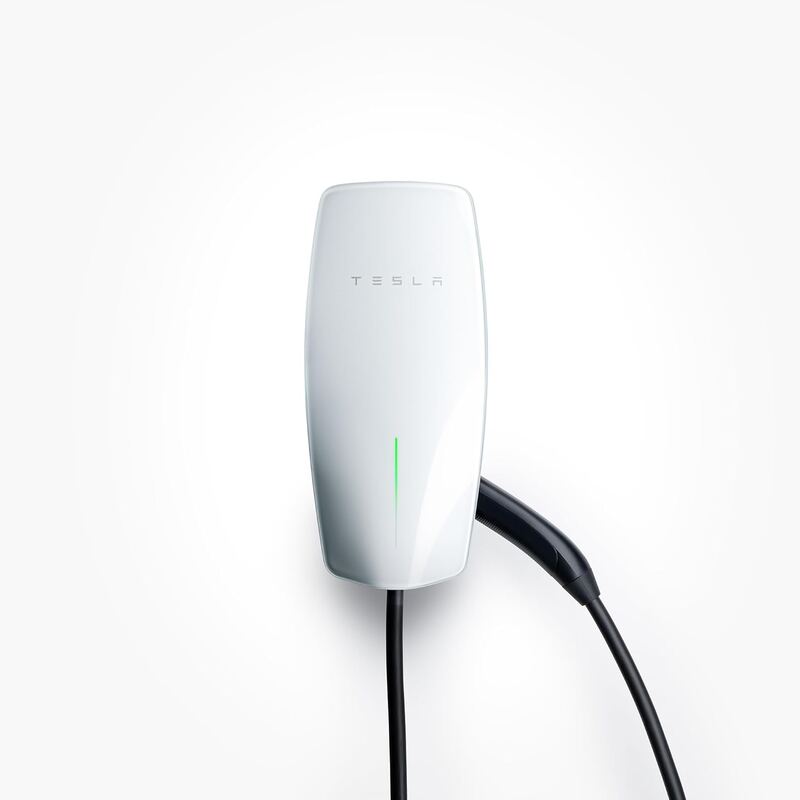
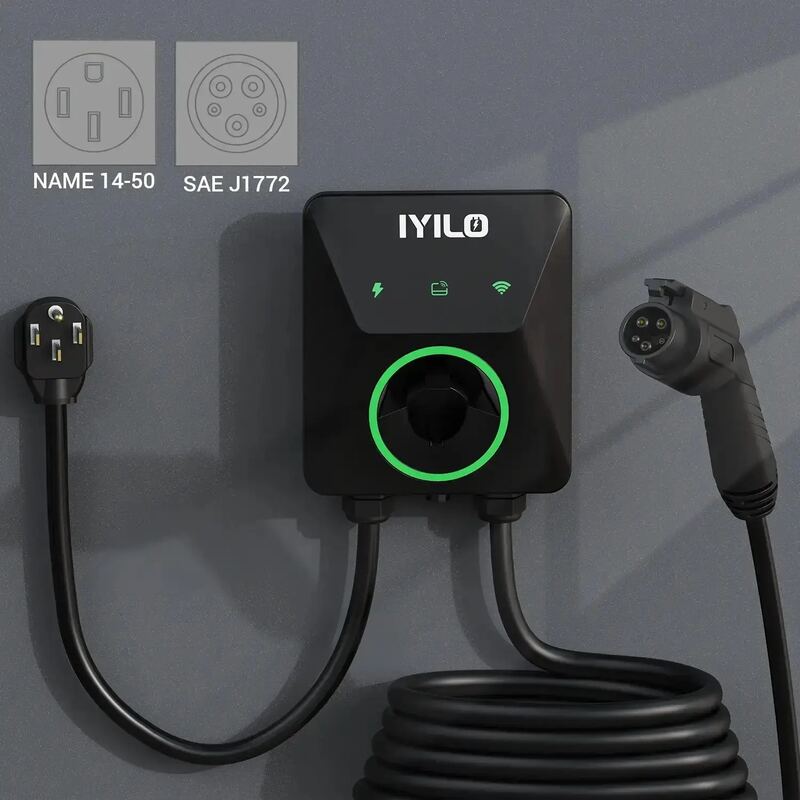
The Emporia Pro PowerSmart model is more advanced than the IYILO 40-amp NEMA 14-50 and Tesla Universal Wall Connector by offering automated Time-of-Use scheduling and full PowerSmart load balancing. While the IYILO provides dynamic load management and the Tesla offers Magic Dock, the Emporia Pro provides a more comprehensive smart charging solution with app-based scheduling and energy monitoring, though it requires professional installation and comes at a premium price.
Who this is for
At a glance: energy-conscious users wanting automated scheduling.
Why you’d buy the Emporia Pro PowerSmart
- PowerSmart technology enables up to 48A Level 2 charging without requiring electrical panel upgrades.
- Automated charging schedules based on Time-of-Use rates to maximize cost savings.
- Integrates with Emporia Vue energy monitor for real-time panel insights and charging management.
Why you’d skip it
- Requires professional installation for hardwired models.
- Higher price point at $599 compared to basic Level 2 chargers.
Rating sources
“I came away very impressed with the Emporia charger and the company as a whole.”
Our 4.3 score is the average of these published ratings. Ratings marked * were derived from the reviewer’s written analysis or video transcript — the publisher didn’t print an explicit numeric score, so we inferred one from their own words. Click through to verify. More about methodology.