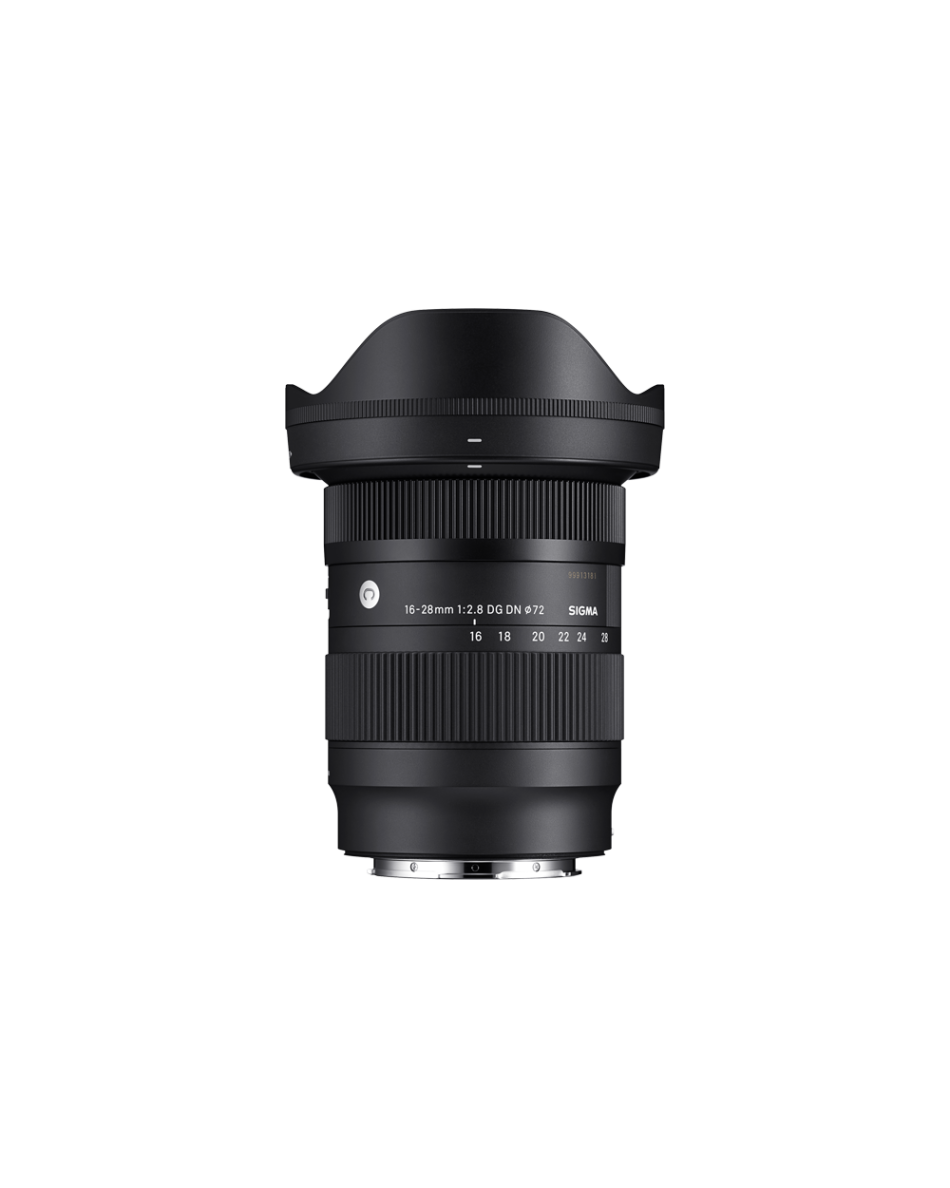
The Sigma 16-28mm F2.8 DG DN Contemporary delivers surprisingly few compromises for a Contemporary-line lens, leading with high sharpness across the frame in a light, internally-zooming 450g body. It starts a true 16mm wide, takes 72mm filters, and undercuts the Sony GM by more than half. The main caveats are mount-only weather sealing and heavy uncorrected vignetting and distortion at the wide end.
Full review
A true 16mm start, wider than the Tamron
Sigma's 16-28mm surprised reviewers by behaving like a more expensive lens than its Contemporary badge suggests. OpticalLimits, scoring it 8/10 (Highly Recommended), found the center quality superb but borders and corners still very impressive, with excellent resolution across the frame at practical apertures.
For a lens that costs less than half the price of the Sony 16-35mm f/2.8 GM, the optical performance is the standout story, mixing solid sharpness with what the Phoblographer called a whimsical wide-angle character and realistic colors.
Reviewers were particularly struck by how little the corners give up to the center, since corner softness is the usual giveaway of a budget wide zoom and the Sigma largely avoids it at working apertures. The starting 16mm focal length also gives it a perspective edge over the 17mm Tamron that landscape shooters notice in tight compositions. Taken together, the resolving power, the consistent across-frame performance and the true-16mm reach make the Sigma feel like a far more expensive lens than its price suggests.
Internal zoom design allows standard 72mm filters
The Sigma is light and compact at 450g, and its internal zoom is a meaningful design choice: the lens does not change length as you zoom, which keeps balance consistent and, crucially, allows it to accept standard 72mm front filters. OpticalLimits described the body, made of Thermally Stable Composite engineered plastics, as feeling sturdy while still being fairly lightweight.
The main build compromise is weather sealing. As both OpticalLimits and the Phoblographer noted, the lens only features a gasket at the lens mount. It withstood mist in testing, but the lack of full sealing means more potential for dust ingress over long-term outdoor use. For a lens often aimed at landscape shooters who work in the elements, that is the most significant practical limitation of the design.
Vignetting reaches 3 stops wide open at f/2.8
Optically, the trade-offs are concentrated at the wide end and wide open. OpticalLimits measured vignetting reaching 3+ EV at f/2.8 in the wide focal lengths, which is heavy, though it reduces significantly with auto-correction. Barrel distortion of roughly 4.5% at 16mm is also evident but correctable, and the Phoblographer noted that Sony's comparable lens does a bit better at keeping lines straight.
Sunstar performance is another minor weakness: the 9 rounded aperture blades produce minimal rays until around f/16, so landscape shooters chasing dramatic sunstars will need to stop well down. None of these issues undermine the lens's core strength, which is consistently high sharpness, but they are the areas where the price difference from the Sony GM shows.
Sealing limited to the lens mount only
The mount-only weather sealing is the headline shortcoming. It is fine for light mist and everyday use, but it is not the fully sealed barrel you get on the Sony GM II or even the Tamron rival, and that matters if you regularly shoot in rain, surf spray, or dusty conditions.
The heavy uncorrected vignetting and notable barrel distortion at 16mm mean you are relying on software correction more than with the Sony, which trims a little into the frame. And like the Tamron, the zoom stops at 28mm rather than 35mm, so it covers a narrower span than the flagship Sony zoom.
Closely matched with the Tamron on sharpness
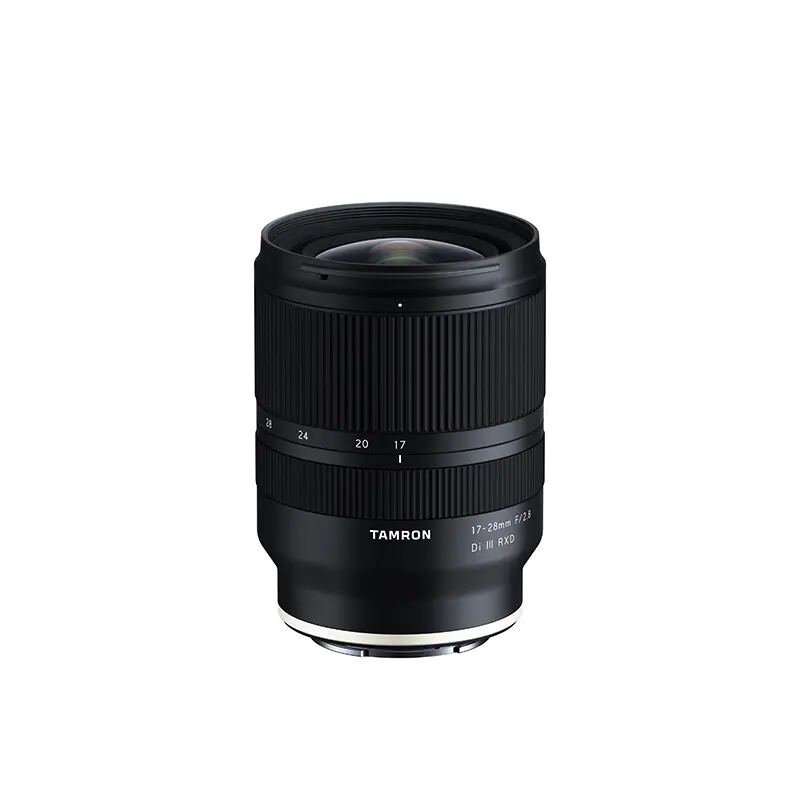
The Sigma and the Tamron 17-28mm F2.8 Di III RXD are the two value picks in this group, and they are closely matched. The Sigma's advantages are a true 16mm wide end, one millimeter wider, and standard 72mm filter compatibility via its internal zoom; the Tamron is slightly lighter and uses 67mm filters. Optically they trade blows, with both delivering near-flagship center sharpness.
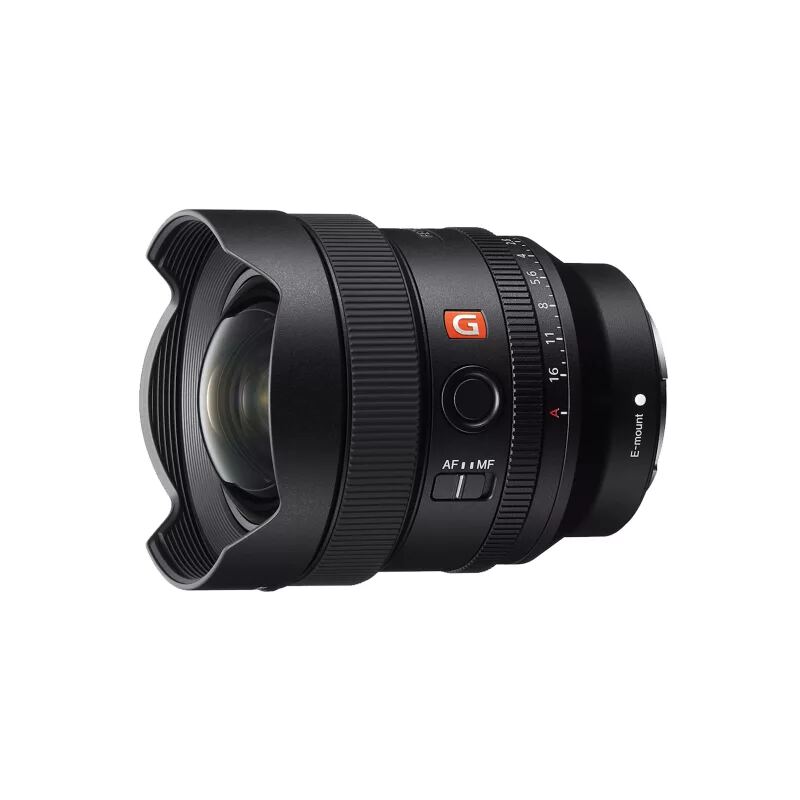
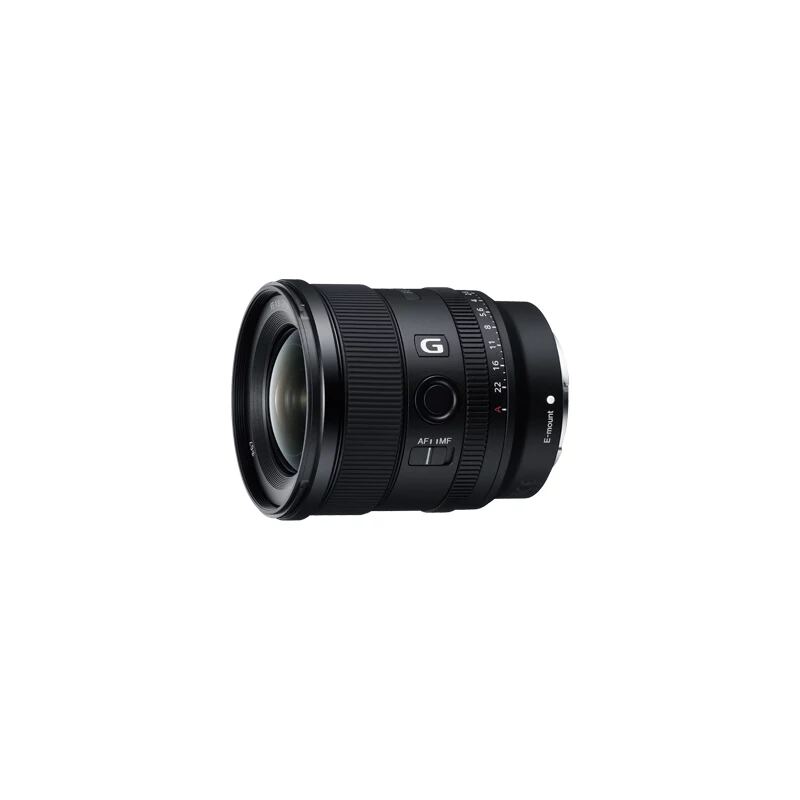
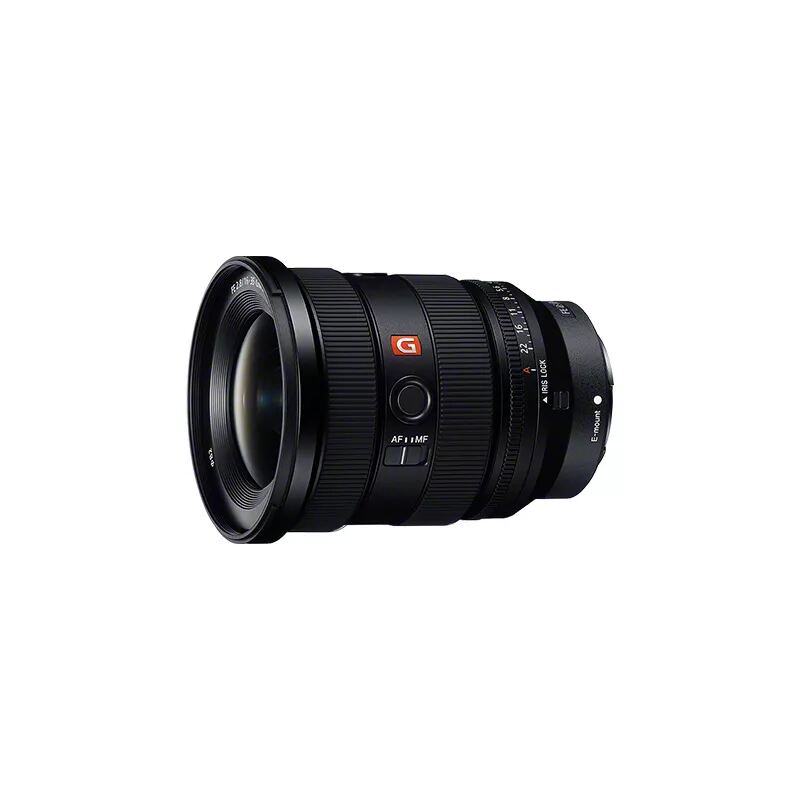
Against the Sony FE 16-35mm F2.8 GM II, the Sigma saves well over $1,000 but gives up the reach to 35mm, the faster autofocus, and the comprehensive weather sealing. Versus the Sony FE 14mm F1.8 GM and FE 20mm F1.8 G primes, it offers zoom flexibility but a slower f/2.8 aperture. It is the pick for buyers who specifically want to start at 16mm and use standard filters on a budget.
Nearly a third of the Sony GM II's price
The Sigma occupies the same value tier as the Tamron, and like the Tamron it is one of the strongest buys in the category. Under $900 buys a lens whose sharpness reviewers describe as superb in the center and very impressive at the borders, with the bonus of a true 16mm wide end and standard 72mm filter compatibility. Against the Sony GM II it saves more than $1,000 while preserving the optical traits most landscape shooters care about most.
The cost of that saving is concentrated in the build: mount-only sealing rather than a fully gasketed barrel, and heavier uncorrected vignetting and distortion that lean on software. Neither undermines the core value, and for a buyer who works mostly in fair conditions and corrects in post anyway, the Sigma delivers flagship-adjacent results at a price that makes the GM II hard to justify. It is the connoisseur's value pick for anyone who specifically wants to start at 16mm.
Handling and Filters
The internal-zoom design is the Sigma's defining ergonomic feature and the reason it earns a place over some rivals. Because the barrel does not extend or rotate as you zoom, balance stays constant on a gimbal and, more importantly, the front element does not move, so a screwed-on circular polarizer or variable ND stays oriented as you change focal length. For landscape shooters who live behind a polarizer, that is a genuine workflow advantage that the extending Tamron cannot match.
Beyond the zoom design, the lens keeps controls minimal in keeping with its Contemporary positioning, with an AF/MF switch and a smooth focus ring. It pairs naturally with other Sigma DG DN lenses that share the 72mm filter thread, letting a Sigma-based kit standardize on a single filter size. The result is a lens that is not just optically strong for the money but practical to live with day to day, particularly for filter-heavy landscape work.
The non-extending barrel also helps in less obvious ways: there is no pumping action to draw dust into the lens as you zoom, which partly offsets the limited mount-only sealing, and the lens stays the same length whether you are at 16mm or 28mm, so it sits predictably in a bag and on a tripod. For a budget zoom, these are thoughtful design choices that make the Sigma feel more considered than its price tier would normally allow.
Best for fair-weather landscape and travel shooting
This lens suits budget-conscious landscape and travel photographers who want the widest possible 16mm field of view in a fast zoom and who value the ability to mount standard 72mm filters. The internal zoom and light weight make it pleasant to carry, and the across-the-frame sharpness means results that hold up well in print and on large displays.
It is a weaker choice for photographers who routinely work in harsh weather, where the mount-only sealing is a liability, or who need the 28-35mm range. For those buyers the Sony GM II is the safer tool. But for the value shooter who prioritizes a true-16mm start and filter compatibility, the Sigma is an excellent buy and a direct, closely matched rival to the Tamron 17-28mm.
Strengths
- +Superb center sharpness with very impressive borders and corners across the range
- +Light and compact at 450g with an internal zoom that does not change length
- +Starts at a true 16mm, a millimeter wider than the Tamron rival
- +Costs less than half the price of the Sony 16-35mm f/2.8 GM
- +Accepts standard 72mm front filters thanks to the internal zoom design
Watch-outs
- −Weather sealing is limited to a gasket at the lens mount only
- −Strong vignetting at f/2.8 (3+ EV) at the wide end before correction
- −Around 4.5% barrel distortion at 16mm that needs correcting
- −Limited sunstar performance until stopped down to about f/16
How it compares
It is the value rival to the Tamron 17-28mm F2.8 Di III RXD, starting a millimeter wider at 16mm and taking 72mm filters versus Tamron's 67mm, while weighing a touch more at 450g. Like the Tamron it undercuts the Sony FE 16-35mm F2.8 GM II by well over $1,000 but gives up that lens's reach to 35mm and full weather sealing. It offers zoom flexibility the Sony FE 14mm F1.8 GM and FE 20mm F1.8 G primes lack.
Rating sources
“The center quality is superb but borders and corners are still very impressive.”
Our 4.3 score is the average of these published ratings. Ratings marked * were derived from the reviewer’s written analysis or video transcript — the publisher didn’t print an explicit numeric score, so we inferred one from their own words. Click through to verify. More about methodology.