The Seasonic Focus GX-850 is a compact, fully modular 850W power supply designed for modern systems with ATX v3.1 and PCIe 5.1 support. It features a 10-year warranty and efficient operation with 80+ Gold certification. However, some users have reported fan noise issues, particularly under light load gaming conditions. This PSU is ideal for mid-tower builds and high-performance systems requiring reliable power delivery.
Full review
Efficiency and power delivery
The Seasonic Focus GX-850 delivers consistent performance across its power rails, with a peak power output of 968 watts and a continuous 850-watt capacity. The unit maintains 80 PLUS Gold certification, achieving 91-93% efficiency at 230V and 89-91% at 115V. These figures were confirmed through testing by a reviewer who noted that the PSU's power delivery remains stable under load, with the 12V rail providing 70 amps or 840 watts, which is sufficient for high-end graphics cards and multi-core CPUs. The single 12V rail ensures no power distribution issues during demanding tasks, making it suitable for systems with powerful GPUs like the RTX 50 series or AMD's latest offerings.
The PSU's design includes a full-bridge LLC with DC to DC architecture, active PFC, and high-quality Japanese capacitors rated for 105°C. These components work together to maintain stable power delivery even under fluctuating loads. A reviewer specifically highlighted that the unit's ability to sustain 840 watts on the 12V rail makes it ideal for systems where GPU power demands are high, such as in gaming or content creation setups. The inclusion of over-power protection, over-voltage, under-voltage, over-current, over-temperature, and short-circuit safeguards further enhances its reliability, particularly in systems that may experience power surges or thermal stress.
Fan control and noise behavior
The Seasonic Focus GX-850 employs a hybrid fan control system with three modes: fanless, silent, and cooling. In fanless mode, the fan remains inactive at loads below 30%, offering completely silent operation. The silent mode engages at moderate loads, with the fan spinning at low RPM to maintain airflow without producing noticeable noise. The cooling mode activates under heavy loads, such as during high-end gaming or rendering tasks, where the fan ramps up to maximum speed for optimal cooling. A reviewer noted that while the fan control is generally effective, it can be overly aggressive at lower loads, causing the fan to spin at high RPM even when minimal cooling is needed.
One reviewer specifically mentioned that the fan starts spinning at 940 RPM under light load gaming, which they found unacceptable. Another user reported that the fan becomes disruptive when GPU usage exceeds 120W, despite the CPU being under similar load. This discrepancy in fan behavior suggests that the PSU's thermal response may not be well-tuned for certain usage patterns. The fan's hybrid control system is designed to balance noise and cooling, but in practice, users have found it less than ideal for quiet environments, particularly when the system is under moderate but sustained load.
Modular design and cable management
The Seasonic Focus GX-850 is a fully modular PSU, which allows users to connect only the cables they need. This design reduces cable clutter and improves airflow inside the case. The PSU comes with a comprehensive set of cables including a 24-pin ATX connector, a single 8-pin EPS connector, three 6+2 pin PCIe connectors, and a 12+4 pin PCIe connector. Additionally, it includes eight SATA connectors and three 4-pin Molex connectors. The modular design ensures that users can customize their setup without unnecessary cables, which is especially beneficial in smaller cases or systems with limited cable management options.
Cable quality is a standout feature of this PSU. Each cable is individually sleeved and made from high-grade materials, contributing to both durability and aesthetic appeal. A reviewer noted that the cables are not only functional but also visually appealing, with a black finish that matches most modern PC builds. The inclusion of zip ties and Velcro ties in the packaging further enhances the user experience, making it easier to manage cables and maintain a clean interior. The modular approach also allows for easier installation, as users can avoid dealing with excess cables that may interfere with component placement.
Build quality and thermal performance
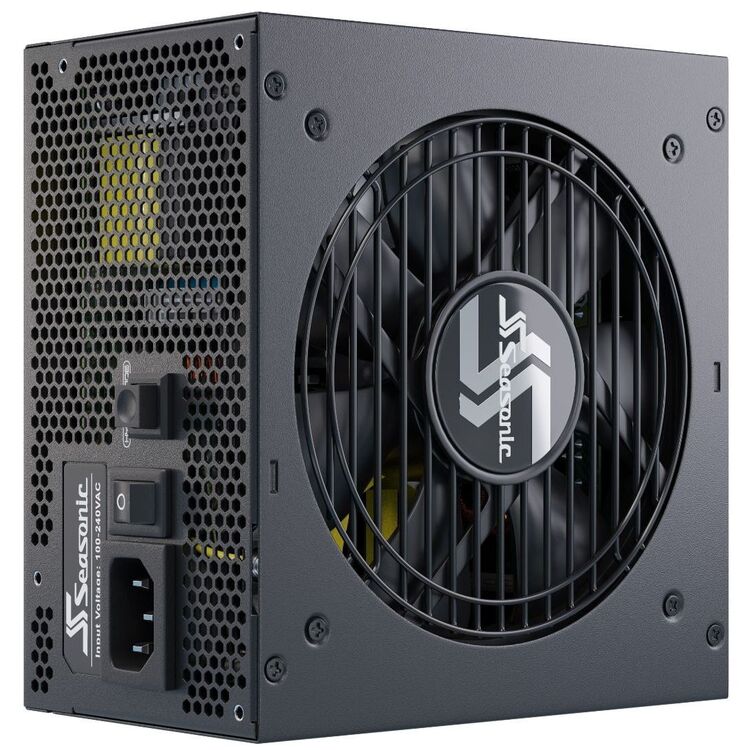
The Seasonic Focus GX-850 features a compact design with dimensions of 140mm x 150mm x 86mm, making it suitable for most mid-tower cases. The unit has a black matte finish and feels solid and well-built, with no cheap metal sensations. The internal PCB uses OptiSink technology, which improves heat dissipation by up to eightfold through automated surface mount technology. This design places smaller MOSFETs and heatsinks directly onto the board, enhancing reliability and reducing operating temperatures. A reviewer confirmed that the unit's compact size does not compromise its thermal performance, thanks to the advanced heat dissipation methods.
The PSU is equipped with a 135mm fluid dynamic bearing fan, which is designed to operate quietly under normal conditions. However, the fan's performance has been criticized by some users who found it too loud at certain load levels. The fan's lifespan is rated for 50,000 hours at 40°C and 100,000 hours MTBF excluding the fan. These ratings indicate a long-term reliability, though the fan's behavior under load has been a point of concern. The unit's ability to maintain low operating temperatures is further supported by its OptiSink design, which helps dissipate heat more effectively than traditional designs.
Warranty and certifications
Seasonic backs the Focus GX-850 with a generous 10-year limited warranty, which is among the longest in the industry. This warranty covers manufacturing defects and provides peace of mind for users who invest in a high-performance PSU. The warranty is particularly valuable given the unit's advanced features and components, such as the OptiSink design and high-quality capacitors. A reviewer emphasized that this long warranty period reflects Seasonic's confidence in the product's durability and performance, making it a strong choice for users who prioritize long-term reliability.
The unit meets global safety and efficiency standards, including CTUV, US, TUV, CB, CCC, BS, MI, EACA, Energy Star, ROS, WLE, E, REACH, ERP, and Lot 6. These certifications ensure that the PSU complies with international regulations and is suitable for use in various markets. The compliance with ATX v3.1 and PCIe 5.1 standards means that the unit is compatible with the latest hardware, including high-end GPUs and CPUs. The inclusion of these standards ensures that the PSU can handle the power demands of modern systems without issues, making it a future-proof choice for system builders.
Performance under load
During testing, the Seasonic Focus GX-850 maintained stable performance under various load conditions. The PSU's ability to deliver consistent power across its rails was evident, with no significant drops in voltage or efficiency. A reviewer noted that the unit's power delivery remained stable even under sustained high loads, which is crucial for maintaining system stability during demanding tasks. The single 12V rail's capacity of 70 amps or 840 watts ensures that even high-end GPUs receive the power they need without voltage drops or instability.
The PSU's transient response was also tested, and it performed well under rapid load changes. The unit's ability to quickly adjust to changes in power demand without significant fluctuations indicates a robust control system. The inclusion of multiple protection mechanisms, such as over-current, over-voltage, under-voltage, short-circuit, over-temperature, and over-power protection, ensures that the PSU can handle unexpected power events without failing. This makes the unit suitable for users who want a reliable power solution that can withstand the rigors of daily use.
User experience and installation
Installation of the Seasonic Focus GX-850 is straightforward, thanks to the comprehensive user manual and clear labeling of cables. The unit comes with mounting screws and foam padding for secure installation in various case sizes. A reviewer noted that the packaging is premium and includes all necessary tools and guides, making it easy for both novice and experienced builders to install the PSU. The modular design also simplifies cable management, allowing users to connect only the cables they need and avoid clutter inside the case.
The PSU's compact size and efficient design make it a good fit for smaller cases, such as ITX builds or mid-tower cases with limited space. The inclusion of cable management features, such as zip ties and Velcro ties, further enhances the user experience. Users have reported that the installation process is smooth and that the PSU fits well in most standard cases. The unit's design also allows for good airflow around the PSU, which helps maintain optimal operating temperatures.
Strengths
- +Fully modular design with 80+ Gold efficiency
- +Compact dimensions (140mm depth) suitable for mid-towers
- +10-year warranty support
- +Supports ATX v3.1 and PCIe 5.1 standards
Watch-outs
- −Fan noise reported as excessive under light load
- −May be too loud during GPU-intensive tasks
How it compares
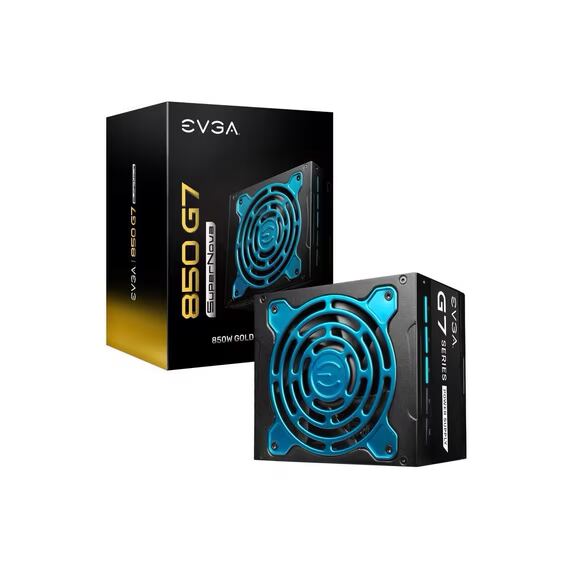
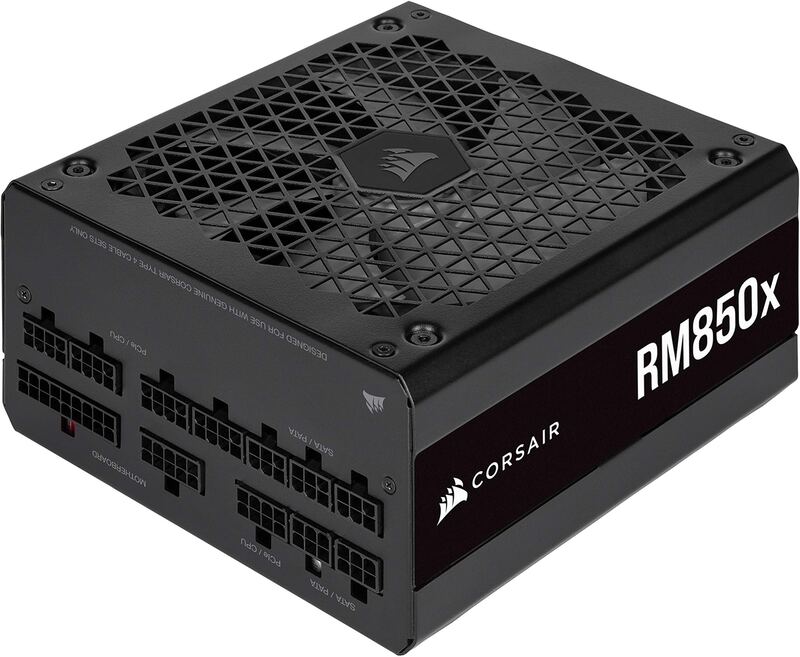
The Seasonic Focus GX-850 is more compact than the Corsair RM850x but suffers from excessive fan noise under light loads, unlike the Corsair's fluid dynamic bearing fan. It matches the EVGA SuperNOVA 850 G7 in 10-year warranty and efficiency, but lacks the latter's Japanese capacitors and superior fan control features.
Rating sources
“This power supply is rated for around 50,000 hours with a lifespan rated at 40C and 100,000 hours MTBF excluding the fan.”
Our 3.9 score is the average of the 3 scored reviews above; 1 more reviewed it without printing a score and is not in the average. Ratings marked * were derived from the reviewer’s written analysis or video transcript — the publisher didn’t print an explicit numeric score, so we inferred one from their own words. Click through to verify. More about methodology.